
 By Rifan Muazin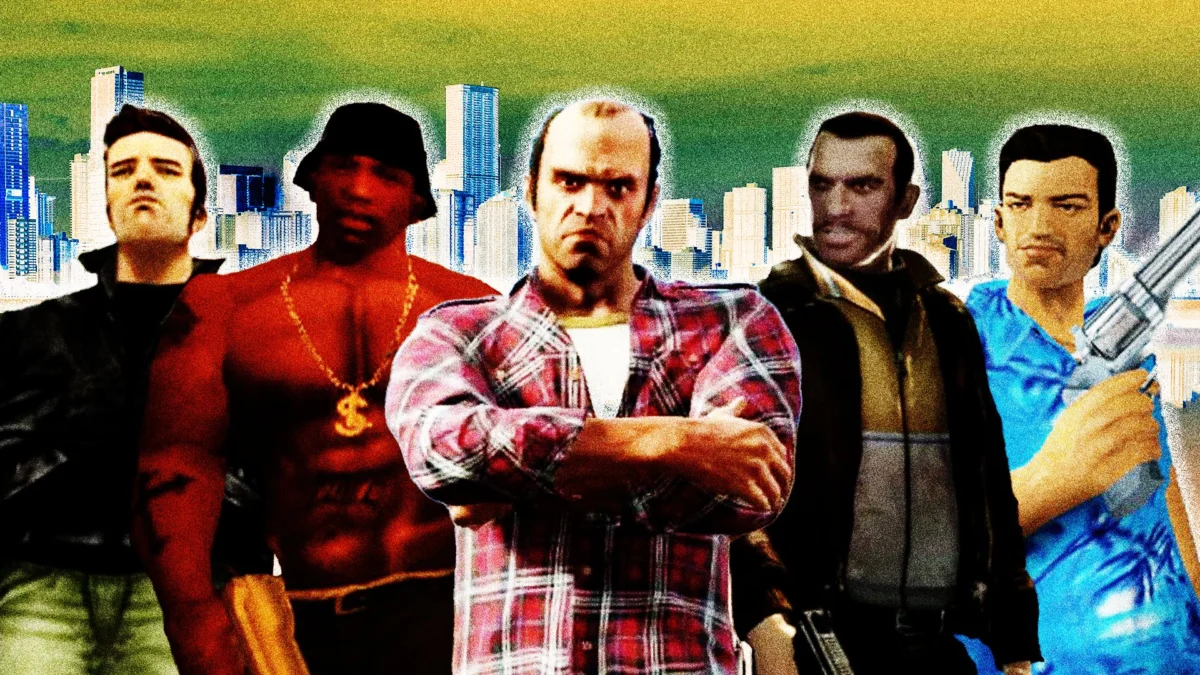
The release of Grand Theft Auto VI is no longer merely a scheduled product launch; it is a looming cultural shift, an entertainment juggernaut poised to make the box-office records of Avengers: Endgame look like niche independent cinema. As Rockstar Games prepares to return to the neon-drenched streets of Leonida, the industry stands on the precipice of a financial event that could rival the GDP of a small sovereign nation. The fervor is quantifiable: the first trailer, unleashed upon the world in December 2023, shattered YouTube records by amassing over 200 million views in a matter of weeks, inadvertently turning Tom Petty’s 1989 track “Love is a Long Road” into a global streaming sensation. With rumors of an extended look hitting platforms like Netflix and a confirmed release window for Fall 2025, the anticipation has reached a fever pitch. When the game finally drops, it won’t just be a holiday for gamers; it will be a day of reckoning for global workplace productivity.

The enduring appeal of the Grand Theft Auto (GTA) franchise lies in its unparalleled synthesis of high-octane escapism and razor-sharp social commentary. For over two decades, players have been given the keys to meticulously crafted digital playgrounds, allowed to zip through traffic in stolen exotics, parachute from skyscrapers, and test the limits of five-star wanted levels. It is the pinnacle of the "sandbox" genre—a world where agency is absolute, and the consequences are purely pixelated. Whether you are engaging in a high-speed pursuit or, in the series’ more controversial moments, causing havoc in a local convenience store, the franchise offers a catharsis that no other medium can replicate.
However, beneath the layers of digital bloodshed and high-speed chases lies a sophisticated evolution of satire. Rockstar Games, led for years by the British perspective of the Houser brothers, has utilized an outsider’s lens to skewer the American Dream. From the rampant consumerism of the 1980s to the vacuous, algorithm-driven influencer culture of the modern day, no aspect of U.S. politics or society is safe from their reach. Yet, the series is not a monolith. Each entry carries a distinct tonal DNA: some mirror the gritty, prestige-drama aesthetic of an HBO series like The Wire, while others embrace the bombastic, sun-soaked energy of a Michael Bay blockbuster. Consequently, the debate over which installment reigns supreme is one of the most contentious in gaming history. To rank them is to choose between different eras of technological innovation and storytelling philosophy.

7 & 6. Grand Theft Auto 1 & 2
The genesis of the franchise bears little superficial resemblance to the third-person behemoths that define the modern era, yet the fundamental DNA was present from the start. Developed by DMA Design (now Rockstar North), the original Grand Theft Auto (1997) and its sequel, Grand Theft Auto 2 (1999), were top-down, bird’s-eye-view shooters that emphasized arcade-style points over narrative depth. In these early iterations, players climbed the criminal ladder by completing missions for various syndicates, often initiated via public payphones—a charmingly archaic touch by today’s standards.
While the first game introduced the foundational trinity of cities—Liberty City, San Andreas, and Vice City—the second game took a detour into a retro-futuristic metropolis known as "Anywhere, USA." These games were defined by their "Kill Frenzy" power-ups and a crude but effective sense of freedom. They were controversial from the outset, with public relations mastermind Max Clifford famously leaning into the media outrage to drive sales. While they lack the immersive storytelling of their successors, they established the "wanted level" system and the radio-station culture that would become series staples. Today, they serve as fascinating historical artifacts—proof that a great idea, even when rendered in 2D pixels, can change the world.

- Grand Theft Auto III
Ranking Grand Theft Auto III at number five feels almost like an act of historical revisionism, given its status as one of the most influential video games ever made. Released in 2001, it was the "Big Bang" for the open-world genre. It transitioned the series into a fully realized 3D Liberty City, a rain-slicked, grimy interpretation of New York City that felt alive in a way no game had before. Players stepped into the boots of Claude, a silent protagonist who navigated a web of betrayal involving the Mafia, the Yakuza, and corrupt police officials.
GTA III was a revolutionary technical achievement, sitting alongside titles like The Legend of Zelda: Ocarina of Time in the pantheon of industry-defining leaps. It provided a sense of verticality and atmospheric immersion that was unprecedented. However, when viewed through a modern lens, it functions more as a proof-of-concept for the masterpieces that followed. The lack of a voiced protagonist makes Claude feel more like a vessel for chaos than a character, and the gameplay mechanics—particularly the shooting and the lack of an in-game map—have aged significantly. Furthermore, its soundtrack, while featuring a few licensed gems like "Scarface" tracks, relied heavily on original compositions, lacking the curated pop-culture power that would define later entries. It is a masterpiece of its time, but one that Rockstar would quickly surpass.
- Grand Theft Auto V
Grand Theft Auto V is a phenomenon that defies the traditional lifecycle of software. Since its release in 2013, it has sold over 190 million copies, making it the second best-selling video game of all time. Set in the sprawling, sun-bleached expanse of Los Santos and Blaine County, the game is a scathing indictment of post-recession America, targeting everything from the tech-bro narcissism of Silicon Valley to the plastic desperation of Vinewood.
The game’s most significant innovation was its three-protagonist system. By allowing players to switch between Michael (a retired bank robber with a crumbling family life), Franklin (a young hustler seeking a way out of the hood), and Trevor (a meth-dealing sociopath who embodies the player’s worst impulses), Rockstar created a multi-perspective narrative that kept the pacing brisk. The "Heist" missions were the game’s crowning glory, offering complex, multi-stage operations that felt like playable versions of the film Heat. However, the game has faced criticism for its treatment of female characters, and the sheer longevity of the title—spanning three console generations—has led to a sense of fatigue. Additionally, the evolution of GTA Online into a futuristic, microtransaction-heavy playground has somewhat diluted the grounded criminal fantasy of the base game. Nevertheless, its technical polish and world-building remain the industry standard.

- Grand Theft Auto: Vice City
If Grand Theft Auto III was the foundation, Vice City was the soul. Released only a year after its predecessor, Vice City traded the gray skies of Liberty City for the neon-soaked, pastel-hued aesthetic of 1986 Miami. This was the moment Rockstar mastered the "vibe" of a game. Heavily inspired by Scarface and Miami Vice, the story follows Tommy Vercetti—voiced with gravelly perfection by the late Ray Liotta—as he builds a cocaine empire from the ground up.
Vice City remains the most stylish entry in the series. It was the first time the soundtrack became a character in its own right, with radio stations like Flash FM and Emotion 98.3 blasting Hall & Oates, Michael Jackson, and Iron Maiden. The game introduced the ability to buy properties and businesses, allowing the player to feel like they were actually taking over the city. While the map was smaller than modern entries, every corner of the beach and the mainland felt iconic. It was a perfect marriage of time, place, and gameplay, proving that Rockstar could do more than just build a sandbox—they could build a time machine.
- Grand Theft Auto IV
For a significant portion of the fanbase, Grand Theft Auto IV represents the series’ high-water mark for storytelling. Released in 2008, it marked the transition to the "HD Universe," utilizing the RAGE engine and Euphoria physics to create a Liberty City that felt startlingly real. The story of Niko Bellic, an Eastern European immigrant haunted by the horrors of the Yugoslav Wars, is a somber deconstruction of the American Dream. Niko doesn’t want to be a kingpin; he wants to escape his past, only to find that the "land of opportunity" is just as violent and corrupt as the one he left behind.
The game took a massive risk by adopting a grittier, more grounded tone. The driving was heavy and difficult to master, the combat was visceral, and the story dealt with themes of betrayal, loss, and the futility of revenge. While it lacked the "fun" side activities of San Andreas—you couldn’t fly jets or customize your body at the gym—it replaced them with a narrative depth that rivaled prestige television like The Sopranos. The inclusion of the "Statue of Happiness" holding a cup of coffee (a nod to the "Hot Coffee" scandal) showed that Rockstar hadn’t lost its bite, but GTA IV remains the closest the series has ever come to being a true work of tragic literature.

- Grand Theft Auto: San Andreas
Grand Theft Auto: San Andreas is not just a game; it is a sprawling, ambitious epic that pushed the PlayStation 2 to its absolute breaking point. Released in 2004, it didn’t just give players a city; it gave them an entire state. The journey of Carl "CJ" Johnson from the gang-infested streets of Los Santos to the foggy hills of San Fierro and the desert lights of Las Venturas is the definitive GTA experience.
San Andreas succeeded by being everything to everyone. It was a 90s gangland drama inspired by Menace II Society and Boyz n the Hood. It was a government conspiracy thriller featuring a corrupt cop played by Samuel L. Jackson. It was an RPG that let you change CJ’s physical appearance based on your diet and exercise. The sheer scale of the world, with its forests, mountains, and small towns, created a sense of adventure that even GTA V struggles to replicate. Whether you were leading a gang war, infiltrating Area 69 with a jetpack, or simply driving a combine harvester through a field while listening to "Free Bird," the game offered a level of freedom that felt limitless. It is a masterpiece of design that balances humor, heart, and havoc in a way that has never been equaled. Twenty years later, the phrase "Ah shit, here we go again" isn’t just a meme—it’s an invitation to return to the greatest open world ever built.
