
 By Rifan Muazin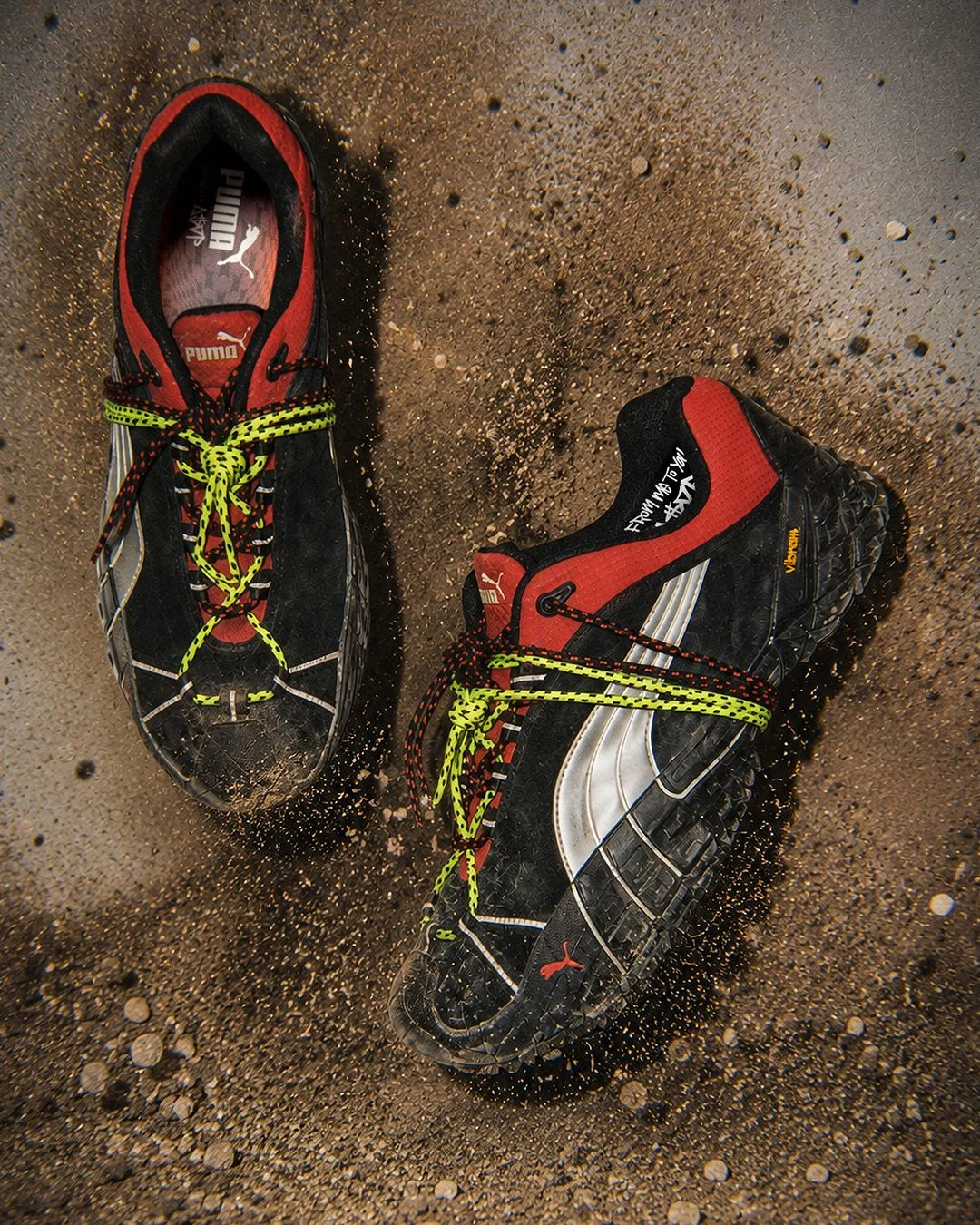
The intersection of high-fashion sensibility and gritty streetwear has long been the playground of Rakim Mayers, known globally as A$AP Rocky. Recently, while navigating the whirlwind of his "Don’t Be Dumb" world tour, the Harlem-born rapper and fashion icon took a moment to discuss his latest creative endeavor from a Zoom call in Europe. The conversation, punctuated by a near-miss encounter with a large bee, revealed a man deeply entrenched in a career renaissance. As Rocky balances the roles of a critically acclaimed artist, one-half of the world’s most watched power couple alongside Rihanna, and a creative director for brands like Ray-Ban and Puma, he remains laser-focused on disrupting the footwear industry. His latest weapon of choice is the Puma Straycat, a silhouette that bridges the gap between obscure archival performance gear and the avant-garde aesthetics of modern street culture.
The Straycat is not a design birthed from a vacuum; rather, it is a calculated resurrection of a deep-cut relic from Puma’s 2005 catalog: the Ouninpohja Explorador II. To the uninitiated, the original shoe was a "gorpy" low-cut hiker, named after one of the most famous and dangerous stages of the Rally Finland. It possessed a unique DNA that blended rugged outdoor utility with the silhouette of a sneaker-moccasin. In the hands of Rocky and the Puma design team, this obscure hiker has been "freaked" into something significantly more aggressive and visually arresting. Rocky’s vision for the Straycat was to create a piece of footwear that satisfied the duality of the modern consumer—someone who demands the technical specifications of a trail shoe but requires the aesthetic "flex" of high-end streetwear.
At the heart of the Straycat’s design is a massive, chunky sole unit provided by Vibram. For decades, Vibram has been the gold standard for performance outsoles, synonymous with durability and grip in the most punishing outdoor environments. By integrating a Vibram sole, Rocky ensures that the Straycat isn’t just a "fashion" shoe; it possesses the legitimate bona fides required for actual hiking. However, the proportions are intentionally exaggerated, leaning into the "maximalist" trend that has dominated the sneaker landscape over the last few years. One of the most striking features of the Straycat is its complex multi-lacing system. This isn’t merely decorative; the laces are designed to wrap around the bottom of the sole near the arch of the foot before being secured at the top. This "wrap-around" construction creates a silhouette that is distinctively "one-of-one," offering a level of visual complexity that helps Puma stand out in an industry often criticized for its repetitive designs.

Rocky’s obsession with what he calls "archival revival" is a driving force behind his partnership with Puma. In an era where the market is saturated with endless iterations of the Nike Dunk or the Adidas Samba, Rocky believes there is a treasure trove of "sleepers" within Puma’s back catalog. He points to the dominance of brands like Nike and Adidas, noting that while they have mastered the art of nostalgia through catalogs like Eastbay, Puma possesses an equally rich history that has remained largely untapped by the mainstream hype machine. By digging beyond the ubiquitous Puma Suedes and Clydes, Rocky is positioning himself as a curator of the "unknown," bringing forgotten 20-year-old designs into the contemporary spotlight.
This strategy aligns perfectly with a broader shift in consumer behavior. Over the last three years, there has been a noticeable fatigue regarding the "Big Two" of the sneaker world. Sneakerheads and fashion enthusiasts alike have begun looking toward the margins, fueling the meteoric rise of brands like Asics, New Balance, and Saucony. These brands have found success by leaning into their heritage performance models and allowing visionary collaborators to reinterpret them for a lifestyle audience. Puma, under the creative guidance of Rocky and their partnership with Formula 1, is aiming to capture this same lightning in a bottle. The Straycat represents a bold step into the "Gorpcore" arena—a fashion movement characterized by wearing functional outdoor gear in urban settings—but it does so with a hip-hop edge that feels authentic to Rocky’s Harlem roots.
During his discussion with GQ, Rocky also touched upon the politics of the fashion industry, expressing a desire for more "unity" among the major players. He voiced a critique of the standard industry practice where massive corporations collaborate with smaller, "niche" brands primarily to exploit their cultural capital or "wave." Rocky proposed a more radical idea: Why don’t the "Big Houses" collaborate with each other? He questioned why the industry remains so siloed and competitive to the point of stagnation, suggesting that a collaboration between giants like Nike and Puma would be the ultimate disruption. While he admitted with a laugh that such a business strategy is likely why he isn’t a corporate CEO, his perspective highlights a growing sentiment among creatives that the traditional rules of brand competition are becoming obsolete in a globalized, hyper-connected market.
The "Don’t Be Dumb" era of A$AP Rocky’s career is defined by this kind of fearless experimentation. Whether it is his work as a brand ambassador for Chanel or his creative direction at Ray-Ban, he is consistently pushing the boundaries of what is expected from a musician. His partnership with Puma, however, feels particularly personal. It is a continuation of a legacy of Black artists influencing global style, but with a level of executive control that was rarely afforded to previous generations. By taking the lead on the Straycat, Rocky isn’t just putting his name on a shoe; he is directing the narrative of how a heritage brand like Puma evolves for the next generation.

The Straycat’s technical details further emphasize this evolution. The upper features a mix of durable synthetic materials and mesh, ensuring breathability while maintaining the structural integrity needed for the "trail shoe" feel Rocky desired. The colorways are expected to lean into both earthy, utilitarian tones and more vibrant, "street-ready" palettes, reflecting the shoe’s dual purpose. The inclusion of the "moccasin DNA" from the original Ouninpohja Explorador II provides a soft, sock-like fit that contrasts with the heavy-duty Vibram exterior, offering a level of comfort that makes it viable for all-day wear in the city.
From a market perspective, the Puma x A$AP Rocky Straycat is priced competitively at $150. In a landscape where high-fashion collaborations often push toward the $500–$1,000 range, this price point makes Rocky’s vision accessible to a wider audience. It is a strategic move that allows the shoe to penetrate the "street visibility" market Rocky mentioned, ensuring that the Straycat becomes a common sight on the feet of youth subcultures rather than just a collector’s item sitting on a shelf.
As the "Don’t Be Dumb" tour moves across Europe, the Straycat serves as a physical manifestation of Rocky’s current creative state: rugged, experimental, and deeply rooted in a love for the "ugly-cool" aesthetics of the early 2000s. It is a reminder that in the world of fashion, nothing is ever truly dead—it is simply waiting for the right person to find it in the archives and give it a new life. For A$AP Rocky, the Straycat is more than just a sneaker; it is a statement on the power of "archival revival" and a challenge to the industry to stop playing it safe. As the shoe hits retailers and Puma’s online store, it marks the beginning of a new chapter for the brand, one where the forgotten "sleepers" of the past become the icons of the future. The bee that nearly took out Lord Pretty Flocko during his interview might have missed its mark, but with the Straycat, it appears A$AP Rocky has hit his.
