
 By admin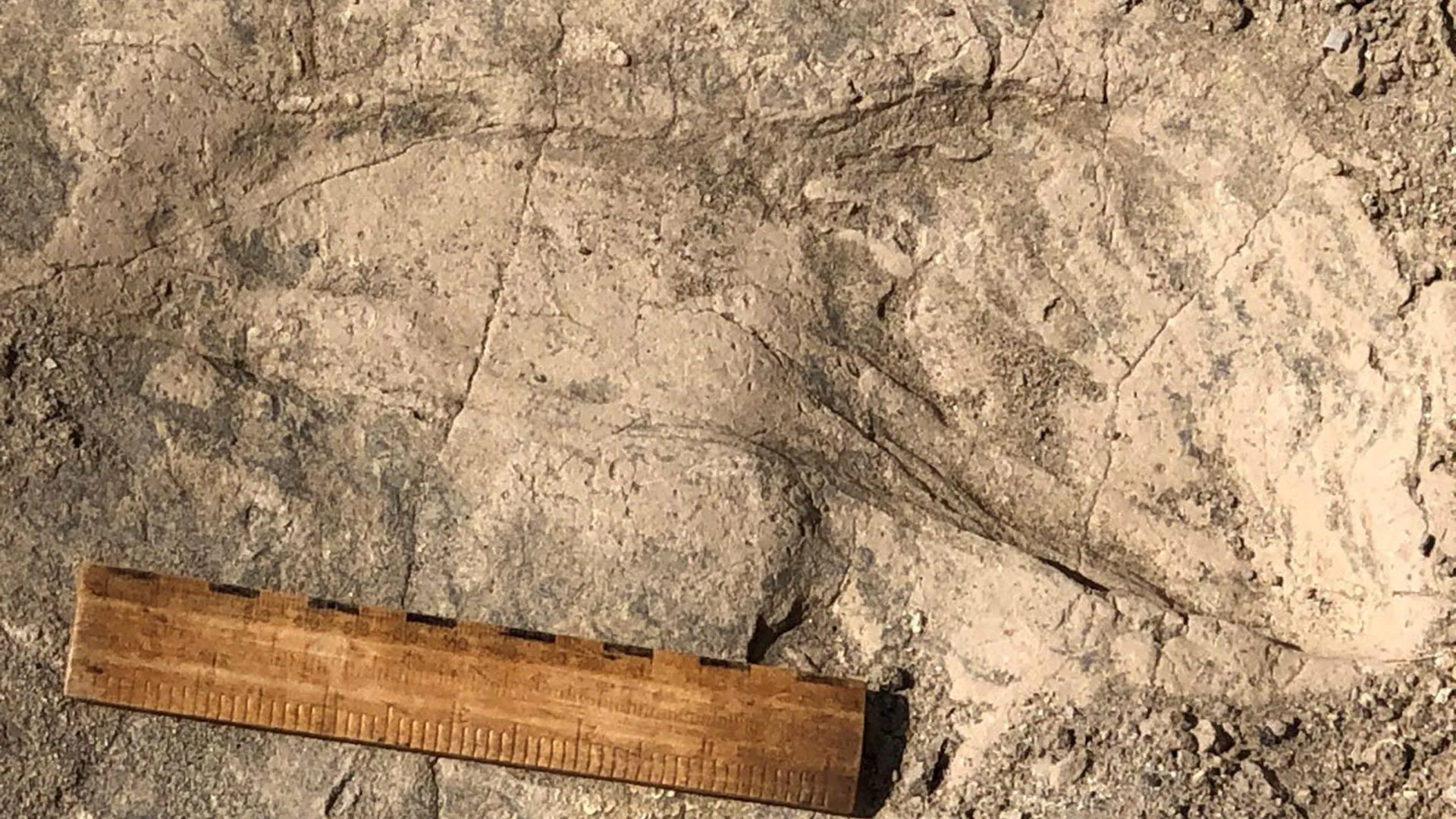
The international team, comprising researchers from institutions in the US and Kenya, meticulously analyzed the trackways, concluding that they were likely made by eight Paranthropus boisei individuals, all occupying the same locale at roughly the same time. This collective presence is a particularly rare find, suggesting a group interaction rather than individual meandering. What immediately struck researchers was the apparent size of several trackmakers, indicating a stature considerably larger than earlier estimates for Paranthropus boisei body size, which had previously been based on a limited and often fragmentary fossil record.
Unearthing a "Robust" Hominin’s True Stature
For decades, our understanding of Paranthropus boisei has been largely dictated by its distinctive cranio-dental features. Known colloquially as "Nutcracker Man" due to its exceptionally large jaws and massive molars adapted for crushing tough, fibrous plant material, most fossil evidence consisted of skulls, mandibles, and isolated teeth. These robust cranial adaptations led many researchers to hypothesize a relatively smaller body size compared to other contemporary hominins, particularly Homo erectus, which lived during the same general period and is widely considered a possible direct ancestor of modern humans. The scarcity of postcranial (below-the-neck) skeletal remains meant that reconstructions of Paranthropus boisei‘s overall physique were largely speculative.
However, the new footprints from the Turkana Basin have dramatically challenged these long-held assumptions. The research team employed advanced analytical techniques, some of which were developed by their team in 2024, to classify the footprints definitively as belonging to Paranthropus boisei. These techniques likely involved sophisticated biomechanical analysis, comparing the morphology of the foot impressions, the stride length, and gait patterns to known characteristics of various hominin species, including those inferred from existing skeletal fragments and comparative anatomy with modern primates and humans. Clues in the foot anatomy, combined with the apparent way the individuals moved, provided the crucial evidence for this classification.
The revelation of the trackmakers’ size came as a significant surprise. "The sizes of the footprints indicate human-like body sizes – up to 1.8 meters tall and around 75 kilograms," stated lead author Kevin Hatala, from Chatham University and an associated researcher of the Department of Human Origins at the Max Planck Institute for Evolutionary Anthropology in Leipzig. This new data suggests that Paranthropus boisei was not necessarily the diminutive hominin once imagined but could achieve statures comparable to, and in some cases even exceeding, that of early Homo erectus individuals. This finding reshapes our understanding of the physical landscape of the Early Pleistocene, suggesting a more complex interplay of body sizes and ecological niches among coexisting hominin species. A larger body mass would have implications for their locomotion, energy requirements, and potentially their interactions with the environment and other species. It could also suggest a broader range of available food resources or a different metabolic strategy than previously considered for a hominin primarily associated with a specialized diet.
A Rare Glimpse into Ancient Social Behavior
Beyond mere anatomy, fossil footprints offer an unparalleled opportunity to delve into the realm of "fossil behavior." Because a walking surface is typically formed and preserved over a very brief span of time, fossil tracks provide direct, incontrovertible evidence about movement patterns, group size, and, most intriguingly, possible social interactions. In the case of these Paranthropus boisei tracks, the collective presence of eight individuals strongly suggests they were traveling together, moving as a coherent group across the ancient landscape.
Even more remarkable is the demographic composition inferred from the footprints. Researchers concluded that most, if not all, of the eight trackmakers were likely adult males. There was no obvious evidence to suggest the presence of females or children among them. This specific grouping hints at a surprisingly complex social structure for Paranthropus boisei, a species often viewed through the lens of its specialized diet rather than its social intricacies.
"The fact that eight, mostly adult male, Paranthropus boisei individuals seemingly traveled together as a group, without females or children, hints at a complex social structure in this species," explained co-author Neil Roach of Harvard University. He elaborated on potential interpretations: "They may have lived in large groups, where males competed for mates, but also tolerated each other at times for safety in a dangerous environment." This hypothesis opens up fascinating avenues for comparison with extant primate societies. For instance, some primate species, like chimpanzees or gorillas, exhibit male-bonding behaviors, forming coalitions for various purposes, including territorial defense, hunting, or navigating dangerous terrains. Bachelor groups, where non-breeding males coalesce, are also observed in some species. The "dangerous environment" of 1.4 million years ago would have included formidable predators such as saber-toothed cats (e.g., Megantereon, Homotherium), large hyenas, and other carnivores, making group travel a significant advantage for protection and resource acquisition.
This possibility adds an entirely new dimension to what scientists know about Paranthropus boisei. While it shared its world with early members of the genus Homo, including Homo erectus, Paranthropus followed a distinctly different evolutionary path, characterized by its extreme cranio-dental specialization. This discovery suggests that despite their dietary divergence, their social complexities might have been more intricate than previously imagined, perhaps paralleling certain social strategies employed by early Homo or even foreshadowing aspects of later hominin social organization. The ability to infer such nuanced social dynamics from mere foot impressions underscores the profound value of ichnology (the study of trace fossils) in paleoanthropology.
The Enduring Allure of the Ancient Lakeshore
The discovery of these Paranthropus boisei footprints is not an isolated event but rather part of a much larger collection of hominin footprints found in the ancient lakeshore environments around Lake Turkana. This recurring pattern of hominin presence in such settings strongly suggests that these areas were crucial habitats, offering vital resources that repeatedly drew extinct human relatives back over immense spans of time.
The Lake Turkana Basin, located in the East African Rift Valley, has long been recognized as one of the world’s most prolific and important regions for understanding human evolution. Its geological history, characterized by active volcanism and fluctuating lake levels, has created ideal conditions for the preservation of fossils, including hominin remains and trace fossils. The paleoclimate of the Turkana Basin 1.4 million years ago would have been different from today, likely featuring a more extensive and dynamic lake system, surrounded by diverse ecosystems ranging from woodlands to grasslands. Such environments would have provided abundant water, crucial for survival in a semi-arid landscape, as well as a rich array of food resources. These could have included aquatic plants, fish, shellfish, and a variety of terrestrial animals attracted to the water’s edge, offering opportunities for both scavenging and hunting. The dense vegetation along the shore could also have offered shelter from predators and the elements.
The repeated presence of hominins at these lakeshores is a testament to the enduring value of these environments. "To me, it is amazing that we have the same kind of lake margin deposits in two areas of East Turkana that are 40 kilometers apart, at about the same age," noted co-author Kay Behrensmeyer of the Smithsonian Institution. This geographical spread of synchronous track sites emphasizes a widespread reliance on these lacustrine environments across the broader region.
Researchers have now documented hundreds of hominin footprints at more than a half-dozen sites across the Turkana region. Understanding precisely why these tracks survived for millions of years is as important as understanding who made them. The geological conditions necessary for footprint preservation are quite specific: a fine-grained, moist substrate (like mud or wet sand) capable of holding an impression, followed by rapid and gentle burial by another layer of sediment (such as volcanic ash or silt) before erosion or disturbance can destroy the tracks. These conditions were clearly met repeatedly in the ancient Turkana Basin. Behrensmeyer predicts that, "if we can understand what geological conditions allowed these tracks to be preserved, we should know more about why hominins continued to return to the lake shore environment over more than 100,000 years." This understanding could reveal critical information about the paleoenvironment, the stability of these resource-rich zones, and the long-term ecological strategies of early hominins.
Building a Comprehensive Record of Life 1.4 Million Years Ago
The research team is committed to furthering these remarkable investigations, with plans to return to Kenya this year to continue exploring the fossil footprint sites. Each newly documented surface represents a distinct moment from the distant past, offering researchers a unique tapestry of evidence about anatomy, walking behavior, social interactions, and environmental conditions that traditional skeletal fossils alone often cannot provide.
Lead author Kevin Hatala aptly describes this ongoing endeavor: "Each site represents a snapshot of our past, and we are quickly building a photo album with several different windows to hominin anatomy, locomotion, behavior, and environments during the Early Pleistocene." This "photo album" metaphor vividly illustrates the cumulative power of these discoveries, each adding a new page to our understanding of a critical period in human evolution.
These discoveries are also reinforcing the unparalleled importance of the Lake Turkana region as one of the world’s richest areas for studying human evolution. The basin has yielded iconic finds such as "Turkana Boy" (Homo erectus), and numerous other fossil hominins, cementing its status as a "cradle of humanity." Co-author Purity Kiura of the National Museums of Kenya underscored this global significance: "The discovery of these fossil footprints along the margins of Lake Turkana reinforces the region’s global importance in understanding human evolution, preserving remarkable evidence of how our ancient relatives lived 1.4 million years ago. It further strengthens Kenya’s position as one of the world’s leading paleoanthropological landscapes and highlights our responsibility to protect this irreplaceable heritage." Her words serve as a powerful reminder of the scientific and cultural value inherent in these ancient landscapes and the imperative to conserve them for future generations.
By combining new, sophisticated analytical methods with unusually well-preserved footprint sites, researchers are gaining access to details that bones alone often cannot provide. These ancient tracks are not just fossilized impressions; they are direct imprints of life itself, revealing how extinct human relatives were built, how they moved through their world, where they chose to spend their time, and even the complex ways they may have interacted with one another. The footprints of Paranthropus boisei from northern Kenya represent a profound leap forward in our quest to reconstruct the intricate tapestry of hominin existence during the Early Pleistocene, painting a more vibrant and detailed picture of our ancient ancestors and their lost worlds.
