
 By admin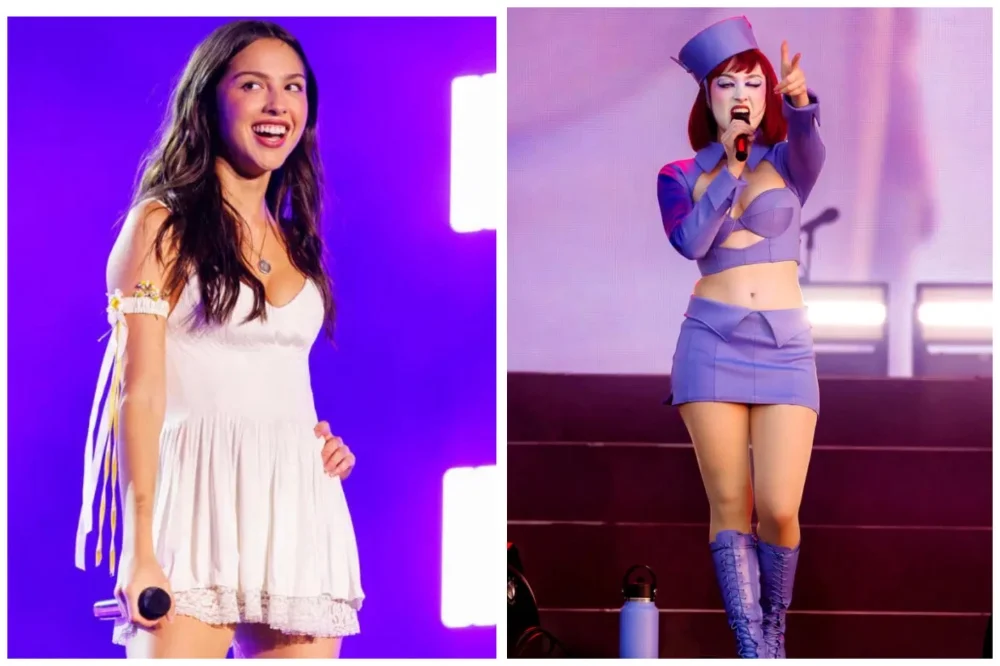
The inaugural Daisy Chain Fields festival, held this past Saturday in Irvine, California, proved to be a monumental success, defying the sweltering August heat and humidity that tested the endurance of its 45,000 attendees. The oppressive 95-degree Fahrenheit temperatures, coupled with a staggering 80% humidity, transformed the festival grounds into a glistening testament to dedication, with perspiration stains becoming the norm and dry patches a rarity. The logistical challenge of navigating between two intensely programmed stages, a journey that demanded a constant 12-minute trek, further amplified the immersive, albeit physically demanding, experience. Yet, despite standing for over ten hours and enduring the relentless elements, the prevailing sentiment, even as fans found themselves gridlocked in exit lots, was a singular, fervent question: "How soon do we get to do this again?"

The resounding answer, delivered by festival creator and headliner Olivia Rodrigo herself, was a beacon of hope for eager fans: the Daisy Chain Fields festival is not a fleeting event. "We’ll reconvene next year," Rodrigo announced to the enthusiastic crowd, confirming that the festival is slated for a return in 2027, promising another meticulously curated, expertly executed, and profoundly spirit-rewarding celebration of female artistry. While the festival’s timing in the peak of summer presented a meteorological challenge, the organizers are reportedly exploring options for future editions to coincide with more temperate weather patterns in Southern California, a nod to the increasing unpredictability of regional climates.
The day-long musical marathon, spanning an impressive ten and a half hours, featured a diverse lineup of 14 acts, augmented by three surprise guest stars. The bill showcased an extraordinary breadth of musical styles and eras, united by the singular, yet powerful, criterion of female leadership. This deliberate curation served as a powerful statement, celebrating the multifaceted contributions of women to the music industry, from the foundational influences of the Lilith Fair era to the current vanguard of pop and rock.

The festival’s spiritual predecessor, Lilith Fair, was implicitly honored when Sarah McLachlan, the iconic instigator of the legendary music festival, took the stage. Her appearance alongside Olivia Rodrigo for duets of "Building a Mystery" and the emotionally resonant "Angel" (dedicated to Dolly Parton, with McLachlan’s characteristic permission to "cry") served as a poignant passing of the torch, a symbolic endorsement of the tradition’s continuation. The musical lineage was further cemented with the highly anticipated appearance of Stevie Nicks, a veritable ambassador from the 1970s rock pantheon, who joined Rodrigo for a set that transcended generational boundaries.
Nicks’ inclusion, while an outlier in terms of her originating decade, underscored a compelling narrative being woven throughout the festival: the assertion that the 1990s and the 2020s represent two of the most fertile and impactful decades for women in popular music. While historical complexities undoubtedly exist, the performances on Saturday provided ample evidence to support this claim. The respective eras of Alanis Morissette, who also made a surprise guest appearance, and Olivia Rodrigo were presented not merely as significant periods, but as arguably the "greatest generations" of female artists, a testament validated by the sheer quality and cultural resonance of their music.

The festival’s crescendo was undeniably reached during the climactic main stage sets by Olivia Rodrigo and Chappell Roan. These two artists, now firmly established as titans of contemporary pop, delivered performances that cemented their status as the preeminent female pop figures of their generation. Between them, they are responsible for a significant portion of the decade’s most critically acclaimed albums, including Roan’s debut and all three of Rodrigo’s LPs, culminating in her latest masterpiece, "You Seem Pretty Sad for a Girl So in Love." While a shared stage moment between these two powerhouses would have been an extraordinary highlight, their consecutive, stellar performances served as a powerful coronation and celebration of their collective reign.
Beyond the dazzling main stage spectacles, the festival’s true heart might have been found on its secondary stage, the Marigold Stage, where artists who profoundly influenced Rodrigo and her contemporaries were given their due. The raw energy of Bikini Kill’s punk anthems resonated powerfully, with the younger generation in the audience singing along in unison, a sight that brought visible awe to lead singer Kathleen Hanna. Reflecting on their early days playing to sparse crowds in Orange County, Hanna expressed her astonishment at the band commanding such a large and engaged audience, primarily comprised of women, a testament to how far feminist ideals and female empowerment in music have progressed since the 1990s. The inclusion of three local women who formed their own band after being inspired by Bikini Kill added a deeply personal and poetic layer to their performance.

The ’90s magic continued on the Marigold Stage with electrifying sets from The Breeders and Garbage. Despite the relentless afternoon heat, Kim Deal and her bandmates confidently launched into their hit "Cannonball" midway through their set, showcasing their enduring appeal. Their performance also included a charmingly anachronistic country-western homage, "Drivin’ on 9," a delightful surprise that added another dimension to their eclectic sound. Shirley Manson of Garbage delivered her signature passionate monologues between songs, touching upon the band’s pioneering exploration of LGBTQ+ themes long before the terminology became widely recognized, a testament to their prescient lyrical depth.
A potential pitfall for any large-scale festival is the risk of attendees claiming prime spots and remaining stationary for the entire duration. However, Daisy Chain Fields cleverly mitigated this by fostering a dynamic flow of attendees between the two main stages. The constant migration, occurring every 30 to 40 minutes, allowed for a diverse audience experience and highlighted the enthusiastic engagement of younger attendees with the legends of ’90s female rock. The Marigold Stage, while predominantly featuring ’90s acts, also showcased contemporary artists, with the evening concluding with the laid-back, ethereal sounds of Not for Radio, the side project of The Marías’ singer Maria Zardoya, a perfect sonic transition as dusk settled over the park.

Contrasting yet equally captivating performances defined the Dandelion Stage. Mitski, an artist whose introspective and complex lyricism often lends itself to more intimate settings, delivered a surprisingly energetic and dynamic set. Her performance, culminating in the anthemic "That White Cat," demonstrated her ability to command a massive audience with raw emotion and powerful stage presence. Mitski’s artistry lies in her unflinching portrayal of female vulnerability, need, and the often-complicated dynamics of self-worth, yet her commanding stage persona exudes an unshakeable strength, leaving no doubt about her resilience.
Following Mitski, Doechii exploded onto the stage with a visually stunning and audaciously theatrical performance. Her and her dancers’ body makeup, rendered in vibrant shades of red and pink, created a striking tableau that mirrored the evolving energy of the festival. Doechii, who primarily performs with tracks rather than a live band, proved herself a formidable show-woman, injecting a dose of hip-hop and R&B flair into the predominantly pop-rock lineup. Her spirited interaction with the Irvine audience, playfully questioning the heat and referencing her Florida roots, endeared her to the crowd and showcased her magnetic charisma.

Chappell Roan’s set was a masterclass in visual storytelling and electrifying performance. Her bold, new stylistic direction, featuring a purple ensemble reminiscent of a retro-futuristic stewardess uniform, commanded immediate attention. With her hair now a sleek bob and her aura radiating a potent, "hotter-to-go" vibe, Roan delivered a high-energy performance that included impressive high kicks and flawless vocal execution of her hit-laden catalog. She playfully warned the audience that her set would consist solely of her biggest hits, a testament to the strength and coherence of her recent album, "Good Luck, Babe." This focused approach ensured a consistently captivating experience, solidifying her status as a leading figure in contemporary pop.
Olivia Rodrigo’s headlining set, an extended hour and twenty minutes, significantly surpassed the duration of other performances, largely due to the inclusion of three special guests and the debut of several tracks from her latest album, "You Seem Pretty Sad for a Girl So in Love." Notably, her guests were announced in advance, allowing for their inclusion on festival merchandise, a decision that proved prescient when Karen O of Yeah Yeah Yeahs had to cancel her planned cameo due to an emergency. The surprise guest of the evening was Alanis Morissette, who joined Rodrigo for a powerful duet of "Ironic." Rodrigo demonstrated remarkable versatility and vocal prowess, effortlessly harmonizing with Morissette, McLachlan, and finally, Stevie Nicks for a poignant rendition of "Landslide" that closed out the night.

Prior to Rodrigo’s electrifying performance, she was joined on stage by Melinda French Gates, who announced a groundbreaking philanthropic partnership. Gates pledged to match Rodrigo’s previously announced $10 million donation to ten chosen charities, bringing the total philanthropic contribution to a remarkable $20 million. Rodrigo’s palpable excitement was evident, amplified by the successful and smooth execution of the festival’s inaugural year. The setlist offered a substantial preview of her upcoming tour, featuring seven tracks from "You Seem Pretty Sad for a Girl So in Love," alongside the newly released non-album single "Serena Joy." While the inclusion of established hits like "Good 4 U" was met with enthusiastic reception, the anticipation for live premieres of more "Pretty Sad" tracks was palpable, underscoring the album’s critical acclaim and the audience’s deep connection to its emotional depth.
Even after the final notes faded, Stevie Nicks remained on stage, not to perform another song, but to express her admiration for Rodrigo’s accomplishment. Her sentiments echoed the appreciation voiced by many of the day’s performers, all recognizing the immense undertaking and successful execution of the festival.

While Daisy Chain Fields marks a significant moment in the revival of all-female-led festivals since the demise of Lilith Fair, it’s worth noting other notable initiatives. Brandi Carlile’s annual all-female headliner festival in Mexico, though requiring significant travel, has fostered a dedicated following. Similarly, the All Things Go festival has increasingly become a showcase for female artists, with its upcoming D.C. edition boasting an extensive lineup of talented women, humorously juxtaposed with the inclusion of Father John Misty and Ryan Beatty as token male performers.
However, it is the involvement of a chart-topping superstar like Olivia Rodrigo that has propelled Daisy Chain Fields into immediate cultural relevance, generating significant buzz and ensuring a sell-out with a palpable sense of FOMO. The festival’s success, culminating in Rodrigo and Nicks’ joint rendition of "Landslide," served as a powerful affirmation of women’s dominance in the music industry in 2026. Unlike the aspirational push for female representation during the Lilith Fair era, Daisy Chain Fields felt like a joyous acknowledgment of an established reality: women are undeniably at the pinnacle of contemporary music.

As the festival concluded and the immense crowd began its exodus, a palpable sense of communal bliss permeated the air, undeterred by the logistical challenges. The event not only celebrated musical talent but also served as a powerful testament to the evolving landscape of gender representation in the arts. The overwhelming sentiment was one of elation and anticipation for the future, with fans already speculating about future headliners and the inevitable demand for tickets. The question on everyone’s lips is clear: when is Daisy Chain Fields happening again, and can we secure our spot for what promises to be an even more spectacular return?
