
 By admin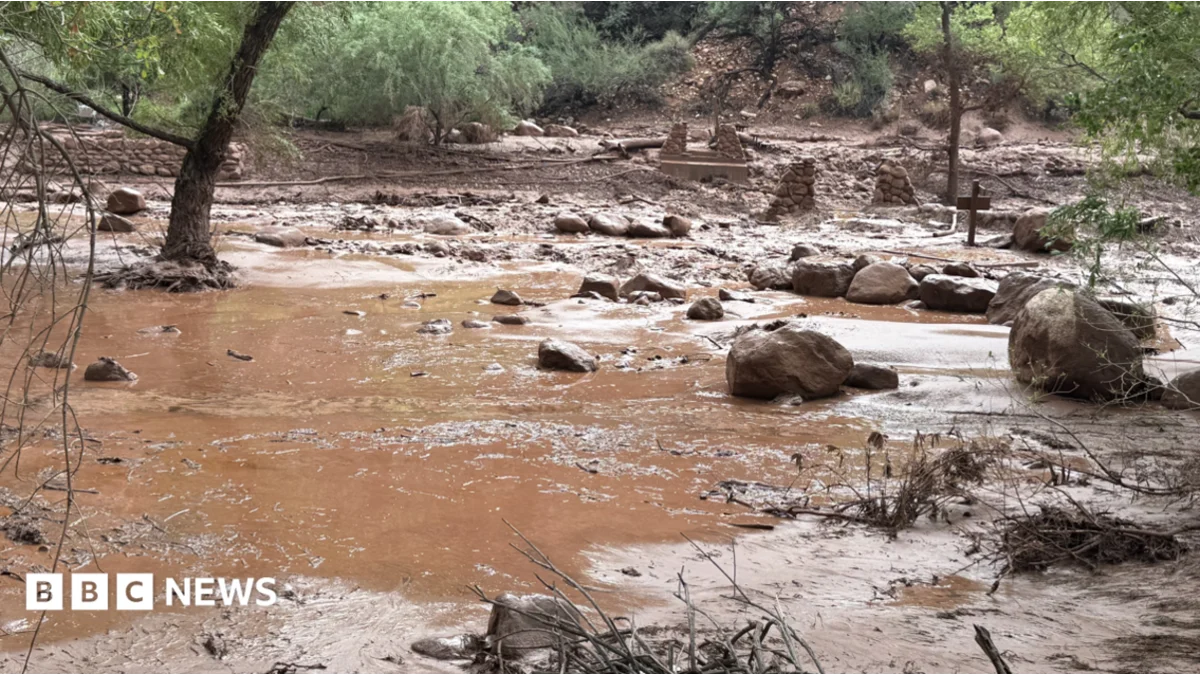
In a harrowing turn of events, a sudden and violent flash flood has devastated parts of the Grand Canyon, leaving an estimated more than 20 individuals missing or unaccounted for. The deluge struck with terrifying speed at approximately 2:30 PM local time (10:30 PM BST) on Saturday, primarily impacting the Bright Angel Canyon and the historic Phantom Ranch area, according to official reports from the National Park Service (NPS). The scale of the disaster is still being assessed, with rescue operations underway and the full extent of the human toll yet to be determined.
As of Sunday morning, 62 people have been successfully airlifted out of the affected zone, with authorities anticipating further evacuations as the situation unfolds and access is re-established. Miraculously, no serious injuries have been reported thus far, a testament to the swift response of park rangers and emergency services, as well as the fortunate timing of the event for many who were able to seek higher ground.
One of the survivors, Nikki Baggs, 41, vividly recounted the terrifying ordeal to the BBC, describing the sudden transformation from a picturesque day into a scene of panic and chaos. "The whole thing was terrifying," Baggs stated, her voice still bearing the tremor of recent trauma. "It was a beautiful day and then people were screaming, running." She was airlifted out of the canyon floor alongside her two friends, still grappling with the sheer disbelief of the event.
Baggs detailed how she and her companions had just settled into their accommodations at Phantom Ranch, a remote and iconic lodge nestled at the very bottom of the Grand Canyon, after dropping off their belongings. Eager to embrace the perfect weather, they ventured out, only to be caught completely off guard by the sudden surge of water. "Before we knew it, a flood of water was sweeping through the area," she recalled.
The immediate aftermath of the rain saw Baggs and her friends scramble for safety. Their initial attempt to find refuge at a picnic table proved short-lived as park rangers, their voices urgent and commanding, directed them to evacuate to a different ledge. There, huddled with other bewildered visitors, they waited for what felt like an eternity, the roar of the floodwaters a constant, menacing soundtrack, before finally being evacuated around 9:30 PM local time.
The planned enjoyment of a well-deserved steak dinner at Phantom Ranch, an experience Baggs and her friends had eagerly anticipated, was irrevocably altered. Instead of culinary delights, they found themselves profoundly grateful for the intervention of the park rangers. "It was a really uniquely coordinated effort," Baggs emphasized, highlighting the professionalism and efficiency of the rescue teams. "That’s what made us feel safe about all of it in an unsafe situation."
The flash flood event in the Grand Canyon is a stark reminder of the unpredictable and formidable power of nature, particularly in arid environments where sudden, intense rainfall can lead to catastrophic consequences. The NPS has a long history of managing the unique challenges presented by the Grand Canyon, a vast geological wonder that attracts millions of visitors annually. However, even with extensive planning and safety protocols, the sheer force of a flash flood can overwhelm even the most prepared.
Flash floods in desert regions, like the Grand Canyon, are a well-documented phenomenon. They are often triggered by intense thunderstorms that occur over a localized area. The dry, compacted soil of the desert is unable to absorb large amounts of water quickly, leading to rapid runoff. This runoff collects in canyons and arroyos, transforming normally dry streambeds into raging torrents within minutes. The topography of the Grand Canyon, with its steep walls and narrow canyons, exacerbates this effect, channeling water into concentrated, high-velocity flows.
The Bright Angel Canyon is one of the most popular hiking destinations within the Grand Canyon, known for its challenging trails and the historical significance of the Bright Angel Trail, which leads to Phantom Ranch. Phantom Ranch itself, established in 1922, is a beloved destination offering lodging, dining, and a connection to the canyon’s rich history. The fact that the flood occurred in such a frequented area underscores the potential for widespread impact on visitors.
The National Park Service employs a robust system of monitoring weather patterns and issuing warnings. However, the sudden and localized nature of some thunderstorms can make precise prediction and timely evacuation challenging. In this instance, the rapid onset of the flood meant that many visitors were caught by surprise. The NPS’s swift response, involving helicopters for evacuation and ground teams for coordination and immediate aid, was crucial in minimizing casualties.
The investigation into the precise cause of the flood will likely focus on meteorological data, including the intensity and duration of the rainfall in the upper elevations of the canyon that feeds into Bright Angel Creek. Understanding the specific weather patterns that led to this event will be vital for refining future forecasting and warning systems.
The missing individuals represent the most pressing concern for authorities. Search and rescue teams, comprised of experienced park rangers, volunteers, and potentially specialized search and rescue units, will be meticulously scouring the affected areas. Their efforts will be hampered by the rugged terrain and the ongoing assessment of flood damage. The hope is that those unaccounted for may have found safe haven in unforeseen locations or are awaiting rescue.
The economic and ecological impacts of such an event are also significant. Phantom Ranch, a vital hub for canyon visitors, will likely face substantial damage and closure for repairs. The delicate ecosystem of the Grand Canyon, already under pressure from tourism and climate change, could also be impacted by the floodwaters, which can carry debris and alter natural habitats.
This incident also raises important questions about visitor preparedness and education in such a dynamic environment. While the NPS provides information on potential hazards, the reality of a flash flood can be difficult to fully comprehend until experienced firsthand. The story of Nikki Baggs and her friends highlights the importance of heeding ranger instructions and being aware of one’s surroundings, especially when venturing into remote and potentially hazardous areas.
The coordinated rescue effort, described by Baggs as "uniquely coordinated," involved a complex logistical operation. Helicopters were essential for reaching stranded individuals and transporting them to safety, bypassing impassable trails and flooded areas. Ground crews worked to provide immediate assistance, assess the situation on the ground, and guide rescue efforts. The seamless collaboration between different agencies and personnel is a critical element in managing such large-scale emergencies.
The psychological impact on those who experienced the flood firsthand cannot be understated. The terror of being caught in a life-threatening situation, the uncertainty of the outcome, and the loss of personal belongings will leave lasting impressions. Support services for survivors, including counseling and assistance with immediate needs, will be crucial in the coming days and weeks.
As the Grand Canyon community and the wider public await further updates, the focus remains on the ongoing search for the missing and the continued efforts to ensure the safety of all visitors. This event serves as a powerful reminder of the untamed beauty and inherent dangers of one of the world’s most iconic natural wonders, and the critical importance of preparedness, vigilance, and the dedicated work of those who protect and serve within its vast expanse. The resilience of the human spirit, as exemplified by the survivors and the rescuers, will be tested in the days ahead as the full story of this devastating flash flood continues to unfold. The recovery process, both for the affected infrastructure and for the individuals involved, will be a long and arduous one.
