
 By Rifan Muazin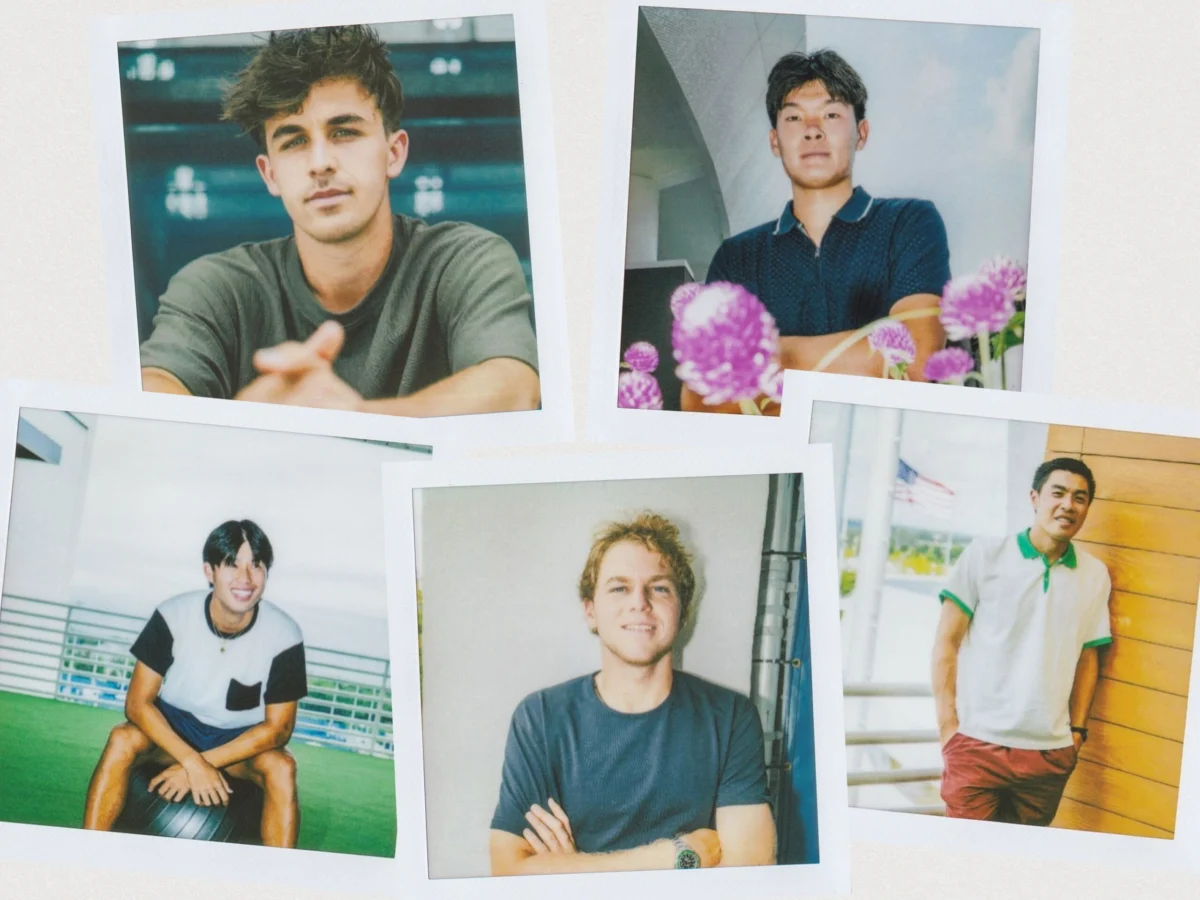
On August 13, 2024, the landscape of professional tennis shifted in a way that had not been witnessed in over two decades, signaling a potential end to the long-standing drought of American dominance in the sport. For the first time in 23 years, two American men faced off in the final of a Masters 1000 tournament—a tier of competition positioned just below the Grand Slams in terms of prestige, prize money, and critical ranking points. This historic encounter took place in Montreal at the National Bank Open, where 25-year-old Brandon Nakashima and 23-year-old Ben Shelton battled for the title. While Shelton ultimately prevailed, the tournament served as a coming-out party for the incredible depth currently defining the American men’s field. Nakashima, in particular, proved his resilience not just in Montreal but by following that performance with a semi-final run at the Cincinnati Open just days later.
For years, the narrative of American men’s tennis has been carried by a familiar quartet: Taylor Fritz, Frances Tiafoe, Tommy Paul, and more recently, Ben Shelton. These athletes have consistently held the spotlight, breaking into the top echelons of the ATP rankings and carrying the hopes of a nation that hasn’t seen a male Grand Slam champion since Andy Roddick hoisted the trophy at the US Open in 2003. However, the current era is defined by something more than just a few top-tier stars; it is defined by a burgeoning cohort of young talent breathing down the necks of the established veterans. This depth is arguably the strongest the United States has seen in decades, stretching from teenagers making their mark in the juniors to collegiate stars transitioning seamlessly into the professional ranks.
Among this new wave is 20-year-old Learner Tien, a player who has rapidly ascended the rankings to reach a career-high of world number 12 in the junior circuit before making waves in the pros. Alongside him is Michael Zheng, a standout talent whose development was honed in the legendary training grounds of Flushing Meadows and the competitive environment of Columbia University. Zheng, hailing from Montville, New Jersey, represents a growing trend of players who are utilizing the American collegiate system as a high-performance springboard rather than a detour. As the main draw of the US Open approaches, the atmosphere in the American camp is one of cautious but palpable electricity. There is a real sense that a homegrown breakthrough is not just a possibility, but an inevitability.
The ease with which these young players are entering the professional fray has caught the attention of experts and former players alike. Chris Eubanks, an American player and current analyst for the Tennis Channel and ESPN, observes that the traditional barriers between junior or college tennis and the ATP Tour are beginning to dissolve. According to Eubanks, the game is evolving to a point where newcomers are able to make the transition fairly quickly and, perhaps more importantly, remain consistent from the moment they arrive. This immediate impact is a departure from previous generations, where young players often spent years toiling in the Challenger circuits before finding their footing at the tour level. The ability of players like Nakashima and Shelton to compete for Masters 1000 titles so early in their careers suggests a higher baseline of readiness.
Prakash Amritraj, a veteran host for the Tennis Channel, echoes this sentiment, noting a definitive momentum shift in the sport. He points out that many of these young men are moving up the rankings at an accelerated pace, fueled by a collective confidence that stems from seeing their peers succeed. However, Amritraj also offers a word of caution regarding the "higher altitude" of elite tennis. He likens the journey to the top of the rankings to climbing Mount Everest, where the air becomes thinner and the pressure more suffocating. While the futures of players like Tien, Zheng, and Alex Michelsen appear unbelievably bright, the challenge lies in adapting to the rarefied air of the Top 10, where every match is a mental and physical marathon.
The shadow of the "Slam drought" is a constant presence in any discussion regarding American tennis. It has been 23 years since Roddick’s 2003 victory, a stretch of time that has seen the rise and fall of several "next big things" in the American game. In 2024, Taylor Fritz came tantalizingly close to ending the wait, reaching the final of the US Open before falling to Jannik Sinner. Despite this ongoing winless streak in majors, Eubanks argues that the drought is more of a media talking point than a psychological burden for the players themselves. While every player dreams of winning a Grand Slam, Eubanks suggests that the long stretch of time since the last American victory has no real bearing on the day-to-day performance or the internal goals of the current roster.

To provide perspective, Eubanks points out that the United States is not alone in its struggle to produce a male Grand Slam champion in the modern era. France, a nation with an equally deep tennis culture and a history of producing elite athletes, has not seen a male player win a major since Yannick Noah’s triumph at Roland Garros in 1983. The dominance of the "Big Three"—Roger Federer, Rafael Nadal, and Novak Djokovic—effectively locked out almost an entire generation of players from every corner of the globe. With that era finally drawing to a close, the vacuum at the top of the sport is being filled by a more diverse array of contenders, and the Americans are positioned better than most to capitalize on this power shift.
During the lead-up to the US Open, a closer look at the individuals comprising this new vanguard reveals a diverse range of styles and personalities. In Mason, Ohio, the site of the Cincinnati Open, the next generation gathered to showcase their skills. Among them was Learner Tien, who stands out not just for his game but for his quiet, effortless cool. At 5’11”, Tien does not possess the towering frame often associated with modern power hitters, but he compensates with a high tennis IQ and exceptional agility. As a left-hander, he utilizes a heavy topspin forehand and a deceptive slicing serve to keep opponents off balance. His "prescience" on the court—an uncanny ability to anticipate an opponent’s next move and build points with surgical precision—makes him a dangerous floater in any draw. His run to the quarterfinals of the Australian Open earlier this year served notice that he is ready for the world stage.
Joining Tien is Alex Michelsen, a player whose rise has been nothing short of meteoric. Michelsen’s game is built on a foundation of modern power, featuring a massive serve and a backhand that can dictate play from the baseline. Then there is Zachary Svajda, a two-time winner of the USTA Boys’ 18s National Championship, whose grit and baseline consistency have made him a mainstay in the qualifying rounds of major tournaments. These players, along with Michael Zheng and Brandon Nakashima, form a "dossier of singular ascendant talent" that provides the U.S. with multiple options for a deep run in any given week.
The technical evolution of these players is matched by their mental fortitude. Brandon Nakashima’s performance in Montreal and Cincinnati highlighted a "mettle" that was previously questioned. Often described as stoic or even robotic, Nakashima’s calm demeanor is now seen as his greatest asset, allowing him to navigate the high-pressure moments of a Masters 1000 final without crumbling. Meanwhile, Ben Shelton’s explosive energy and charismatic presence on court have made him a fan favorite, bringing a level of showmanship back to the American game that hasn’t been seen since the days of Andre Agassi.
As the tennis world turns its attention to the hard courts of New York, the narrative is no longer just about when the drought will end, but about who will be the one to end it. The sheer volume of high-quality American players means that the probability of success has increased exponentially. With established stars like Fritz, Paul, and Tiafoe providing a consistent presence in the second week of Slams, and the "new wave" of Nakashima, Shelton, Tien, and Zheng pushing them from below, the internal competition within American tennis is at an all-time high.
This internal rivalry is perhaps the most significant factor in the recent surge. When one American succeeds, it provides a blueprint and a motivation for the others. Shelton’s semi-final run at the 2023 US Open and Fritz’s 2024 final appearance have demystified the later stages of Grand Slams for their compatriots. As Prakash Amritraj noted, it is likely the most exciting time for American men’s tennis in twenty years. The "Mount Everest" of a Grand Slam title remains the ultimate goal, but for the first time in a long time, the climbers are well-equipped, the team is deep, and the summit is finally within sight. The media talking point of a "drought" may soon be replaced by a discussion of a new American dynasty.
