
 By admin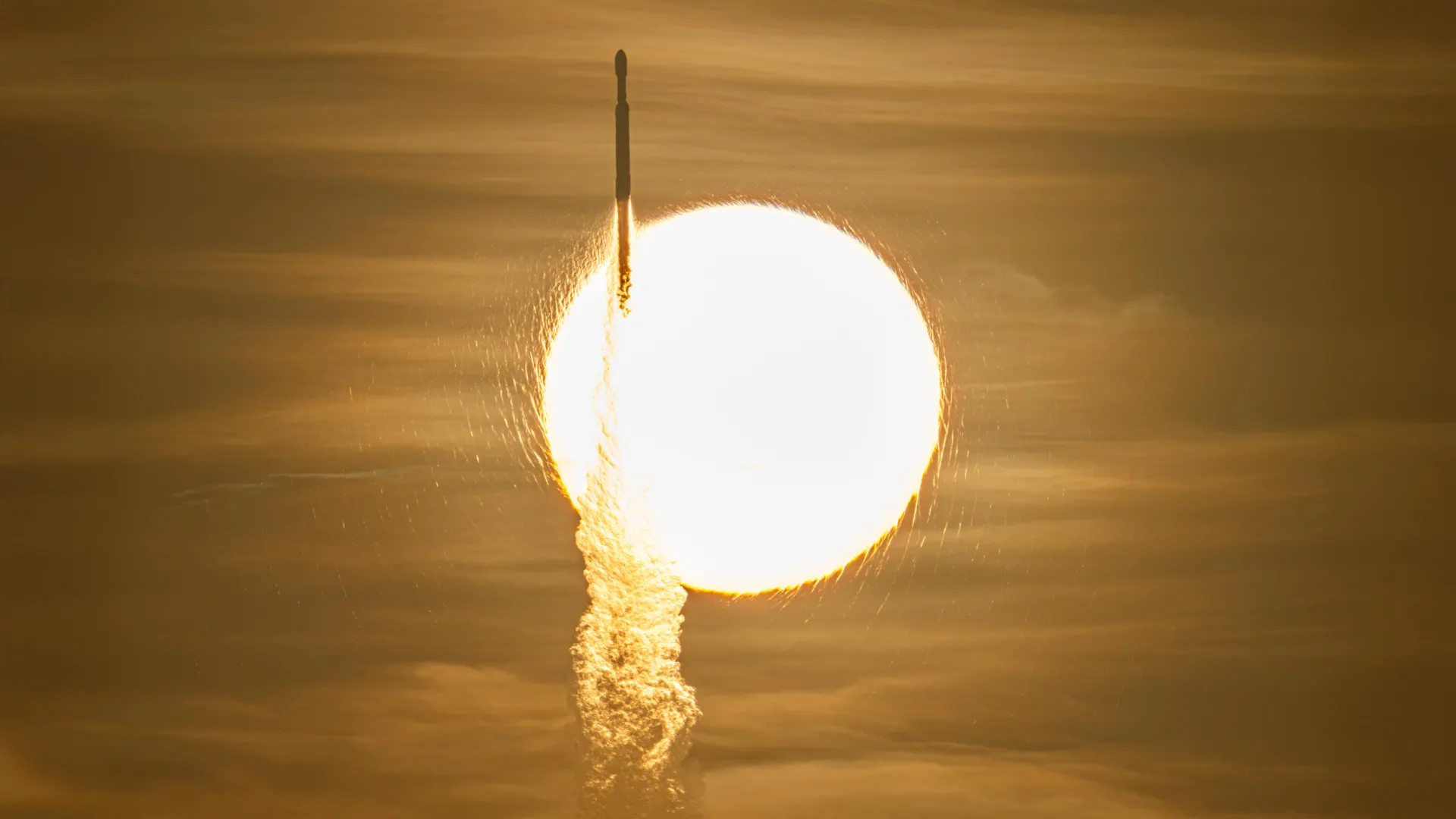
NASA’s groundbreaking Nancy Grace Roman Space Telescope has commenced its crucial three-month transit, a voyage spanning approximately one million miles, as it makes its way to its designated orbital station. The observatory successfully launched at 7:26 a.m. EDT on Sunday, propelled skyward by a powerful SpaceX Falcon Heavy rocket from the historic Launch Complex 39A at NASA’s Kennedy Space Center in Florida. This launch marks a significant milestone, not only for astrophysics but also as a testament to efficient program management, with the mission notably delivered ahead of schedule and within budget – a rare and commendable achievement for a project of this magnitude.
Once it reaches its operational orbit and undergoes a rigorous commissioning phase, the Roman Space Telescope is poised to revolutionize our understanding of the cosmos. Its unique design marries an exceptionally sharp infrared vision with an unprecedentedly wide field of view. This powerful combination will allow astronomers to conduct vast surveys of immense cosmic regions, simultaneously peering back through billions of years of cosmic history to observe the universe in its infancy. The telescope’s primary scientific objectives are ambitious and address some of the most profound mysteries in modern cosmology: the enigmatic nature of dark matter and dark energy, and the comprehensive study of worlds beyond our solar system, known as exoplanets. Beyond these core investigations, Roman’s sweeping observations are also expected to yield a wealth of unanticipated discoveries, pushing the boundaries of astronomical knowledge in unforeseen directions.
"Roman is exactly the kind of success story we want to see across NASA," affirmed NASA Administrator Jared Isaacman, highlighting the project’s exemplary execution. "Delivered ahead of schedule and on budget, this mission reflects more than a decade of dedication from the NASA workforce and our industry partners. Now, Roman will give us a new atlas of the universe, push the boundaries of discovery, and demonstrate what is possible when America’s space program pairs bold ambition with disciplined execution." This sentiment underscores the agency’s commitment to both innovative science and fiscal responsibility.
Journey to a Gravitationally Stable Outpost
The journey into deep space began almost immediately after liftoff. Controllers stationed at NASA’s Goddard Space Flight Center in Greenbelt, Maryland, initiated reception of telemetry data from Roman a mere seven minutes post-launch, confirming the observatory’s healthy status. The SpaceX Falcon Heavy, renowned for its immense lifting capacity and partial reusability, performed flawlessly. The separation of the observatory from the rocket’s upper stage occurred precisely as planned, 31 minutes after liftoff. In a display of advanced rocketry, the Falcon Heavy’s two side boosters executed synchronized return maneuvers, landing safely back at the launch site where they will undergo refurbishment for future missions, further reducing the cost of access to space.
"Roman will be a discovery machine that will bring us closer than ever before to answering humanity’s most profound questions about our cosmic history," stated Nicky Fox, associate administrator for the Science Mission Directorate at NASA Headquarters in Washington. "With its large field of view and fast survey speeds, Roman will usher us into a new era of discovery and make the invisible visible, setting the foundation for humanity’s search for life beyond our solar system." This vision encapsulates the telescope’s transformative potential.
During the initial phase of its mission, Roman maintains communication with ground controllers via the Near Space Network, a vital system comprising ground stations and relay satellites that facilitate tracking, telemetry, and command transmission for missions closer to Earth. Approximately 70 minutes after launch, communications transitioned to NASA’s Deep Space Network (DSN). This global array of radio antennas is crucial for guiding the observatory toward its ultimate destination: the second Sun-Earth Lagrange point, or L2, situated approximately one million miles (about 1.5 million kilometers) from Earth.
L2 is a particularly advantageous location for space telescopes, especially those designed for infrared observations. It is a gravitationally stable region where the combined gravitational forces of the Sun and Earth create a dynamic equilibrium, allowing a spacecraft to maintain a relatively fixed position with minimal fuel expenditure. This stability provides an exceptionally cold and thermally stable environment, ideal for Roman’s sensitive infrared instruments, which must be kept extremely cold to prevent their own heat from interfering with observations of faint cosmic infrared light. Furthermore, L2 offers an unobstructed view of the cosmos, free from the thermal and light pollution of Earth. Roman’s first communications through the DSN were routed via the Canberra Deep Space Communication Complex in Australia. Roughly six hours later, this responsibility transferred to the Madrid Deep Space Communication Complex in Spain, followed by the Goldstone Deep Space Communication Complex in California. This network of strategically located facilities ensures continuous, uninterrupted contact with the spacecraft throughout its extensive journey.
Critical Deployments and Initial Power-Up
The early hours of Roman’s mission involved a series of critical deployments essential for its long-term operation. One hour and 23 minutes after launch, the mission team successfully confirmed the deployment of the observatory’s solar panels, which are vital for generating power, and the lower instrument sun shade. This sun shade is crucial for shielding the sensitive instruments from solar radiation, helping to maintain the ultra-cold temperatures required for infrared astronomy.
Over the subsequent days, further key deployments will unfold. These include the unfurling of Roman’s high-gain antenna, essential for transmitting the enormous volumes of scientific data back to Earth, and its visor-like deployable aperture cover, which protected the primary mirror during launch and will now retract to expose the telescope’s optical system. Mission controllers will also meticulously carry out the first of two precision course corrections, fine-tuning Roman’s trajectory to ensure its accurate insertion into the L2 orbit. Concurrently, the innovative Coronagraph Instrument, one of Roman’s two primary scientific instruments, will be powered on and begin its initial testing.
The Coronagraph Instrument represents a significant technological leap. Its primary function is to block out the overwhelming glare of a host star, thereby enabling the direct imaging of exoplanets orbiting it. Directly imaging exoplanets is an extraordinary challenge because a star can be billions of times brighter than the planets in its vicinity, effectively drowning them out. A coronagraph achieves this by employing a sophisticated system of masks and optics to suppress starlight, making nearby planets detectable. Roman’s Coronagraph Instrument is not primarily for discovery but rather a technology demonstrator. It will pave the way for future missions, such as the ambitious NASA Habitable Worlds Observatory concept, which aims to directly photograph Earth-like planets and analyze their atmospheres for signs of life. Roman’s contribution will be to advance this technology by capturing direct images of gas giant exoplanets, similar in size to Jupiter, proving the efficacy of the coronagraph in a space environment.
A Panoramic Infrared Eye: The Wide Field Instrument
Several weeks into its journey, Roman’s main scientific powerhouse, the Wide Field Instrument (WFI), will be activated. This instrument is a marvel of engineering: a 300-megapixel infrared camera equipped with 18 4K detectors, each roughly the size of a saltine cracker. These highly sensitive detectors are designed to capture faint photons from distant astronomical objects, translating them into extraordinarily detailed, wide-angle panoramas of the cosmos.
Roman’s design incorporates a revolutionary optical stability system that allows it to rapidly move from one observation target to another without lengthy pauses for stabilization. This agility, combined with its expansive field of view – which is approximately 200 times larger than that of the Hubble Space Telescope’s primary infrared camera – is one of Roman’s defining advantages. While Hubble excels at capturing incredibly detailed images of relatively small, postage-stamp-sized regions of the sky, Roman is engineered to combine a similarly sharp infrared view with an unprecedentedly vast field. This translates into a survey speed about 1,000 times faster than Hubble, enabling astronomers to map enormous portions of the sky in a fraction of the time previously required. This capability is critical for achieving Roman’s ambitious goals of statistically significant surveys of galaxies, stars, and exoplanets across vast cosmic volumes. The infrared capability is also crucial, as it allows Roman to penetrate dust clouds that obscure visible light and to observe the redshifted light from the earliest galaxies, whose light has been stretched into the infrared spectrum by the expansion of the universe.
Unlocking the Universe’s Secrets with Big Data
For the remainder of its three-month commissioning period, a dedicated team of scientists and engineers will meticulously test and calibrate Roman’s instruments. These stringent procedures are designed to ensure that the observatory is operating with absolute precision and optimal performance before its full scientific program officially commences.
NASA anticipates releasing Roman’s first captivating images to the public in early 2027, marking the beginning of a new era of infrared astronomy. Once science operations are fully underway, Roman is projected to transmit an astounding 1.4 terabytes of data to Earth every single day. This represents the highest daily data rate ever achieved by a NASA astrophysics mission, presenting both an incredible opportunity and a significant challenge.
The sheer volume of information will far exceed the capacity of traditional manual analysis alone. To effectively navigate and extract discoveries from this deluge of data, Roman’s mission will heavily rely on advanced computational techniques. Machine learning and artificial intelligence algorithms will be deployed to identify patterns, classify objects, and detect anomalies within the vast datasets. Crucially, citizen scientists will also play a vital role, lending their collective human intelligence to help researchers sift through Roman’s observations, identifying potentially important discoveries that might otherwise be overlooked. This collaborative approach will enable astronomers to investigate the most promising findings in greater detail, maximizing the scientific return of the mission.
"We’ve never been able to view the universe with eyes like Roman’s before," reflected Julie McEnery, Roman’s senior project scientist at NASA Goddard. "There’s no telling what more we’ll know and have seen by this time next year." Her words capture the profound sense of anticipation and the potential for paradigm-shifting discoveries that Roman holds.
A Collaborative Endeavor for Deep Space Exploration
The Nancy Grace Roman Space Telescope represents the fourth primary NASA mission to launch successfully aboard a SpaceX Falcon Heavy rocket, underscoring NASA’s increasing reliance on and confidence in commercial launch capabilities for its most critical scientific endeavors. In a testament to the mission’s exceptional progress, NASA’s Launch Services Program worked in close coordination with SpaceX to advance the launch date after the telescope was completed ahead of its initial schedule, a rare feat for a major space project.
The Roman mission is a testament to broad scientific and international collaboration. NASA Goddard Space Flight Center manages the mission, with significant participation from the agency’s Jet Propulsion Laboratory in Southern California, Caltech/IPAC in Pasadena, California, and the Space Telescope Science Institute in Baltimore, which will manage science operations and data archiving. Scientists from a diverse range of research institutions across the globe are also deeply involved.
The mission’s main industrial partners include BAE Systems Inc., L3Harris Technologies, and Teledyne Scientific & Imaging, each contributing critical components and expertise. Furthermore, Roman benefits from robust international contributions, with vital support from the European Space Agency (ESA), the Japan Aerospace Exploration Agency (JAXA), the French space agency CNES (Centre National d’Études Spatiales), and the Max Planck Institute for Astronomy in Germany. This global partnership highlights the shared human endeavor to explore and understand the universe, with the Nancy Grace Roman Space Telescope now leading the charge into a new era of cosmic discovery.
