
 By admin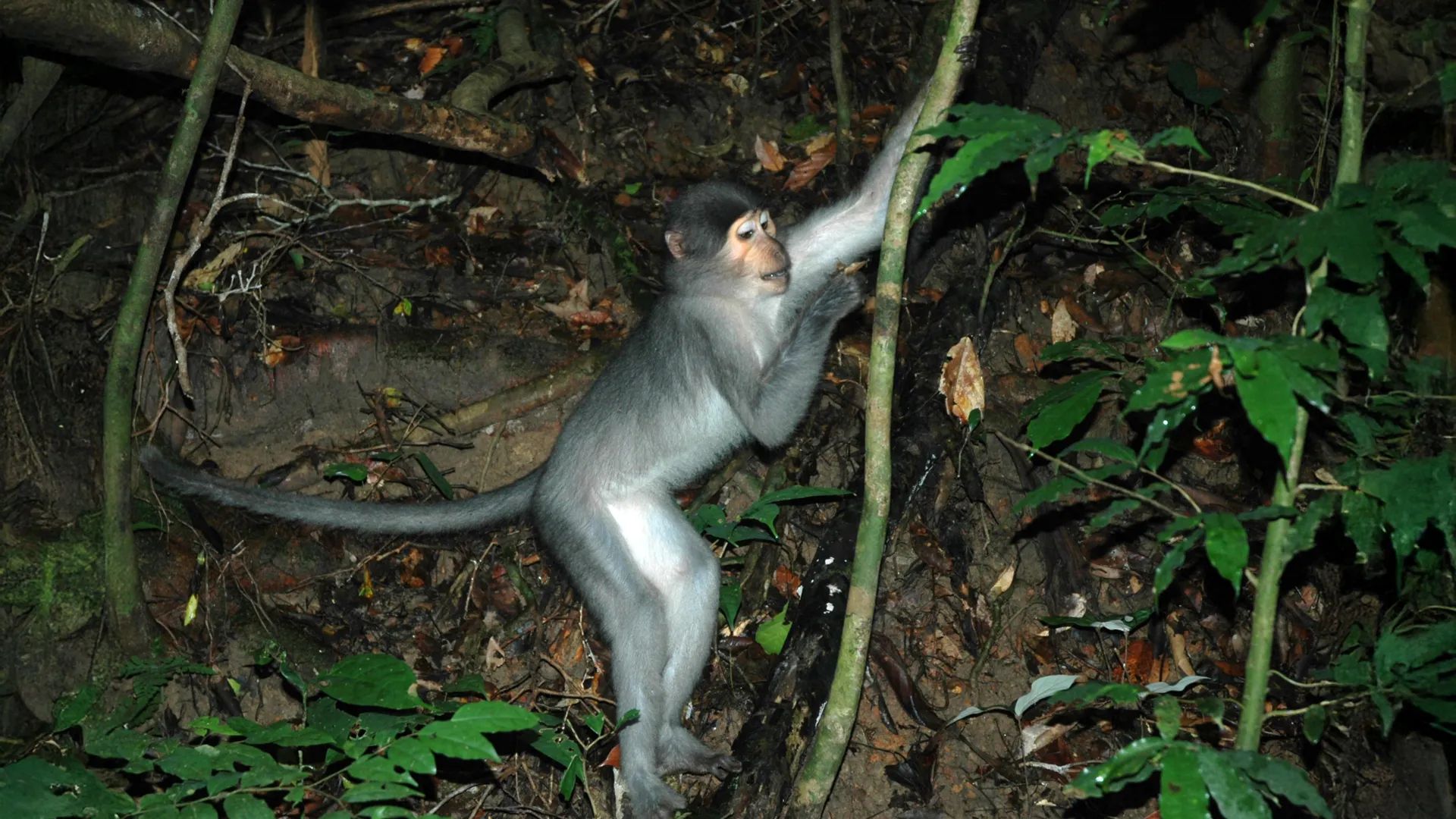
Reconstructing the LCA is a central pillar of paleoanthropology. Scientists tirelessly piece together fragments of fossil evidence, analyze comparative anatomy of living primates, and observe contemporary animal behavior to paint a clearer picture of this elusive ancestor. A paramount question revolves around its habitat and movement patterns: Did it primarily navigate the canopy, swinging through high horizontal branches? Was it adept at vertical climbing from the ground up? Or did it employ a combination of these behaviors, moving fluidly between different strata of the forest environment? The answers to these questions profoundly influence our understanding of the pressures and adaptations that ultimately led to hominins walking upright on two legs.
For decades, assumptions about primate arboreal locomotion have shaped these reconstructions, particularly concerning the structure and function of the foot. Chimpanzees, our closest living relatives, are renowned for their exceptional tree-climbing prowess, especially their ability to ascend vertical tree trunks with remarkable agility. This skill is significantly aided by their highly flexible ankles, which can dorsiflex (bend upward) to a much greater degree than human ankles, allowing for a strong, grasping foot-hold on uneven surfaces. Monkeys, by contrast, have often been perceived through a different lens. Their feet, generally considered less specialized for vertical climbing than those of great apes, have been thought to rely more heavily on their arms for arboreal movement, particularly in the upper canopy. This long-held distinction has directly influenced hypotheses regarding the LCA’s foot morphology: should it have possessed feet more akin to modern apes, optimized for powerful vertical climbing, or feet more similar to monkeys, potentially suggesting a different climbing strategy or even reduced vertical climbing ability?
However, new video evidence emerging from the dense forests of West Africa is now challenging these deeply ingrained assumptions, potentially overturning long-standing interpretations of fossilized foot structures. Researchers from The Ohio State University, led by first study author Luke Fannin, assistant professor of anthropology, embarked on a groundbreaking study of wild sooty mangabey monkeys. These particular monkeys are crucial subjects because their feet do not exhibit the same extreme ankle flexibility characteristic of chimpanzees. Traditional interpretations would suggest they are less capable vertical climbers. Yet, through meticulous, detailed observations and precise measurements derived from high-resolution video footage, the research team discovered something remarkable: these mangabeys can indeed bend parts of their feet sufficiently to climb narrow vertical tree trunks with surprising proficiency. They do this while foraging for food, seeking refuge from predators, or finding safe elevated spots to sleep.
"People are making behavioral inferences from fossils, and some say a monkey can’t vertically climb as well as an ape can," Fannin explained, highlighting the core of the challenge to prevailing wisdom. "We’re saying there’s a functional equivalence here. So you can’t rule out vertical climbing just because something doesn’t have a chimpanzee-like foot." This statement underscores a critical paradigm shift: the outcome of effective vertical climbing can be achieved through diverse biomechanical pathways, not just the highly specialized ankle of an ape. This finding injects a new layer of complexity into the interpretation of fossil feet, suggesting that a fossilized foot structure that might appear "monkey-like" does not necessarily preclude a highly arboreal, vertical climbing lifestyle for an extinct species, including our LCA. The groundbreaking research, which promises to reshape our understanding of primate locomotion, was published this week in the prestigious journal Proceedings of the National Academy of Sciences.
The implications of this discovery for human evolution are profound. A central aim of paleoanthropology is to determine the precise morphology and locomotor repertoire of the human-chimpanzee LCA, as this knowledge provides crucial insights into the evolutionary steps that ultimately led to habitual bipedalism, a form of movement practiced regularly and exclusively by humans among living primates. Humans are, biologically speaking, a type of ape, sharing a common ancestry with great apes like chimpanzees, gorillas, and orangutans. However, the new findings suggest that an ancestor possessing feet anatomically resembling those of monkeys might still have been perfectly capable of climbing in ways comparable to, or even as effectively as, modern apes. This challenges the notion that a highly specialized ape-like foot was a prerequisite for extensive arboreal life in our common ancestor.
"Part of paleoanthropology is understanding how our evolution happened, and it’s often through the hallmark of how we move because modern humans move quite differently than our cousins, the chimpanzees, do, and they’re the living primate we’re most closely related to," Fannin elaborated, emphasizing the critical role of locomotion in defining species and evolutionary trajectories. "And we’re trying to understand why that is." The divergence of locomotor strategies – from versatile arborealism to obligate terrestrial bipedalism – represents one of the most significant evolutionary transitions in our lineage. Understanding the starting point, the LCA’s locomotor capabilities, is therefore paramount to tracing this remarkable journey.
The meticulous data for this study was collected by Fannin at the Taï Forest Monkey Project field station in Ivory Coast, a renowned research site known for its rich biodiversity and long-term studies of primate behavior. The project is co-directed by W. Scott McGraw, professor and chair of anthropology at Ohio State and senior author of the study, whose extensive experience in West African primate research provided invaluable context and expertise. The choice of methodology – high-resolution video documentation – proved instrumental in yielding these unprecedented insights. "The great thing about having the video is that it allows us to capture exactly what the monkey is doing in a high-resolution manner. So we can actually say how the joint is loaded. Before, we had hunches, but in this way, it’s far more precise," McGraw explained, highlighting the leap in analytical capability offered by modern video technology over traditional observational methods. This precision allowed the researchers to quantify subtle movements and joint angles that would be impossible to discern with the naked eye, leading directly to the breakthrough discovery of midfoot flexibility.
The quantitative data revealed the surprising degree of foot flexibility exhibited by the mangabeys. In a typical vertical tree climb, a chimpanzee ankle can dorsiflex by approximately 45 degrees, providing a wide range of motion crucial for gripping and propelling itself upwards. Most human ankles, by stark contrast, are much more restricted, capable of flexing by roughly 20 degrees, reflecting our adaptation for bipedal walking rather than climbing. The mangabeys, despite their "monkey-like" ankle structure, achieved a functionally equivalent degree of flexion, but through a different anatomical mechanism. Fannin’s measurements showed as much as 46 degrees of flexion in the animals’ midfoot – the complex series of joints between the ankle and the toes – while they ascended vertically. This demonstrates a remarkable example of convergent evolution or functional compensation, where different anatomical structures can achieve similar biomechanical outcomes.
This finding significantly complicates competing ideas about how the LCA traveled through its forest environments. Some prevailing theories have posited that a specialized ape-like foot, characterized by highly flexible ankles, was an indispensable requirement for effective vertical climbing. Other theories were more accommodating, allowing for an ancestor with a more generalized, monkey-like foot, but perhaps without fully appreciating its potential for robust vertical arboreal locomotion. The mangabey data now forces a re-evaluation of these frameworks.
"What’s neat about this paper is it adds clarity, but it also makes the broader picture more fuzzy," McGraw aptly summarized, articulating the paradox of scientific discovery. The clarity comes from understanding that vertical climbing can be achieved through multiple anatomical solutions. The "fuzziness" arises because this newfound understanding broadens the spectrum of possibilities for the LCA’s foot morphology and locomotion, making it harder to definitively infer behavior from partial fossil remains. "Because this notion that you have to have a foot like an advanced ape to vertically climb, which is a difficult task, is not true. You’ve got a bunch of monkeys that aren’t extinct – and which can be filmed – that are very competent at performing a biomechanically challenging behavior right now in a forest in West Africa." This living evidence provides a powerful counter-narrative to purely theoretical or fossil-based assumptions. "The videos that Luke made in Taï are particularly important because they provide some of the first kinematic documentation of a locomotor behavior in a monkey that has largely been unrecognized or underappreciated," McGraw added, emphasizing the unique contribution of the study.
The narrative of human evolution often centers on bipedalism as the definitive break from our primate relatives. Yet, the deep ancestral connection to trees, known as arboreality, is far from severed. Vertical climbing is not exclusively within the domain of nonhuman primates; many modern human populations, particularly hunter-gatherers and foragers in forested regions, are also highly capable climbers. While their climbing ability relies more heavily on the remarkable flexibility and strength of ligaments, tendons, and muscles rather than on the intrinsic structure of the foot bones, it nonetheless underscores an enduring human capacity.
Fannin and McGraw compellingly argue that although walking on two feet is one of the most defining characteristics of modern humans, climbing fundamentally remains an inherent part of human behavior and capability. Our innate tendency to ascend, to reach for higher places, or to navigate complex vertical environments may very well reflect a deep, ancient ancestral relationship with trees that extends far beyond mere anatomical adaptations. This suggests that the evolutionary journey didn’t erase arboreal skills but rather repurposed and integrated them within a bipedal framework.
"Arboreality is fundamental to understanding primates – including ourselves – because it has shaped our body to a large degree: hands and feet, wrists and ankles, nails instead of claws, etc.," McGraw stated, emphasizing the pervasive influence of life in the trees on the entire primate body plan. Our grasping hands and feet, the flexibility of our wrists and ankles (even if less extreme in humans), and the development of flattened nails instead of claws are all legacies of an arboreal past, reflecting adaptations for manipulating branches, navigating complex three-dimensional environments, and gripping surfaces.
The ongoing quest to understand the LCA’s foot structure – whether it was "monkey-like" or "ape-like" – is central to piecing together the locomotor puzzle. This new research adds a crucial dimension by demonstrating that functional outcomes can be achieved through diverse anatomical means. "Regardless of where you’re starting from, which we don’t know yet, vertical climbing is universal, and the anatomy is going to perform that behavior," Fannin concluded. "So I think that to get at the question of a monkey-like or ape-like last common ancestor, we need more fossils." The call for more fossil evidence is a perennial one in paleoanthropology, as these physical remnants provide the most direct, albeit often fragmented, insights into our distant past. Until more complete fossil feet of early hominins and their immediate ancestors are unearthed, studies of living primates, like the sooty mangabeys, will continue to provide critical comparative data, pushing the boundaries of our understanding and enriching the narrative of human origins.
The research was made possible through the generous support of various institutions, including Dartmouth College, the Explorer’s Club, the U.S. National Science Foundation, the Emory National Primate Research Center, the Primate Society of Great Britain, and a Schmidt Sciences Postdoctoral Fellowship. Former Ohio State undergraduate Carmen Pape also contributed significantly as a co-author, underscoring the collaborative and multi-institutional nature of such pivotal scientific endeavors. The work serves as a powerful reminder that our journey to understanding human evolution is an ongoing process of discovery, where new observations of living species can dramatically alter our interpretations of ancient bones and the pathways that led to who we are today. The tree-climbing prowess of our distant ancestor, whatever its exact foot morphology, appears to be an increasingly undeniable part of that story.
