
 By Rifan Muazin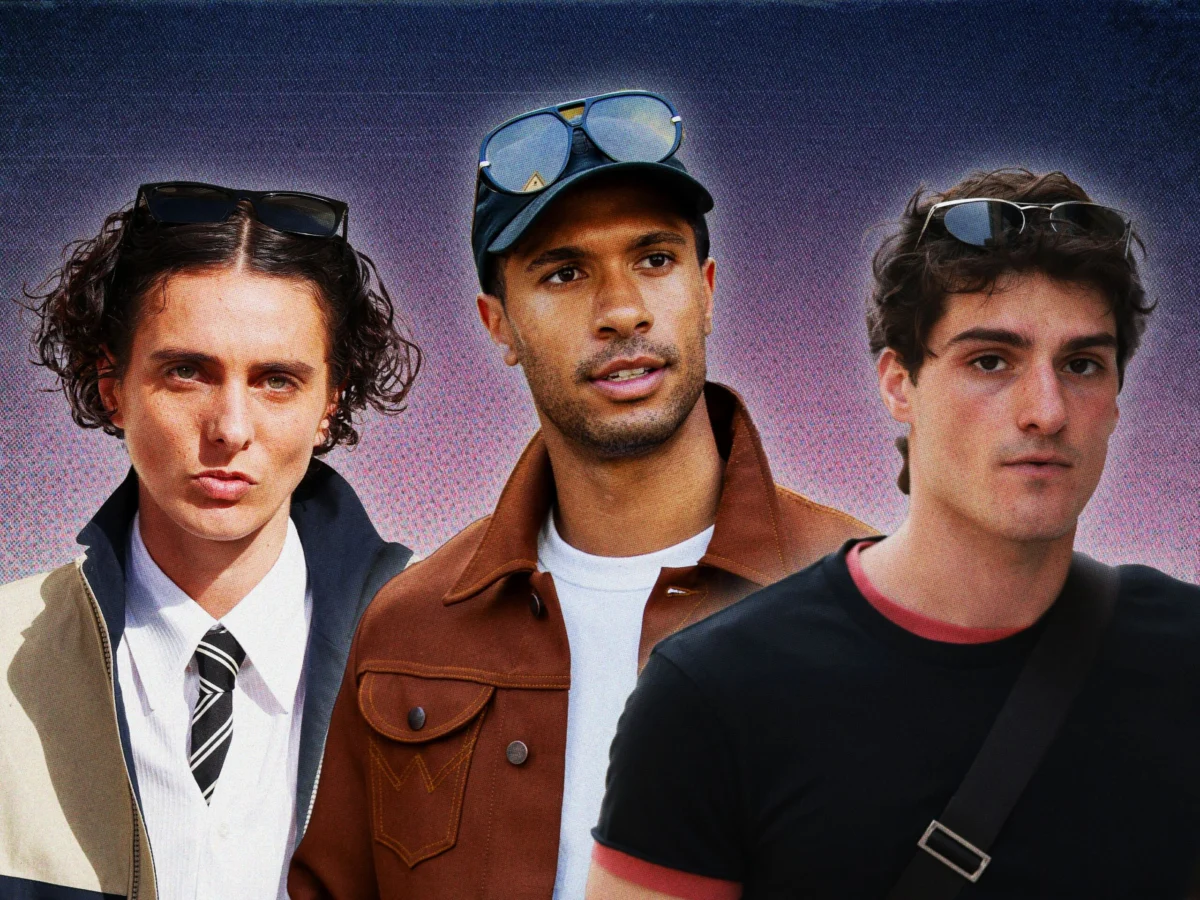
In the meticulously curated world of men’s fashion, there are certain constants that provide a sense of sartorial equilibrium. You may change up your accessories on the regular, rotating through a collection of vintage signet rings or modern minimalist bands, but chances are you’re going to wear those rings on the same fingers every single day. Similarly, your watch—whether it is a rugged tool watch, a sleek dress piece, or a high-tech smartwatch—almost certainly finds its home on the same wrist with unwavering consistency. Because once you find an orientation that looks and feels right, once the ergonomics of your personal style are settled, why mess with it? However, there is one category of accessory that defies this static placement: sunglasses.
Sunglasses are unique in the masculine wardrobe because they are inherently transient. Depending on which side of the street you’re walking on, the intensity of the UV index, or whether you’ve just stepped from a bright sidewalk into a dimly lit bistro, you’ll likely move your sunglasses from your face to your shirt pocket or hang them from your collar. If you’re particularly neurotic about the longevity of your lenses, you’ll even go through the laborious process of putting them back in their protective case. Sunglasses are, by their very nature, a nomadic accessory. Yet, what has become increasingly clear in recent months is that they’ve moved on from their usual haunts to other parts of the body. Rather than defaulting to the traditional safety of a pocket or the classic "V" of a shirt collar, the coolest brands and most stylish guys are instead flipping their shades up on top of their heads like the visor on a motorcycle helmet.
This shift likely started from a place of pure practicality, a solution to a grooming problem that has plagued men for decades. For guys with long hair, sunglasses can be a handy way to hold their lengthy locks back and out of their faces, serving as a makeshift headband that carries more masculine weight than a piece of plastic from a drugstore. That was certainly the case for Sage Toda-Nation, the visionary designer behind the eponymous label Sage Nation and a key figure in the UK-based fashion brand YMC. Toda-Nation, whose work often explores the intersection of Japanese and British design sensibilities, notes that the habit was born of necessity. “I think it started because, when I had long hair, I would do it to keep my hair back, like a headband,” he says. “And it also kind of just looks cool.”
Even as personal aesthetics evolve, these functional habits often stick. Toda-Nation started buzzing his head about two years ago, moving away from the long hair that necessitated the "sunglass-headband" fix, but he says he still wears his sunglasses on his dome out of habit and convenience. “It also means I don’t lose them,” he adds, touching on a universal fear for anyone who has ever dropped a pair of four-hundred-dollar frames into the ocean or left them on a restaurant table.

One might wonder why the modern man wouldn’t simply use the protective case that comes with almost every pair of premium sunglasses. The answer, according to Toda-Nation and many others in the industry, lies in the evolution of everyday carry. Most sunglass cases are simply too bulky to stash in a standard trouser pocket without creating an unsightly bulge that ruins the silhouette of a well-tailored pair of pants. This then necessitates carrying a bag—a tote, a messenger, or a crossbody—which transforms a small styling choice into a more cumbersome affair. When perched on the head, sunglasses are easily accessible, immediately ready for a sudden burst of sunlight, and protected from the structural threats of being crushed or the cosmetic threats of being scratched by keys in a pocket.
Beyond the logistical benefits, there is a profound aesthetic argument for the "overhead" placement. Practicality aside, Jackie McKeown, the creative director of the burgeoning label Literary Sport, often styles models with sunglasses as a headband or worn atop a beanie to add depth to an outfit that might otherwise feel flat. Literary Sport, which occupies a space where intellectualism meets athletic aesthetics, relies on layering to communicate its narrative. “I think it keeps the fit intact in a certain way, like when you are sitting in a bar, and you have to take off the glasses. It allows them to still be part of the outfit without being on your face,” McKeown explains.
This placement evokes a specific set of cultural touchstones. “It feels reminiscent of old hiking references, or skiing, where you’re just putting a goggle up on your helmet,” McKeown says. This connection to "Gorpcore"—the fashion trend where functional outdoor gear is worn in urban environments—cannot be overstated. In the world of high-performance mountain sports, sunglasses and goggles are pieces of technical equipment. When they aren’t shielding the eyes from snow glare, they are pushed up onto the forehead or the helmet. By mimicking this placement in a lifestyle context, the wearer adopts a "ready-for-anything" persona, suggesting a life lived between the city streets and the rugged outdoors.
The sunglass play doesn’t stop at the hairline, however. The "Great Migration" of eyewear has reached even more unconventional territories. Men are now styling their shades resting across the bill of their ball caps, a "backwoods" style that was once the exclusive domain of offshore fishermen and construction foremen. This look was thrust into the high-fashion spotlight recently by Jeremy Dufrene, the fanboat-driving husband of pop icon Lana Del Rey. When Dufrene appeared at Paris Fashion Week, he brought a slice of Louisiana bayou utility to the front row, wearing his sunglasses perched atop the brim of his cap. It was a jarring, yet oddly refreshing contrast to the polished perfection of the Valentino show, signaling that "authentic" utility is currently the ultimate luxury.
Furthermore, sunglasses are being worn backward on the neck, styled with "Croakies"—those neoprene or braided straps favored by powerboaters and frat stars of the 1980s—or even dangling from a belt loop like a carabiner. “It’s become this interesting thing where you just strap them to you as an accessory on its own,” McKeown says. “Whether they’re on your face or not, it’s this other kind of addition to the look.” This reflects a broader trend in menswear where the "tool" becomes the "jewel." Just as a diver’s watch is rarely used for diving, and a field jacket is rarely worn in a literal field, sunglasses are being decoupled from their primary function of light filtration and treated as a sculptural element of the human form.

The history of sunglasses supports this evolution toward the ornamental. While the Inuit people used flattened walrus ivory with narrow slits to block snow blindness, and 12th-century Chinese judges used smoky quartz to hide their facial expressions in court, the modern "cool" of sunglasses didn’t solidify until the 20th century. When Sam Foster sold the first pair of Foster Grants on the Atlantic City Boardwalk in 1929, he wasn’t just selling eye protection; he was selling the Hollywood mystique. For decades, the goal was to keep the glasses on the face to maintain that air of mystery. But in 2024, the mystery has been replaced by a desire for "texture."
As sunglasses have become more expensive—with luxury houses like Balenciaga, Rick Owens, and Loewe producing architectural frames that resemble pieces of modern art—the way we display them has become more performative. When you spend $600 on a pair of titanium-framed shades, you don’t want to hide them in a pocket. You want them to be visible, serving as a crown or a decorative buckle for your head.
However, even in this era of experimentation, there are still rules to the game. While there may not be one single “right” way to wear them (aside from on your face, naturally), the wrong way seems glaringly obvious to those in the know. The traditional move of hooking one temple of the glasses over the front of a T-shirt collar—a look synonymous with "dad style" or mid-2000s business casual—is increasingly viewed with disdain by the avant-garde. Toda-Nation put it bluntly: “There’s something about putting it on your T-shirt that looks a bit shit.” It’s a move that feels half-hearted, a lazy middle ground between wearing them and storing them. By contrast, putting them on your head or your hat feels like a deliberate styling choice.
In the end, the movement of sunglasses away from the eyes and toward the crown of the head represents a shift in how we view "utility." We no longer want our accessories to just do a job; we want them to tell a story about where we’ve been and where we’re going. Whether you’re using them to hold back your hair, channeling a 1970s downhill skier, or simply trying to keep your pockets empty, moving your shades to the dome is the easiest way to elevate your look without saying a word. The nomadic accessory has finally found its new home, and it’s right on top.
