
 By admin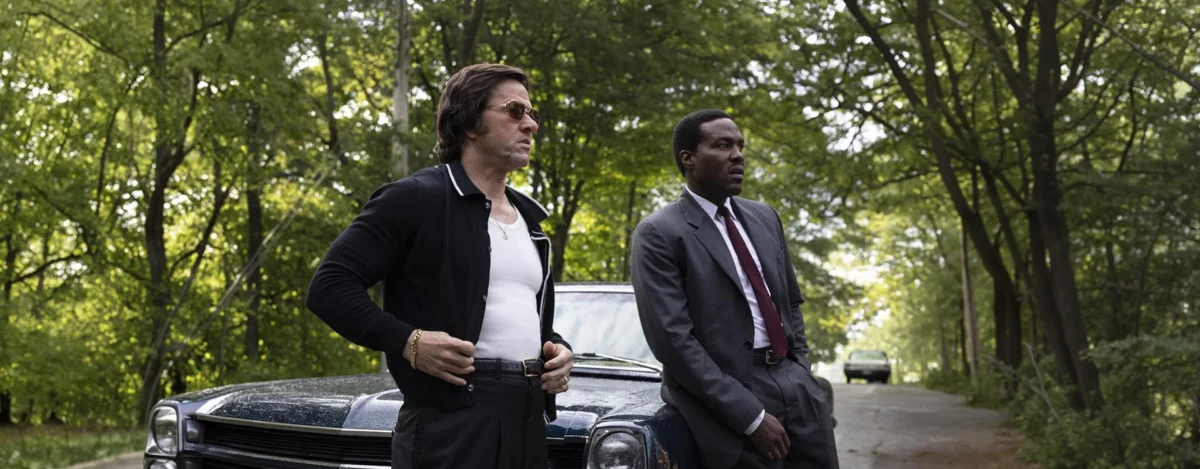
In Peter Farrelly’s 2018 film "Green Book," Viggo Mortensen’s character, Tony Vallelonga, famously introduces Mahershala Ali’s Dr. Don Shirley to the simple pleasure of fried chicken. This seemingly innocuous act serves as a pivotal moment, a gesture by the white working-class driver to demonstrate his understanding and appreciation of Black culture, thereby establishing a bridge of camaraderie with the sophisticated Black concert pianist. It’s a scene intended to symbolize a nascent cultural détente, a small salve on the deeply ingrained wounds of American racial division. Eight years later, Elegance Bratton’s second feature film, "By Any Means," revisits similar thematic territory, but instead of offering a nuanced exploration of cultural understanding, it presents a vision of racial healing that feels not just dated, but a downright relic, proving even less watchable on a scene-to-scene basis than its predecessor.
"By Any Means" positions itself as a historical drama, opening with a somber archival montage that immediately grounds the narrative in the turbulent landscape of the 1960s Mississippi Civil Rights Movement. The montage powerfully establishes the context of racial terror by depicting the chilling disappearance of three civil rights workers during the seminal Freedom Summer. The film emphasizes the identities of these victims – two Jewish men and one Black man – all united in their courageous efforts to register local Black voters, a dangerous undertaking in a deeply segregated South. The historical news clips that conclude this opening segment underscore the gravity of the situation, with the search for the missing men still underway and authorities publicly vowing to bring those responsible to justice. This carefully constructed historical backdrop sets a tone of urgent, unresolved injustice, hinting at the profound societal rifts the film intends to explore.
However, this carefully curated historical prelude is jarringly juxtaposed with the film’s immediate plunge into gratuitous and unrelenting violence. The stark contrast is immediately apparent as the screen cuts to Mark Wahlberg, his muscles bulging beneath a tight shirt and his hair inexplicably parted, in the dimly lit confines of a dingy basement. He is depicted in the act of brutally beating a man, the sounds of impact and guttural groans filling the soundtrack. Wahlberg’s character, identified as mob enforcer Greg Scarpa, interrogates his victim with chilling intensity, the demand "Where are the bodies?" echoing as he delivers another savage blow with a baseball bat, targeting the already pulverized knees of the man. This opening sequence is not merely violent; it is an exhibition of brutality, delivered with a relentless seriousness that immediately signals the film’s problematic approach to its subject matter.
The film then pivots to outlining its central premise, which, while based on a true story, presents a significantly fictionalized narrative. It chronicles the unlikely alliance between the notoriously violent mob enforcer Greg Scarpa (Wahlberg) and FBI Agent Wayne Strider (Yahya Abdul-Mateen II). Their mission: to investigate the brutal murder of Vernon Dahmer, the local NAACP chapter president, an act carried out by members of the Ku Klux Klan. The inherent tension in this partnership lies in their diametrically opposed methodologies. Strider, a Black agent who has witnessed the corrosive effects of white supremacy firsthand throughout his career, is presented as a proponent of working within the established legal framework. His motivation for joining the FBI was to uphold the law, and he adheres strictly to procedural protocols.
This adherence to the rules stands in stark opposition to Scarpa’s modus operandi, which is, as the film’s title suggests, "by any means necessary." Scarpa, a real-life figure whose criminal activities and informant status are well-documented, is portrayed as having been quietly enlisted by Strider’s superiors. His approach to law enforcement is characterized by a brutal pragmatism: information, he believes, should be extracted through any means, with extreme violence being his preferred tool. The film attempts to frame this as a clash of philosophies regarding justice and the fight against racial oppression.
The choice of the phrase "by any means necessary" is particularly loaded, having been popularized and inextricably linked to the Black activist Malcolm X. The film’s implicit transfer of this powerful slogan to a white mob enforcer, who uses it to justify his violent methods, represents one of the most egregious instances of the film’s superficial and often crude rewriting of history and ideology. While the film boldly proclaims its events are "based on a true story," this assertion is misleading. While Greg Scarpa was indeed a mobster who likely served as an informant for the FBI, there is no historical evidence to suggest he partnered with a Black FBI agent, and the character of Wayne Strider is entirely fictional. This creative liberty, rather than enhancing the narrative, raises questions about the film’s intent and its responsible engagement with historical events.
Despite these significant historical liberties and thematic contrivances, "By Any Means" attempts to function as a gripping action thriller, repurposing familiar cinematic tropes to achieve its effect. As Scarpa and Strider navigate the treacherous landscape of 1960s Mississippi, their investigation unfolds through a series of interrogations and drives through the city. The film leans heavily on the "white savior" trope, a problematic narrative device that centers the agency and heroism of a white character in a story about racial injustice. Alongside this, it employs the more conventional "odd couple" or "mismatched buddy" dynamic, where humor and dramatic tension are derived from the contrasting personalities and worldviews of the two protagonists, particularly in their approaches to violence.
Wayne Strider is depicted as a highly disciplined and by-the-book agent. Having trained in Chicago before returning to his home state of Mississippi, he embodies a professional detachment, albeit with a simmering frustration. This frustration occasionally surfaces, such as when he punches a filing cabinet in a moment of exasperation, but his overall demeanor remains one of near-prim adherence to legal procedures. The film also attempts to imbue him with a stable personal life, highlighting his devoted relationship with his wife, played by Nicole Beharie. Beharie, despite limited screen time, imbues her character with quiet strength, offering Strider moments of affirmation and support, a stark contrast to the volatile world of his partner.
Greg Scarpa, on the other hand, embodies a more chaotic and aggressive persona, reflecting his Brooklyn origins. For Scarpa, violence is not merely a tool but a virtue, a necessary component of achieving his objectives. His character is visually defined by his penchant for chewing toothpicks and sporting a white tank top, projecting an image of raw, unrefined masculinity. He exhibits a disturbing tendency to inflict violence on anyone who irritates him, from a gun dealer to a highway patrol officer. While the film briefly touches upon his family life, showing him sharing a meal of penne with his wife and children, this domestic portrayal feels superficial. The film’s portrayal of women, in general, is notably broad and underdeveloped, often relegated to stereotypical roles, as exemplified by Scarpa’s casual encounter with a "giggling, blonde floozy" in a motel room.
The central "big idea" of "By Any Means" appears to be the ostensible conflict between Strider’s adherence to the law and Scarpa’s brutal pragmatism, framing it as a reductive debate between nonviolent resistance and retaliatory force. However, the film’s true inclination lies in exploring how Scarpa’s aggressive, "down-to-earth" approach seemingly influences Strider, awakening a more aggressive, righteous rage within him. This is exemplified by Scarpa’s patronizing advice to Strider: "You’ve got your gun, you’ve got your badge, now you need to grow some balls." The film clearly intends for the audience to applaud such sentiments, a testament to its uncritical embrace of violence as a solution. Another of Scarpa’s "moderately offensive eye-rollers" – a phrase that itself acknowledges the film’s problematic dialogue – is his declaration, "I ain’t shining no shoes, I’m cracking heads." This line encapsulates the film’s embrace of brute force over intellectual or strategic engagement.
If there is any redeeming quality to "By Any Means," it lies in the visually arresting filmmaking of Elegance Bratton. Despite the film’s narrative and thematic shortcomings, Bratton, working in collaboration with cinematographer Ante Cheng, crafts a visually stunning experience. Even the most disturbing or overtly simplistic scenes are transformed into displays of aesthetic beauty. The masterful use of light is particularly noteworthy. A wide shot capturing dawn sunlight glinting off wet pavement offers a moment of visual poetry, while the introduction of the film’s antagonists is rendered with sinister effectiveness, their hostile faces cast in stark, horizontal shadows from window shutters, creating an atmosphere of impending dread.
These beautifully composed images possess a subtlety that is sorely lacking in the film’s dialogue and narrative construction. They leave the viewer longing for a story that is more deserving of Bratton’s evident directorial talent. His debut feature, "The Inspection," was a critically acclaimed and lyrical portrait of a Marine recruit, showcasing a profound understanding of character and theme. The evident creative struggles within "By Any Means," which was written by Sascha Penn from a script that had previously appeared on the prestigious Black List, suggest that the fundamental problems of the film were deeply embedded in its conception, potentially prior to Bratton’s involvement. The most glaring of these issues, and one that is apparent from the very first scene, is the film’s implicit endorsement of violence. For a movie that purports to explore opposing attitudes towards violence, "By Any Means" unequivocally chooses a side, and it is the side of brute force, a choice that ultimately undermines any pretense of nuanced social commentary or historical exploration.
