
 By admin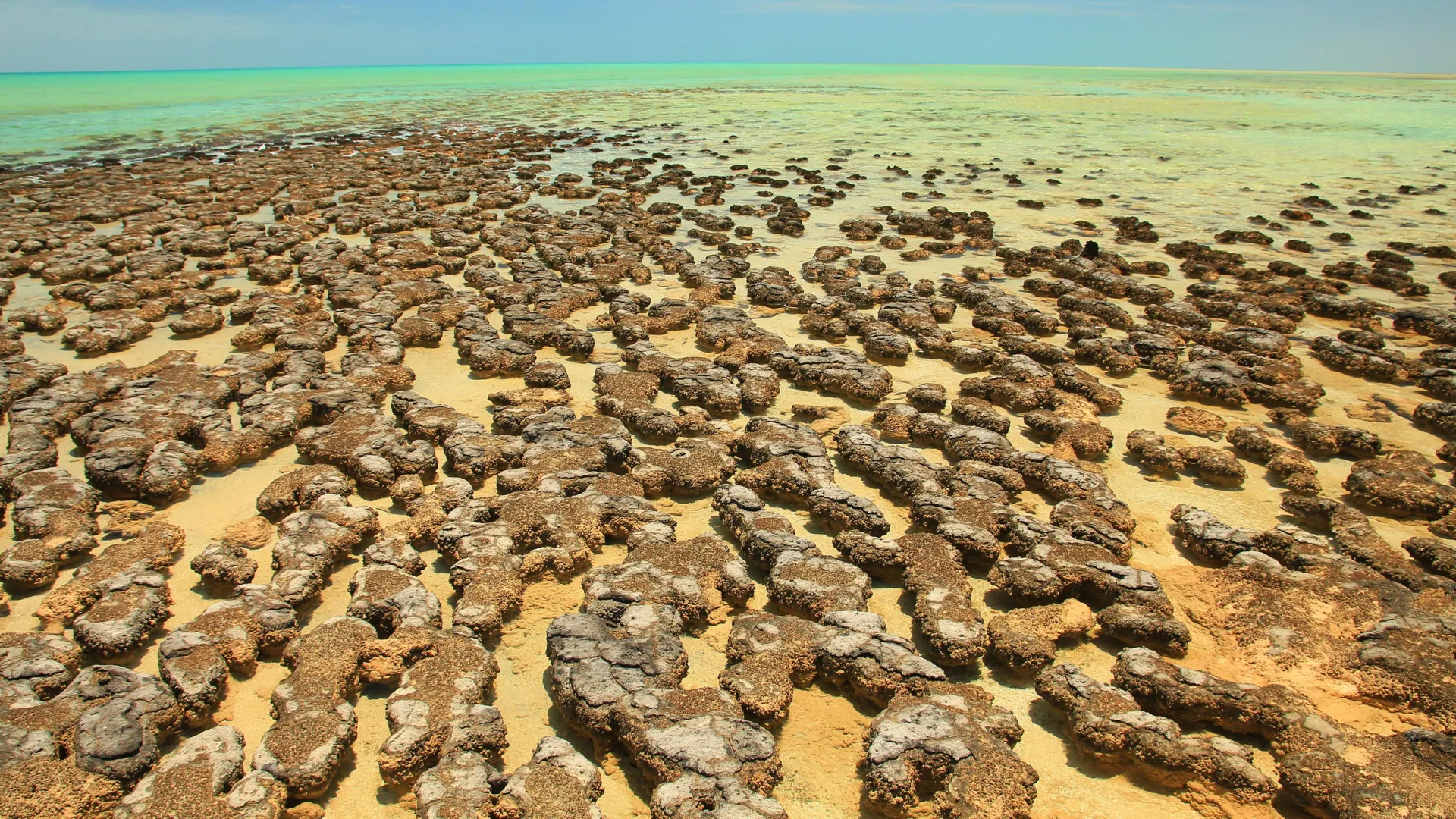
The research, spearheaded by Associate Professor Brendan Burns, an evolutionary microbiologist at UNSW Sydney, along with a collaborative team from the University of Technology Sydney and The University of Melbourne, has unveiled a previously unknown microbial partnership nestled within these ancient structures. The discovery centers on a novel microbe, a member of the enigmatic Asgard archaea, found living in intimate association with another organism. This unprecedented observation could illuminate one of biology’s most fundamental mysteries: the intricate process by which relatively simple, single-celled organisms began to cooperate, eventually giving rise to the incredibly diverse and complex forms of life that dominate our world today.
"Stromatolites could be more than ‘just’ a cradle of life where early microbial life flourished," A/Prof. Burns posits, highlighting the study’s transformative potential. "They could also tell us how complex life first emerged." This statement underscores a significant shift in perspective, elevating stromatolites from mere relics of a bygone era to active laboratories for understanding fundamental evolutionary transitions. The quest to understand the origin of complex life, specifically the transition from prokaryotic (simple, no nucleus) to eukaryotic (complex, with nucleus and organelles) cells, has long been a central challenge in biology. This evolutionary leap, often referred to as the "eukaryogenesis event," is considered one of the most significant innovations in the history of life, setting the stage for multicellularity and the vast biodiversity we see today.
A Microbial Partnership With Ancient Roots: Unveiling the Genesis of Complexity
Stromatolites and microbial mats, while ancient in their lineage, are far from extinct. These tenacious communities continue to thrive in specific environments today, offering scientists a living window into Earth’s distant past. One of the most pristine and globally significant locations for their continued formation is Shark Bay, a World Heritage-listed site located in Western Australia. Here, in hypersaline lagoons, conditions mimic the harsh, anoxic environments believed to have characterized early Earth, allowing these microbial ecosystems to persist and flourish. The unique geochemistry and isolation of Shark Bay make it an unparalleled natural laboratory for evolutionary biologists and geomicrobiologists.
It was from samples meticulously collected in Shark Bay that A/Prof. Burns and his dedicated colleagues made their pivotal discovery. Through sophisticated genetic sequencing and subsequent cultivation efforts, they managed to isolate a member of the Asgard archaea, a phylogenetically distinct group of microbes that has captivated scientists for over a decade. Asgard archaea are considered the closest known prokaryotic relatives to eukaryotes – the cells that constitute all plants, animals, fungi, and protists, including humans. Their genomes are replete with genes that encode "eukaryotic signature proteins," molecules previously thought to be exclusive to complex life, thus bridging the long-standing gap between simple and complex cellular organization.
The prevailing scientific consensus on the origin of eukaryotic cells is rooted in the endosymbiotic theory, a revolutionary concept first championed by Lynn Margulis. This theory proposes that the first eukaryotic cell developed through an intimate, mutually beneficial partnership between an ancient archaeon and a bacterium. According to the most widely accepted variant, the "archaeal host hypothesis," an archaeal cell engulfed or otherwise incorporated a bacterium, which subsequently evolved into the mitochondria – the vital energy-producing organelles found within virtually all complex cells. This symbiotic union was a game-changer, providing the host cell with a massive energy advantage that fueled the evolution of increased cellular complexity, including the development of a nucleus, endomembrane system, and multicellularity.
However, despite compelling genomic and phylogenetic evidence, scientists have historically lacked direct visual evidence illustrating what such an early, foundational partnership might have actually looked like in a living system. The new research from A/Prof. Burns’ team provides precisely this missing piece of the puzzle. For the first time, the study offers visual proof of an Asgard archaeon physically interacting with a bacterium, connected by extremely delicate, tube-like structures aptly named nanotubes. These structures are not merely incidental; they represent a potential conduit for molecular exchange, signaling, and nutrient transfer, embodying the very essence of a nascent symbiotic relationship.
"This could be a little model for how these kinds of partnerships started and ultimately formed eukaryotes," A/Prof. Burns enthusiastically states. The significance of this observation cannot be overstated. It moves the endosymbiotic theory from a purely conceptual model to one supported by direct, observable biological interaction, offering a tangible glimpse into the evolutionary crucible where complex life was forged.
Years Spent Trying to Grow an Elusive Microbe: The Perseverance of Discovery
The path to this discovery was far from straightforward, epitomizing the arduous yet rewarding nature of scientific exploration. Initial genetic sequencing efforts clearly indicated the presence of these intriguing organisms within the Shark Bay samples. However, transitioning from genetic detection to direct observation and study in a laboratory setting proved to be a formidable challenge. Cultivating these microbes, particularly the Asgard archaea, outside of their natural, often extreme, habitats is notoriously difficult.
"It took four or five years in the lab," A/Prof. Burns recounts, painting a vivid picture of the sheer persistence required. "A lot of time, optimizing and chasing different shadows." This long incubation period highlights the technical hurdles involved in growing fastidious microorganisms, especially those adapted to specialized niches and potentially reliant on complex interspecies interactions. Many environmental microbes simply refuse to grow in artificial laboratory conditions, a phenomenon known as the "great plate count anomaly."
The researchers discovered they could not grow the Asgard archaeon in isolation, a crucial detail that itself offers profound biological insights. "The fact that we could never get these organisms into pure culture is probably because they always depend on other organisms to survive," A/Prof. Burns suggests. This inherent dependency strongly supports the hypothesis that these microbes are obligate symbionts, requiring the presence of their bacterial partners for essential metabolic functions. This observation reinforces the idea that cooperative interactions are not just advantageous but often indispensable for survival in microbial ecosystems, particularly in the nutrient-limited or energetically challenging environments like those found in stromatolites.
Unveiling the Interaction: Advanced Imaging and Deep Learning Reveal Intimate Details
To overcome the limitations of traditional microscopy and the unculturability of the organisms, the research team turned to cutting-edge imaging technologies. They made significant progress using electron cryotomography (cryo-ET), a sophisticated high-resolution 3D imaging method. Cryo-ET involves flash-freezing samples to preserve their native state without chemical fixatives or dehydration, followed by tilting the sample in an electron microscope to capture multiple images from different angles. These images are then computationally reconstructed into a detailed 3D volume, capable of revealing cellular structures at the scale of a millionth of a millimeter – a resolution critical for observing the fine intricacies of microbial interactions.
The resulting cryo-ET images were revelatory. They provided unprecedented visual evidence of the archaeon and bacterium physically connected by bacterial nanotubes, confirming the intimate nature of their partnership. Beyond these direct connections, researchers also observed the archaeon producing chains of budded vesicles and elaborate tube-like structures. These vesicles, small membrane-bound sacs, are known to be involved in intercellular communication and the transfer of various molecular cargoes, suggesting a dynamic and bidirectional exchange between the partners.
Further analysis revealed a striking chemical complementarity between the two microbes. Each appeared to produce compounds that the other could utilize, including essential vitamins, vital nutrients, and hydrogen. This metabolic hand-off is a cornerstone of many symbiotic relationships and provides a plausible mechanism for how such a partnership could have been established and maintained over evolutionary time. For instance, the "hydrogen hypothesis" for eukaryogenesis posits that an archaeal host, dependent on hydrogen, integrated a bacterium that produced hydrogen as a metabolic byproduct. The observed hydrogen exchange in this modern analogue lends strong support to such scenarios.
Coauthor Associate Professor Debnath Ghosal from The University of Melbourne emphasized the profound significance of directly capturing an interaction between an Asgard archaeon and a bacterium. "This discovery brings us a few steps closer towards understanding how complex cells evolved from relatively simpler microbial life forms," A/Prof Ghosal states, encapsulating the monumental impact of this visual evidence on our understanding of life’s trajectory.
Ancient Cellular Machinery Comes Into View: A Glimpse into Evolutionary Blueprints
The interdisciplinary nature of the research extended beyond advanced imaging, incorporating the power of artificial intelligence. According to coauthor Associate Professor Kate Mitchie from UNSW, the team integrated deep learning, a sophisticated type of machine learning, into its analysis pipeline. "We used this to predict the structures of proteins in these microbes," A/Prof. Mitchie explains. Deep learning algorithms, particularly those like AlphaFold, are revolutionizing structural biology by accurately predicting protein three-dimensional structures from their amino acid sequences. This capability is particularly invaluable for organisms that are difficult to cultivate or whose proteins cannot be easily crystallized for traditional structural determination methods.
"And that’s exciting because we can start to see ancient versions of the cellular machinery that later became central to complex life," A/Prof. Mitchie adds. By predicting the structures and functions of proteins encoded in the genomes of these Asgard archaea, scientists can infer their roles in cellular processes and compare them to their counterparts in modern eukaryotes. This allows them to trace the evolutionary lineage of complex cellular components, providing molecular blueprints of the transitional stages that ultimately led to the sophisticated cellular architecture of eukaryotes.
A/Prof. Burns further characterizes archaea within these microbial mats as ‘companions’. Life inside microbial mats can be incredibly harsh and resource-limited, characterized by steep chemical gradients, fluctuating oxygen levels, and intense competition. In such challenging environments, close cooperation between organisms, even at microscopic scales, can provide a crucial survival advantage. This ecological pressure could have been a powerful driver for the evolution of increasingly interdependent relationships, ultimately culminating in the permanent integration seen in endosymbiosis.
A Living Window Into Early Earth: Connecting Past, Present, and Future
Coauthor Associate Professor Iain Duggin from the University of Technology Sydney reflects on the broader implications of these findings. He describes it as "remarkable to consider that microbes may have maintained partnerships like these in such environments for millions of years, eventually contributing to the emergence of complex life, including humans." This sentiment beautifully encapsulates the profound interconnectedness of all life and the deep evolutionary roots of our own existence. "It’s if we have slowly arisen from the bottom of the sea," A/Prof. Duggin muses, invoking a poetic image of life’s slow, persistent ascent from primordial origins.
The newly identified archaeon has been given a scientifically and culturally significant name: Nerearchaeum marumarumayae. The genus name, Nerearchaeum, combines a reference to Nereus, the ancient Greek sea god, symbolizing its aquatic habitat and ancient lineage. The species epithet, marumarumayae, is particularly poignant, deriving from the Malgana word for ‘ancient home’. Malgana is one of the traditional languages spoken by the Indigenous people of central Shark Bay, whose deep and enduring ties to country are formally recognized by Native Title. This naming choice is a powerful acknowledgment of the region’s rich cultural heritage.
Honoring Shark Bay’s Malgana Heritage: A Model for Ethical Science
The process of naming the microbe was undertaken with utmost respect and extensive consultation. Researchers worked closely with Kymberly Oakley, the world’s foremost Malgana language expert, and engaged directly with Malgana elders and community members. This collaborative approach ensured that the language was used respectfully and appropriately in the organism’s scientific name. The elders graciously granted permission for the Malgana language to be included, recognizing the opportunity for their culture to be acknowledged, celebrated, and shared on a global scientific platform.
Shark Bay is not merely a scientific marvel; it possesses a profound and continuous Indigenous history. Archaeological evidence indicates that Indigenous people have inhabited the region for at least 30,000 years, making them continuous custodians of this extraordinary landscape. For researchers, the microbial communities of Shark Bay offer an unparalleled opportunity to study conditions that closely resemble parts of early Earth, providing a living laboratory for evolutionary biology. For the Malgana Traditional Owners, these same environments form an integral part of a vibrant, living cultural heritage that continues to be protected, managed, and cared for through traditional practices and modern stewardship. This dual significance underscores the importance of integrating scientific inquiry with Indigenous knowledge and land management.
A Future of Collaboration and Connection: The Deepest Mark of Smallest Partners
A/Prof. Burns now envisions expanding this exciting line of inquiry. He hopes to identify additional microbial partnerships within stromatolites and other ancient ecosystems, aiming to build what he describes as a "little primordial Asgard soup." Each new partnership identified will add another crucial piece to the complex puzzle surrounding the earliest stages in the evolution of complex life, helping to reconstruct the intricate network of interactions that shaped our world.
"But it’s not just about the organisms," A/Prof. Burns emphasizes, shifting the focus to the human element of discovery. "It’s about people as well. A huge collaborative effort across disciplines with many graduate students being instrumental in building this story." This highlights the collective nature of modern scientific breakthroughs, where diverse expertise and dedicated young researchers are essential.
"Part of what makes this exciting is that it’s not just discovery, but connection. Not just across many years, but at a time when these fragile ecosystems face mounting threats from climate change and human activity," he concludes. This statement powerfully links the ancient past to urgent contemporary challenges. The very environments that harbor these evolutionary insights, like Shark Bay, are vulnerable to anthropogenic pressures. Protecting these unique natural heritage sites is not just about biodiversity conservation; it is about safeguarding living archives of Earth’s history and the potential for future scientific revelation.
The findings from this landmark study resonate with a timeless truth: survival can profoundly depend on cooperation between organisms. From the microscopic world of stromatolites to the global challenges facing humanity today, interdependence remains a fundamental principle of life. "These microbes remind us that even the smallest partners can leave the deepest mark on our history," A/Prof. Burns eloquently states, leaving us with a powerful reflection on the enduring legacy of life’s earliest architects and the intricate web of connections that bind all living things.
