
 By admin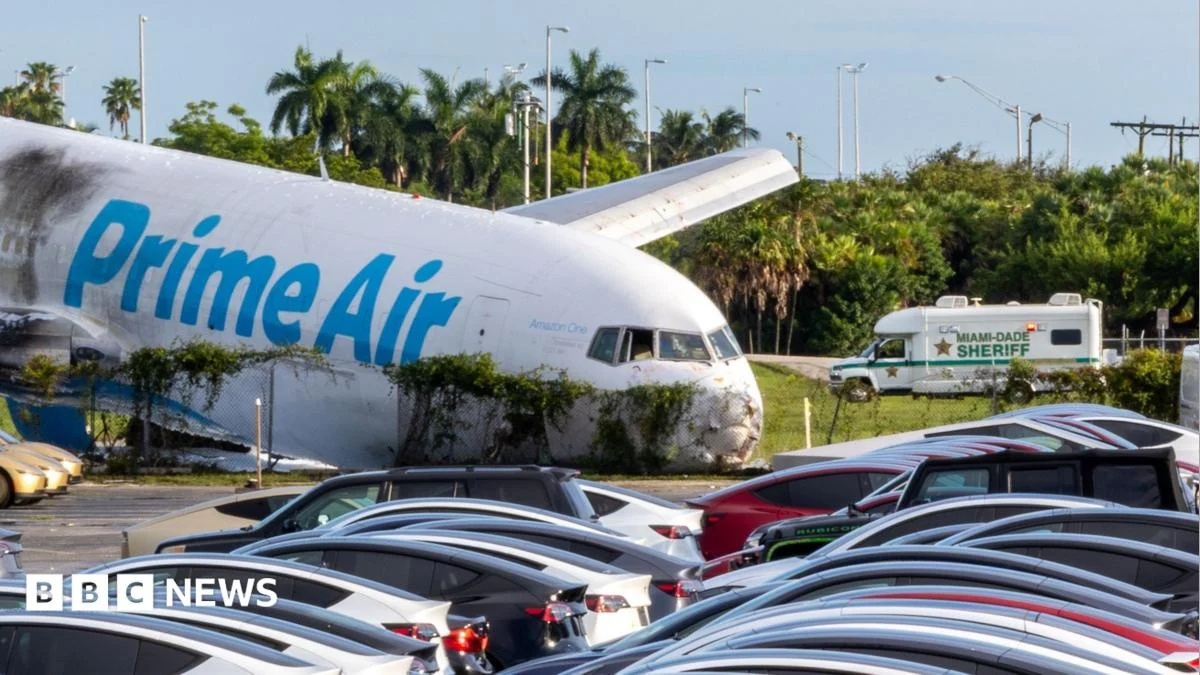
A catastrophic incident unfolded at Miami International Airport (MIA) on Sunday afternoon when an Amazon-branded cargo plane, operated by 21 Air, overshot the runway during its landing, resulting in a devastating crash that claimed the lives of at least five individuals and left five others with serious injuries. The ill-fated flight, a Boeing 767-300 freighter, went far beyond the designated landing zone, crossing a public road and impacting multiple vehicles on the ground, creating a scene of widespread destruction and prompting an immediate and intensive investigation.
The gravity of the situation was underscored by an early afternoon press conference where Miami-Dade County Mayor Daniella Levine Cava confirmed the grim toll: "At least five people have lost their lives, and five others are injured." She lauded the swift response of emergency services, noting that rescue crews arrived at the scene "within seconds" of the crash, a testament to the airport’s emergency preparedness protocols. Miami Fire Chief Raied Jadallah provided further details on the injured, stating that three of the five were in critical condition. The harrowing accounts from the scene revealed that several individuals were trapped within or beneath the wreckage of vehicles, necessitating extrication efforts by over 200 firefighters who battled the intense flames that engulfed the aircraft. The identities of those who perished have not yet been released, a painful void that authorities are working to fill for grieving families.
The National Transportation Safety Board (NTSB), the federal agency tasked with investigating aviation accidents, has launched a comprehensive inquiry into the circumstances surrounding the crash. Members of the NTSB were scheduled to brief reporters on Monday afternoon, aiming to shed light on the critical questions facing investigators. Preliminary analysis of video footage captured during the landing has become a focal point, with aviation experts speaking to the Associated Press suggesting that the footage will be crucial in determining whether the aircraft touched down within the designated runway area and, if so, what sequence of events led to the tragic outcome.
Flight data from the aviation tracking website FlightRadar24 offered a glimpse into the final moments of the flight, indicating that the Amazon cargo plane was traveling at 112 knots (approximately 129 mph or 207 km/h) as it exited the "usable runway." The site also noted that the aircraft came to rest in proximity to a car park serving an Amazon warehouse and other businesses, a detail that adds a layer of unfortunate proximity to the e-commerce giant’s operations. Compounding the challenging landing conditions, FlightRadar24 reported the presence of light thunderstorms and gusting winds in Miami at the time of the incident, factors that could have significantly contributed to the loss of control.
In the wake of the tragedy, both 21 Air and Amazon expressed their profound sorrow and pledged full cooperation with the ongoing investigation. A statement from Kelly Nantel, Amazon’s Director of Corporate Global Media Relations, conveyed deep heartbreak: "We’re heartbroken to learn that five people lost their lives in today’s incident at Miami International Airport. Our deepest sympathies go out to the families, loved ones, and all those affected by this devastating loss." Nantel reiterated that the aircraft was operated by 21 Air and was attempting to land when the incident occurred, assuring that Amazon was working closely with local authorities.
Similarly, 21 Air, a charter cargo airline based in North Carolina, issued a statement from its CEO, Keith Winters, expressing profound condolences: "Our deepest condolences are with the families and loved ones of those who lost their lives. Our immediate priorities are supporting those affected, assisting the authorities, and ensuring that accurate information is communicated as it becomes available." This dual commitment to supporting the affected parties and cooperating with the investigation signals a united front in addressing the aftermath of the crash.
The incident, which occurred just before 2:00 PM local time (6:00 PM GMT), had a ripple effect throughout Miami International Airport. The Federal Aviation Administration (FAA) temporarily grounded all flights, leading to significant disruptions for travelers during one of the busiest travel weekends of the year in the United States – the Labor Day holiday. Passengers at MIA described scenes of frustration and confusion, with many flights cancelled or significantly delayed. Long queues formed at airline counters as individuals scrambled to rebook their travel plans, with some facing the prospect of an unexpected overnight stay in Miami. One traveler, identified as Faroush, expressed his predicament to the BBC, stating, "The earliest I could find to fly to San Francisco was Tuesday morning. I’ll probably have to find a hotel and spend more time in Miami."
The Transportation Safety Administration (TSA) had projected a massive surge in air travel for the Labor Day holiday week, anticipating 17 million travelers passing through US airports. On Sunday alone, the TSA predicted that 2.3 million people would be flying. This surge in passenger volume amplified the impact of the MIA closure, affecting a substantial number of travelers attempting to reach their destinations.
Miami International Airport, a critical hub for both domestic and international travel, is a vital artery for the region and the nation. Founded in 1928, MIA is a major player in global aviation, recognized as America’s busiest airport for international freight and the second busiest for international passengers. It boasts an unparalleled connectivity to Latin America and the Caribbean, offering more flights to these regions than any other US airport. The airport plays a pivotal role in Florida’s tourism industry, with approximately 60% of all international visitors to the state arriving through its terminals. Its strategic location near downtown Miami and its extensive network of routes make it a cornerstone of the South Florida economy and a significant gateway for international commerce and tourism.
The investigation into this tragic event will undoubtedly scrutinize every aspect of the landing, from the aircraft’s approach and airspeed to the pilot’s actions and any potential environmental factors. The NTSB’s meticulous process of data collection, analysis of flight recorders, and interviews with relevant personnel will be crucial in piecing together the sequence of events that led to this fatal outcome. The findings will not only seek to provide answers for the victims and their families but also to identify any systemic issues or procedural shortcomings that could be addressed to prevent similar tragedies in the future. The focus remains on understanding what transpired in those critical moments when a routine cargo flight ended in devastating loss, sending shockwaves through the aviation community and the broader public. The crash serves as a stark reminder of the inherent risks in aviation and the constant vigilance required to ensure the safety of air travel.
