
 By Lina Irawan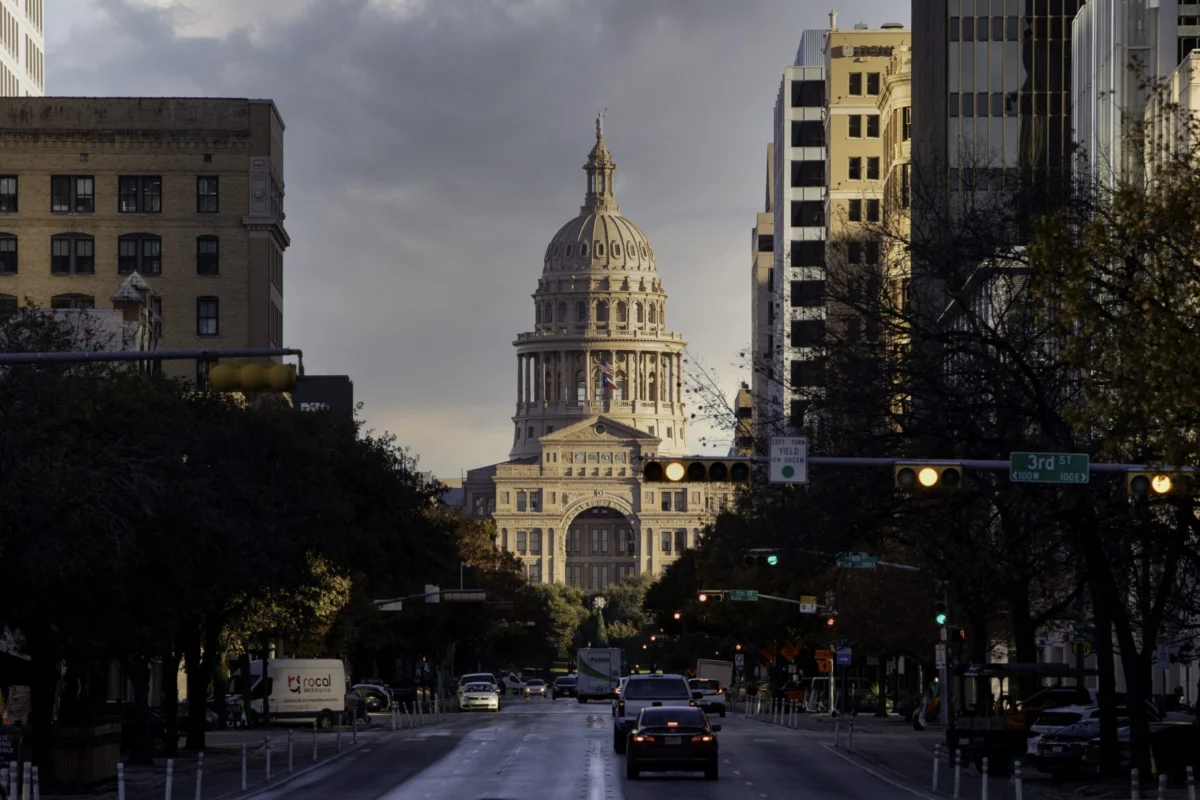
In the heart of Austin, Texas, Mathew Davis, a 49-year-old resident of a homeless shelter, dreams of a place to call his own. His aspirations, however, clash starkly with the brutal economic realities of his life. Earning a meager few hundred dollars a month primarily through donating blood plasma, Davis finds even the most basic housing options out of reach. A tiny home, costing $450 a month and lacking private running water or a dedicated bathroom, remains an impossible "stretch," as he describes it. "I don’t make enough money really to afford anything," Davis laments, articulating a sentiment shared by millions across the nation, "I just keep trying to swim uphill." This personal struggle highlights a confounding paradox: as Davis and others like him fight for survival, over 4,500 units in Austin, officially classified as "affordable," lie empty—a staggering 16% vacancy rate in a city grappling with a homelessness crisis.
Davis’s predicament is not an isolated incident but a poignant illustration of a deepening national crisis where the country’s poorest citizens face the most acute shortages of affordable homes, even as units designed to alleviate this very issue sit unoccupied. The fundamental flaw, according to experts and recent data, lies in a disconnect between the intended beneficiaries of affordable housing programs and the actual economic thresholds they serve. The majority of low-income housing financed in recent years, a critical component of national housing strategy, is targeted at individuals earning 50% of an area’s median income (AMI) or higher. This leaves a vast and growing chasm for those at the very bottom of the economic ladder, for whom these "affordable" rents are still prohibitively expensive.
Consequently, a distressing trend is emerging in cities nationwide: an uptick in vacancies within these designated affordable units. As rents for these properties, often calibrated for moderate-to-low income brackets, begin to approach market rates, they become inaccessible to the "poorest of the poor." This economic exclusion forces individuals like Davis into continued homelessness or into desperate, unsustainable circumstances to maintain housing they can ill afford. The systemic failure not only exacerbates social inequality but also undermines the very purpose of substantial public and private investments in affordable housing.
The Dire Shortage for the Most Vulnerable
The National Low Income Housing Coalition’s most recent annual report paints a grim picture: there are only approximately 4 million affordable rental units available for the country’s 11 million extremely low-income (ELI) renter households. These households, representing about a quarter of all U.S. renter households, are defined as those with annual incomes either below federal poverty guidelines (just under $16,000 for a single person) or 30% of their area’s median income, whichever is higher. This demographic includes a broad spectrum of vulnerable populations: individuals working multiple low-wage jobs, seniors living on fixed incomes, and people with disabilities. The report further reveals that about three-quarters of ELI renter households spend over half their income on rent and utilities, a figure far exceeding the recommended 30% affordability standard, leaving them with dangerously little for food, healthcare, transportation, and other basic necessities.
Despite the profound need, housing initiatives primarily neglect this most vulnerable group. In 2024, units specifically set aside for ELI renters constituted only about 12% of the affordable housing units financed through the Low-Income Housing Tax Credit (LIHTC) program. LIHTC, a federal program established 40 years ago, is the nation’s largest source of affordable housing, providing crucial tax credits to developers in exchange for commitments to keep rents low for at least 30 years. While it has financed nearly 4 million affordable units nationwide, its current structure disproportionately benefits those higher up the income scale. The majority of LIHTC-supported housing targets individuals earning at least 50% of an area’s median income. In Austin, for instance, 50% AMI translates to a single person earning roughly $47,000 a year, a stark contrast to an extremely low-income person earning under $28,000.
Critiques and Complexities of the LIHTC Program
The efficacy of the LIHTC program, particularly in addressing the needs of the truly impoverished, has come under scrutiny. Critics, such as Chris Edwards, an economist at the libertarian Cato Institute, argue that the program is "enormously complex and bureaucratic," driving up construction costs due to its intricate rules and requirements. Edwards, who has testified before Congress on the matter, contends that this complexity has "spawned" an entire industry of legal and accounting firms dedicated solely to administering the program, further diverting resources from direct housing provision. His perspective leans towards direct subsidies for tenants, such as housing vouchers, as a more efficient solution: "If you’re going to subsidize affordable housing, you should give the money directly to tenants," he states.
However, other housing experts maintain that LIHTC and housing vouchers (like Section 8) are complementary and essential. Properties built with LIHTC are generally required to accept housing vouchers, providing a critical access point for low-income families that market-rate landlords in many states are not obligated to offer. This integration theoretically allows the poorest to afford units that might otherwise be beyond their reach. Yet, a major federal funding shortfall plagues the voucher system: experts estimate that only one in four eligible families ever receive vouchers, with waitlists often stretching for years. This scarcity means that even if LIHTC units are technically "voucher-friendly," the lack of available vouchers leaves many unable to bridge the gap.
Affordable housing developers themselves echo the challenge of making projects for extremely low-income individuals financially viable without substantial, additional subsidies. Carmen Romero, President and CEO of True Ground Housing Partners, an affordable housing developer in the Washington, D.C. area, illustrates the dilemma with stark figures. A unit designed for someone earning 60% of the area’s median income (nearly $70,000 annually in their region) might generate $1,715 per month in rent. After covering mortgage and operating expenses totaling $1,575, only a slim $140 remains. Romero emphasizes that an extremely low-income person would only pay half that rent, rendering such a unit economically unsustainable for a developer. "The math does not lie," she asserts, "Our expenses don’t make it really possible to create a 30% AMI unit, unless there was this extraordinary amount of subsidy that just doesn’t exist."
The Irony of Vacancy: Competition with Market-Rate Rents
The issue is compounded by the fact that in burgeoning U.S. cities like Austin, Denver, and Portland, Oregon, the rents for LIHTC units catering to 60% AMI households are increasingly nearing those of market-rate apartments. This convergence creates an ironic situation where affordable units sit empty. Many potential renters, even those eligible for these units, are opting to pay slightly more for market-rate apartments. The motivation? To circumvent the notoriously lengthy and intrusive application processes associated with affordable housing, which often demand extensive income verification and documentation. Market-rate apartments, by contrast, typically offer faster approvals and fewer bureaucratic hurdles.
In Austin, this phenomenon is particularly acute. Real estate data and analytics firm CoStar reports a nearly 16% vacancy rate across all affordable housing, translating to over 4,500 vacant units. This figure is significantly higher than a healthy vacancy rate, which is typically around 5%. LDG Development, a prominent affordable housing developer, confirmed a 12% vacancy rate specifically for its 60% AMI units in Austin. Rebekah Fischer, LDG’s chief portfolio officer, openly admits they are "in direct competition" with the thousands of new market-rate apartments that have flooded Austin’s housing market recently. She highlights the administrative burden on applicants for affordable housing: "I have to have every bank statement, every pay check, every bill, every Venmo transaction that you had with your friends." She contrasts this with market-rate applications: "When we’re almost going after the same renter, you can be approved within two minutes at a market-rate deal, where unfortunately in affordable housing… it takes time."
Similar trends are observed elsewhere. Denver’s Colorado Housing and Finance Authority reports a 13% vacancy rate among its 60% AMI units financed by the federal tax credit program, soaring to 21% for 80% AMI units. Simultaneously, the city faces a severe deficit of housing for its poorest residents. Portland, Oregon, despite a recognized housing shortage for its lowest-income groups, also has over 1,700 vacant affordable units, an overall vacancy rate of 7.5%. Most of these are for those earning 60% AMI (approximately $54,000 for a single person), with rents capped at around $1,444 per month. This cap is uncomfortably close to the average rent of $1,581 for a one-bedroom market-rate apartment in the city, according to CoStar figures shared by the Portland Housing Bureau. Jaiden Barbee, a Portland resident earning about 55% of the AMI, is on multiple waitlists for affordable housing. Yet, he expresses a willingness to pay an extra $200 for a market-rate apartment to avoid the bureaucratic "hoops" and gain easier, faster access to housing. "I’d rather spend the $200 extra just to get into a place easier that’s wherever I want," he states, reflecting a growing sentiment of frustration.
Austin’s Unmet Goals and the Path Forward
Austin’s own housing targets underscore the disparity in progress. Between 2018 and 2027, city officials aimed to construct 20,000 units for extremely low-income individuals, representing 17% of the city’s households. As of 2024, city documents reveal that a mere 543 of these crucial units had been built. In stark contrast, all 15,000 units planned for those earning between 60% and 80% of the area median income were successfully completed. This dramatic imbalance highlights a systemic failure to prioritize the housing needs of the most vulnerable. In response to inquiries, Austin’s housing department acknowledged the urgent need to increase housing for the poorest and stated it is taking steps, including giving preference to funding proposals that incorporate 30% AMI units. However, for individuals like Mathew Davis, who endured a year living in his car before securing a bed in an Austin shelter, these bureaucratic acknowledgments offer little immediate solace.
Davis’s aspiration for a home is simple yet profound: "I want to shut the door at night and be able to sleep," he says, articulating a fundamental human need for security and dignity. "I really just want to find the right place." His words resonate as a powerful call to action, exposing the tragic irony of a system designed to provide affordable housing yet failing those who need it most, leaving thousands of units vacant while the poorest remain trapped in a relentless uphill struggle. The challenge for policymakers and housing advocates is not merely to build more units, but to build the right units, for the right people, with a system that is accessible, efficient, and genuinely equitable. Without significant reform and a renewed focus on deeply affordable housing and robust direct subsidies, the paradox of empty "affordable" homes amidst rampant homelessness will continue to define America’s housing crisis.
__
Former AP writer Charlotte Kramon contributed.
