
 By admin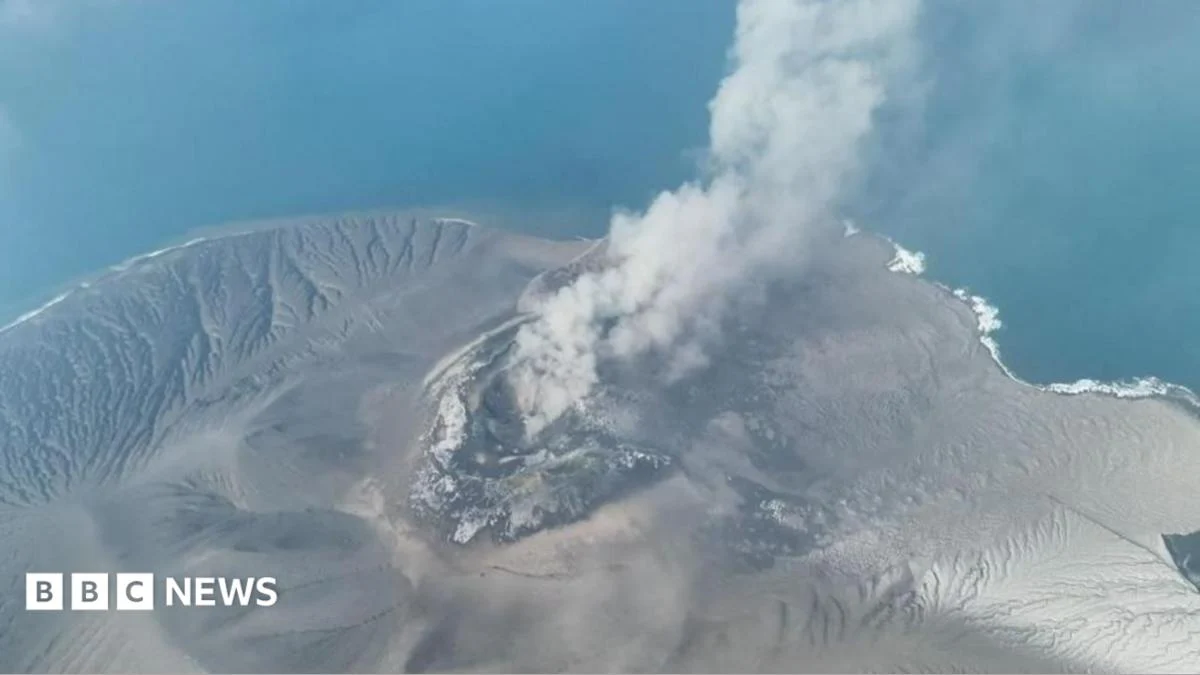
The specter of volcanic fury has once again descended upon Indonesia, as the Anak Krakatau volcano, a persistent and powerful force in the Sunda Strait, erupted with renewed intensity, leaving thousands of travelers stranded and prompting the closure of key airports. The dramatic events unfolded on Sunday, with the latest eruption occurring at 20:23, sending plumes of ash soaring into the atmosphere and creating a climate of uncertainty and disruption for both locals and tourists. In the wake of this significant volcanic activity, Halim Perdanakusuma, a smaller airport catering to civil and military flights, has joined the growing list of facilities that will remain closed until the situation stabilizes.
The immediate impact of the eruption was felt acutely at Jakarta’s Soekarno-Hatta International Airport, where snaking queues formed in departure halls on Monday. Stranded passengers, their travel plans thrown into disarray, were desperately seeking refunds and crucial updates on when they might finally be able to resume their journeys. The scene at the airport was one of palpable frustration and anxiety. Finna, a 46-year-old who was scheduled to fly home to Jakarta from Malang, a city in East Java, on Sunday morning, described the chaotic atmosphere as flights were repeatedly rescheduled. "It was very crowded because passengers from the morning flights had piled up, while those scheduled for later departures still didn’t know what would happen," she told BBC Indonesian, her voice tinged with exhaustion. "We were all glued to the flight information screens," she added, highlighting the collective fixation on any flicker of hope or information.
The sheer unpredictability of the situation led many to seek alternative, often arduous, routes. Unwilling to endure the prolonged uncertainty at the airport, Finna ultimately opted for a long overnight journey, spending the night on two intercity trains before finally arriving in Jakarta at 03:00 on Monday. Her experience was far from unique. "Everyone seems to be racking their brains [figuring alternative transportation options]," observed Jo Shaw, who was visiting Indonesia with members of her conservation charity, Save the Rhino International. Shaw’s team, whose original plans included camping at Java’s Ujung Kulon National Park, had to abandon their expedition after authorities raised the alert level for the Anak Krakatau volcano. While acknowledging the inconvenience, Shaw maintained a pragmatic perspective. "Being stranded in an airport hotel is a relatively minor inconvenience to be resolved in a few days hopefully," she stated, her primary concern resting with the dedicated teams working on the ground with the rhinos, who are now facing more challenging environmental conditions.
The disruption extended to international travelers as well. A newlywed Malaysian couple, who had just concluded a week-long honeymoon in Bali, found themselves in a precarious situation. They were informed that the earliest available flight back to Kuala Lumpur would not be until September 11th, a staggering five days beyond their original departure date. "What are we going to do here for another five days? We only prepared enough money for our honeymoon and [were supposed] to go home yesterday," Amir Hamzah, 29, lamented to Malaysia’s national news agency Bernama. He recounted their initial plan: "We thought we would just sleep at the airport for a few hours and then take the morning flight home [on Monday]. We never thought we would end up being stuck here for days." Their honeymoon bliss had abruptly transformed into an unexpected and costly ordeal.
The scientific community had issued stark warnings prior to the most recent significant eruption. On Monday, Indonesia’s Geological Agency cautioned that "the probability of further eruptions in the coming periods remains high." The scale of the volcanic ash dispersal was considerable. The meteorological agency BMKG reported that volcanic ash had reached an alarming altitude of 6,000 meters on the Java side of the volcano and a staggering 15,000 meters on the Sumatra side. Significant ashfall was also observed in some parts of Java’s westernmost province, Banten, underscoring the widespread impact of the eruption.
Anak Krakatau, a name that translates to "Child of Krakatoa," is situated in the Sunda Strait, strategically positioned midway between the islands of Java and Sumatra. Its geological history is marked by periods of intense activity, most notably its dramatic emergence from the sea at the beginning of the 20th century within the caldera left by the catastrophic 1883 eruption of Mount Krakatoa. This earlier event remains one of the most destructive volcanic eruptions in recorded history, causing widespread devastation and claiming tens of thousands of lives through tsunamis. The volcano’s propensity for instability was tragically demonstrated again in December 2018 when a significant flank collapse triggered a massive tsunami. That event alone resulted in over 400 fatalities and left thousands more displaced and injured along the vulnerable coastlines of Sumatra and Java. Scientific investigations following the 2018 collapse revealed that some of the dislodged rock fragments were substantial, measuring approximately 70-90 meters in height.
The dynamic nature of volcanic activity makes precise predictions about its duration challenging. Transport Minister Dudy Purwagandhi, addressing the temporary closures of the affected airports, stated, "We cannot ascertain when this will end due to the dynamic weather." He elaborated on the ongoing efforts by authorities at the airports, who were conducting tests every 30 minutes. These frequent checks were designed "to anticipate whether the ash spread is widening or subsiding," a crucial measure for determining when it would be safe to resume air travel.
In addition to the aviation disruptions, authorities have implemented stringent safety measures to mitigate risks to the public. A clear warning has been issued, advising against approaching or engaging in any activities within a 3-kilometer radius of the active crater. Furthermore, maritime traffic has been restricted, with ships passing through the Sunda Strait prohibited from entering an exclusion zone of the same 3-kilometer radius surrounding the volcano. Crucially, authorities have confirmed that the recent volcanic activity has not triggered any tsunami warnings, offering a degree of relief to coastal communities.
The geographical context of Anak Krakatau’s activity is rooted in its location along the Pacific Ring of Fire. This immense geological belt is a horseshoe-shaped zone that encircles the Pacific Ocean, characterized by a high concentration of volcanoes, earthquake sites, and active tectonic plate boundaries. Stretching over an astonishing 40,000 kilometers (25,000 miles), the Ring of Fire extends from the southern tip of South America all the way to New Zealand. This region is a hotbed of geological activity, accounting for approximately 90% of all earthquakes globally and hosting an estimated 75% of the Earth’s active volcanoes, totaling 452 individual active volcanic sites. Anak Krakatau’s persistent eruptions are a stark reminder of the powerful forces at play within this volatile geological arc. The current disruptions underscore the delicate balance between human activity and the raw power of nature, a balance that is constantly being tested in regions like Indonesia, situated at the heart of the Pacific Ring of Fire. The ongoing monitoring and response efforts by Indonesian authorities are critical in navigating these challenging and unpredictable volcanic events, prioritizing both public safety and the restoration of essential services.
