
 By admin
The 2026 NFL season is officially underway, and the air is thick with anticipation for how the strategic evolutions and roster shifts witnessed during the spring and summer will translate into on-field dominance. This season promises a fascinating blend of established powerhouses adapting their schemes and rising contenders leveraging new talent and innovative approaches. Each week, a deep dive into the All-22 coaches’ film will reveal five critical insights, but for this inaugural piece, we’ll focus on the potential Super Bowl-shifting developments that have emerged from a dynamic offseason.
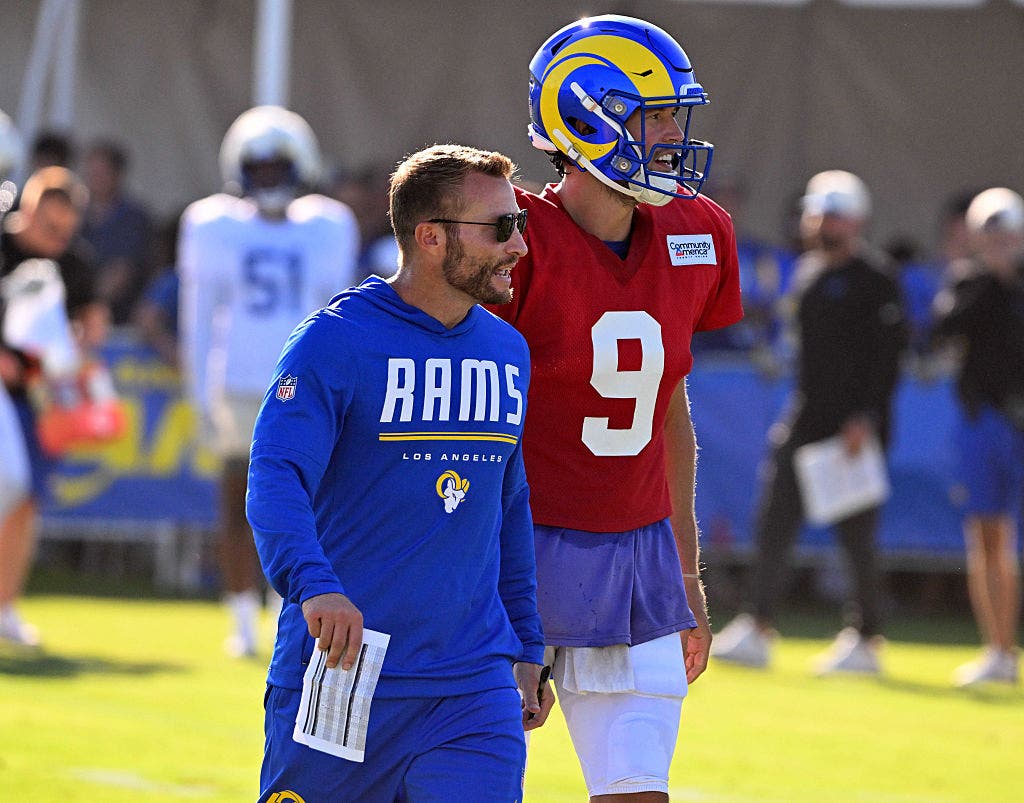
One of the most significant offensive trends poised to reshape the league is the continued proliferation of the "13 personnel" package (one running back, three tight ends, and one wide receiver), a strategy that saw remarkable success for the Los Angeles Rams in 2025. This formation, typically associated with heavy run blocking, has become an offensive coordinator’s coveted weapon for attacking the prevalent two-high safety defenses that often limit explosive passing plays. By deploying three "bigs" on the perimeter – tight ends with the dual threat of effective blocking and reliable route-running capabilities – offenses are forcing defensive coordinators into difficult personnel decisions. These decisions often involve keeping their base defense on the field in standard down-and-distance situations, or even short-yardage/goal-line packages, creating mismatches that can be exploited anywhere on the field.
The Rams, under the innovative guidance of head coach Sean McVay, masterfully utilized this approach, leveraging the versatility of their tight end corps, including Tyler Higbee, Colby Parkinson, Terrance Ferguson, and Davis Allen. This collective talent allowed McVay to dictate defensive alignments, creating more favorable matchups for quarterback Matthew Stafford. By employing max protection schemes and play-action passes, the Rams were able to stretch the field vertically, leading to Stafford’s near 70% completion rate and 20 touchdowns from this grouping last season, as reported by ESPN. Beyond the tight ends, the Rams also employed an array of bunch and clustered formations, designed to create an unbalanced offensive line and exploit running lanes. Simultaneously, "snug" alignments were used to test the communication and discipline of linebackers and safeties, forcing them to navigate complex switch calls required to defend against pick and rub routes. This strategic brilliance effectively gave McVay’s offense a "cheat code" that dominated scoreboards across the league.
Recognizing the Rams’ pioneering success, NFL teams spent the offseason meticulously studying the 13 personnel package and making roster decisions with run-heavy formations in mind. This strategic shift is evident in the 2026 NFL Draft, where a staggering 22 tight ends were selected, including nine within the top 100 overall picks. Notably, five teams—the Denver Broncos, Cleveland Browns, Miami Dolphins, Jacksonville Jaguars, and Baltimore Ravens—drafted multiple tight ends, signaling their intent to incorporate 13 personnel into their offensive schemes. The Jaguars, under the tutelage of McVay disciple Liam Coen, added to their tight end depth by selecting Nate Boerkircher in the second round and Tanner Koziol in the fifth, underscoring the growing influence of this trend. As more teams embrace multiple tight-end sets to create and exploit mismatches both in the running and passing game, the increased utilization of 13 personnel is undoubtedly the No. 1 trend to monitor closely in the early weeks of the 2026 season.
Another significant storyline unfolding in New England is the highly anticipated reunion of former Tennessee Titans teammates A.J. Brown and head coach Mike Vrabel. The acquisition of Brown, an All-Pro wide receiver with six 1,000-yard seasons, including two eclipsing 1,400 yards, provides the Patriots with a bona fide No. 1 receiver around whom to build their passing game. Brown’s imposing size, strength, and physicality make him a natural fit at the "X" receiver position, where he possesses the ability to overpower cornerbacks who dare to press him at the line of scrimmage. His prowess against bump-and-run coverage is well-documented; according to Next Gen Stats, he is one of only four players in NFL history to average over 75 receiving yards per game and more than 15 yards per reception. Last season, Brown commanded a 34.7% target rate against press coverage and averaged an impressive 2.6 yards per route, ranking fifth in the league. During his tenure with the Philadelphia Eagles from 2022 to 2025, he led the league with an average of 3.4 yards per route against press coverage among receivers with at least 100 such routes.
Intriguingly, Patriots offensive coordinator Josh McDaniels drew a comparison between the veteran Brown and the legendary tight end Rob Gronkowski during the offseason, citing Brown’s superior physical dimensions and dominant playmaking ability on the perimeter. If this comparison serves as an indicator of how Brown will be deployed, expect to see the physically gifted wideout utilized on the backside of various 3×1 and empty formations. This strategic alignment forces opponents to reveal their coverage schemes and telegraph potential double-team assignments, thereby creating opportunities for other receivers. The isolation alignment also enables the Patriots to manufacture and exploit favorable matchups, and the presence of the three-time Pro Bowler is expected to elevate the game of third-year quarterback Drake Maye, providing him with more manageable throws on the perimeter. Considering Maye led the league in completion percentage and passer rating in 2025 without a true No. 1 receiver, the addition of Brown should inject a much-needed dimension into an offense that faltered in the AFC Championship Game and Super Bowl LX.
McDaniels plans to further enhance the Patriots’ big-play potential by moving Brown around the formation, preventing opposing defenses from employing simplistic schemes to neutralize his impact. By aligning Brown in the slot, New England can exploit his speed and quickness against nickel backs and linebackers in the passing game, while also leveraging his blocking skills to create running lanes on the edges. Furthermore, given the Patriots’ offensive system, which incorporates various hot routes and sight adjustments allowing receivers to alter their routes based on coverage, Brown becomes a valuable chess piece. He can effectively counter aggressive pressure tactics designed to disrupt the quarterback’s rhythm. However, Brown’s route-running acumen and scheme mastery will face an immediate test in the season opener against a Seattle Seahawks defense known for its aggressive bump-and-run tactics against outside receivers.
The elusive quest for a defensive player to win NFL MVP has been ongoing since Lawrence Taylor’s dominant 1986 campaign, where he recorded 20.5 sacks, leading the New York Giants to a 14-2 record and Super Bowl XXI. This season, all-world edge defender Myles Garrett stands as a prime candidate to break that drought and become the Rams’ new defensive cornerstone. Even with the return of fellow future Hall of Famer Aaron Donald, the football world is keenly observing Garrett’s impact on a Rams team with championship aspirations. During his tenure with the Cleveland Browns, under former defensive coordinator Jim Schwartz, Garrett was strategically moved around the defensive front to prevent offenses from keying in on his location. The five-time All-Pro possesses the ability to win with fundamental maneuvers from a three-point stance, as well as a diverse repertoire of athletic and agile moves reminiscent of elite basketball players. While most offenses typically allocate two, and sometimes three, blockers to contain him, Garrett is now part of a formidable pass-rushing unit in Los Angeles, featuring fellow blue-chip talents who will punish opponents for overcommitting to the NFL’s all-time single-season sack leader.
Joining Garrett in the formidable Rams pass rush are Kobie Turner, Byron Young, and Aaron Donald. Each of these players is capable of recording double-digit sack totals, utilizing their individual array of one-on-one moves to expose offensive linemen lacking the talent or technique to win without assistance. The collective dominance of this trio will force opposing offenses into difficult decisions regarding when and how to double-team Garrett. Furthermore, the diverse talent within this group necessitates a playbook and call sheet that functions like "organized chaos" for defensive coordinator Chris Shula, allowing Garrett the freedom to freelance without compromising the defense’s structural integrity. Given the Rams’ consistent use of a 3-4 scheme complemented by various iterations of nickel and dime sub-packages, Shula faces the delicate challenge of maximizing his superstar’s strengths while maintaining scheme simplicity and consistency for the remainder of the unit. This presents a welcome dilemma for the Rams, but a potentially terrifying prospect for opponents, including the San Francisco 49ers in Week 1.
Kevin O’Connell has established himself as one of the NFL’s premier "quarterback whisperers," boasting a proven track record of eliciting Pro Bowl-caliber performances from signal-callers like Kirk Cousins and Sam Darnold. Even during periods of quarterback instability, the Minnesota Vikings managed to extract passable production from emergency starters such as Nick Mullens and Josh Dobbs. Despite a somewhat sputtering offensive performance under J.J. McCarthy in 2025, the Vikings’ acquisition of Kyler Murray injects an electrifying quarterback into their lineup, possessing the dual threat potential to dominate both as a runner and a passer from the pocket. Murray is arguably the most talented player O’Connell has worked with in Minnesota, and his dynamic skill set will undoubtedly allow the creative play designer to delve into the deeper sections of the playbook.
However, before unleashing the full arsenal of offensive creativity, the Vikings may initially opt for a simplified approach. This strategy aims to allow the two-time Pro Bowler to engage in a "pitch-and-catch" rhythm with a talented receiving corps, featuring the likes of All-Pro Justin Jefferson and Jordan Addison. By encouraging Murray to string together completions on high-percentage passes, the Vikings are seeking to establish a quick-rhythm offense that overwhelms opponents through execution and efficiency. Skeptics may question Murray’s ability to operate within a highly structured offense, given his history of freelancing and big-play hunting in Arizona. Yet, a more fundamental approach may actually align better with his skillset as a pinpoint passer with exceptional accuracy and a wide range of throwing capabilities. With Murray expected to target the entire field using a variety of rhythm throws designed to stretch the defense from sideline to sideline and end line to end line, defensive coordinators will be faced with a critical decision: play soft, umbrella coverage, prioritizing coverage on Jefferson and Addison while leaving potential running lanes for Murray and the running backs on scrambles and designed runs, or opt for a more aggressive approach.
If defensive coordinators choose to load the box or increase pressure to attack Murray directly, the veteran quarterback’s explosive running ability and expansive passing range could trigger a "big-play bonanza" for the Vikings. In a league where explosive plays frequently determine game outcomes, Murray’s potential for game-altering plays within a meticulously crafted offense could be the most compelling storyline to watch this weekend as Minnesota hosts Green Bay.
For those who haven’t been closely following "America’s Team" this summer, the Dallas Cowboys are quietly emerging as legitimate Super Bowl contenders. This resurgence is fueled by an explosive offense and a retooled defense poised to surprise opponents throughout the fall. Under the direction of first-year defensive coordinator Christian Parker, a disciple of Vic Fangio who spent the past two seasons with the Philadelphia Eagles, the Cowboys have assembled a unit perfectly suited to stifle opponents forced to chase points against their high-powered offense. The 34-year-old defensive playcaller boasts not only a talented collection of pass rushers with Pro Bowl experience – including Von Miller, Quinnen Williams, Kenny Clark, and Rashan Gary – but also ball-hawking, high-IQ defenders in the secondary. This potent combination of pass rush and coverage is designed to test the patience and discipline of quarterbacks who lack the composure to execute a "dink-and-dunk" offense against a defensive backfield committed to taking away deep throws and explosive plays.
Furthermore, the Cowboys aim to stuff the run from two-high safety structures and light boxes, making it difficult for opponents to anticipate the location of extra defenders designed to plug designated run gaps. By presenting an umbrella structure before transitioning to airtight zones with single-high, weak-side rotations, the Cowboys intend to frustrate opponents with a disciplined approach that condenses the field, featuring a group of players operating with speed and freedom in the backend. If this exceptionally talented pass rush unit performs to its collective potential, with a blend of veteran leadership and newcomer impact, the Cowboys’ defense could evolve into a suffocating force. This unit, under the guidance of a young coach who understands how to build a system that empowers players to thrive as "see ball, get ball" defenders, could become a defining characteristic of their championship aspirations.
