
 By admin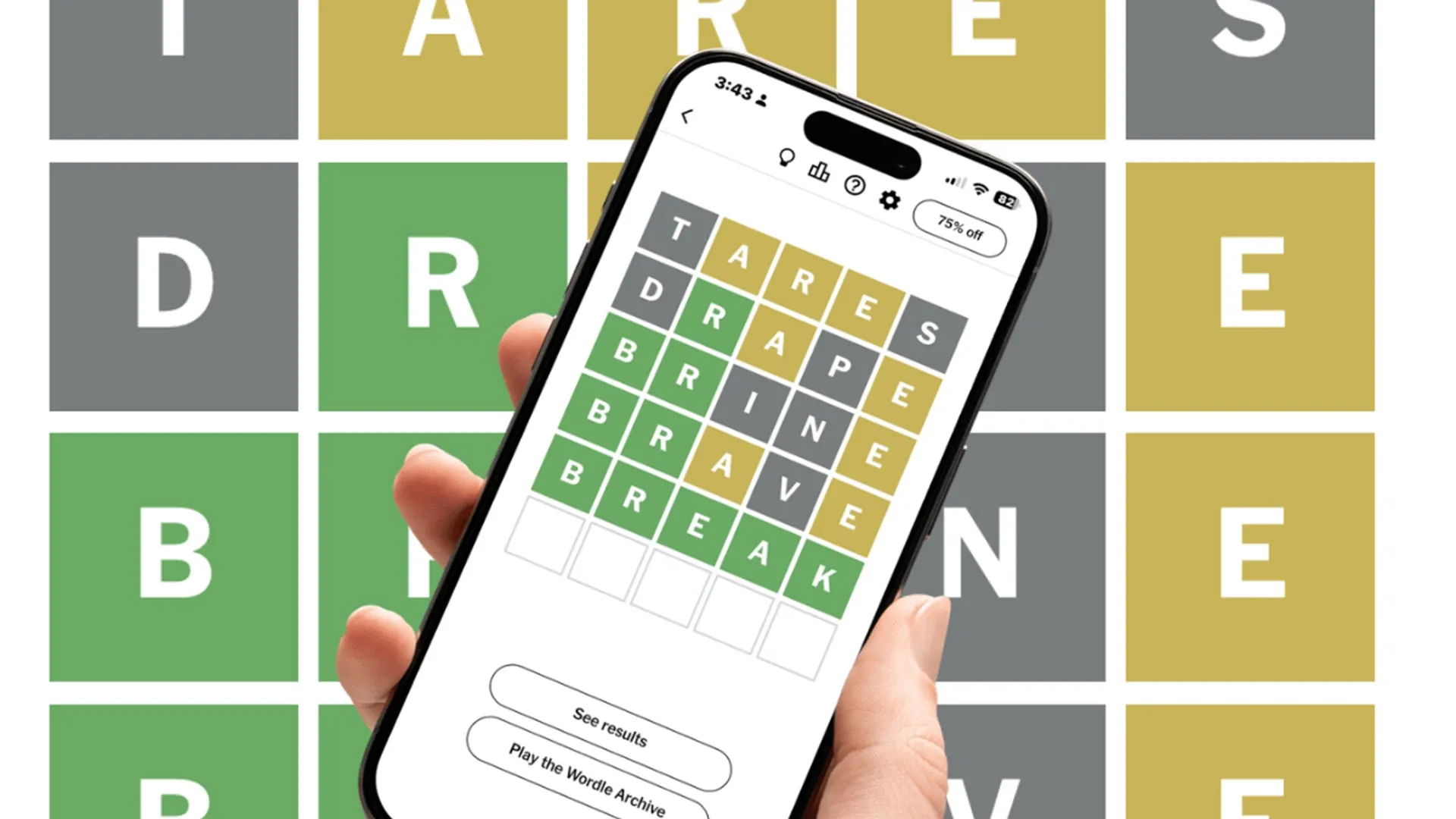
The global phenomenon of Wordle, a daily online word puzzle, captured the public’s imagination shortly after its debut in late 2021. Its simple yet addictive premise—guessing a five-letter word in six tries—made it a staple for millions, sparking daily conversations and friendly rivalries. What often seems like a game of pure linguistic intuition or educated guessing, however, is, at its core, a problem of uncertainty reduction. This is precisely where the power of information theory comes into play, transforming a casual pastime into a fascinating case study for mathematical optimization.
Unlocking Wordle’s Secrets with Information Theory
The research team, spearheaded by Assistant Professor Congyu "Peter" Wu from Binghamton University’s Thomas J. Watson College of Engineering and Applied Science’s School of Systems Science and Industrial Engineering, focused their efforts on a concept central to information theory: Shannon entropy. This mathematical framework, pioneered by Claude Shannon in the mid-20th century, provides a means to quantify uncertainty and measure the expected information content of a message or, in this case, a guess.
"The core insight is surprisingly counterintuitive," explains Dr. Wu. "Instead of always trying to guess the answer as quickly as possible, our method favors words that reveal the greatest amount of useful information, even if that word isn’t the most likely solution itself." This paradigm shift is crucial. Human players often prioritize words with common letters or those they believe might be the answer, driven by a desire for immediate gratification. The algorithm, by contrast, operates with a singular focus: to minimize the remaining uncertainty about the hidden word as efficiently as possible.
How Wordle Generates Information from Every Guess
To fully appreciate the mathematical strategy, it’s important to understand how Wordle functions as an information-generating system. The game presents players with a blank slate – a grid of five empty squares – and six opportunities to identify a secret five-letter word. The journey begins with no clues, making the first guess a critical decision that sets the stage for subsequent turns.
After each attempt, Wordle provides immediate feedback through a color-coded system, turning every guess into a precise piece of information:
- Green: A letter turns green if it is in the correct position within the hidden word. This provides definitive placement information.
- Yellow: A letter turns yellow if it is present in the hidden word but is in the wrong position. This indicates the letter’s presence but not its location, narrowing down possibilities for its placement.
- Gray: A letter turns gray if it is not present in the hidden word at all. This conclusively eliminates that letter from all future considerations for the target word.
Players intuitively use these clues to progressively narrow down the vast array of possible five-letter words. The game culminates either when all five squares turn green, signifying a successful solve, or when the player exhausts all six attempts without uncovering the word. This iterative process of receiving feedback and reducing the set of potential answers makes Wordle a natural and fertile ground for the application of information theory, a branch of mathematics fundamentally concerned with the quantification, storage, and communication of information.
The Math Behind a 99% Wordle Strategy: Deeper Dive into Shannon Entropy
The research team’s formidable success rate stems from their sophisticated application of Shannon entropy. While entropy might sound like a complex scientific term, in the context of information theory, it serves as a precise mathematical measure of uncertainty. Imagine trying to identify an object from a large group. If you ask a question that splits the group perfectly in half (e.g., "Is it animal or vegetable?"), you gain a lot of information, significantly reducing your uncertainty. If your question only eliminates one obscure item, you gain very little. Shannon entropy quantifies this "expected information gain" for any given choice.
In the realm of Wordle, this translates to a strategic shift: instead of merely choosing the word that appears most likely to be the correct answer, the researchers’ algorithm meticulously calculates which guess would eliminate the greatest number of possibilities from the remaining pool of potential solutions. This isn’t about guessing the target word directly; it’s about making the most "informative" guess.
"Let’s say you’re at a certain guess. The previous guesses will eliminate a whole bunch of options, and based on the remaining options, guessing some words will send you into a trajectory where information gain is speedier," elaborated Dr. Wu. This ‘trajectory’ concept is crucial. It suggests that the algorithm isn’t just looking at the immediate impact of a guess, but how that guess positions the player for subsequent, even more efficient, information gathering. A word that, at first glance, seems unlikely to be the final answer can still prove to be extraordinarily valuable if its unique combination of letters helps to divide the remaining possibilities into distinct, smaller, and more manageable groups. For instance, a word like "ADIEU," while not a common answer, uses four vowels, providing a massive amount of early information about the vowel structure of the hidden word.
Donald Stephens, a doctoral student at Binghamton University and a key member of the research team, underscored this nuance: "A subtle but important insight from the paper is that a guess doesn’t have to be the most likely answer; it simply has to be informative. By applying Shannon entropy, the objective shifts to maximizing the expected reduction in uncertainty rather than the probability of being right. In practice, this approach can lead to solving the puzzle in fewer guesses." This distinction is what separates the mathematically optimal strategy from intuitive human play, which often prioritizes perceived likelihood over pure information density.
Why the Best Guess Can Look Wrong: Human Intuition vs. Algorithmic Precision
To an average human Wordle player, some of the strategy’s recommendations might initially appear perplexing, even random. This is because human players are often guided by intuition, pattern recognition, and a natural bias towards words that seem "close" to the answer. The algorithm, however, is devoid of such biases; its sole objective is to optimize for information gain, irrespective of how "right" a word might feel.
For example, if a player has narrowed down the possibilities to a handful of words that share some letters but differ significantly in others, a human might try a word that shares many letters with one of the likely candidates. The algorithm, conversely, might suggest a word that has little chance of being the actual solution but strategically tests a diverse set of letters present across the entire remaining set of possibilities. By doing so, even if that suggested word is incorrect, the color-coded feedback it generates will likely eliminate a substantial chunk of the remaining options, pointing much more clearly toward the correct answer in subsequent turns. It’s a calculated sacrifice of an immediate guess for a more informed path forward.
Implementing this mathematically superior strategy during a live Wordle game would necessitate the use of an external computational tool. After each guess, the player would input Wordle’s color-coded feedback (green, yellow, gray) into a specially designed script or program. This software would then instantly process the new information, update its probabilistic model of remaining words, and calculate the next optimal guess—the word expected to provide the greatest amount of new information and thus maximize the reduction of uncertainty. This dynamic recalculation at each step is what makes the strategy so powerful and adaptive.
Information Theory Trumps Common Letter Guessing: A Statistical Vindication
The Binghamton researchers put their information theory approach to the ultimate test, comparing it against a more conventional human-like strategy: one centered on frequently used letters in the English language (e.g., prioritizing "A," "E," "R," "O," "S," "L," "I," "N," "T"). This "common letter" strategy is a widely adopted heuristic among Wordle players, relying on the statistical frequency of letters to make initial and subsequent guesses.
The results of their simulations were stark and conclusive. The information theory method achieved a remarkable success rate, solving an astounding 99% of Wordle puzzles within the allotted six guesses. In stark contrast, the common letter strategy, while intuitively appealing, managed to solve only 90% of the puzzles.
This significant 9% difference is not merely a statistical anomaly; it highlights a fundamental distinction between passively choosing letters that appear often and actively choosing guesses that provide the greatest amount of new and relevant information. While common letters are undoubtedly useful, the mathematical approach continually adjusts its choices based on what has already been learned from previous feedback. It’s a dynamic, adaptive system versus a relatively static, pre-programmed heuristic. The algorithm isn’t just looking for ‘E’ because it’s common; it’s looking for ‘E’ because, given the current state of information, testing ‘E’ in a particular position or within a specific word structure will maximally reduce the pool of possible solutions. This intelligent adaptation is the core reason for its overwhelming superiority.
From Classroom Project to Published Research: A Testament to Applied Education
What makes this research even more compelling is its origin story. The project did not begin as a formal, top-down research initiative but rather blossomed from a practical classroom assignment. Dr. Wu challenged his students to demonstrate how information theory, often perceived as an abstract mathematical concept, could be applied to solve a real-world problem. The students, drawn to the pervasive popularity of Wordle, chose the daily puzzle as their practical testing ground, inadvertently transforming a popular pastime into a rigorous demonstration of mathematical decision-making.
Co-author Talal Aladaileh reflected on this evolution, stating that the project’s journey from a humble classroom exercise to a published academic paper in the Northeast Journal of Complex Systems is a testament to the rigor, depth, and quality of the School of Systems Science and Industrial Engineering program at Binghamton. "The courses here don’t just teach concepts; they push you to apply them in ways that have real, lasting impact," Aladaileh emphasized, underscoring the program’s commitment to practical, hands-on learning that transcends theoretical boundaries.
Dr. Wu further elaborated on the broader implications of the project, highlighting how it effectively demonstrates information theory’s capacity to move beyond merely describing uncertainty. Instead, it transforms into a powerful, dynamic tool for making measurably better decisions. "What is especially creative and valuable about the team’s intellectual contribution," Wu stated, "is that it transformed a static measurement (Shannon entropy) in a scientific domain into a dynamic solution that helps accomplish a popular task better, which showcases the team’s deep understanding of class material and their talent as engineers."
The findings, detailed in their paper "Solving Wordle Using Information Theory," published in the Northeast Journal of Complex Systems, not only offer a definitive strategy for Wordle enthusiasts but also serve as a compelling illustration of how abstract mathematical principles can yield concrete, superior results in everyday contexts. This research underscores the enduring power of interdisciplinary thinking and the capacity of rigorous academic inquiry to shed light on even the most seemingly simple aspects of modern life.
