
 By admin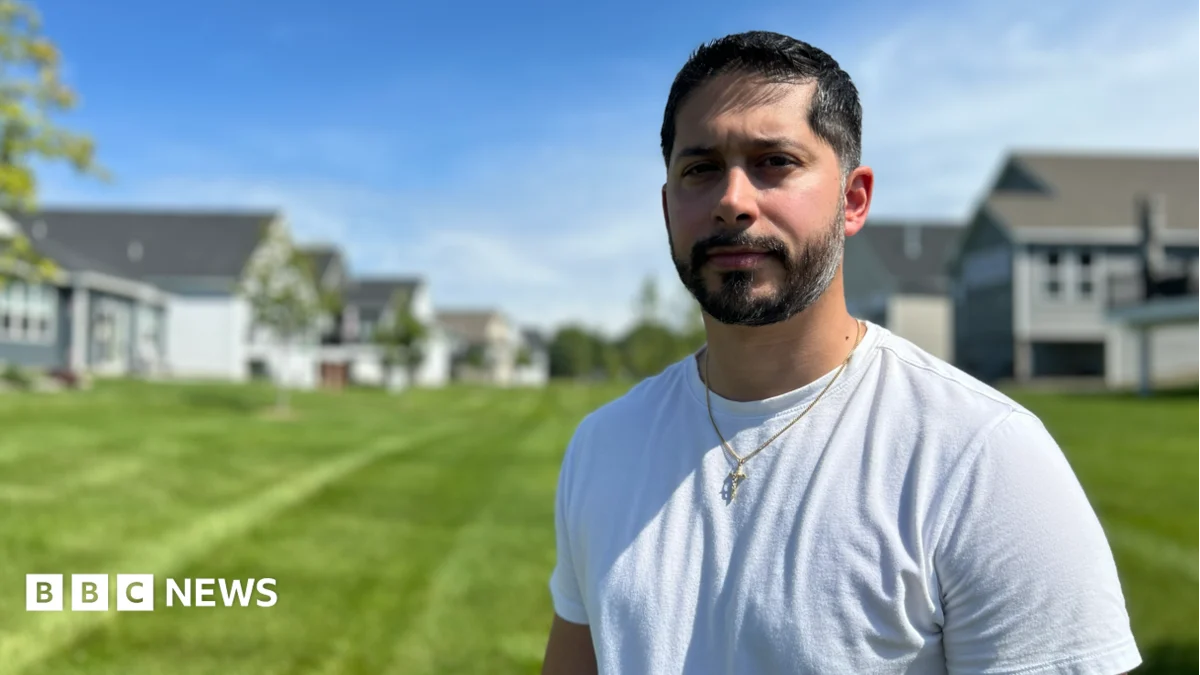
In September 2025, Gerald Bourguet believed he had reached the pinnacle of his personal and professional aspirations. He and his wife had recently purchased their dream home, complete with a coveted swimming pool. Their joy was amplified by the recent arrival of their baby boy, and Bourguet was living his passion, writing full-time about professional men’s basketball. This idyllic existence, however, was about to be irrevocably shattered by a series of online posts he made in the immediate aftermath of the fatal shooting of conservative activist Charlie Kirk on September 10th, while Kirk was delivering a speech on the campus of Utah Valley University.
Bourguet’s online commentary, posted mere hours after Kirk’s death, was starkly critical. He characterized Kirk as an "evil man," asserting that the activist had dedicated his life to propagating hateful ideologies. Furthermore, Bourguet took aim at Kirk’s supporters, questioning their silence on the pervasive issue of school shootings. "I had seen the way that people were talking about this person – kind of eulogizing him and lionizing him and it bothered me based on a lot of the things that he had said," Bourguet explained to the BBC, articulating the visceral reaction he experienced to the widespread veneration of Kirk.
Charlie Kirk, the founder of the Christian youth organization Turning Point USA, was an undeniably polarizing figure in the American political landscape. For adherents of the political right, Kirk was lauded as a charismatic orator with an uncanny ability to distill complex conservative ideas into a form that resonated with younger demographics. Conversely, his detractors found his pronouncements on a broad spectrum of issues – encompassing race, immigration, gun control, and gender identity – to be profoundly offensive and harmful.
The fallout from Bourguet’s critical posts was swift and devastating. Screenshots of his online commentary rapidly went viral, triggering a torrent of repercussions. He was summarily fired from his position, his home address was publicly exposed, and he began to receive a barrage of threatening text messages. The escalating safety concerns for his family, including their four-month-old son, compelled them to flee their home state. They eventually returned months later, not to reclaim their lives, but to sell their house and relocate permanently. A year after the incident, Bourguet maintains he harbors no regret for the sentiments he expressed, yet he candidly acknowledges the profound and lasting impact: "My life will never be the same after this." He added, with palpable weariness, "At age 35, I am having to start over in a lot of respects… I wouldn’t wish this on my worst enemy." Bourguet spoke to the BBC from his new, undisclosed location, a testament to the ongoing need for personal security. His former employer, PHNX Sports, did not respond to the BBC’s inquiries for comment.
Bourguet’s experience was not an isolated incident. He was one of hundreds who faced termination or disciplinary action following critical comments made about Charlie Kirk in the wake of his death. While some individuals who lost their employment have since been reinstated or received restitution – in some instances amounting to millions of dollars – others, like Bourguet, have been forced to rebuild their lives and careers from the ground up.
In the immediate aftermath of Kirk’s assassination, the prevailing sentiment among many was to keep their feelings private, sharing them only with a trusted inner circle. However, the highly polarized ecosystem of social media platforms became an arena for rapid pronouncements, with individuals rushing to either laud or denounce the controversial activist. Some observers deemed criticisms posted so soon after his death as lacking in taste and sensitivity. Conversely, others demanded swift repercussions, arguing that such comments were callous, mocking, and potentially incited further violence.
Laura Loomer, a prominent right-wing commentator with a substantial following of nearly two million on the platform X (formerly Twitter), issued a stark warning to Kirk’s critics: "prepare to have your whole future professional aspirations ruined." This pressure for punitive action extended to the highest echelons of American government. Vice President JD Vance, in the days following the assassination, urged his constituents to "call them out" when they witnessed individuals "celebrating Charlie’s murder." He further advised, "And hell, call their employer." White House spokesperson Davis Ingle, in a statement to the BBC, unequivocally stated, "Anyone who engages in or endorses political violence or assassination culture must be condemned in the harshest terms possible."
From the left, critics argued that there was a crucial distinction between expressing criticism of Kirk and celebrating his death. Some commentators accused conservative leaders of hypocrisy, highlighting their previous vocal opposition to the rise of "cancel culture" – a phenomenon where individuals expressing controversial opinions face severe professional and social repercussions. Jordan Pace, a Republican member of the South Carolina House of Representatives, offered a nuanced perspective to the BBC: "Cancel culture can be good, it’s bad when it’s applied in the wrong ways." He elaborated, "If you are someone who celebrates political assassinations and the murder of an innocent man with two young children in a way that many people did, then yeah, that’s an appropriate way for society to function, to shame those people." Pace had previously advocated for defunding universities in South Carolina if they failed to take action against employees who made disparaging remarks about Kirk. Notably, one of his posts garnered a re-share from then-President Donald Trump.
Across the nation, numerous employers, encompassing both private and public entities, responded with alacrity to the mounting pressure. While precise figures on the number of individuals subjected to disciplinary action are elusive, a Reuters tally conducted in November of the preceding year identified over 600 instances. This number is widely considered an undercount, as not all cases garnered national or local media attention. The specific actions that precipitated these disciplinary decisions varied considerably. In Tennessee, anthropology professor Tamar Shirinian was suspended and subsequently terminated for a Facebook comment stating that "the world is better off" without Kirk. A flight attendant employed by Delta Air Lines was fired for posting "good riddance" in response to news of Kirk’s death. Office Depot terminated an employee for refusing to serve a customer who wished to print flyers for a Kirk vigil. Delta Air Lines and Office Depot declined to comment on these specific cases.
Other individuals faced repercussions even without making direct comments about Kirk or his demise. Darren Michael, a theater professor in Tennessee, was dismissed after sharing a screenshot of a 2023 news article detailing Kirk’s controversial stance on gun control. The article quoted Kirk as stating that protecting citizens’ Second Amendment rights was a worthwhile pursuit, even if it resulted in annual gun deaths. Brittney Brown, a biologist with Florida’s Fish and Wildlife Conservation Commission, was terminated after reposting a meme that satirized Kirk’s position on gun violence in light of his own shooting. "I was absolutely gutted," Brown recounted to the BBC, describing her firing as a moment where "the entire world just completely flipped on its head."
In the year following Kirk’s killing, a significant number of lawsuits have been filed nationwide by individuals terminated for their public comments regarding the activist. These plaintiffs argue that their dismissals constituted violations of their constitutional right to free speech. In several instances, these legal challenges have resulted in substantial financial settlements. Brittney Brown agreed to a $485,000 settlement, a sum approximately twelve times her annual salary. Darren Michael was reinstated by Austin Peay State University, and in January of the following year, the institution agreed to pay him $500,000 to resolve legal claims. The university did not respond to requests for comment. In what appears to be the most significant settlement reviewed by the BBC, the University of Tennessee agreed to pay $1.9 million to resolve a lawsuit brought by anthropologist Tamar Shirinian concerning her "better off" remark. As part of this settlement, Shirinian will not be reinstated and has agreed not to reapply for future positions at the university. More recently, an arbitrator ordered The Washington Post to rehire opinion journalist Karen Attiah, with back pay, after her termination for online posts that included her statement that she would not engage in "performative mourning for a white man that espoused violence." Several other lawsuits remain in various stages of litigation, according to BBC findings.
The majority of these legal actions have been pursued by employees of government institutions or unionized workers, who typically possess certain free-speech protections under the law. However, in the United States, the prevalent employment structure in the private sector is "at-will" employment, which grants employers the latitude to terminate employees for virtually any reason, or no reason at all. Even for those who have achieved legal victories, the outcome often feels hollow. "All I wanted was my job back," biologist Brown stated. "How much taxpayer money did they waste on this when I barely made $40,000 a year? So no, it does not feel like justice." Shirinian echoed this sentiment, telling the BBC that her primary desire was to return to her position. She viewed a legal case as a potentially protracted and draining endeavor. "I took a settlement because this allows me to move on with my life," she explained. "The one small regret that I have is that I will not see my day in court and justice will not be served in that way. But I think that the number of the settlement actually speaks to that anyway." The University of Tennessee and Florida’s Fish and Wildlife Conservation Commission did not respond to the BBC’s requests for comment.
As an at-will employee in the private sector, Gerald Bourguet faces significant legal hurdles in challenging his dismissal. A year after the incident, he continues to grapple with the difficulty of finding new employment. While the state he now resides in boasts a professional basketball team, Bourguet believes his past actions have rendered him virtually unemployable within the specialized and interconnected world of sports journalism. In response, he has launched his own podcast, though he harbors doubts about its potential to generate sufficient income to meet his financial obligations. "I have accepted that that life is over and that I need to start a new one," he stated. The prospect of leaving the country entirely is now a consideration.
Despite the profound personal and professional sacrifices they have endured, those who spoke to the BBC expressed a consistent sentiment: after months of introspection, they do not regret their actions. "I have a right to say what I want to say," Brown asserted. "They are the ones who should have the regrets, not me," she added, referring to her former employer. Shirinian did issue an apology to the university days after her suspension, explaining to the BBC that her comment was an "emotional outburst" not intended for public consumption and that she regretted the tone. "I don’t regret the sentiment, however," she clarified, "the sentiment was that I am not sad. And I refuse to be made to feel like I have to be sad that someone who was so hateful was killed." Bourguet, too, maintained that he does not regret his statements, although he acknowledged the conflicting emotions surrounding their consequences. "I don’t regret that line of thinking because I think it’s important to push back on things that are steeped in hatred," he said, referring to Kirk’s political messaging. He concluded, "I don’t regret what I said. I don’t regret the way that I said it. I do regret the ripple effects that came from it and the way that they impacted me, my career, my family, and my son."
