
 By Lina Irawan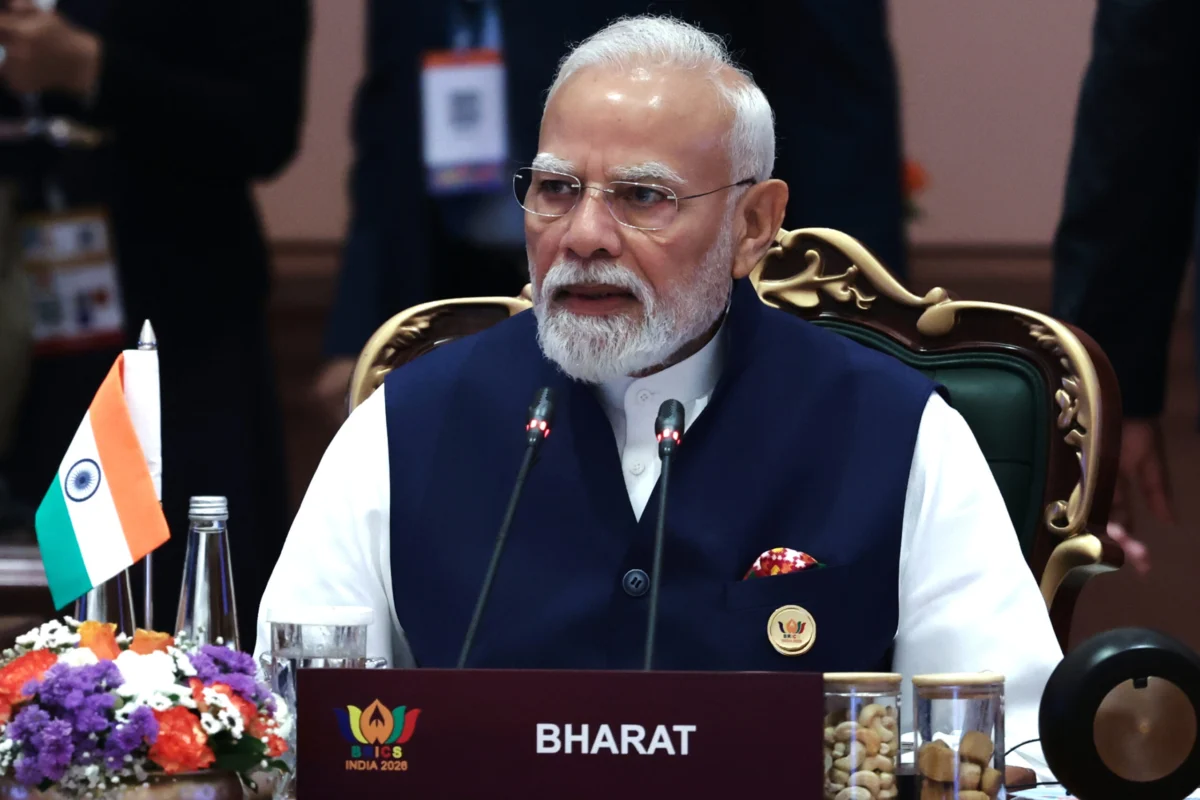
Addressing the BRICS summit of leading developing nations on its second day in New Delhi, Prime Minister Modi underscored the profound and interconnected challenges facing the international community. His remarks highlighted the urgent need for collective action among nations that share common vulnerabilities and aspirations, particularly those within the burgeoning "Global South." Modi further cautioned that the "weaponization of technology and critical minerals" could severely impede global development and shared prosperity, signaling a new front in geopolitical competition that threatens equitable growth.
The BRICS bloc, originally founded in 2006 by Brazil, Russia, India, and China, has rapidly evolved from an economic acronym to a significant geopolitical force. Its recent expansion to 11 members – with the addition of Saudi Arabia, the United Arab Emirates, Egypt, Ethiopia, Argentina, and Iran – marks a pivotal moment, dramatically increasing its collective demographic and economic heft. This expanded group now represents approximately half the world’s population and commands a significant share of global economic output, ranging from crucial energy resources to vast consumer markets. From its inception, BRICS has consistently sought to champion greater representation for developing countries in global governance institutions and has actively promoted alternatives to what it perceives as Western-dominated financial systems, epitomized by the establishment of the New Development Bank (NDB).
Modi articulated the growing peril posed by an increasingly volatile world. "The number of conflicts and tensions in the world is continuously increasing, and this is having an increasingly negative and far-reaching impact on the lives of ordinary people," Modi stated, speaking alongside other influential bloc leaders, including Chinese President Xi Jinping, Russian President Vladimir Putin, and Iranian President Masoud Pezeshkian. His words resonated with the shared experiences of many developing nations, which often bear the brunt of global instability despite having limited roles in its creation. These conflicts, whether localized or regional, inevitably disrupt trade routes, displace populations, and divert resources away from critical development initiatives.
The Indian premier further emphasized the interconnectedness of global challenges, stating, "Pandemics, climate disasters and supply-chain disruptions have shown that in today’s interconnected world, no crisis remains confined to a single region." This observation, sharply illustrated by the COVID-19 pandemic and recent extreme weather events, underscores the necessity of a coordinated global response. In a tangible step towards this goal, Modi announced that the bloc had agreed to establish an integrated early warning system for infectious diseases. This initiative aims to bolster preparedness and response mechanisms for future outbreaks, recognizing that rapid, collaborative action is paramount in mitigating the spread and impact of global health crises. Such a system could leverage the collective scientific and technological capacities of member states, facilitating data sharing, joint research, and coordinated public health interventions.
The warning about the "weaponization of technology and critical minerals" adds a contemporary dimension to the traditional geopolitical landscape. In an era increasingly defined by digital transformation and green energy transitions, control over advanced technologies and the rare earth elements and other critical minerals essential for their production has become a new battleground. Nations are increasingly imposing export controls, intellectual property restrictions, and sanctions related to technology, while competition for access to mineral resources intensifies. Modi’s statement implies concern that such practices could be used as coercive tools, stifling the technological advancement and industrial growth of developing nations, thereby exacerbating existing inequalities and hindering the collective pursuit of sustainable development goals. For the Global South, equitable access to technology and critical minerals is vital for industrialization, job creation, and climate action.
In his closing remarks at the summit, Prime Minister Modi urged the bloc nations to translate the summit’s agreements into tangible and time-bound action, moving them from "files to real-life impact." This call for practical implementation reflects a desire to demonstrate BRICS’s effectiveness and its commitment to delivering concrete benefits for its member states and the broader developing world. He expressed his conviction that the discussions over the past two days reinforced the belief that "BRICS is not merely a group of countries, but an ecosystem of solutions," signaling a vision for the bloc as a collaborative platform for addressing multifaceted global issues. Modi concluded by wishing China success as it prepares to take over the BRICS chair for the next term, underscoring the rotational leadership structure and the continuity of the bloc’s agenda.
The significance of the BRICS summit extended beyond Modi’s addresses, culminating in a joint declaration released on Saturday that outlined the bloc’s shared positions on a wide array of international issues. The declaration expressed profound concern over escalating tensions in the Middle East and Sudan, calling for disputes to be resolved through dialogue and diplomacy. This stance reflects a shared commitment to multilateralism and peaceful conflict resolution, particularly relevant given the diverse geopolitical alignments within the expanded BRICS membership.
A cornerstone of the BRICS philosophy, reiterated in the declaration, is the support for a multipolar world order. This vision challenges the traditional unipolar or bipolar structures of global power and advocates for a more balanced distribution of influence among multiple centers. To this end, the bloc called for comprehensive reforms to the United Nations, including its Security Council, to make it more representative and effective in addressing contemporary global challenges. Developing nations have long argued that the current composition of the Security Council, largely unchanged since World War II, does not reflect the geopolitical realities of the 21st century, with calls for permanent representation from Africa, Latin America, and major Asian powers like India. Similar calls were made for reforms to global financial institutions such as the World Bank and the International Monetary Fund, pushing for greater voting power and representation for emerging economies, which currently feel underrepresented in their governance structures.
The BRICS leaders also voiced strong opposition to unilateral sanctions and coercive economic measures, criticizing sanctions not authorized by the U.N. Security Council. This position is particularly resonant for members like Russia and Iran, which are subject to extensive Western sanctions, but it also reflects a broader concern among developing nations about the extraterritorial application of national laws and the use of economic leverage as a political weapon. Furthermore, the declaration criticized rising tariffs and non-tariff barriers, asserting that such protectionist measures undermine global trade and supply chains, which are crucial for the economic growth of developing countries.
In a move aimed at fostering greater financial autonomy and resilience, the bloc backed greater use of local currencies in trade and stronger cross-border payment systems. This initiative is seen as a strategic step towards reducing reliance on the U.S. dollar, mitigating exposure to geopolitical risks associated with Western financial systems, and promoting intra-BRICS trade. While discussions about a common BRICS currency are nascent and complex, the focus on local currency settlements and improved payment infrastructure represents a tangible effort to create a more diversified and resilient global financial architecture. The New Development Bank, founded by BRICS, plays a crucial role in facilitating development projects in member states and can be a vehicle for such local currency transactions.
Beyond economic and geopolitical alignment, the declaration called for enhanced cooperation on critical global issues, including food security, energy, digital infrastructure, artificial intelligence, and climate action. This reflects a comprehensive agenda aimed at addressing the fundamental needs and future challenges of member states. Cooperation in food security could involve sharing agricultural technologies, improving supply chain resilience, and addressing price volatility. In energy, it encompasses transitioning to cleaner sources while ensuring energy access and security. Digital infrastructure and AI cooperation could focus on bridging the digital divide, developing ethical AI frameworks, and fostering innovation. Climate action, a pressing concern for the Global South, involves technology transfer, climate finance, and collaborative efforts towards adaptation and mitigation.
One of the most significant diplomatic achievements of the summit was forging consensus among Iran, Saudi Arabia, and the United Arab Emirates – three nations that historically hold competing positions on key regional and geopolitical issues. Their inclusion in BRICS, and their agreement to the joint declaration, signals a remarkable diplomatic breakthrough amidst ongoing conflicts and heightened tensions in the Middle East. These countries have been on opposing sides in various regional proxy conflicts and have complex bilateral relationships. Their collective commitment within BRICS underscores the bloc’s potential to transcend traditional geopolitical divides and foster cooperation even among rivals, driven by shared economic interests and a desire for a more balanced global order. This ability to bring together such diverse and sometimes adversarial actors adds considerable weight to BRICS’s claims of being a viable alternative platform for international cooperation.
The expanded BRICS, now a more diverse and influential group, faces both immense opportunities and significant challenges. While its growth signifies a powerful push towards a multipolar world and greater voice for the Global South, it also introduces complexities in consensus-building. Managing the diverse economic models, geopolitical alignments, and national interests of 11 member states will require sophisticated diplomacy and a strong commitment to shared objectives. Nonetheless, the New Delhi summit underscored BRICS’s evolving role as a crucial forum for dialogue, cooperation, and collective action, aiming to reshape global governance and foster a more inclusive and equitable international system in the face of escalating global crises. The calls for concrete action and an "ecosystem of solutions" highlight the bloc’s ambition to move beyond rhetoric and deliver tangible impact for its members and beyond.
