
 By admin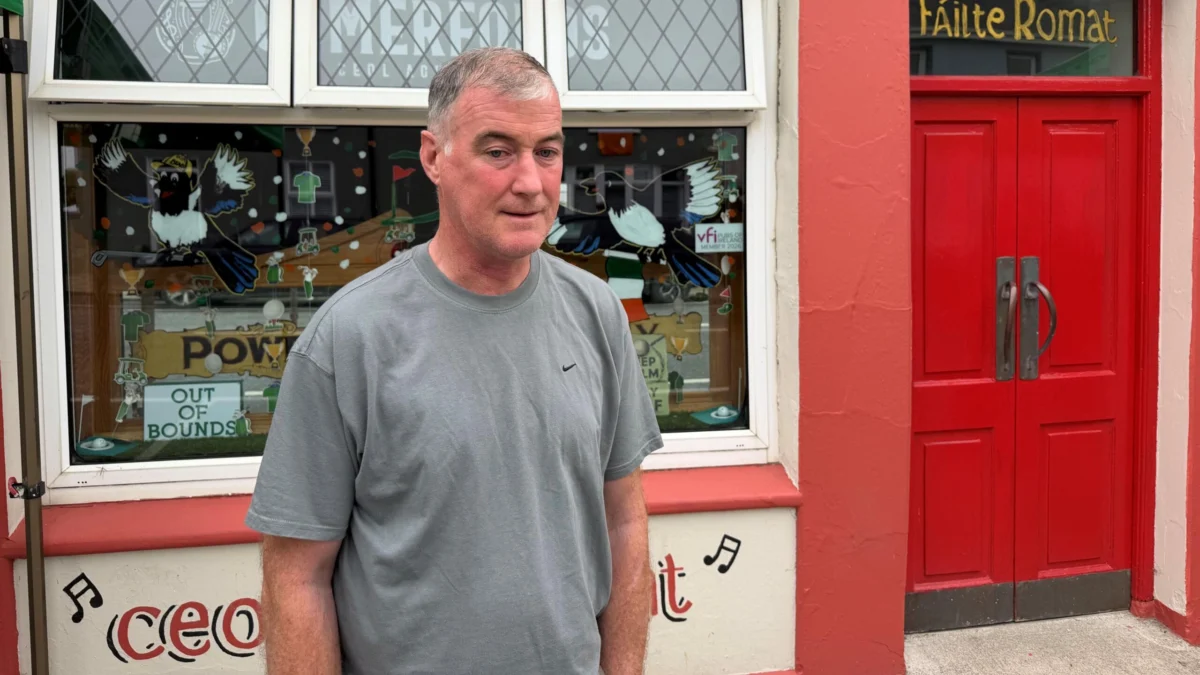
President Donald Trump, during the second day of his visit to Ireland, emphatically reiterated his stance favoring a united Ireland while attending the Amgen Irish Open at his Trump International Golf Links in Doonbeg, County Clare. The remarks, initially made during a meeting with Taoiseach Micheál Martin in Dublin, were further elaborated upon at his Doonbeg resort. Trump, sporting a white USA baseball cap and a navy blazer over a white shirt, addressed reporters with outstretched arms, describing his support for a united Ireland as a "fairly routine comment" and a natural progression for the island.

"I’ve always loved the people of Ireland," Trump stated, elaborating on his perspective. "It just seems to me you have Northern Ireland and Ireland. It seems that one of the naturals of all of time is to put them together. That’s only my opinion, and by the way, many people agree." This sentiment, while presented as a personal view, has significant implications given Trump’s position as President of the United States. His consistent engagement with the topic of Irish unity, dating back to comments made during St. Patrick’s Day celebrations in Washington D.C. where he inquired about a "merger," suggests a pattern of interest that goes beyond casual observation.
When pressed on the issue, Trump skillfully sidestepped a question regarding Scottish independence, humorously stating, "I won’t talk about Scotland yet, I will save that." He also responded to remarks made by Prime Minister Andy Burnham regarding the timing of a poll on Irish unity, suggesting that "Everybody says that and then things happen," implying that political landscapes can shift unexpectedly.

Taoiseach Micheál Martin, speaking at The Open, indicated that Trump’s pronouncements did not come as a surprise. He acknowledged Trump’s consistent view that unity is the "logical way for the island to be configured and organised." Martin suggested that some of the reactions to Trump’s comments were perhaps an "overreaction," emphasizing that the President often takes a "different sort of perspective on things." This diplomatic approach from the Taoiseach aims to manage the political sensitivities surrounding the issue while acknowledging the President’s expressed opinions.
The visit culminated with President Trump presenting the winner’s trophy to Irish golfer Shane Lowry at the Trump International golf resort. During the awards ceremony, Trump announced his intention to lift tariffs on Irish whiskey, a move widely welcomed by the Irish spirits industry. This decision, while seemingly separate from his political commentary, underscores the economic ties between the two nations and can be interpreted as a gesture of goodwill. This marked the conclusion of Trump’s two-day engagement in Ireland.

The President’s visit, however, was not without its controversies and protests. On Saturday, over 10,000 people marched through Dublin to express their opposition to Trump’s presence. On Sunday, a smaller contingent of approximately 100 protesters gathered in Doonbeg, arriving by bus. Irish broadcaster RTÉ reported that a small crowd was moved from the vicinity of the President’s hotel by Gardai (Irish police). The security presence was significant, reflecting the dual nature of the visit – a high-profile international event intertwined with significant political opposition.
The contentious atmosphere extended to specific incidents. On Saturday evening, three women were arrested for trespassing on the golf links at Doonbeg and subsequently appeared before a special sitting of Ennis District Court. These arrests highlight the tensions between supporters of the visit and those actively demonstrating against it.

Among those protesting was Rev. Steven Foster, a Methodist minister from Galway, who shared his motivations with BBC News NI. "I’m here because Trump is the exact opposite of everything I stand for as a follower of Jesus," he stated. Rev. Foster emphasized the importance of visible opposition from religious leaders, adding, "As a church leader, it’s important for me to be visible, and the church needs to be visible in this regard." He further articulated that the "type of welcome he has been given sends out a terrible message." His presence and sentiments reflect a segment of the population deeply concerned about Trump’s policies and rhetoric.
In stark contrast to the protests, the Trump International Golf Course in Doonbeg is lauded by some local business owners for its significant economic contributions to the region. Martin Kelly, a local businessman from Doonbeg, described the village as "very fortunate" to host the Trump International Golf Course. He emphasized its role as a "massive employer," stating, "There’s nothing else about here at that scale; they’re very decent people to work for, they’re very fair." Kelly expressed pride in the local community for hosting the golf tournament and highlighted the business benefits. "We’re not into politics here, we’re into business. And it’s a massive business to us. Doonbeg is one of the best links courses in the world. Donald Trump isn’t perfect but look, he’s not doing a bad job either." His perspective underscores the complex interplay between international politics and local economic realities, where a high-profile venue can bring substantial benefits despite any political reservations about its owner.

Seoirse Comerford, owner of the Comerford bar in Doonbeg, echoed these sentiments, calling the tournament "unbelievable." He described the influx of visitors, noting the "red double-decker buses going up and down the street full of people," an experience he never anticipated. Comerford stressed the golf course’s vital role in sustaining Doonbeg, stating it is "keeping Doonbeg alive." He pointed out the dire economic situation in many rural villages in west Clare, where young people often leave for opportunities elsewhere. "Like there’s over 300 people employed up there at the golf course, it’s a big boost to the local economy. You’ve got big companies in Dublin, like Intel, the golf course is our Intel down here." Comerford further revealed that the presence of the golf course was a significant factor in his decision to take over the bar business. He reported exceptionally high footfall, with "1,000 plus through the pub on Saturday night and the same Friday night, so there’s a lot of people around the village, which is great to see." His testimony provides concrete evidence of the tangible economic uplift the golf course provides to the local community, illustrating how such large-scale enterprises can be anchors for rural economies.
The visit, therefore, presented a multifaceted picture of Ireland’s engagement with President Trump. On one hand, his repeated pronouncements on Irish unity injected a significant political dimension into his diplomatic activities, sparking debate and protest. On the other hand, his presence as a golf course owner highlighted the economic benefits that international investment can bring to local communities, even when the investor is a polarizing figure. The juxtaposition of these elements—political statements, public dissent, and economic appreciation—painted a vivid portrait of the complex and often contradictory landscape of international relations and local impact. The lifting of tariffs on Irish whiskey, a significant economic concession, further complicates the narrative, suggesting that diplomatic and economic considerations often coexist with political commentary, even during a controversial visit. The ongoing discussions about a united Ireland, a deeply historical and sensitive issue, were given a new platform by President Trump’s involvement, ensuring that the conversation, however uncomfortable for some, continued to reverberate.
