
 By Lina Irawan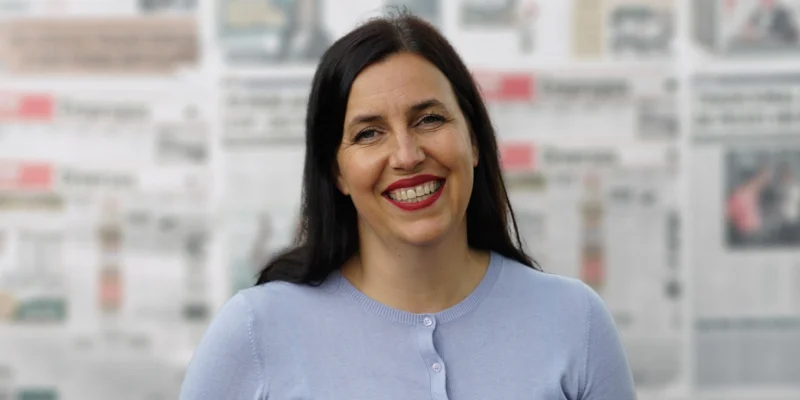
For a moment, I was transported back to the grey, repressive landscape of 1980s communist Bulgaria. My memories are vivid: the omnipresent sense of economic ruin, the stripped supermarket shelves, the pervasive fear of expressing any thought deemed critical of the regime. The aftermath was no less traumatic, with the 1990s ushering in power outages, hyperinflation, and widespread instability across post-communist Soviet bloc countries. These were not abstract political concepts; they were the fabric of daily life, shaping destinies and stifling aspirations.
To me, communism means being forever stuck in a morass of mediocrity, where individual ambition is crushed under the weight of collective dogma. It signifies a life of enforced silence, a fawning existence marked by hollow propaganda that relentlessly heralded non-existent equality while demanding self-sacrifice “in the name of all.” This sacrifice, however, rarely translated into universal benefit; instead, it served to consolidate the power and privilege of a select few. Communism, in my experience, ruptured the vital relationship with the engines of a happy, flourishing life: truth, trust, personal empowerment, and the pursuit of individual success. It meant being continuously lied to by those in power, prohibited from expressing oneself freely, and forced to repress any big dreams of standing out from the crowd, dreams that are so intrinsic to human nature and progress.
This deeply personal understanding made the Cato Institute’s statistic particularly jarring. What, then, could possibly appeal to so many young American adults about communism? I wondered, fairly certain that it was not any of the grim facets I associate with communist regimes. This disconnect between my historical memory and contemporary youth sentiment prompted me to seek answers.
To gain insight, I reached out to two thoughtful young individuals: Fenley Scurlock, 18, co-author of Down to Business and now a freshman at Brown University majoring in philosophy, and Harper Bruner, 17, an Atlanta-based senior at Stanford Online High School focusing on history. Their perspectives offered a crucial window into the generational understanding of these complex ideologies.
Despite communism’s dramatic collapse in 20th-century Soviet bloc countries, the last decade has witnessed a surprising and growing surge in interest in communism and socialism among the US public and journalists globally. This isn’t just anecdotal. Analysis by my consultancy, AKAS, reveals that Google searches for "communism" have reached an all-time high in the US, up a staggering 82% since 2006. This uptick suggests not only curiosity but also a significant shift in public discourse. Further analysis by Ahrefs, examining 684 million English-language news pages published globally between 2016 and 2026, underscored this trend. It revealed that news mentions of "socialism" are now on par with mentions of "capitalism," while mentions of "communism," though at a lower absolute level, have also reached a recent high. This data points to a sustained and intensifying conversation around these terms in media and public consciousness.
In our conversation, Bruner observed that young adults are picking up on the heightened communism- and socialism-related rhetoric being "thrown around" by politicians and news commentators. This political weaponization of terms like "socialism" and "communism" has become a pervasive feature of contemporary American political discourse. Indeed, President Trump drastically escalated his warnings about communism this summer, mentioning the term 81 times in the two weeks surrounding July 4th. Calling his opponents "communists" or "socialists" appears to be a consistent midterm election campaign tactic, aiming to invoke historical fears and rally his base. However, this tactic, intended to demonize, seems to have had an unintended, even counterproductive, effect on younger generations.
Bruner explained that young people are often confused by this cacophony of terms — communism, socialism, utilitarianism, authoritarianism — that hold little historical resonance for them. They are, after all, three generations removed from the direct experiences and Cold War anxieties that shaped their grandparents’ and even parents’ understanding. In an age of instant information, they turn to Google search and AI for clarification, seeking to decipher the meaning behind words often used more as political slurs than precise ideological descriptors.
Contrary to the political rhetoric’s intended effect, according to both Scurlock and Bruner, most young people are not frightened by the "threat" of communism or socialism. Instead, they associate these terms with a different, often more promising, economic reality rather than with a political regime, let alone an authoritarian one (another term poorly understood among the young). As Bruner remarked, "We grew up without memories of the Soviet era. We view these terms more abstractly and associate words like communism with resources rather than with authoritarianism." This highlights a critical generational chasm in understanding: for many young Americans, these ideologies are not synonymous with gulags or breadlines, but with ideas of collective good, equitable distribution, and social safety nets.
Scurlock further argued that the Republican "red-baiting" rhetoric has, in many instances, backfired, inadvertently triggering a favorable attitude towards the ill-understood concepts of communism and socialism among young people. "Republicans are used to labelling measures like universal healthcare and universal basic income […] as ‘socialism’ or ‘communism,’ which they use as scare words," Scurlock explained. "But when you see something that looks good for people being labelled socialism, or communism, you think, ‘Well, those things seem good, maybe that means that socialism is good.’" This phenomenon reveals a profound miscalculation in political strategy: when policies perceived as beneficial – like affordable healthcare, accessible education, or a safety net for the most vulnerable – are consistently branded with historically negative terms, it risks rebranding the terms themselves in a more positive light for those without direct historical memory.
At the heart of communism and socialism’s disproportionate appeal among young people lies their increasingly curtailed economic prospects, a subject both Scurlock and Bruner talked about at length. With 53% of US 18-to-29-year-olds favorable towards socialism but only 45% favorable towards capitalism, Gen Z evidently feels let down by the prevailing economic system. And they are indeed wrestling with unprecedented economic precarity, a reality underscored by numerous data points, such as the rising age of first-time home buyers (29 in 1981 versus 40 in 2025). This generational shift signifies a profound difficulty in achieving traditional markers of adult financial stability.
"I think the problem is the lived economic frustrations associated with high costs of living, soaring house prices, crippling student debt, and low student wages," rationalized Bruner. "So, when you live under these difficult market conditions, the ideas and promises of universal equity or wealth redistribution naturally catch your attention." Having volunteered to support Hispanic immigrants, she was keen to speak about the extreme economic inequality she had witnessed firsthand. "Some people don’t have access to a proper education, to a house or to technology… others don’t even have access to basic things like pens, pencils, diapers, period products, and paper." This observation highlights how the visible disparities and lack of access to fundamental necessities can fuel a desire for alternative systems that promise greater equity.
Scurlock drew a detailed picture of "failing capitalism," which so many from his generation are fervently averse to. "In the last 40 years, we’ve seen large corporations become a sort of authoritarian entity in themselves. We see billionaires buying media companies and influencing their trajectory, the wealthy actively donating money to fund certain political candidates that they then can make demands of. We see monopolies, multinational corporations that are too big to fail. In other words, we see something that in one sense is not actually capitalism, something like a crony capitalism." He further laid out the extraordinary economic unfairness his generation perceives: "You see companies outsourcing labor to China, to underpaid and often underage workers. You see a high level of corruption in government due to corporate interference. Young people look at our current system specifically in America and see that this system isn’t working." This critique points to a perception that the system, far from being a meritocracy, is rigged against the average person, with immense power concentrated in the hands of a few corporate and financial elites.
The term "crony capitalism" is crucial here, as it distinguishes their critique from a rejection of free markets entirely. It suggests that what they are witnessing is a corrupted form of capitalism, one where political influence and wealth are inextricably linked, leading to unfair advantages and a lack of genuine competition. The outsourcing of labor, particularly to regions with questionable labor practices, further exacerbates their perception of an unethical and exploitative global economic system that prioritizes profit over human dignity. This disillusionment, coupled with the daily struggles of economic precarity, makes the theoretical promises of "communism" or "socialism"—as understood by Gen Z—seem like a viable path toward a more just and equitable society.
My conversations and research left me much less shocked at that statistic that had sent chills down my spine a few weeks prior. While my personal history continues to inform my skepticism of communist ideologies, I now see that many young people are genuinely searching for alternative systems to the one they perceive as broken. Their favorable view of "communism" or "socialism" is less about a nuanced understanding of Marxist theory or a desire for totalitarian rule, and more about a desperate yearning for economic security, social justice, and a fairer distribution of wealth and opportunity. They are not advocating for the repressive regimes of the past, but rather for a future where their aspirations are not stifled by insurmountable debt, unaffordable housing, and stagnant wages.
This presents a critical challenge for politicians and policymakers. They must listen to these deeply felt frustrations and provide a compelling, viable alternative that does not relegate Gen Z to the sidelines of prosperity and personal fulfillment but actively puts them at the center of economic opportunity. Ignoring these concerns or simply dismissing them with historical scare tactics will only deepen the generational divide and potentially push more young people toward ill-understood but appealing radical ideas. In Scurlock’s words, "We want more regulation, more individual ground-level say in the economy and less of one CEO at the top throwing $100 million to secure the election of a candidate who cuts their taxes." This sentiment encapsulates a desire for systemic reform, a demand for greater transparency, accountability, and a more equitable distribution of power and resources within a democratic framework. The future stability and prosperity of the nation depend on addressing these legitimate grievances with thoughtful, constructive solutions, rather than allowing a generation to feel perpetually disenfranchised by the very system designed to serve them.
The opinions expressed in Fortune.com commentary pieces are solely the views of their authors and do not necessarily reflect the opinions and beliefs of Fortune.
