
 By Rifan Muazin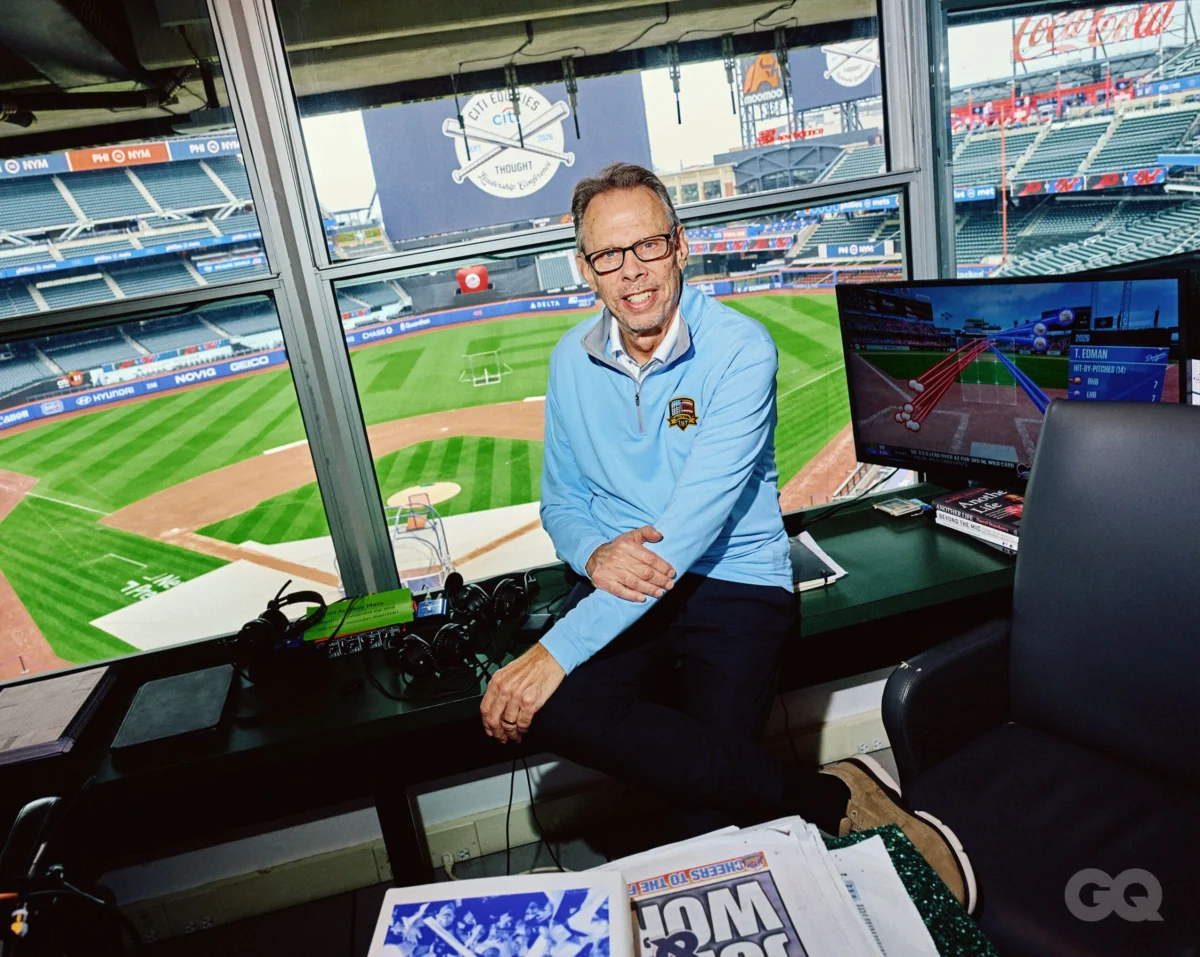
Shortly before the start of the 2026 baseball season, Howie Rose announced his retirement, sending a tremor through the five boroughs and beyond. After 22 years serving as the definitive radio voice of the New York Mets, and 40 years associated with the franchise in various capacities, the job had finally become too taxing for the septuagenarian broadcaster. He was ready to pass the torch, retire to the sun-drenched landscapes of South Florida, and work on a golf game that had long been neglected in favor of 162-game grinds. He spoke of spending more quality time with his wife, Barbara, adding with his trademark dry wit that he would be there "whether she likes it or not!"
For the Mets faithful, the timing felt like a cruel cosmic joke. The announcement followed a humiliating end to the previous season and a winter that saw the disappearance of much of the team’s beloved core—most notably the departure of Pete Alonso to the Baltimore Orioles. It should have felt like a crushing blow to a fanbase for whom Rose’s Queens-accented play-by-play has long been the primary antidote to the chronic affliction of rooting for the Mets. To lose the man who narrated the heartbreak made the heartbreak feel unmoored. Yet, to rewatch the announcement now—just after witnessing the team’s elimination from playoff contention at the hands of a "prodigal" Pete Alonso in an Orioles uniform—is to feel that, somehow, the best is yet to come.

"You know, I’m always honored to start the season by emceeing at Citi Field," Rose said during his farewell address, his voice carrying a genial gravitas that few in the industry can match. He bounced improbably between sincere positivity and that patent New York sarcasm that suggests he knows exactly what you’re thinking before you do. "But this year in particular, I would like nothing better than to bookend that by serving as master of ceremonies on the steps of City Hall after a trip down the Canyon of Heroes immediately following the season. That would make this dream I’ve lived complete."
This past season, Mets fans found themselves clinging to Rose like a lifeboat. As they watched the highest-paid team in baseball history sink toward the bottom of the NL East faster than the Titanic, Rose remained the steady hand on the tiller. He didn’t sugarcoat the failures, but he didn’t abandon the ship either. Fans wondered how disappointed Howie must truly be, having spent decades waiting to call a championship that seemed to perpetually retreat into the horizon.
In the Bob Murphy Broadcast Booth at Citi Field, as Rose prepared to call the first game of the final series of his 40th season, the atmosphere was one of reflective quiet. When approached for an interview, Rose was initially confused. Why would a fashion and culture magazine like GQ want to talk to him? Once assured it wasn’t for sartorial advice, he opened up about his philosophy of Mets fandom—a belief system that serves as a survival guide for the millions who choose the "Orange and Blue" over the "Pinstripes."

"You have a choice in this town," Rose declared, leaning back in his chair. "To root for the Mets, to root for the Yankees… And because you have that choice here in New York, if you choose to stay a Mets fan through down years, when the Yankees are playing in October every year—well, that’s loyalty. And that loyalty is tested by the refusal to jump ship." He paused, his eyes twinkling with the mischief of a man who has seen it all. "I mean, any idiot could root for a team that is playing for championships most years."
This choice, for Rose, was made at the age of seven in 1961, a year before the Mets even took the field. His father, Robert, a traditionalist, had attempted to indoctrinate him into the Yankees’ corporate excellence, but the pinstripes felt cold to young Howie. When he learned a new National League team was coming to Flushing, Queens—just a stone’s throw from the Bayside neighborhood where his family was planning to move—he felt a divine connection. He believed, with the ego only a child can possess, that the team had been created specifically for him.
In a historical sense, he wasn’t entirely wrong. The Mets franchise, birthed from the void left by the departure of the Brooklyn Dodgers and New York Giants, knew its expansion-drafted squad would be losers for the foreseeable future. They marketed themselves to young baby boomers as the jovial, technicolor alternative to the grayscale severity of the Mantle-era Yankees. "Everything about them appealed to me," Rose remembered. "First of all, blue and orange are kind of my colors anyway. I don’t know why, but maybe somebody who’s better versed at GQ could tell me."

The loyalty of the "New Breed" fans, as they were called in the 1960s, was forged in the fires of historic losing seasons. What kept them coming back was the storytelling. The original Mets broadcaster, Bob Murphy, was the man who showed Rose how an announcer could turn a "gutter-dweller" into a protagonist. Murphy’s "Happy Recap" became a staple of New York life. "He was able to make you feel good about the Mets regardless of the game or their place in the standings," Rose said. "Maybe it wasn’t good tonight, but man, there’s a chance it’s going to be great tomorrow."
Rose’s career path was set during a forgotten game on August 4th, 1966. The powerhouse San Francisco Giants held a 5-0 lead over the second-to-last-place Mets. In a stunning reversal, the Mets battled back, eventually winning on a walk-off home run by Ron Swoboda. "I went home on the Q27 bus that day thinking not only is this the greatest game I’ve ever seen or will see, but I wonder how Lindsay Nelson called it, I wonder how Bob Murphy called it," Rose recalled. "And all the way home I was thinking, ‘Man, I’m sure it was great to hit the game-winning home run, but it must have been almost as great just making that call.’"
That afternoon, Rose discovered the central truth of modern sports: without the commentary, the game is merely a series of physical events. With the commentary, it becomes a narrative. The broadcaster’s voice becomes the fanbase’s collective spirit, providing structure, meaning, and direction to the chaos of the diamond. From that day on, Rose didn’t imagine himself as Tom Seaver on the mound; he imagined himself as the godly director in the booth, calling his squad toward glory.

His rise through the ranks was a masterclass in persistence. He organized a fan club for Marv Albert, the legendary voice of the Rangers, and eventually became his protégé. By the late 1980s, Rose was hosting "Mets Extra," where his "Albertine" mix of fierce partisanship and brutal objectivity made him a fan favorite, even if the front office occasionally winced at his honesty. His career reached a fever pitch in 1994 when, filling in for Albert, he delivered the iconic "MATTEAU! MATTEAU! MATTEAU!" call as the Rangers clinched the Eastern Conference. But his heart always belonged to Flushing. In 2004, when he succeeded Bob Murphy, the circle was complete.
However, one piece of the puzzle remained missing. "Unfortunately, I’ll not have gotten a chance to call a world championship for the Mets," he admitted with a sigh. "I don’t have many, but that will be my biggest regret." Behind him in the booth, the words "HE DID IT!" were spelled out in thumbtacks—a tribute to his 2024 call of Pete Alonso’s series-clinching home run against the Brewers. It was a moment of pure, unadulterated joy that briefly made a 70-year-old man feel like a teenager again.
Rose has often compared the Mets to the counterculture of the 1960s. He views the 1969 "Miracle Mets" not just as a sports team, but as a reflection of a rebellious era. "The Mets were the counterculture," he insisted. "I go back to the Bob Dylan song, ‘The Times They Are A-Changin’’… I thought he wrote that about the ’69 Mets, even though that song was about five years before." He noted that for younger fans, the 2024 run felt like their version of 1969—a surge of unexpected hope in a cynical world.

As he prepares to sign off for the final time on September 20th, the voice that bridged the gap between the era of Casey Stengel and the era of Steve Cohen will go silent. While he has promised to return for ceremonies and perhaps the occasional guest appearance to support his successor, Keith Raad, the daily rhythm of "Put it in the books!" will be missed.
Rose remains humble, attempting to manage the expectations of a fanbase that isn’t ready to let him go. But to listen to him speak is to hear a prophecy of redemption. He leaves behind a legacy of "Metsian" hope—the belief that no matter how gruesome the previous week was, or how many stars have departed for Baltimore, the next miracle is always just one swing away. As the door to the Bob Murphy Broadcasting Booth closes on a legendary career, the books remain open, waiting for the next chapter of a story Howie Rose spent a lifetime telling.
