
 By admin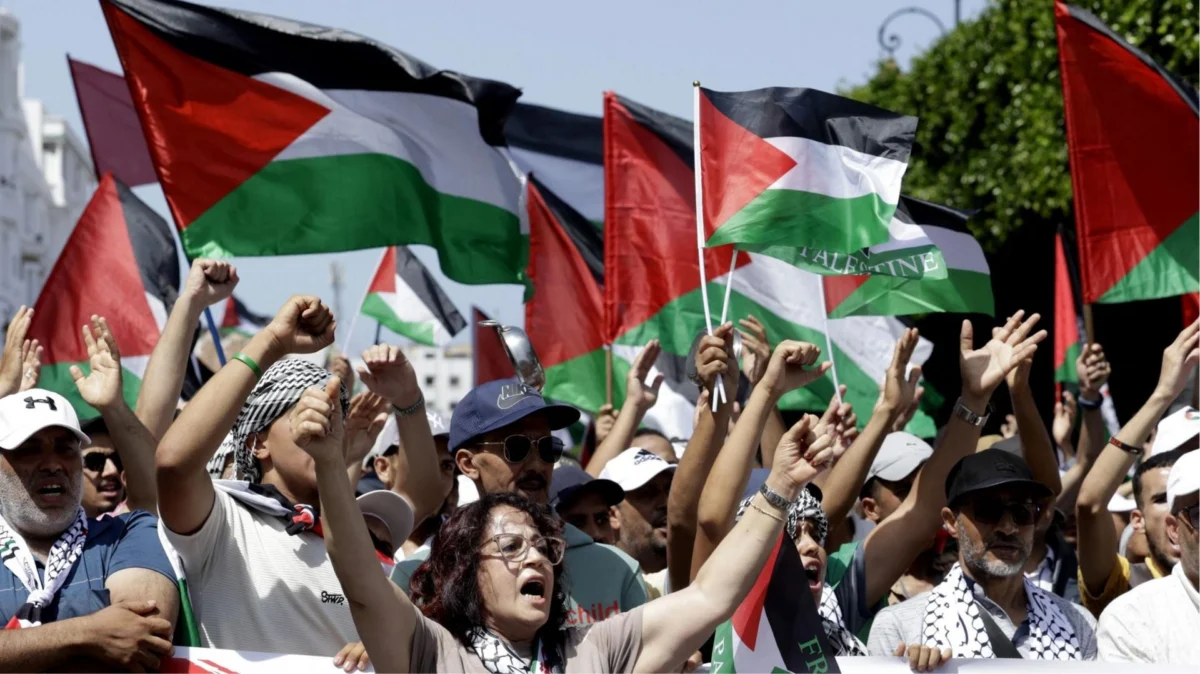
Ahead of Wednesday’s parliamentary elections, Morocco’s political landscape is a vibrant, yet often discordant, tapestry woven with viral football slogans, ambitious job creation promises, and impassioned anti-Israel rallying calls, all vying for the attention of a deeply disillusioned young electorate. Despite these energetic campaigns, a pervasive sense of political detachment persists among many young Moroccans, who view the electoral spectacle with skepticism. "I have no hope for this election. I’m ashamed of our political scene. It’s a complete circus," lamented Siham Azeroual, a 32-year-old environmental activist from the Atlas region, reflecting a sentiment echoed by many of her peers.

The outcome of these elections holds significant weight, determining the composition of Morocco’s next government. This vote occurs just weeks after a dramatic surge in irregular migration, with an estimated 60,000 individuals risking their lives to cross from Morocco to the Spanish enclave of Ceuta. This exodus serves as a stark indicator of the perceived lack of opportunities and dwindling prospects that many young Moroccans feel acutely.
Morocco operates as a constitutional monarchy, a system where political parties contend for 395 seats in the House of Representatives, the nation’s legislative body. However, the locus of executive power remains firmly anchored with the monarchy. King Mohammed VI, the 63-year-old monarch, holds the prerogative to appoint the prime minister from the party that secures the most votes. Furthermore, he presides over the Council of Ministers, the country’s principal policy-making forum, underscoring the enduring influence of the crown in governance.

The current election campaign unfolds against the backdrop of a recent wave of youth-led protests that erupted in September 2025. These demonstrations, fueled by widespread discontent over unemployment, the state of healthcare, and escalating living costs, saw demonstrators chanting potent slogans such as "freedom, dignity, and social justice." The protests escalated, with calls for the resignation of Prime Minister Aziz Akhannouch becoming increasingly vocal, culminating in chants of "get out Akhannouch." The government’s response was swift and severe, with over 2,400 individuals facing prosecution in the aftermath of the unrest. Despite this crackdown, a segment of young activists has chosen to channel their frustration and aspirations into the political arena, seeking to effect change from within.
One such individual is Hamza El Kharroubi, a 29-year-old who was briefly arrested during the protests. He is now standing for parliament with the nascent Environment and Sustainable Development Party, a relatively unknown entity championing a green agenda. "As a young person, I don’t have much hope. I joined this party because they wanted more Gen Z faces and they are allowing us to speak freely about our demands," El Kharroubi shared with the BBC. Hailing from Tetouan, a city situated a mere 34 kilometers (21 miles) from Fnideq beach, the epicenter of the migration wave to Ceuta in late July, El Kharroubi’s proximity to the crisis imbues his political platform with a personal urgency.

The mass crossing to Ceuta saw approximately 60,000 individuals, comprising both Moroccans and people of other nationalities, make the perilous journey. Tragically, at least 100 lives were lost during this surge, marking it as the largest migration event to the Spanish enclave in recent history. "We want justice for the families of those who died crossing to Ceuta. We want compensation for their families," El Kharroubi declared, directly linking the desperate crossing to the pervasive economic hardship and soaring unemployment rates plaguing the nation.
According to estimates from the International Monetary Fund (IMF), Morocco’s overall unemployment rate stood at 13% last year. However, the situation is far more dire for its youth, with unemployment among those aged 15 to 24 reaching a staggering 37.3%. El Kharroubi’s immediate goal is not to unseat established political giants but to secure a voice within parliament, laying the groundwork for future political engagement. "As young people, we have to enter the parliament so by 2031 we have strong young politicians who can compete for a seat in the government," he articulated, envisioning a long-term strategy for youth representation.

Emerging as a significant political force and a new sensation in Moroccan politics is Fouzi Lekjaa, the president of the Royal Moroccan Football Federation and a senior figure within the finance ministry. Lekjaa, widely credited with elevating the Atlas Lions, Morocco’s national men’s football team, to global contention, joined the centrist Party of Authenticity and Modernity (Pam) in July. His campaign rallies have become viral sensations in the football-mad nation, which is co-hosting the next World Cup with Spain and Portugal. Videos circulating online depict enthusiastic crowds chanting "Sir," the Moroccan Arabic equivalent of "Go," a phrase deeply resonant with the nation’s historic 2022 World Cup run, where the Atlas Lions became the first Arab and African team to reach the semi-finals. Lekjaa has made ambitious promises, vowing to propel Morocco to sixth in the world rankings for education and healthcare, mirroring the Fifa standing of the men’s football team.
Pam is one of 27 parties vying for electoral success, including Prime Minister Akhannouch’s National Rally of Independents (RNI). Seeking a second term, the RNI has reiterated its pledge to generate one million job opportunities by 2031. However, political expert Rachid Aourraz of the Moroccan Institute for Policy Analysis (MIPA) expresses skepticism regarding this promise. "The slogan ‘one million jobs’ has become an overused electoral slogan. There is also talk of raising the minimum wage, but what is proposed cannot withstand a structural inability to create stable net jobs," Aourraz stated, highlighting the persistent challenges in job creation. He further observed that major parties often "do not compete over an alternative model," but rather focus on the implementation of public policies that are ultimately guided by a "royal vision."

Meanwhile, the Islamist Justice and Development Party (PJD), seeking a political comeback, is leveraging anti-Israeli sentiments to appeal to voters. Morocco normalized relations with Israel in December 2020 as part of the US-brokered Abraham Accords. Led by populist former Prime Minister Abdelilah Benkirane, the PJD is campaigning aggressively on a platform to sever diplomatic ties with Israel, deeming the normalization a "mistake" made during their tenure as the governing party between 2016 and 2021. Bilateral relations were strained during the Gaza war, with weekly protests against the Israeli diplomatic presence occurring in the capital, Rabat. During the conflict, the Israeli liaison office was temporarily closed, and direct flights between the two countries were suspended. However, despite widespread pro-Palestinian demonstrations, where tens of thousands took to the streets and the Israeli flag was burned at the height of the war, it was announced earlier this month that Israel and Morocco had agreed to establish full embassies in each other’s countries, following a meeting between their top diplomats and the US ambassador to the United Nations. "We have to speak up," Benkirane urged supporters at a rally in Marrakesh. "If we work hard, the king will close the Israeli embassy. The king does not like going against his own people," he asserted, cautioning against "the dangers of Israel and Zionism in Morocco."
With over half of Morocco’s population of approximately 38.8 million under the age of 35, the youth vote is a significant demographic, yet only 4% of the more than 15.8 million registered voters fall within the 18 to 24 age bracket. "I am not keeping up much with the campaigns – but I noticed the same faces as usual," commented Hiba, a 27-year-old Moroccan residing in Montreal, Canada, who opted to withhold her surname. Her city hosts a substantial Moroccan diaspora, numbering around 104,000 according to the 2016 census. Many of the Gen Z protests that occurred last year were more vocal outside of Morocco, where young Moroccans felt emboldened to express their grievances without fear of reprisal. Hiba, who co-organized several Gen Z protests in Montreal, stated that she would have considered voting had she been able to designate a proxy in Morocco, a mechanism through which diaspora members can cast their ballots. "Gen Z protests didn’t go in vain. We achieved something. At least now we see more debates with young people on state TV," she remarked, acknowledging a perceived shift in media discourse.
Siham Azeroual, the environmental activist, concurs with this sentiment. Having experienced both the 20 February movement in 2011, which led to constitutional reforms, and the recent Gen Z movement, she believes that meaningful change necessitates a multifaceted approach. "I think young people should focus on the microscale: rather than running for office, helping build communities and connecting with people and then building up to the top," she advised. Despite her reservations about the current political offerings, Azeroual affirmed her intention to cast her vote at her local polling station, underscoring the enduring importance of participation, even in the face of disillusionment.
