
 By admin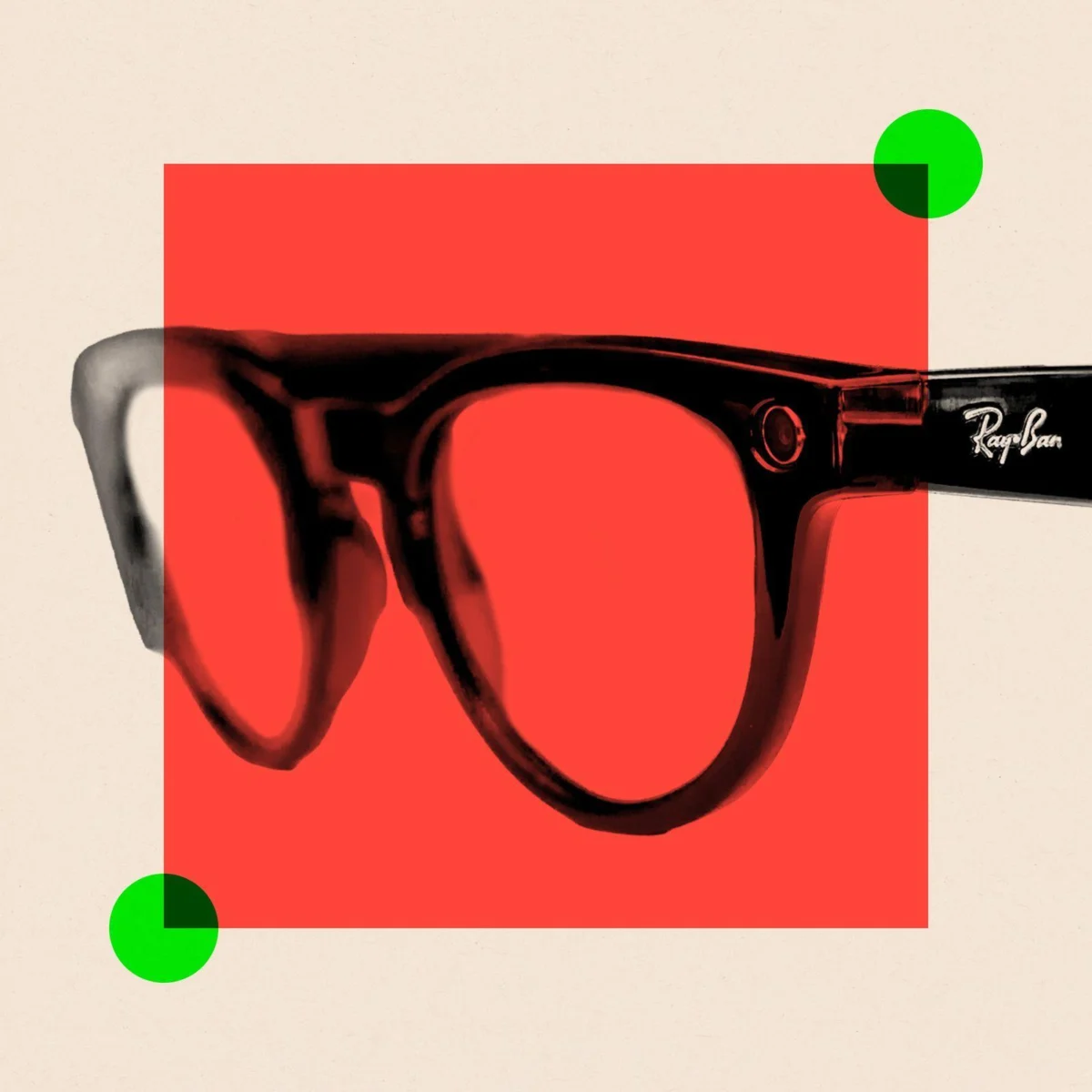
When Meta, formerly Facebook, launched its AI-powered smart glasses in 2023, in collaboration with the iconic eyewear brand Ray-Ban, it ignited a firestorm of controversy that continues to cast a long shadow over the burgeoning wearable technology market. Reports of these devices being used to harass individuals, particularly women and girls, by surreptitiously filming them without consent and subsequently sharing the footage, have led to widespread public outcry and significant reputational damage for the tech giant. Even the high-profile endorsement by Kylie Jenner, sister to reality TV mogul Kim Kardashian, this past summer, has failed to dispel the negative perception, with the devices earning unflattering monikers such as "pervert" or "creepy" glasses. The growing unease has translated into tangible restrictions, with numerous establishments and organizations, including JD Wetherspoon pubs, major theatres, Comic-Con, several schools, and even the sensitive naval base at Faslane, home to the UK’s nuclear submarines, implementing outright bans on the technology.
In a significant move, Meta is now unveiling a new iteration of its smart glasses, dubbed Ray-Ban Meta Audio, which conspicuously omits a camera altogether. This new model retains the audio functionalities of its predecessor, enabling users to make phone calls and stream music with audio directed discreetly into their ears, but with substantially reduced privacy implications. This strategic pivot is being viewed by some in the tech industry as a calculated response to the intense backlash concerning privacy, a potential recalibration of Meta’s ambitious vision for augmented reality wearables.

Meta, however, firmly denies that the swift release of this camera-free version is a direct reaction to public anger, asserting that the product has been in development for two years. The audio-only variant is positioned as a more accessible option, priced lower than its camera-equipped counterparts, and boasts a lighter frame and improved battery life. When pressed about whether the audio-only glasses might outsell the original camera-enabled models, Ankit Brahmbhatt, Meta Glasses’ Head of Product, offered a carefully considered, "We have, I think, something for everyone," hinting at the delicate balance Meta is trying to strike. This development prompts a crucial question: does the release of a camera-free option signify a fundamental shift in how tech companies perceive the future of smart glasses, or is it merely a niche side-product catering to a specific segment of consumers weary of constant connectivity, akin to the resurgence of minimalist "brick" phones for digital detoxers?
The controversy surrounding smart glasses is undeniable. Wearing a pair of the camera-equipped Meta Ray-Bans for testing purposes, I harboured initial reservations about public reception, anticipating potential physical altercations, having heard anecdotal accounts of people forcibly removing and destroying the devices. However, my experience during commutes and walks across various cities, including London, Glasgow, and Portsmouth, was surprisingly uneventful; very few people seemed to notice or react. This observation leads to a contemplation of whether public awareness and concern are as pervasive as both Meta and anti-glasses campaigners suggest. Nevertheless, some individuals confided that they would feel uncomfortable approaching someone wearing such glasses, even if they recognized them, due to the lingering fear of being filmed and the footage disseminated online.
The smart glasses are designed to function as an extension of a user’s smartphone, syncing via Bluetooth through Meta’s AI app. Voice commands activate features, and open speakers embedded in the arms of the glasses deliver audio directly to the wearer’s ears. The experience is akin to wearing headphones, but without noise-cancelling capabilities, allowing for ambient environmental awareness. My personal assessment, perhaps a controversial one, is that many of the glasses’ features proved useful, notably excluding the camera. The ability to listen to music and podcasts while on the move, without the inconvenience of earbuds, felt safer and more liberating. Furthermore, it enhanced my confidence in navigating busy urban environments, particularly when avoiding hazards like e-bike-riding phone thieves, by keeping my actual phone out of immediate reach.

The utility of smart glasses extends to navigation, a crucial aspect for individuals with a poor sense of direction. Having directions spoken directly into my ears was highly convenient. However, this functionality necessitates granting the Meta AI app continuous access to one’s location, a significant concession given Meta’s well-documented voracious appetite for personal data. My posts about using the Meta Ray-Bans on social media elicited a degree of criticism. Yet, when demonstrating the glasses to people in my everyday life, the reactions were generally more positive. My hairdresser expressed enthusiasm for the idea of recording client hair transformations, and a builder I encountered at the gym saw potential for documenting site activities, aiding in accident reporting or even skills training. A runner friend indicated a desire to wear them during jogs.
Content creators have largely embraced smart glasses. My son, borrowing a pair to help wash my car, proudly presented a video documenting his meticulous removal of stubborn bird droppings without damaging the paintwork – a task I was happy to accept his word for. More broadly, smart glasses have been hailed as a transformative technology for the blind community. Users have described them as "game-changers" due to their capacity to provide audio descriptions of current locations and read visible text, such as restaurant menu options. Earlier this year, Meta generously donated 15,000 pairs to a charity for the blind in Ireland, underscoring their potential for accessibility.
Despite these positive applications, the furor over privacy has intensified. The glasses feature a blinking white LED that illuminates when the camera is active. However, a secondary market has emerged dedicated to finding technical workarounds to disable this indicator light, some involving invasive physical modifications to the devices. Meta claims that less than 0.1% of the frames sold globally have been tampered with. While exact sales figures remain undisclosed, Ray-Ban’s parent company, EssilorLuxottica, reported selling seven million units last year.

Liz Hunter, a tech founder and parent who has initiated a petition advocating for urgent new regulations on smart glasses, expresses profound anger. "They should never, ever have left the lab at Meta," she stated emphatically. "It’s a real travesty of public trust, and of women’s equality, and it’s rolled back our privacy rights right before our very eyes." Hunter believes that smart glasses should remain accessible to blind individuals but should be withheld from the general public. "We don’t need them, we don’t want them," she asserts.
The sentiment of unease is echoed by a Polish developer who released an app named ZuckOff, which utilizes Bluetooth to detect nearby smart glasses. According to Wired magazine, the app has garnered thousands of downloads. Ben Wood, a principal analyst at tech research firm CCS Insight, notes that the phrase "pervert glasses" appearing in the typically reserved Financial Times signifies a "significant public backlash."
Despite the controversy, the allure of the smart glasses market has not waned for other major tech players. Samsung is reportedly collaborating with the high-end eyewear brand Warby Parker on a new venture, and Google is also rumored to be developing its own iteration. Snap, the company behind Snapchat, has recently launched its Specs in the US, retailing at a considerable $2,195 (and £1,995 in the UK). These glasses allow users to overlay data within their field of vision and capture photos with a simple finger snap. Snap founder Evan Spiegel, along with others, envisions a future where smart glasses eventually supplant smartphones as the primary personal computing device.

Meta’s initial product launch in 2021 positioned smart glasses as tools to "easily record the world as you see it" and "capture life’s moments as they happen from a unique first-person perspective." The subsequent announcement of a camera-free version, therefore, represents a notable departure. Janusz Swierczynski, a researcher at Oxford University’s Saïd Business School who holds concerns about smart glasses, views the camera-free release as a "positive sign" that Meta may be heeding privacy concerns. "They’re thinking about it and that they’re responding," he comments, though he acknowledges it’s "not a perfect" response as camera-enabled glasses remain on the market.
However, some analysts remain skeptical about the significance of this shift. "It’s certainly not the end of cameras in glasses," asserts Ben Wood of CCS Insight. He posits that the core value of smart glasses lies in their ability to capture and process information from the environment using AI. Glasses equipped with cameras, offering a direct view of the user’s surroundings, are an "extremely good" source of this data, forming "an invaluable data stream to an AI platform." Wood suggests that Meta has likely been developing the camera-free glasses for several years, and the current privacy concerns provide "fantastic timing" for their market introduction.
Meta itself shows no indication of halting development of its camera-enabled glasses. The company is preparing to launch its third generation of glasses in the UK next month, featuring the ability to visually display data directly within the lenses. For journalists like myself, who have openly discussed challenges with cognitive load, the prospect of discreetly displayed scripts via smart glasses holds considerable appeal. Kate Winick, a tech analyst at Forrester, characterizes this move not as a step backward from camera-enabled technology but rather as a "half step to the side, where they give users time to get comfortable with the technology… so that users themselves start to say, ‘Oh, this would be so much more useful if it had a camera’." Paradoxically, Winick believes the existence of camera-free glasses could help alleviate some of the public scrutiny directed at wearers of camera-enabled models. "It’s now clear that out in the market some glasses have cameras and some don’t," she explains. "You can’t automatically get mad at everybody wearing Meta’s glasses, because you may not know whether or not they have a camera."

Other companies are exploring different avenues to address privacy concerns without sacrificing camera functionality. The Taiwanese firm HTC recently introduced its Vive Eagle glasses, priced at less than a quarter of Snap’s offerings. Thomas Dexmier, a vice president at HTC Vive, explains that if someone within earshot of an Eagle wearer says "stop filming" or "stop recording," and the command is detected by one of the four microphones, the camera will automatically deactivate. Furthermore, all recordings captured by the glasses are encrypted, preventing HTC from accessing them – though this also means HTC cannot actively flag harmful content. "We acknowledge that there are some challenges, potentially becoming a real problem, especially for women," Dexmier admitted, adding that HTC Vive is striving to minimize misuse, but it is "too early to comment" on whether a camera-free version would be considered.
Ultimately, Ben Wood anticipates that camera-enabled glasses are "not going away." He draws a parallel to the early 2000s, when mobile phone companies faced similar privacy concerns regarding the integration of cameras. "There’s an inevitability there," he concludes. "We will have to find a societal norm, a framework for the use of these products." The evolution of smart glasses, marked by this recent pivot to audio-only models, highlights the ongoing tension between technological innovation, user convenience, and the fundamental right to privacy, suggesting that the debate over their place in society is far from over.
