
 By admin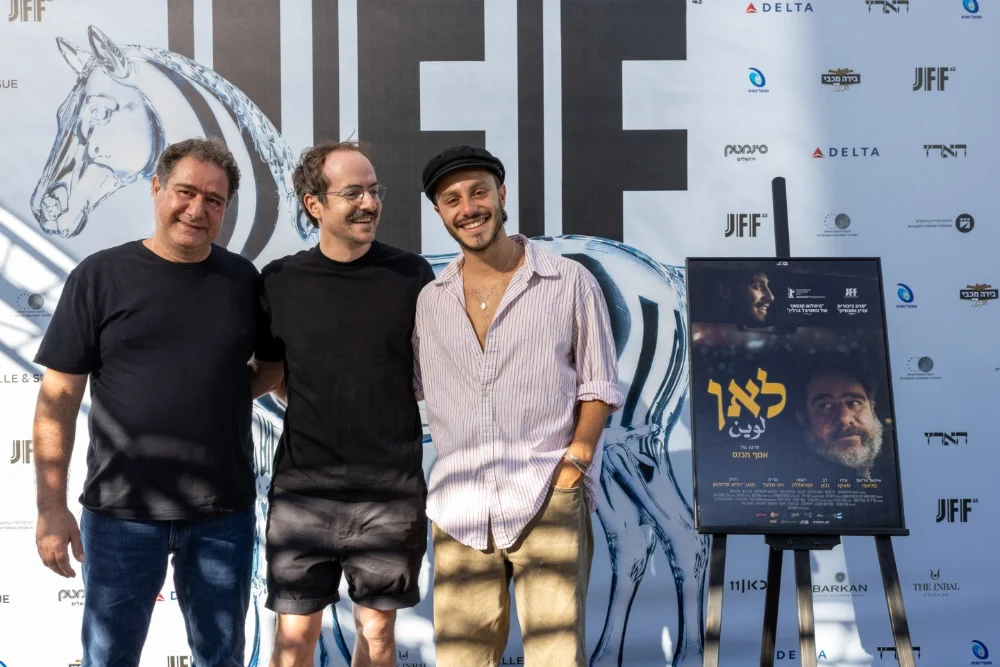
In a powerful open letter that transcends political divides, Roni Mahadav-Levin, the visionary executive director of the Jerusalem Cinematheque and the prestigious Jerusalem Film Festival, has issued an impassioned plea to Palestinian filmmakers, urging them to embrace the platform offered by the festival and engage directly with audiences. This heartfelt appeal, published in full, comes at a critical juncture, aiming to foster dialogue and understanding through the universal language of cinema amidst a region grappling with deep-seated conflict and calls for cultural boycotts. Mahadav-Levin’s initiative is not merely an invitation; it is a strategic call to action, rooted in the belief that art possesses the unique capacity to challenge entrenched narratives, disrupt the status quo, and build bridges in a fractured society.
The 43rd edition of the Jerusalem Film Festival, which recently concluded on July 19th, served as a testament to Mahadav-Levin’s vision. Spanning from July 9th to July 19th, the festival showcased a diverse and compelling array of cinematic works, drawing a significant international presence and fostering an environment of open discourse. Despite ongoing calls for boycotting all Israeli-linked film institutions, a notable contingent of Palestinian and Arab-Israeli filmmakers actively participated, their voices and stories resonating within the festival’s hallowed halls. This participation underscores a growing sentiment among artists and cultural practitioners that engagement, rather than isolation, is the most potent tool for fostering change and challenging oppressive ideologies.
Mahadav-Levin’s letter eloquently articulates the festival’s ethos, emphasizing that the audiences who filled its cinemas were far from a homogeneous group. "The cinemas were filled with diverse crowds, Jews and Arabs, secular and religious citizens, locals and internationals," he observed. "For a few hours, they were united by a shared narrative on the screen." This shared experience, he contends, is the fertile ground where critical dialogue germinates. The ensuing discussions in the lobby, often delving into "uncomfortable truths about our society or sharing moments of profound empathy," are the very "building blocks of a resilient society." It is within these spaces, he asserts, that "hardline narratives are challenged" and "the status quo is disrupted." This perspective aligns with the broader understanding of cultural festivals as vital spaces for critical inquiry and social commentary, offering a counterpoint to state-sponsored narratives and fostering a sense of collective consciousness.
The festival’s commitment to inclusivity was evident in its programming. Palestinian actor Ehab Elias Salami, who delivered a powerful performance in Assaf Machnes’ feature film "Where To?", was recognized with the festival’s award for best acting performance. Furthermore, a curated compilation of short films titled "All That Remains," featuring the works of six Palestinian filmmakers and curated by Fadi Far, was screened, offering a poignant glimpse into Palestinian experiences. These instances, while significant, represent a fraction of the potential for collaboration and mutual understanding that Mahadav-Levin hopes to cultivate in future editions.
Mahadav-Levin’s critique of boycotts is sharp and incisive. He argues that "Boycotts and cultural withdrawal do not punish the hardliners; they empower them." This paradox lies at the heart of his argument. In a bitter irony, he notes, "the hardliners who wish to censor art and the boycotters who seek to block audiences from seeing it end up sharing a common interest: both ultimately work to silence the discourse, isolate the public, and keep people divided." By withdrawing their films from certain audiences, Palestinian filmmakers, he warns, are inadvertently "doing the censors’ work for them." His plea is for artists to harness the power of their work to directly confront, challenge, and inspire those audiences who are most in need of engaging with their perspectives. This echoes the sentiments of many who believe that cultural exchange is a vital component of non-violent resistance and a crucial tool for dismantling oppressive systems from within.
The open letter, addressed to "artists around the world, and specifically to Palestinian filmmakers," is a comprehensive manifesto for cultural engagement. Mahadav-Levin begins by recounting the opening of the 43rd edition with Moshe Rosenthal’s "Tell Me Everything," highlighting the festival’s role in showcasing "the year’s most vital cinema." He acknowledges the inherent complexities of organizing such an event in Jerusalem, particularly under the current political climate and in the wake of prolonged conflict. He stresses that the participation of international guests and the presence of global cinema do not constitute an endorsement of the Israeli government’s policies. Instead, he frames it as an "affirmation of the power of culture, dialogue, and artistic exchange to resist the forces of extremism, challenge division, and keep democratic discourse alive." This distinction is crucial in navigating the often-charged landscape of cultural diplomacy in conflict zones.
Mahadav-Levin draws parallels between the challenges faced in the Middle East and those occurring globally, citing "political chaos and deep polarization unfolding in the United States," the "creeping authoritarianism" in Hungary, and the "courageous, ongoing uprisings in Iran and elsewhere." He observes a global trend where "populist leaders and fundamentalist factions attempt to consolidate power by dividing populations and silencing dissent." This global perspective lends weight to his argument that cultural dialogue is not merely a regional concern but a fundamental aspect of safeguarding democratic values worldwide.
His historical perspective is particularly insightful. Drawing lessons from "recent history, especially since the fall of the Berlin Wall," he asserts that "dictatorships, authoritarian regimes, and populist governments are rarely dismantled by the force of external wars or diplomatic isolation." Rather, he posits, "they are overthrown from within." This internal transformation, he emphasizes, is "driven by the people themselves, whether through the ballot box, however tempered the elections may be, or through widespread demonstrations and civil resistance." To empower these internal movements, Mahadav-Levin argues, it is imperative to "keep the channels of cultural conversation wide open."
The festival’s role as a facilitator of this open conversation is central to his argument. The presence of international artists and filmmakers signifies an acknowledgment that "true exchange happens between individuals, regardless of their nationalities, alliances, or sociological identities." By presenting "Israeli, Palestinian, and international stories side by side," the festival invites audiences to engage with a multiplicity of experiences and perspectives, fostering empathy and breaking down the barriers of distance and unfamiliarity. He reiterates that films, festival guests, and the festival itself do not represent nations or governments but rather "reflect the shared human condition." This philosophical underpinning is essential to understanding the festival’s mission beyond mere entertainment or artistic exhibition.
Mahadav-Levin’s call to Palestinian filmmakers is framed as a strategic imperative, especially with Israeli elections on the horizon. He describes the current moment as "a critical, fragile moment." His admonishment is direct: "It is both counterproductive and ultimately irresponsible to retreat into ideological purism by removing yourself from the cultural arena in the very place that needs your voice the most." This plea is grounded in the understanding that effective activism often requires direct engagement with the very systems and populations one seeks to influence. Cultural isolation, while perhaps a form of protest, can inadvertently reinforce the divisions it seeks to overcome.
He reiterates his core message regarding the counterproductive nature of boycotts: "Boycotts and cultural withdrawal do not punish the hardliners; they empower them." He elaborates on the shared interest between hardliners and boycotters in silencing discourse, isolating the public, and perpetuating division. "When you block your film from certain audiences," he writes, "you are doing the censors’ work for them." The imperative, therefore, is for artists to use their platforms to "confront, challenge, and inspire the audiences who need to engage with your perspectives right now." This perspective champions art as a tool for active engagement and social transformation, rather than a passive form of expression or protest.
Mahadav-Levin concludes his letter with a profound expression of hope for a more peaceful future. He envisions a trajectory towards "better days soon" for Israel, Palestine, and the entire region. However, he firmly believes that this path requires "brave engagement, reflection, and art, not silence." His final exhortation is a powerful call to arms for artists: "Now is the time to lean in. Be part of this change. Be brave. Be heard." This closing sentiment encapsulates the spirit of his appeal – a fervent belief in the transformative power of art and dialogue to forge a more just and harmonious future, even in the face of seemingly insurmountable challenges. The Jerusalem Film Festival, under Mahadav-Levin’s leadership, positions itself not just as a showcase for cinema, but as a crucial nexus for fostering understanding and driving societal change through the potent medium of film.
