
 By admin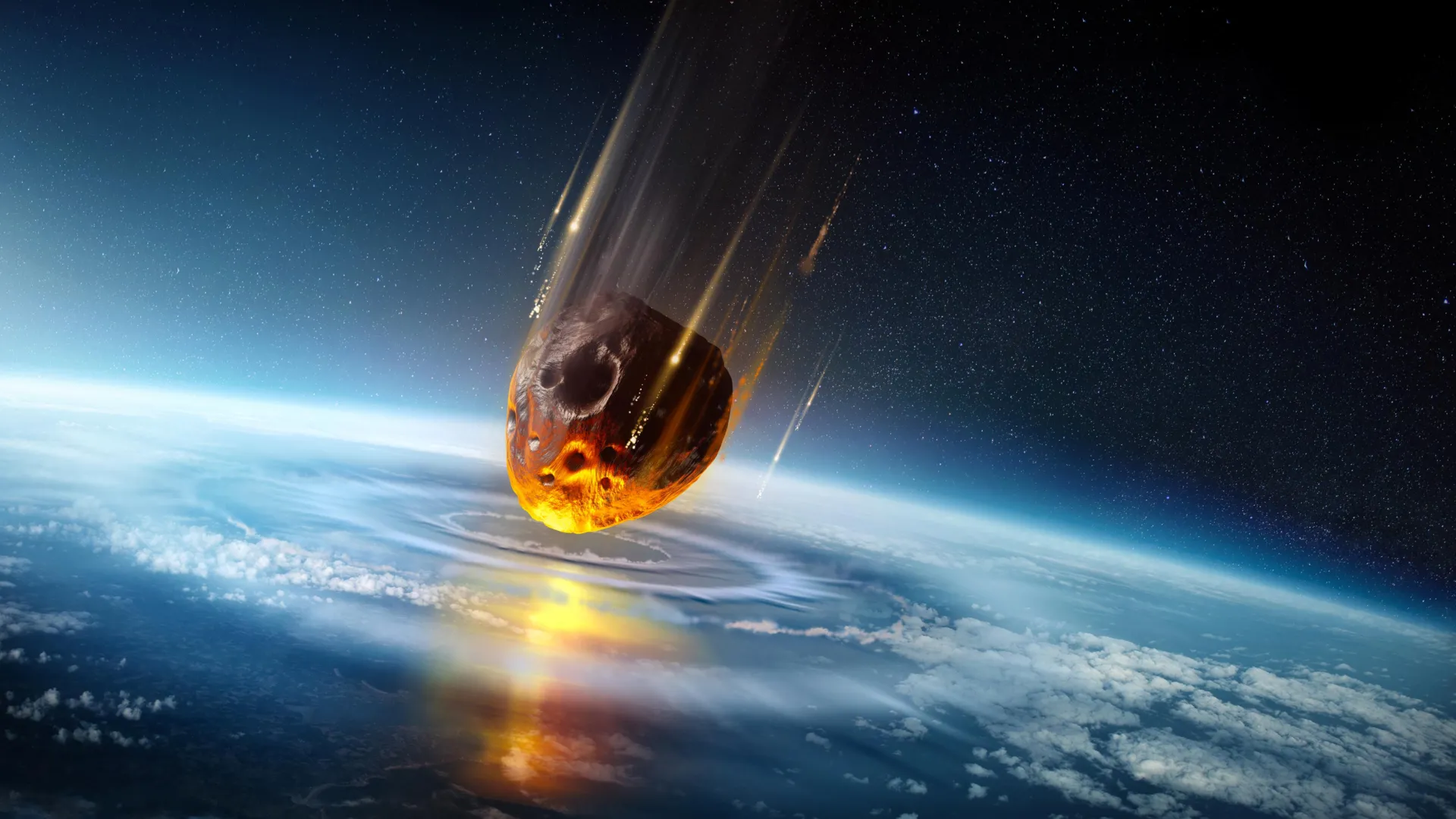
The research not only confirms the extraterrestrial origin of the K-Pg extinction event but also narrows down the specific class of meteorite responsible, providing crucial insights into the precise mechanisms that led to such widespread devastation. For decades, scientists have debated the exact nature of the impactor, with various types of asteroids and comets being proposed. The identification of a CO chondrite, a rare and distinct subset of carbonaceous chondrites, marks a significant step forward in this scientific quest.
Unmasking the Impactor: The CO Chondrite’s Unique Signature
Carbonaceous chondrites, characterized by their high carbon content and the presence of volatile compounds, represent some of the most primitive materials in our solar system, essentially unaltered remnants from its formation. Among these, the Ornans class (CO chondrites) stands out. "Carbonaceous chondrites of the Ornans class are definitely not like the typical meteors you find in museum collections," explains Dr. Philippe Claeys, a professor with Vrije Universiteit Brussel who contributed to the study as a visiting professor at UBC. His insights underscore the distinctiveness of this meteorite type.
A key characteristic of CO chondrites that sets them apart from other known meteorite classes is their composition. Dr. Claeys elaborates, stating, "A CO contains much less volatile elements – like carbon, zinc, water and particularly sulfur – than other classes of meteorites we’ve discovered so far on Earth." This specific elemental profile is not merely an academic detail; it carries profound implications for understanding the mechanics of the K-Pg extinction. The traditional narrative often included the massive release of sulfur from the impactor itself as a major contributor to global climate change and acid rain. However, the discovery that the impactor was a sulfur-poor CO chondrite necessitates a re-evaluation of this aspect.
While the identification of a CO chondrite doesn’t alter the fundamental theory that an impact caused the extinction, it does refine our understanding of the specific environmental consequences. "It doesn’t alter our theory of what caused the extinction event – but it makes it less likely that sulfur contained in the impactor was the smoking gun," Dr. Claeys notes. Instead, the evidence now strongly suggests that "the fine debris thrown into the atmosphere would have the primary factor." This distinction is critical: rather than the impactor’s own sulfur content being the main driver of climatic chaos, the enormous quantities of pulverized rock and dust – including sulfur-rich materials from the Earth’s crust at the impact site – blasted into the atmosphere are increasingly seen as the dominant mechanism.
The Power of Nickel Isotopes: Tracing an Extinct World’s Killer
The identification of the CO chondrite hinged on highly precise nickel isotope measurements. Scientists from the Institut de Physique du Globe and Université de Paris led this intricate analytical work, focusing on samples gathered over many years from the K-Pg boundary layer. This thin, globally distributed layer of clay and sediment is a geological time capsule, preserving the faint but undeniable traces of the cataclysmic event. It marks the precise moment in Earth’s history when the Mesozoic Era ended and the Cenozoic Era began, characterized by a sudden and dramatic shift in fossil records.
Nickel, like other elements, exists in various isotopic forms – atoms with the same number of protons but different numbers of neutrons. The relative abundance of these isotopes can vary subtly depending on the source material, providing a unique geochemical fingerprint. Meteorites from different parent bodies or regions of the solar system possess distinct isotopic signatures, allowing scientists to differentiate between them.
The challenge in this research was immense. As Dr. Claeys, currently visiting the Pacific Centre for Isotopic and Geochemical Research with Earth, Ocean and Atmospheric Sciences at UBC, explains, "Only a minute fraction of the projectile is preserved in the planet’s KT clay layer because the entire meteorite vaporized upon impact." The sheer kinetic energy of an object traveling at tens of thousands of kilometers per hour upon impact would have instantly vaporized most of the meteorite and a significant amount of Earth’s crust. What remains are mere wisps, infinitesimal particles scattered globally, making the task of identifying the original object akin to finding a needle in a planetary haystack.
Despite this formidable challenge, the advanced analytical techniques employed allowed the researchers to extract and analyze these minute traces. The specific nickel isotope signature detected in the K-Pg boundary material proved to be consistent with that of CO chondrites, effectively narrowing down the impactor’s identity to this rare class of carbonaceous meteorite. This level of precision in identifying the impactor speaks volumes about the sophistication of modern geochemical analysis.
Refining the Extinction Mechanism: A Focus on Atmospheric Debris and Target Rock
The implication of a sulfur-poor CO chondrite impactor significantly reorients our understanding of the immediate and long-term environmental consequences of the K-Pg event. While the impact itself was an unimaginable force, triggering massive earthquakes, tsunamis, and widespread wildfires, the truly devastating effects were global and atmospheric.
The initial impact would have ejected trillions of tons of pulverized rock, dust, and aerosols into the atmosphere. This "fine debris," as Dr. Claeys describes it, would have formed a global shroud, blocking sunlight for months, if not years. This "impact winter" would have plunged the planet into darkness and cold, halting photosynthesis at the base of the food chain. Plants withered, herbivores starved, and subsequently, the carnivores that preyed on them faced mass extinction. The lack of sunlight would have been devastating for primary producers, collapsing ecosystems from the bottom up.
Crucially, the Chicxulub impact site in the Yucatán Peninsula is rich in sulfate-bearing rocks, particularly gypsum. While the impactor itself was low in sulfur, the vaporization of these target rocks would have released colossal amounts of sulfur dioxide (SO2) into the atmosphere. This SO2 would then have reacted with water vapor to form sulfuric acid aerosols. These aerosols would have not only contributed to blocking sunlight but also led to severe acid rain globally. This acid rain would have further acidified oceans, impacting marine life, and leached nutrients from soils, exacerbating the collapse of terrestrial ecosystems. The identification of a sulfur-poor impactor strengthens the argument that the target rock’s composition played an even more critical role in the chemical aspects of the environmental catastrophe than previously attributed solely to the impactor.
The Cosmic Journey: Where Did the Dinosaur-Killing Meteorite Come From?
While the identity of the impactor has been revealed, its precise original source within the vastness of the solar system remains a subject of ongoing scientific inquiry. Two primary hypotheses currently compete:
- Distant Outer Solar System: The meteorite may have originated from a remote region beyond the main asteroid belt, perhaps from the outer reaches of the solar system, such as the Kuiper Belt or even the scattered disk, which are reservoirs of icy and rocky debris. Objects from these regions can be perturbed by gravitational interactions, sending them on paths that intersect Earth’s orbit.
- Outer Asteroid Belt Near Jupiter: Another possibility is that the CO chondrite came from the outer part of the main asteroid belt, situated closer to Jupiter. Gravitational resonances with Jupiter can slingshot asteroids from this region onto highly eccentric, Earth-crossing orbits.
Carbonaceous chondrites, in general, account for only about five percent of all meteorites collected on Earth. CO chondrites, specifically, represent an even smaller fraction of this already rare group. They are considered some of the most "primitive" and "least altered" materials available for study, meaning they have undergone minimal heating or chemical change since the early days of the solar system’s formation, thus preserving a pristine record of its primordial composition.
The sheer improbability of such a rare object striking Earth with such devastating consequences leads Dr. Claeys to muse, "Being impacted by such a rare, distant projectile really underscores how unlucky the dinosaurs were." This sentiment captures the cosmic roll of the dice that led to one of Earth’s most dramatic mass extinction events.
The Chicxulub Impact: A Glimpse into the Cataclysm
The K-Pg impactor, now identified as a CO chondrite, was an object of immense scale, estimated to be between 10 to 15 kilometers (about 6 to 9 miles) in diameter. To put this into perspective, it was roughly the size of Mount Everest turned on its side. It slammed into Earth at an astonishing velocity of approximately 64,000 kilometers per hour (about 40,000 miles per hour).
The energy released upon impact was equivalent to billions of times the power of the atomic bomb dropped on Hiroshima, creating a truly global catastrophe. The immediate result was the formation of the enormous Chicxulub crater, a structure approximately 180 kilometers (110 miles) in diameter and 20 kilometers (12 miles) deep. Today, this colossal impact site lies buried beneath sediments of Mexico’s Yucatán Peninsula, with a significant portion extending offshore into the Gulf of Mexico. Its discovery and confirmation as the K-Pg impact site in the 1990s revolutionized paleontology and planetary science, providing the "smoking gun" for the extinction event first proposed by Luis and Walter Alvarez in 1980.
The Chicxulub crater is characterized by its complex structure, including a distinctive "peak ring" formation, a feature seen in only the largest impact structures on Earth and other planetary bodies. The sheer scale of the excavation and the subsequent geological processes that buried and preserved it make it a unique laboratory for studying large-scale impact events and their long-term effects on planetary evolution.
Broader Implications and Future Directions
The precise identification of the K-Pg impactor as a CO chondrite offers more than just a historical footnote; it has profound implications for several fields of science. For planetary defense, understanding the types of objects that pose significant threats allows for better modeling of potential impact scenarios and the development of mitigation strategies. While such massive impacts are exceedingly rare on geological timescales, their consequences are catastrophic, making their study vital.
For paleontologists and climate scientists, this research refines the environmental models of the K-Pg extinction. By knowing the specific composition of the impactor, scientists can more accurately simulate the atmospheric chemistry, global cooling, and ocean acidification that followed, leading to a more nuanced understanding of how ecosystems collapse under extreme stress. This knowledge can also inform our understanding of modern climate change and its potential impacts on biodiversity.
Future research will undoubtedly delve deeper into the origins of CO chondrites, perhaps using advanced astronomical observations or further isotopic analyses to pinpoint their solar system provenance. More detailed studies of the K-Pg boundary layer globally, employing a wider array of geochemical tracers, could also corroborate these findings and provide even finer resolution on the sequence of events following the impact.
In conclusion, the identification of a CO chondrite as the perpetrator of the K-Pg mass extinction is a testament to decades of interdisciplinary scientific endeavor. It provides a clearer picture of the immediate agent of destruction and refines our understanding of the subsequent environmental cascade that led to the demise of the dinosaurs and 75% of Earth’s species, forever altering the trajectory of life on our planet.
