
 By admin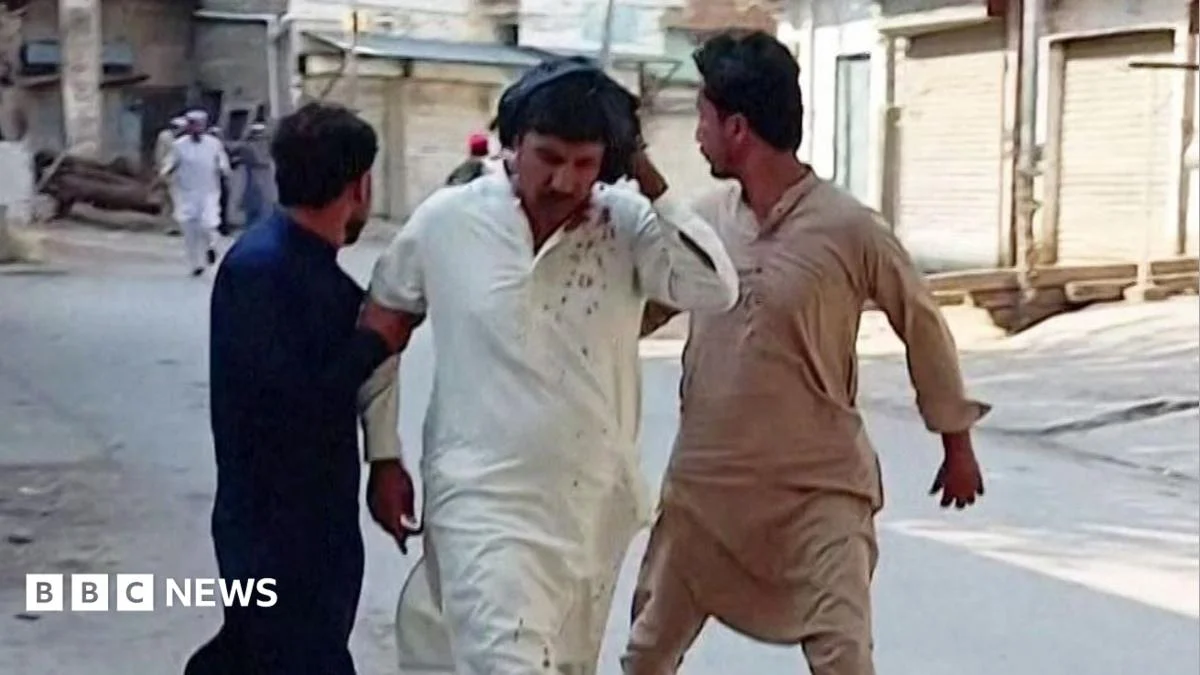
In a brutal act of violence that has sent shockwaves across Pakistan, a devastating car-bomb attack targeted a mosque in the city of Kohat, located in the restive Khyber Pakhtunkhwa province, on Friday afternoon. The blast, which occurred around 1:15 PM local time (8:15 AM GMT), ripped through the congregational prayer hall, claiming the lives of at least 21 people and leaving more than 100 others injured. Among the tragic fatalities were fifteen police officers, who were reportedly present at the mosque, and a four-year-old child, underscoring the indiscriminate nature of the assault. The coordinated attack also involved gunmen who engaged in a fierce firefight with a nearby police facility, adding another layer of terror to the unfolding events.
Initial reports, corroborated by the Pakistan’s APP news agency, painted a grim picture of the aftermath. Visual evidence captured by BBC Verify offers a harrowing glimpse into the destruction, with footage revealing the mosque compound buried under a mountain of rubble and desperate civilians scrambling to tend to the wounded amidst the chaos. The sheer scale of the devastation has led authorities to classify the incident as a complex terrorist operation, with Inspector General of Khyber Pakhtunkhwa police, Zulfikar Hameed, describing it as a "suicide attack" to Reuters. He further elaborated that all seven attackers, who were integral to the execution of the bombing and subsequent gun battle, were killed during the operation.
The attack, striking at the heart of a community during a sacred time of prayer, has elicited widespread condemnation. Pakistan’s President Asif Ali Zardari, in a statement, conveyed his "best wishes for the swift recovery of those injured in the explosion," a sentiment echoed by Prime Minister Muhammad Shehbaz Sharif, who unequivocally condemned the act of barbarism. A comprehensive clearance operation is currently underway at the blast site, as security forces work to secure the area and gather further evidence to aid in the ongoing investigation. However, as of the latest reports, no militant group has stepped forward to claim responsibility for this heinous act, leaving a void of immediate attribution but a chilling certainty about the perpetrators’ intent to sow terror and instability.
The incident in Kohat is not an isolated event but rather a stark manifestation of the escalating militancy that has plagued Pakistan’s border regions in recent months. Khyber Pakhtunkhwa, bordering Afghanistan, has become a focal point for extremist activities, with armed groups increasingly targeting both military personnel and law enforcement agencies. This surge in violence has led to heightened security concerns and strained diplomatic relations between Pakistan and Afghanistan. Islamabad has repeatedly accused Afghanistan of providing a safe haven for militants who train and plan attacks on Pakistani soil. The Afghan Taliban government, however, vehemently denies these accusations, characterizing the militancy as an internal Pakistani issue. This ongoing dispute over cross-border terrorism remains a significant challenge for regional security and stability.
To understand the context of the Kohat attack, it is crucial to examine the broader landscape of militancy in Pakistan. For decades, the country has grappled with various militant outfits, some with complex ideological motivations, others with ethno-nationalist grievances, and a significant number aligned with global jihadist movements. The Khyber Pakhtunkhwa province, and particularly its tribal districts formerly known as the Federally Administered Tribal Areas (FATA), have historically been fertile ground for such groups due to their rugged terrain, porous borders, and periods of weak central governance.
The Tehrik-i-Taliban Pakistan (TTP), an umbrella organization of various Pakistani Taliban factions, has been a persistent threat, engaging in a bloody insurgency against the Pakistani state. The TTP has been responsible for numerous large-scale attacks, including bombings, assassinations, and assaults on security forces. While the TTP has often claimed responsibility for attacks in Pakistan, the lack of immediate claim for the Kohat mosque bombing adds a layer of complexity, potentially indicating a shift in operational tactics, the involvement of a less prominent group, or a deliberate attempt to sow confusion.
The targeting of a mosque, particularly during Friday prayers, is a particularly abhorrent tactic. It signifies a deliberate attempt to inflict maximum casualties and terrorize a civilian population in a place of worship, a sanctuary that should be free from violence. Such attacks are often designed to undermine public confidence in the government’s ability to protect its citizens and to create an atmosphere of fear and despair. The presence of police officers among the casualties suggests a calculated move to strike at the state’s security apparatus.
The involvement of a car bomb, a weapon of mass destruction often employed by sophisticated militant networks, points to the logistical capabilities of the perpetrators. The subsequent gun battle indicates a well-planned operation with multiple phases, designed to inflict damage and potentially escape or continue the assault. The fact that all seven attackers were neutralized underscores the bravery and effectiveness of the Pakistani security forces who responded to the incident, though at a tragic cost.
The geopolitical implications of the Kohat attack are also significant. The fragile security situation in Pakistan’s border regions is intrinsically linked to the stability of Afghanistan. The ongoing debate over cross-border terrorism highlights the deep-seated mistrust and differing perspectives between Islamabad and Kabul. The international community has a vested interest in seeing a stable and secure Pakistan, as instability in the region can have far-reaching consequences, including the potential for increased refugee flows and the resurgence of transnational terrorist groups.
Expert analysis on the rise of militancy in Pakistan often points to a confluence of factors, including socio-economic disparities, political disenfranchisement, ideological radicalization, and external influences. The Pakistani government has, over the years, implemented various counter-terrorism strategies, including military operations, de-radicalization programs, and legislative measures. However, the persistent nature of these attacks suggests that these strategies, while achieving some successes, have not been entirely effective in eradicating the root causes of extremism.
The psychological impact of such attacks on the population cannot be overstated. Communities are left traumatized, their sense of security shattered. The attack on a mosque can further alienate communities, fueling anger and a desire for retribution, which can, in turn, be exploited by extremist groups. The response of the Pakistani government, therefore, needs to be multi-pronged, encompassing not only robust security measures but also efforts to address the underlying socio-economic grievances that can contribute to radicalization.
The international community’s role in supporting Pakistan’s counter-terrorism efforts is also crucial. This can include intelligence sharing, capacity building for security forces, and assistance in de-radicalization and rehabilitation programs. However, any international engagement must be sensitive to Pakistan’s sovereignty and its own unique security challenges.
The Kohat mosque bombing serves as a grim reminder of the ongoing battle against terrorism in Pakistan. The resilience of the Pakistani people in the face of such adversity has been a defining characteristic, but the human cost continues to mount. As investigations proceed and the full scope of the attack becomes clearer, the international community will be watching closely to see how Pakistan responds to this latest act of barbarism and whether it can effectively counter the persistent threat of militancy that continues to destabilize the region. The search for lasting peace and security in Pakistan and its neighboring regions remains a complex and arduous undertaking, demanding sustained effort and international cooperation. The condemnation from President Zardari and Prime Minister Sharif, while necessary, must be accompanied by concrete actions to dismantle the networks that perpetrate such atrocities and to heal the wounds inflicted upon the nation. The road ahead is fraught with challenges, but the resolve to overcome them remains paramount.
