
 By admin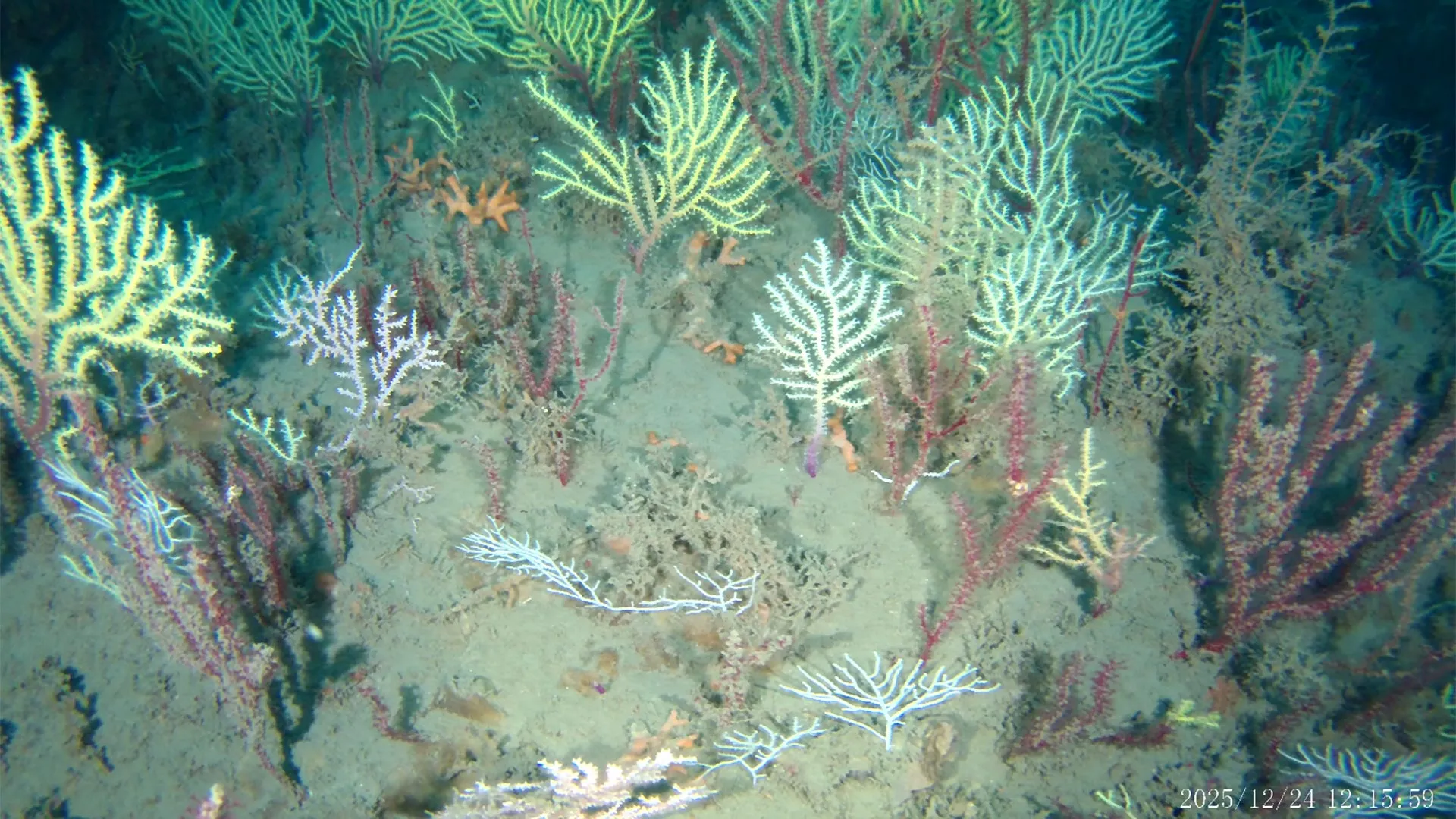
The story of Benin’s forgotten reef begins more than 60 years ago, in the nascent era of systematic marine surveys. During the 1960s, oceanographic expeditions, driven primarily by the economic imperative to locate productive fishing grounds for a growing global population, ventured into the waters off the coast of Benin. Using the then-cutting-edge technology of the time – primarily acoustic sounding and rudimentary sonar – researchers identified what appeared to be a deep-water coral reef. However, with the limited visual capabilities and understanding of deep-sea ecosystems prevalent in that era, the prevailing scientific consensus was that such deep structures were likely barren or, at best, dead. The depth, coupled with the challenges of direct observation, led scientists to conclude that this underwater feature was probably a relict reef, a ghost from a past geological era, devoid of living corals. This assessment, while understandable given the technology and knowledge of the time, meant that a vibrant ecosystem lay unacknowledged, hidden in plain sight, for over half a century.
Fast forward to the present day, and a new generation of scientists, armed with vastly superior technology and a renewed sense of curiosity, embarked on a mission to revisit these historical records. Dr. Gérard Zinzindohoué of the Institut de Recherches Halieutiques et Océanologiques du Bénin, the lead author of the groundbreaking study, spearheaded the modern expedition. His team’s motivation stemmed from a hunch: could the earlier interpretation have been incomplete or even mistaken? The scientific landscape has evolved dramatically since the 1960s. Today, marine biologists possess an intricate understanding of deep-sea ecosystems, including mesophotic coral environments, which thrive in zones once thought too dim for coral life.
The modern expedition was a testament to both scientific rigor and technological advancement. The team deployed state-of-the-art sonar systems, a far cry from their 1960s predecessors, capable of creating highly detailed bathymetric maps of the seafloor. This advanced sonar allowed them to scan vast swathes of the seabed with unprecedented resolution, identifying subtle topographical features that might indicate the presence of reef structures. Complementing this, they utilized the Deep Sea Camera System, a cutting-edge piece of equipment provided by the National Geographic Exploration Technology Lab. This system, akin to placing high-definition trail cameras deep beneath the ocean surface, allowed for visual confirmation and detailed observation of the seafloor in real-time or near real-time.
"It was not an easy field campaign," Dr. Zinzindohoué recounted, reflecting on the arduous journey. "It was a mix of long days at sea, technical problems, and a lot of uncertainty. You’re operating in a challenging environment, far from shore, relying on complex machinery that can always develop issues. There were moments of doubt, certainly." Despite these hurdles, the team’s perseverance paid off. "But then we saw structures on the sonar that looked like they could be reef signatures, which gave us hope that we were close," he continued. These acoustic ‘signatures’ provided the first tangible clue, a flicker of possibility that the historical records might be incomplete.
The next critical step involved deploying an underwater drone to investigate the most promising sonar anomalies. Equipped with the Deep Sea Camera System, the drone descended into the ocean’s depths, acting as the eyes of the scientists above. "That was a big moment for us, because suddenly we could actually see the seafloor," Zinzindohoué recalled vividly. "I still remember seeing those first images. It was a mix of excitement and disbelief, because after all this time thinking about this reef, suddenly there was something real in front of us." The images beamed back from the drone revealed an astonishing sight: a vibrant, living coral community, teeming with life, thriving in a place long considered desolate. The discovery was a profound vindication of their hypothesis and a powerful reminder of the ocean’s hidden resilience.
A Deep Coral Ecosystem Thought To Be Dead
The original surveys had estimated the possible reef’s location at depths exceeding 50 meters below the ocean surface. Based on the new visual evidence and the depth, Zinzindohoué and his colleagues quickly suspected that the site was not a shallow, light-dependent reef, but rather a mesophotic coral ecosystem (MCE). MCEs represent a critical, yet often overlooked, component of marine biodiversity.
"A mesophotic coral ecosystem lives deeper than the usual shallow coral reefs, in zones where light is much more limited," explained Zinzindohoué. Unlike the vibrant, sun-drenched shallow-water reefs that tourists typically envision, MCEs inhabit the ocean’s "twilight zone," typically ranging from 30 to 150 meters, and sometimes even deeper. In these depths, only a fraction of surface light penetrates, forcing corals and associated organisms to adapt to low-light conditions. While some corals in MCEs still host symbiotic algae (zooxanthellae) for photosynthesis, many are more reliant on heterotrophic feeding, capturing plankton and other organic particles from the water column. This adaptability allows them to thrive in environments that would be lethal to their shallow-water cousins.
Another defining characteristic of MCEs, as Zinzindohoué noted, is their structure. "Unlike typical shallow reefs, it does not always form a single continuous reef structure. Instead, it can appear as patchy or scattered coral communities spread across the seafloor." This fragmented nature can make them harder to detect with traditional survey methods, contributing to their underrepresentation in scientific literature and conservation efforts. They often grow on rocky outcrops, seamounts, or other hard substrates where currents deliver food and provide a stable base.
Guided by the decades-old survey records, the researchers systematically scanned an extensive 11.5 kilometers of seafloor using their advanced sonar. Their diligent work identified two distinct areas exhibiting strong signals indicative of reef-like structures. These anomalies became the primary targets for visual confirmation. The team then meticulously examined the most promising locations with the underwater drone and the Deep Sea Camera System. The high-resolution images returned by the system confirmed their deepest hopes: a healthy, thriving coral community, robust and full of life, against all historical odds.
Cameras Reveal Coral and Fish Life
The visual data provided a treasure trove of information, showcasing the intricate biodiversity supported by this newly rediscovered ecosystem. Researchers observed eight distinct types of coral, demonstrating a surprising diversity for a deep-water environment. While specific species identifications would require physical samples, the visual characteristics indicated a mix of hard and soft corals, forming complex structures that provide essential habitat. More importantly, they documented eight different fish species actively utilizing the reef for shelter, feeding, and potentially reproduction.
Among the observed fish species were the striking golden African snappers, known for their vibrant coloration and importance in regional fisheries; the blackbar soldierfish, a nocturnal species often found sheltering in crevices; the colorful Guinean angelfish, recognized for its distinctive patterns; the West African goatfish, which uses its barbels to forage on the seafloor; and the Monrovia doctorfish, a surgeonfish species. Also present were the three-banded butterflyfish, often indicators of healthy coral ecosystems, and two species of damselfish, known for their territorial behavior and association with reef structures. The presence of such a diverse array of fish species underscores the ecological significance of this reef, serving as a critical refuge and feeding ground within the broader marine environment of the Gulf of Guinea.
True to the nature of MCEs, the reef did not manifest as a single, monolithic coral wall. Instead, it appeared to consist of separate, discrete coral patches flourishing on rocky sections of the seabed where conditions were optimal for growth. This patchy distribution is characteristic of mesophotic environments, where factors like light penetration, substrate availability, and nutrient currents can vary significantly over short distances. Scientists believe that these findings represent just a glimpse of a potentially much larger system. Additional surveys, extending beyond the initially investigated areas, may reveal even more such reefs scattered throughout the surrounding region, forming a complex network of deep-water oases.
"To our knowledge, this is the first confirmed record of a living mesophotic coral ecosystem on the Gulf of Guinea continental shelf," affirmed Dr. Zinzindohoué, highlighting the regional significance of the discovery. The Gulf of Guinea, while known for its high productivity and rich pelagic fisheries, has historically been less explored for its deep-sea benthic communities, particularly coral reefs. This finding dramatically alters the understanding of marine biodiversity in this crucial part of the Atlantic.
However, Zinzindohoué also posited a broader implication: "I think what we found is probably not an exception. It is more likely a reflection of how little we still know about coastal regions in West Africa and elsewhere." This statement challenges the prevailing narrative that many parts of the ocean have been thoroughly mapped and understood. The vastness and inaccessibility of the deep sea mean that countless ecosystems remain undiscovered or, as in this case, simply forgotten. "If we were able to find this reef again after 60 years, how many others are still undocumented or simply forgotten?" he mused. "So yes, I do believe there are likely more coral systems out there that we have not documented yet. But we should not assume they are everywhere. Each discovery needs to be confirmed. Without going back into the field, we are really just guessing." This call for further exploration is a stark reminder that the frontier of marine science is still largely unwritten.
How Many More Reefs Could Be Hidden?
The discovery of this living reef off Benin profoundly raises the possibility that other coral ecosystems along the West African coastline may have been overlooked, misidentified, or simply never documented in the first place. This region, often characterized by its dynamic oceanography and significant coastal populations, has historically received less intensive deep-sea exploration compared to other parts of the world. The assumption that the Gulf of Guinea continental shelf might lack significant coral structures could have led to a lack of focused surveys, leaving entire ecosystems hidden beneath the waves.
Yet, despite the immense excitement surrounding this finding, the researchers caution that this is only an early, preliminary look at the site. The identifications of coral and fish species made from the camera footage, while highly suggestive, still require confirmation through physical sampling. Collecting actual specimens would allow for detailed morphological analysis, genetic sequencing, and comparison with known species, ensuring accurate classification. This is a standard and crucial step in marine biology to definitively identify species and understand their genetic relationships.
Furthermore, a significant historical question remains unresolved: Was the reef truly dead in the 1960s and subsequently recovered, or did the original survey simply misinterpret what it observed? It is generally unlikely for a structurally complex coral reef to die completely and then fully recover to its previous state within a few decades, especially in deep water. More plausibly, the 1960s researchers, limited by technology (e.g., poor image quality, lack of light penetration for their cameras) and a less sophisticated understanding of MCEs, might have simply failed to detect the signs of life or misidentified the deep, patchy coral structures as inert. Deep-water corals often look different from their shallow-water counterparts and can be mistaken for rocks or sponges by untrained eyes or with low-resolution imagery. Answering these profound questions will necessitate much more detailed and extensive research at this site and in the surrounding waters, including paleo-oceanographic studies of coral growth rates and environmental proxies.
A Possible 40 Kilometer Coral System
The true scale of this discovery could be far greater than currently understood. "This is still an initial exploration," emphasized Dr. Zinzindohoué. "The historical reports suggested that this could be a continuous coral reef barrier extending roughly 40 kilometers parallel to the coast. We only surveyed a small section of this area, and we had a limited number of visual transects." The possibility of a 40-kilometer long, previously unknown, and thriving mesophotic coral system represents a monumental shift in the understanding of West African marine ecology. Such a large-scale ecosystem would provide immense habitat, contribute significantly to regional biodiversity, and potentially play a crucial role in carbon cycling and nutrient exchange.
To fully grasp the extent and ecological significance of this reef, Dr. Zinzindohoué articulated an ambitious vision for future research: "If I had all the grant money in the world, the first thing I would do is return to the site with a proper scientific diving and sampling program." Such a program would involve deploying remotely operated vehicles (ROVs) with manipulator arms capable of collecting coral fragments, sediment cores, and water samples. Depending on the depth, specialized deep-sea submersibles or technical divers might also be employed for more direct observation and sampling. These collected samples would unlock a wealth of information: identifying the exact coral species, determining their age and growth rates, understanding their reproductive strategies, and analyzing the genetic connectivity between different coral patches. "These are ecosystems that are still poorly known in this part of the world, and every additional piece of information matters," he stressed.
Beyond the immediate scientific gratification, the deeper implications of this discovery resonate with the broader challenges of marine conservation and climate change. Mesophotic coral ecosystems are increasingly recognized for their potential role as refugia for shallow-water species, particularly as shallow reefs face unprecedented pressures from rising ocean temperatures, acidification, and pollution. While MCEs are not immune to global change, their deeper location might offer some buffering against acute surface impacts, making them crucial reservoirs of biodiversity.
"For me, the most exciting part is about understanding the reef’s history, and what it can tell us about how the ocean in this region has changed over time," Zinzindohoué concluded, encapsulating the profound scientific and historical value of the finding. Coral skeletons act as natural archives, recording environmental conditions over decades or even centuries. Analyzing the growth layers of these corals could provide invaluable data on past ocean temperatures, water chemistry, and productivity, offering insights into long-term climate patterns and regional oceanographic shifts. "It feels like we have only just started to read an archive that has been there for a very long time."
This discovery off Benin is more than just a scientific footnote; it is a powerful call to action. It highlights the urgent need for increased investment in marine exploration, particularly in understudied regions like West Africa. It underscores the importance of revisiting historical data with modern tools and open minds, challenging old assumptions, and acknowledging the potential for hidden wonders in our vast and mysterious oceans. As humanity grapples with the myriad threats facing marine ecosystems, the rediscovery of this vibrant, living reef offers a glimmer of hope – a testament to the resilience of nature and a powerful incentive to protect the unseen treasures that still await discovery beneath the waves. The future of this newly found ecosystem, and potentially many others, now depends on sustained scientific inquiry and proactive conservation measures.
