
 By admin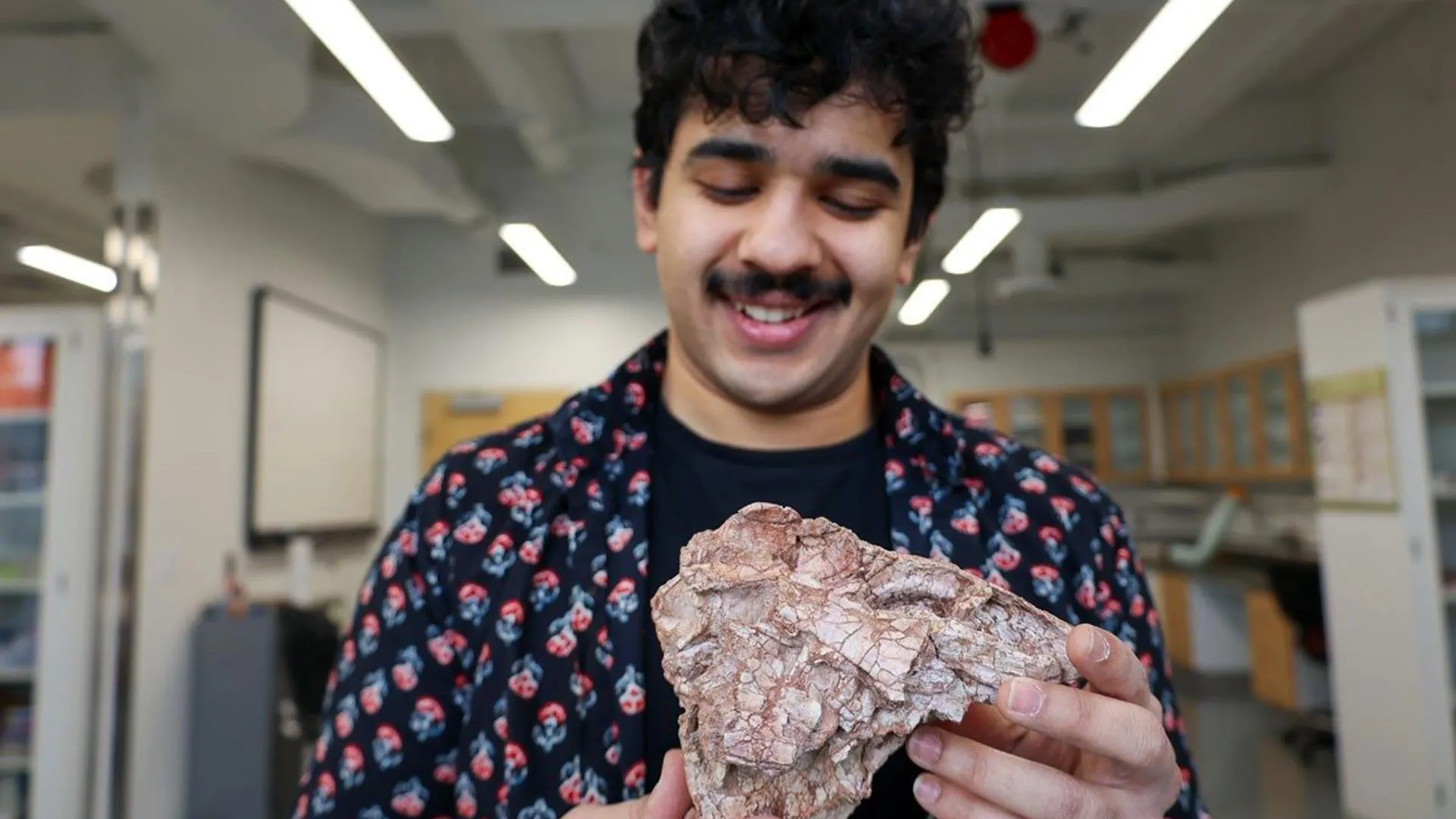
"This is a uniquely sucky specimen," Srivastava declared, a statement that might seem irreverent to the uninitiated but perfectly captured the reality for paleontologists. "It’s so bad. Like, if you saw a human skull in this way, you’d throw up." The fossil, a collection of crushed, fragmented bone, offered little of the elegant structure one might expect from a prehistoric predator. Yet, it was precisely its deplorable condition that made the subsequent discovery so remarkable, and Srivastava’s two-year endeavor to painstakingly reconstruct it all the more impressive. His meticulous work, culminating in its publication in the esteemed journal Papers in Palaeontology, has not only pieced together a lost creature but has also offered profound new insights into the pivotal moment when dinosaurs ascended to global dominance during the Jurassic period.
The story of how this "uniquely sucky" fossil came to shed such brilliant light on evolutionary history is itself an unusual tale, interwoven with scientific tenacity and a commitment to nurturing young talent. While such high-level paleontological research is typically the domain of seasoned scientists and post-doctoral fellows, Virginia Tech’s geobiologists Sterling Nesbitt and Michelle Stocker made the unorthodox decision to bring Srivastava onto the project as a first-year student. This decision underscores a core philosophy within Virginia Tech’s paleontology program: to immerse undergraduate researchers in the entirety of the scientific process, from initial discovery and painstaking preparation to detailed analysis and eventual publication. "We want undergraduate researchers to experience the whole paleontological research process at Virginia Tech," Nesbitt explained, highlighting the program’s dedication to hands-on learning. "Simba grabbed the project by the reins," he added, a testament to Srivastava’s exceptional drive and intellectual curiosity.
Reconstructing a Rare Dinosaur Skull: From Drawer to Discovery
The fossil’s journey to the Virginia Tech lab was as circuitous as its physical state was challenging. It was initially unearthed in 1982 by a field team from the Carnegie Museum of Natural History during an expedition to the famed Ghost Ranch in New Mexico. Ghost Ranch is a legendary site in paleontology, renowned for its rich Triassic fossil beds, particularly its abundance of Coelophysis, one of the earliest known dinosaurs. Despite the promise of its origin, the poor condition of this particular skull meant it didn’t immediately reveal its secrets. It was collected, cataloged, and then, for more than three decades, it remained largely unexamined, residing in a museum drawer, awaiting a fresh pair of eyes and the advent of new technology.
It was Nesbitt, with his keen eye for overlooked specimens, who "rediscovered" the fossil in that drawer many years later. Recognizing its potential significance despite its fragmented state, he brought it to Virginia Tech for a more thorough examination. The task of making sense of the jumbled pieces fell to Srivastava. Traditional fossil preparation often involves physically chipping away rock matrix, a process that is both delicate and irreversible. For a specimen as crushed and intertwined as this skull, such methods would have been catastrophic. This is where modern paleontological techniques became indispensable.
Srivastava utilized computed tomography (CT) scanning data, a non-invasive imaging technique similar to medical CT scans. This allowed him to peer inside the rock without damaging the fossil, generating thousands of cross-sectional images. From this digital data, he embarked on the arduous process of virtually segmenting and separating the individual, crushed bones. Imagine trying to untangle a ball of yarn where each strand is brittle and fused – this was the digital equivalent. Once digitally isolated, Srivastava could then create a precise 3D printed reconstruction of the skull. This physical model, a perfect replica of the digitally reassembled skull, allowed for hands-on study, observation of intricate anatomical details, and comparisons with other known dinosaur species – a critical step in understanding its place in the evolutionary tree. This fusion of cutting-edge technology and meticulous traditional observation transformed an unintelligible jumble of bone into a scientifically viable specimen.
The dinosaur to which this skull belonged was a carnivorous species, but one that existed more than three times earlier than the iconic Tyrannosaurus Rex. These ancient predators roamed the Earth near the end of the Triassic period, a geological epoch spanning approximately 252 million to 201 million years ago. This was a vastly different world from the one often depicted in popular culture. At this juncture, dinosaurs were far from the dominant, colossal predators of later periods. Instead, they were still relatively modest in size and numbers, coexisting and competing fiercely with a diverse array of other formidable creatures. These competitors included early relatives of crocodiles, known as crurotarsans, which often held the top predator niches, as well as various large amphibians and early mammal-like reptiles. The Triassic was a time of ecological experimentation, with no single group having fully established global supremacy.
How Dinosaurs Rose to Power: The End-Triassic Catalyst
This delicate ecological balance, however, was about to be shattered by one of Earth’s most devastating mass extinction events. As the Triassic period drew to a close, a catastrophic global upheaval wiped out a significant portion of life on Earth, dramatically altering the course of evolution. This event, known as the End-Triassic Extinction, is primarily linked to massive volcanic activity associated with the Central Atlantic Magmatic Province (CAMP). Over a period of several hundred thousand years, enormous volumes of lava erupted across what is now the Atlantic continents, releasing vast quantities of greenhouse gases like CO2 and sulfur dioxide into the atmosphere. This led to rapid global warming, ocean acidification, and widespread environmental collapse. Estimates suggest that up to 70-80% of all terrestrial and marine species perished during this tumultuous interval.
Crucially, this extinction event disproportionately affected many of the dinosaurs’ main competitors, particularly the large crurotarsans. With these dominant predators largely removed from the ecological landscape, vast swathes of ecological niches suddenly became vacant. It was into this power vacuum that dinosaurs, which were already diversifying and evolving, could rapidly expand and adapt. "Dinosaurs go from being co-stars to the headliner," Srivastava aptly summarized, capturing the essence of this dramatic ecological shift. This period of rapid diversification and adaptive radiation following the extinction event laid the groundwork for the dinosaur-dominated ecosystems of the subsequent Jurassic and Cretaceous periods.
Fossils from this critical transitional period – the very end of the Triassic and the dawn of the Jurassic – are exceedingly rare. Well-preserved specimens are even scarcer, making any fossil from this interval, even a severely damaged one, immensely valuable to paleontologists seeking to understand the mechanisms of post-extinction recovery and the rise of new dominant groups. The "sucky" skull, therefore, represented an unparalleled window into this pivotal moment. Indeed, its unique combination of features and its stratigraphic position (the rock layer in which it was found) suggested that no other specimen quite like it had ever been discovered, underscoring its scientific importance.
Despite its distorted state, the fossil yielded crucial anatomical details. The digital reconstruction revealed that this dinosaur possessed unusually large cheekbones, a broad braincase, and likely a relatively short, deep snout. These features were largely unprecedented in early carnivorous dinosaurs known from earlier in the Triassic. The robust cheekbones might suggest powerful jaw musculature or perhaps a more distinctive facial profile, while the broad braincase could indicate differences in sensory processing or brain structure. The short, deep snout, in contrast to the more elongated snouts of many early theropods, hints at a specialized feeding strategy, perhaps for crushing or tearing rather than just slicing. These previously unseen morphological characteristics provided compelling evidence that early dinosaurs were evolving in more complex and divergent ways than scientists had previously understood, challenging simpler linear models of early dinosaur evolution.
A New Species With a Strange Look: Ptychotherates bucculentus
Given its distinctive and somewhat peculiar appearance, Srivastava and the team embarked on the essential paleontological task of naming the new species. "We landed on Ptychotherates bucculentus, which means ‘folded hunter with full cheeks’ in Latin," Srivastava explained. The name perfectly encapsulates its key features: "Ptychotherates" (folded hunter) referring to the crushed nature of the original skull and its predatory lifestyle, and "bucculentus" (full cheeks) highlighting its prominent cheekbones. The evocative name quickly caught the imagination of the scientific community and beyond. As Srivastava recounted, "One paleo-artist said that it looked like a murder muppet," a description that humorously but effectively conveys its potentially fierce yet oddly proportioned visage, a blend of primal predator and perhaps something unexpectedly grotesque.
After years of meticulous analysis, comparative anatomy, and phylogenetic studies (mapping its evolutionary relationships), the team determined that Ptychotherates bucculentus belonged to the Herrerasauria. This was a significant classification. Herrerasaurians are one of the earliest known groups of carnivorous dinosaurs, appearing relatively early in the Triassic period (around 233 million years ago). They were bipedal predators, generally medium-sized, and possessed a unique suite of primitive and derived features that place them at or very near the base of the dinosaur family tree. They represent a critical early branch, and their evolutionary trajectory has long been debated. The discovery of Ptychotherates suggests that this group persisted for much longer than previously thought, and that this "folded hunter" appears to have been among the very last surviving members of this ancient lineage.
Rethinking the End-Triassic Extinction: A Nuanced View
The implications of Ptychotherates bucculentus extended even further, leading to an unexpected re-evaluation of the End-Triassic Extinction itself. The rock layers in which Ptychotherates was found were carefully dated and appear to correspond to a geological moment just prior to the onset of the mass extinction event. Crucially, no other members of the Herrerasauria group have ever been discovered in rock layers dating after this extinction. This absence in the post-extinction fossil record strongly suggests that the Herrerasaurians, despite being one of the earliest dinosaur lineages, may have themselves fallen victim to the End-Triassic extinction.
"This forces us to reconsider the impact of the end-Triassic extinction as something that wiped out not just the competitors to dinosaurs, but some long-standing dinosaur lineages themselves," Srivastava emphasized. This finding adds a crucial layer of nuance to our understanding of the extinction event. Previously, it was often viewed primarily as a "dinosaur-friendly" event, clearing the way for their subsequent dominance. Ptychotherates demonstrates that even within the dinosaurian family, not all lineages were equally resilient. Some, like the Herrerasaurians, were also vulnerable and ultimately succumbed to the environmental catastrophe. This paints a more complex picture of ecological upheaval, where survival was not guaranteed even for those poised for future success.
Furthermore, the fact that Ptychotherates was found in what is now the American Southwest, and that no other Herrerasaurians have been discovered elsewhere from such a late point in the Triassic, led scientists to propose an intriguing hypothesis: this region may have served as a final refuge for this ancient dinosaur group. As environmental conditions deteriorated globally, localized pockets of more stable or favorable environments might have allowed relict populations to persist for a time, even as their relatives vanished elsewhere. This "final refuge" concept highlights the patchy and often localized nature of extinction events and the importance of specific geographical conditions in determining survival.
One Fossil, an Entire Lost Lineage: The Enduring Legacy
Simba Srivastava’s "folded hunter" is more than just a new species; it represents a singular, tangible link to an entire lost chapter of Earth’s history. It is a poignant reminder of the fragility of life and the immense power of geological time. In the grand tapestry of evolution, where billions of individual organisms lived and died over millions of years, the fossil record is inherently incomplete. Most life leaves no trace. Thus, when a single specimen emerges, especially one in such a condition and from such a critical juncture, its significance is magnified exponentially.
"This specimen, it fits in my hands, but it is the only proof that any of these dinosaurs lived this long, lived in these latitudes, the only proof that they evolved to have this skull shape," Srivastava reflected, holding the 3D printed replica. His words underscore the profound responsibility and privilege of paleontological discovery. "All these billions of individuals that existed through time are spoken for by this one specimen." It is a powerful testament to the detective work of paleontology, where a few fragments of bone, carefully analyzed and contextualized, can unlock secrets about entire lineages, rewrite evolutionary narratives, and illuminate the dynamic, often brutal, forces that have shaped life on Earth. Through the dedication of young researchers like Simba Srivastava, guided by experienced mentors, the silent stories embedded in stone continue to speak, enriching our understanding of the planet’s ancient past and our place within its ongoing story.
