
 By admin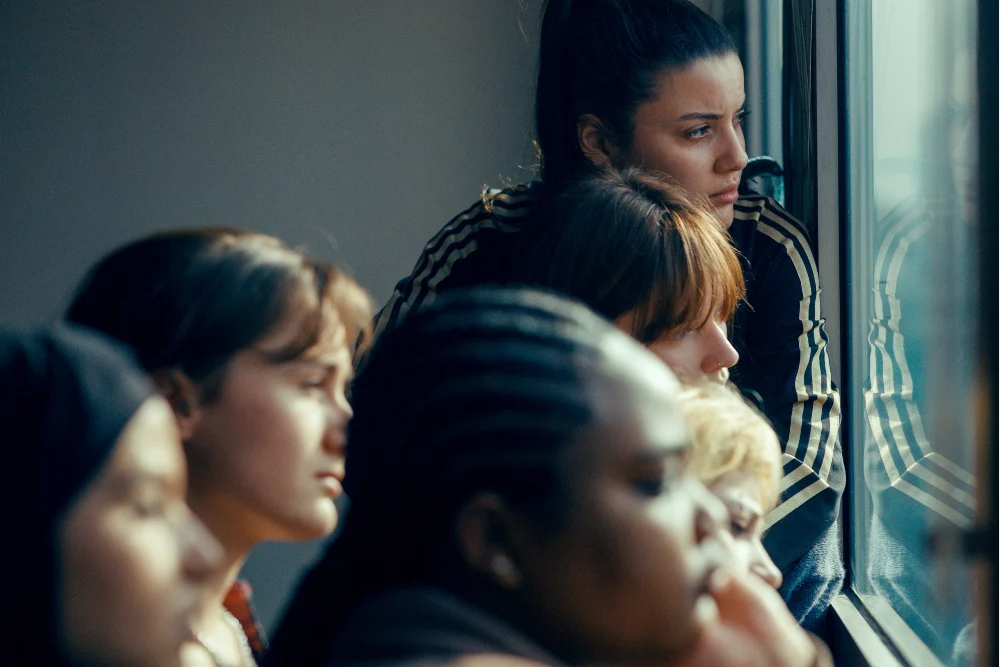
Director Cédric Kahn, a filmmaker with a long-standing fascination with the complexities of the human psyche, has finally brought his vision of psychiatry to the screen with "A Place to Heal." However, his journey into this often-dark subject matter led him not to an examination of doctors and diagnoses, but to an unexpected and powerful focus on teenagers and their remarkable resilience in the face of profound psychological distress. The film, which premiered at the Venice Film Festival, tackles difficult themes such as eating disorders, suicide attempts, and bullying, yet emerges as a surprisingly luminous and life-affirming work. It is punctuated by moments of unexpected humor and genuine joy, and crucially, it never casts its young characters in a light of pity.
"I didn’t want psychiatry or mental illness to be associated with something too deathly," Kahn revealed in an interview with Variety on the eve of the film’s world premiere. "I wanted the film to be very vital, very visceral." This intent is palpable from the opening scenes. The narrative begins with 17-year-old Lucia, brought by the police to an adolescent psychiatric ward that is all too familiar to her. Here, she reconnects with Eloïse, a long-term patient, and encounters a diverse group of teenagers grappling with their own internal battles. Kahn himself portrays Etienne, the dedicated but clearly overstretched head of the medical team. The arrival of a new, enigmatic patient, Enzo, injects a disruptive energy into the unit, creating a palpable shift in the established dynamics.
Kahn and his co-writer Kahina Le Querrec undertook extensive research to ensure the authenticity of their portrayal. They immersed themselves in the realities of adolescent psychiatric wards, with Le Querrec spending six months within one unit and Kahn observing another for several weeks. Their meticulous observation extended to patients, caregivers, consultations, and crucial meetings between medical professionals and families. This deep dive provided the raw material for the film’s twelve adolescent patients and ten caregivers. The writers then artfully transformed and synthesized these observations, weaving them into fictionalized narratives to ensure that no real individual could be directly identified, thus preserving their privacy while honoring their experiences.
What struck Kahn most profoundly during this period of immersion was the undeniable vitality he witnessed, and the crucial role the adolescents themselves played in each other’s healing journeys. "They become a family. They heal each other too," he explained. "It’s not only the institution that treats them. It’s the fact that they’re there collectively at a moment of enormous fragility." He further elaborated on the paradoxical environment: "There’s a morbid impulse and a vital impulse. It’s the coexistence of those two things that makes that place so particular." This duality forms the emotional bedrock of the film, showcasing how even in the darkest of circumstances, the drive to live and connect can persevere.
The film’s exploration of adolescent mental health resonates deeply with the growing global conversation surrounding the well-being of young people. From France to the United States and beyond, the urgency of addressing these issues has become undeniable. This timeliness was evident during the casting process. Kahn was struck by the profound knowledge and open dialogue surrounding psychiatric illness among the teenagers he auditioned. "They talked about it without any taboo and without any negative preconceptions," Kahn noted. "I remember that when we were teenagers, people who had psychiatric problems were a little bit freaks. It’s much more accepted today." This generational shift in perspective is a crucial backdrop to the film’s narrative.
Kahn modeled the character of Etienne, the no-nonsense chief psychiatrist, on the real-life head of the psychiatric unit he observed during his research. He aimed to capture a specific approach to patient care: "He treated the people he was speaking to as intelligent teenagers who were capable of questioning themselves. Without condescension. That’s what matters," Kahn stated, highlighting the importance of respecting the young patients’ agency and intelligence.
Ironically, Kahn himself has never undergone psychoanalysis. Yet, he found himself surprisingly convincing in the role of Etienne when viewing the film in the editing room. "I think it’s the face, the voice, I don’t know," he joked. "I have a doctor’s face." Beyond the visual aspect, there’s a clear connection between Kahn the filmmaker and Etienne the psychiatrist. "As a director, I’m a little like that too," he admitted. "I can say to an actor: ‘What you did wasn’t good.’" He humorously added, "Especially famous actors. It’s more fun," acknowledging that seasoned performers might not always welcome such direct feedback.
This dual role as actor and director in "A Place to Heal" is particularly revealing for Kahn. Beyond his acclaimed directing career, he has quietly established himself as one of France’s most respected and sought-after character actors. He has collaborated with esteemed filmmakers such as Xavier Beauvois, Elie Wajeman, and Joachim Lafosse, and delivered a memorable performance as himself in the popular series "Call My Agent!" alongside Isabelle Huppert. "A Place to Heal" marks only the second time Kahn has taken a significant acting role in one of his own films, the first being in his 2019 movie "Fête de famille," which featured a stellar cast including Catherine Deneuve and Emmanuelle Bercot.
Kahn’s presence at the Venice Film Festival this year is doubly significant. In addition to the world premiere of "A Place to Heal" in competition, he also appears in Alexandre Smia’s feature debut "Jupiter," a real-time political thriller screening out of competition. This showcases his versatility and continued engagement with the cinematic landscape.
Throughout his directing career, Kahn has demonstrated a keen ability to navigate between working with established stars and discovering new talent. His 2018 drama "The Prayer" featured a breakthrough performance from Anthony Bajon, who earned the Silver Bear for best actor at the Berlin Film Festival. Kahn’s most significant directorial success to date came with "The Goldman Case," a gripping courtroom drama that opened the Cannes Directors’ Fortnight in 2023 and subsequently earned Arieh Worthalter the César for best actor. Venice has also been a consistent platform for Kahn’s work; his debut film, "Bar des rails," screened at the Lido’s Critics’ Week in 1992. "L’Ennui" competed in 1998, and "Making Of" was shown out of competition in 2023. "A Place to Heal" signifies his fourth participation in the festival and a welcome return to the competitive lineup.
For "A Place to Heal," Kahn assembled an ensemble cast primarily composed of newcomers. Teen casting director Marlène Serour and her team meticulously auditioned over 1,000 young individuals. Kahn himself then personally interviewed more than 100 before making his final selection of the twelve teenagers who form the heart of the film. Among the few with prior screen experience are Malou Khebizi, who garnered attention in Agathe Riedinger’s "Wild Diamond" (which competed at Cannes in 2024), and Patience Munchenbach, known for her role in "The Swarm."
Despite the immediacy and contemporary relevance of the subject matter, Kahn was resolute in his decision not to make "A Place to Heal" a film solely defined by the current youth culture. He deliberately stripped away many potential signifiers that could have anchored the film too tightly to the post-pandemic era. "We didn’t over-update the film around screens, eco-anxiety, lockdowns and all that," he stated. "Cinema isn’t the same rhythm as current events." His ambition is for "A Place to Heal" to possess a timeless quality, remaining relatable for audiences for years to come. "I hope that even in 10 years, we’ll look at it as a contemporary film," he expressed.
As is characteristic of Kahn’s filmmaking, "A Place to Heal" also carries a significant social dimension. It offers a poignant look at the pressures confronting France’s public psychiatric system, particularly at a time when the demand for mental health services among young people continues to surge. However, the film also serves as a powerful testament to the inherent strength and inclusivity of the French public hospital system, emphasizing the principle that everyone accesses care through the same doors. "The public hospital welcomes everyone, regardless of origin or social class," Kahn asserted. "Psychiatric illness cuts across classes. It affects absolutely every layer of the population." This highlights the universality of mental health struggles and the vital role of accessible public services.
While the film is firmly rooted in social realism, it gradually transitions from an almost documentary-like observational style in its opening to a more romantic sensibility. This shift mirrors the young characters’ burgeoning desire to break free from the confines of the institution. The cinematography by Patrick Ghiringhelli, who previously collaborated with Kahn on "The Goldman Case," employed three cameras simultaneously. This technique allowed for continuous coverage of different group members, capturing subtle interactions and individual reactions, thereby enhancing the film’s immersive quality.
Kahn explains that this evolving tone reflects the adolescents’ own powerful yearning for escape from the institution. Paradoxically, for some, this desire becomes complicated by a fear of leaving once their discharge date approaches. "I love when I have the feeling, even for the spectator, that it’s the characters who are writing the screenplay," he said, emphasizing his commitment to allowing the narrative to unfold organically from the characters’ internal experiences.
Ultimately, this creative impulse leads the film back to Kahn’s foundational belief: regardless of the darkness depicted, cinema must offer a path forward. "I can’t conceive of a film if there isn’t a small window, a little glimmer," he stated. "I don’t even have the strength to make one otherwise." This philosophy imbues "A Place to Heal" with a profound sense of hope, suggesting that even in the most challenging circumstances, the human spirit possesses an enduring capacity for healing and resilience.
"A Place to Heal" is produced by Ad Vitam Films, with Ad Vitam managing French distribution and Charades overseeing international sales.
