
 By Titik Puspa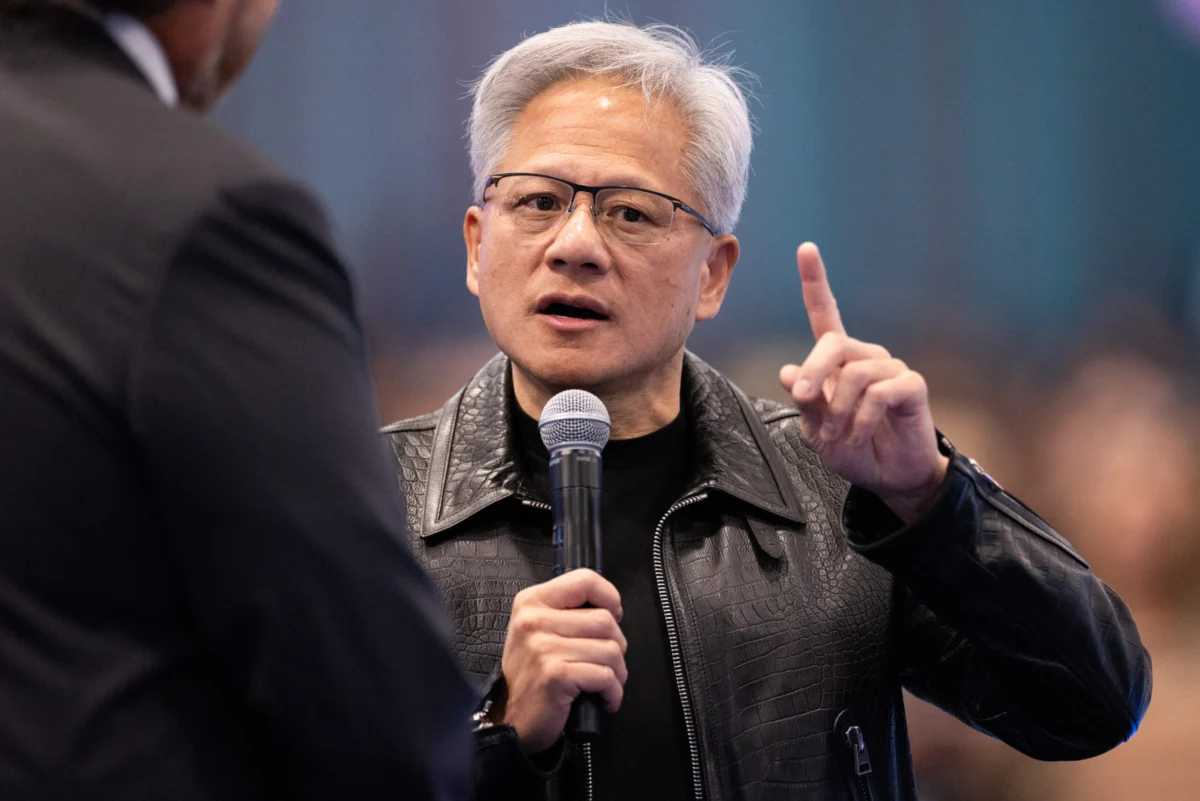
A significant rift is emerging within the artificial intelligence industry, as prominent figures grapple with the implications of rapid AI advancement and the potential need for a more measured approach. At the heart of this debate lies Anthropic CEO Dario Amodei’s recent proposal to "pace the frontier," a plan that has garnered a surprising degree of industry support. However, this call for caution stands in stark contrast to Nvidia CEO Jensen Huang’s public alignment with President Donald Trump’s assertions that the growing backlash against AI is a manufactured hoax, rendering further regulation unnecessary. These conflicting viewpoints were recently dissected on TechCrunch’s Equity podcast by Kirsten Korosec, Sean O’Kane, and Anthony Ha, who explored the sincerity of calls for a slowdown and the viability of market-driven safeguards.
Dario Amodei’s "plan to pace the frontier," published in September 2026, outlines a vision for a more deliberate progression in AI development. While the specifics are still being fleshed out, the general thrust suggests a need for enhanced safety protocols and a more collaborative approach to risk management. Amodei’s proposal, however, has been met with a mix of cautious optimism and skepticism. While many in the industry have publicly acknowledged the importance of AI safety, the concrete details of Amodei’s plan have been criticized for their vagueness.
In a recent episode of TechCrunch’s Equity podcast, the conversation surrounding Amodei’s initiative took center stage. The hosts delved into whether executives like Amodei and OpenAI CEO Sam Altman are genuinely committed to slowing down the relentless pace of AI development. Anthony Ha, one of the podcast’s hosts, expressed surprise at the widespread industry endorsement of Amodei’s plan, noting that even before its official publication, similar sentiments were circulating. He observed that these ideas have been percolating within the AI safety community for some time, suggesting that Amodei’s contribution was more of a formal articulation of existing concerns.
However, Sean O’Kane, another podcast host, voiced a more critical perspective, highlighting the perceived lack of detail in Amodei’s proposal. "I don’t know," O’Kane stated, referencing the plan’s somewhat abstract nature. "I said on this show last week, I didn’t think we were headed for a slowdown of any kind, in large part because I don’t think these companies are structured in a way where that works." He elaborated that despite the pronouncements from Amodei, Altman, and even Elon Musk to some degree, the underlying mechanisms for such a slowdown remain unclear. O’Kane pointed out that the proposed measures lack specificity, both in terms of articulating the precise dangers and risks associated with current AI trajectories and in defining what a meaningful "slowdown" would entail.
Kirsten Korosec, the third host, offered a nuanced view, acknowledging that while consensus can be beneficial, it can also be a precursor to collusion. She emphasized the importance of identifying who is participating in this consensus, noting that the focus is primarily on "frontier AI labs"—those at the forefront of developing the most advanced AI systems. Korosec outlined some of the general ideas presented in Amodei’s plan, including the involvement of independent third-party evaluators to monitor safety practices within companies like Anthropic and OpenAI, and the coordination of safety standards and limits among major AI companies in democratic nations, along with international collaboration.
Adding another layer to the discussion, Korosec highlighted the significant pushback Amodei’s plan has received from unexpected quarters, most notably from Nvidia CEO Jensen Huang. Huang’s public remarks, particularly those made during a call with President Donald Trump on-stage at the All-In Summit, have been a focal point of contention. Huang’s stance directly contradicts the calls for caution, aligning instead with Trump’s narrative that the AI backlash is a fabricated issue. This public endorsement by Huang, a key player in the AI hardware ecosystem, underscores the deep divisions within the industry.
Sean O’Kane offered an analysis of Huang’s position, suggesting that the Nvidia CEO sees himself as a pragmatic voice, or "the adult in the room," in the often-turbulent AI landscape. O’Kane noted a shift in this dynamic, recalling a time when Microsoft’s Satya Nadella was often perceived in this role. However, he believes Microsoft has lost some of that standing, partly due to unfulfilled promises to disrupt the search engine market. O’Kane posits that Huang understands the need to appeal to a broad audience and to serve as a crucial liaison between the AI industry and the current administration. The fact that President Trump felt compelled to engage with Huang publicly during a high-profile conference further illustrates Huang’s influential position and the administration’s interest in the AI narrative.
Kirsten Korosec, however, viewed Huang’s on-stage appearance with skepticism, interpreting it as a calculated move that highlighted Nvidia’s vested interest in the unhindered advancement of AI. "I hate to be cynical about it, but that was sort of my initial reaction to it," she admitted, suggesting that Huang’s actions were driven by the financial benefits Nvidia accrues from the rapid development and deployment of AI technologies.
Anthony Ha further elaborated on the alignment of interests between Trump and Huang, noting that Huang was likely telling Trump what he wanted to hear. Ha also pointed out a subtle but significant linguistic difference in the discourse around slowing down AI. While both Altman and Amodei use the term "slowdown," they often prefer the word "pace." This linguistic choice, Ha suggests, is strategic. The three proposals outlined by Korosec—independent evaluations, coordinated safety standards, and international collaboration—while theoretically leading to a deceleration, are not explicitly framed as such. Instead, they are presented as essential safety measures, allowing for continued progress, albeit with a degree of oversight.
This leads to a critical question posed by Kirsten Korosec to Sean O’Kane: In a free market, wouldn’t existing regulations and the competitive landscape naturally provide sufficient safeguards against unsafe AI releases? Wouldn’t companies that deploy dangerous AI face market repercussions, such as customer cancellations and reputational damage, thereby acting as a natural deterrent?
Sean O’Kane, while acknowledging the theoretical validity of this argument in an idealized market, expressed strong reservations about its applicability in the current AI ecosystem. "In a vacuum, or in a market that is not being distorted by a whole bunch of different external pressures, yeah, I think there’s an element of that," he conceded. However, he immediately countered this by pointing to the perceived lack of enforcement by the federal government regarding regulations, both broadly and specifically within the AI sector.
Furthermore, O’Kane highlighted what he described as a peculiar characteristic of the AI market: a perceived lack of robust consumer choice driving the competitive dynamic. He argued that if a company were to release a truly harmful AI product, the impact on customer base, measured by cancellations or other forms of market rejection, is not as significant as one might expect. This is particularly true, he explained, as these companies have increasingly shifted their revenue streams towards enterprise solutions. "Corporations are not going to pack up and move from [OpenAI’s] Codex to [Anthropic’s] Claude Code just because they disagree on principle with something that OpenAI did," O’Kane asserted.
Adding to this, O’Kane pointed out that the massive influx of investment capital into AI companies provides them with a significant buffer, enabling them to absorb potential financial losses that might arise from any negative consequences of their AI deployments. Consequently, while the idea of market-driven self-regulation is appealing in theory, O’Kane believes it is largely absent in practice within the current AI landscape. This suggests that external interventions, whether through regulatory bodies or a more proactive industry-wide commitment to responsible development, may be necessary to ensure the safe and ethical progression of artificial intelligence. The divergence between Amodei’s call for pacing and Huang’s dismissal of slowdown concerns, coupled with the perceived shortcomings of market-based safeguards, underscores the complex and multifaceted challenges facing the global AI community.
