
 By admin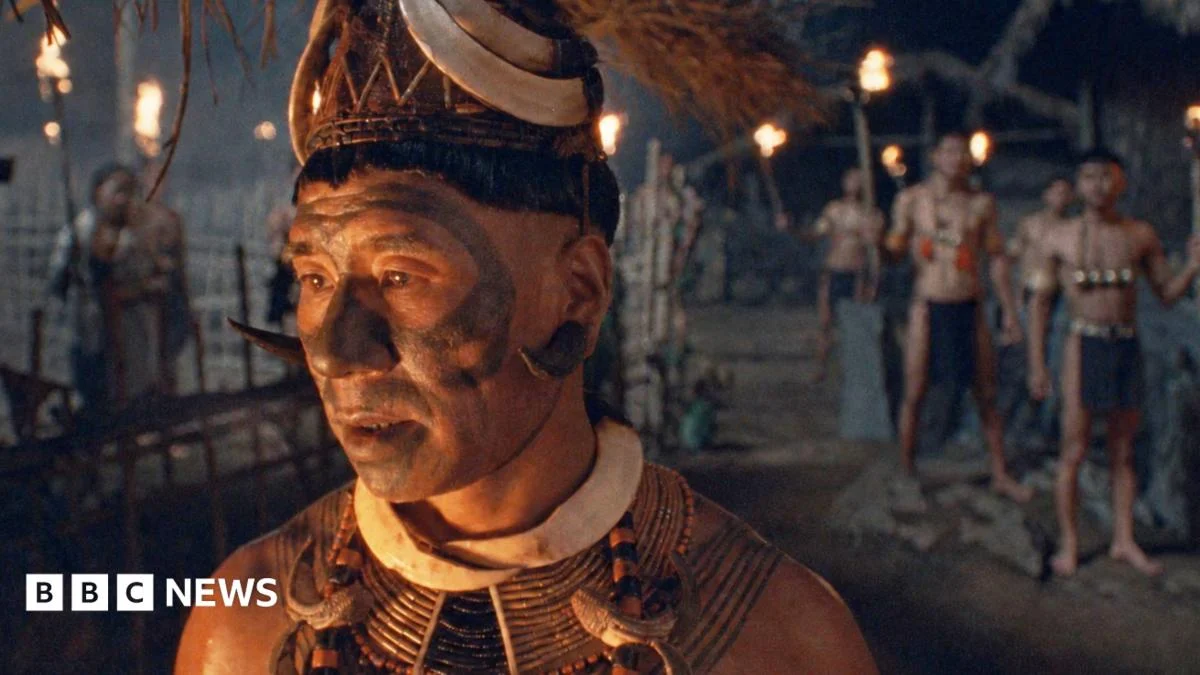
There is something profoundly pleasingly improbable about "Angh." This cinematic gem emerges from Nagaland, a mountainous state cradled on India’s northeastern frontier, home to fewer than two million people. The film is spoken in Konyak, a tribal language that remains largely unfamiliar to the vast majority of Indians, let alone international audiences. Furthermore, "Angh" marks director Theja Rio’s maiden feature film, and most of its cast members were stepping in front of a camera for the very first time. Yet, against these seemingly insurmountable odds, this quiet, contemplative film captured the prestigious Platform Prize at the Toronto International Film Festival this month, a significant juried award that recognizes films possessing a distinctly original directorial voice. The jury lauded Rio’s "refreshing perspective" and the film’s evocative portrayal of a world seldom encountered on the global cinematic stage.
This remarkable win bestows "Angh" with an uncommon pathway towards the 2027 Academy Awards. Under a revised set of regulations, films that win specific designated awards at six select international festivals are now eligible for consideration in the International Feature Film category, bypassing the traditional reliance solely on their country’s official submission. While this does not automatically confer an Oscar nomination upon "Angh," it undeniably propels a Konyak-language film, hailing from one of India’s smallest states, into a global conversation from which such narratives have been almost entirely absent.
Director Theja Rio himself still sounds slightly taken aback by the magnitude of this achievement. Speaking from Delhi, a mere 72 hours after the win, he admits to having barely had a moment to catch his breath amidst the whirlwind of Toronto, flights, interviews, and more interviews. "There were a lot of good films in the competition," he shares, acknowledging the presence of directors with far more extensive experience. While his producers harbored a strong sense of confidence, with some even anticipating a win, Rio himself was more reserved. "They thought we were going to win. I wasn’t," he confesses with a disarming honesty.
Beneath the gravity of his directorial debut and its critical acclaim, Rio reveals a personality far less solemn than the film’s themes might suggest. Before embarking on his cinematic journey, his aspirations lay in music. He harbored a desire to be a rapper, humorously envisioning himself as "a kid from Compton instead of a kid from Nagaland." His eclectic tastes still span a wide spectrum, happily embracing the lyrical prowess of Black Thought, the lead rapper of the iconic American hip-hop group The Roots, alongside his profound admiration for his favorite filmmaker, the acclaimed Iranian director Abbas Kiarostami. However, for his inaugural feature, Rio chose to turn his gaze inward, towards the very heart of his homeland.
Set in the early 1960s, "Angh" centers on Anghba, the aging hereditary chief of a Konyak village, and his young son, as the world around them undergoes profound transformation. The Konyaks, one of Nagaland’s seventeen major tribes, are predominantly concentrated in the eastern district of Mon, a region where these hereditary chiefs are known as Anghs. Even today, some elder Konyak men bear distinctive facial tattoos, a legacy of their historical practice of headhunting, a tradition deeply ingrained in their ancestral lore and social structure.
Anghba and his son stand as poignant figures among the last in their community to adhere to their ancestral faith as Christianity steadily gains ground. The narrative takes a significant turn with the arrival of an American missionary, portrayed by Scottish actor Douglas Henshall. While the father grapples with resistance to this encroaching influence, the son finds himself increasingly drawn by curiosity.
Rio explains that the genesis of the film’s concept arose a few years prior, during a visit to Mon for another project. What struck him most profoundly was the remarkable proximity with which different generations seemed to coexist within the same societal fabric. Within a single family, he observes, one might encounter a grandfather who was a former headhunter, his face still adorned with traditional tattoos, while just two generations later, his grandson might be strumming a guitar in a burgeoning rock band. "It feels like you’ve jumped on a time machine," Rio muses, capturing the essence of this temporal convergence. "The past and the present sort of coexist together."
The historical context of the film’s chosen year is also crucial. Nagaland, which was previously a part of the larger Assam state, formally attained its status as an Indian state in December 1963. This period marked an era of profound political and social upheaval across India, and Nagaland was no exception. By this time, Christianity had been making inroads among Naga communities for several decades, ushering in changes that extended far beyond mere religious conversion, impacting customs, rituals, and the very fabric of daily life.
Dr. B. Amo Konyak, a respected scholar of Konyak society, describes the transformations that occurred during this period as almost akin to a form of cultural disappearance. Certain practices were irrevocably lost, while others "survived in fragments" – existing in the fading memories of elders or preserved in cherished family heirlooms. What had once been an integral part of everyday existence gradually transitioned into heritage. However, Dr. Konyak emphasizes that culture did not simply cease to exist. Instead, individuals carried elements of their heritage into new religious and social frameworks. Traditions persisted, but their meanings evolved as their forms adapted to the changing landscape. It is precisely this pivotal moment of transition that Rio sought to encapsulate within "Angh." "The past 50 or 60 years have brought extraordinary churn," he remarks, highlighting the widening generational chasm. In "Angh," he meticulously explores this phenomenon through the intricate relationship between the father and son, who, despite their deep and abiding love and care for one another, find their worlds beginning to diverge.
Film critic Siddhant Adlakha was particularly struck by the nuanced ambiguity that "Angh" so skillfully captures. "Progress and tradition can be nonlinear, even entwined," he observes, "rather than strictly opposing forces." While the film has yet to reach a broad audience, its brief trailer offers a compelling glimpse into Rio’s method of world-building. Mists elegantly drape over steep, verdant hillsides; figures traverse through dense forests and along village paths; and the warm glow of fire and lamplight artfully illuminates faces emerging from the darkness. The landscape, while undeniably beautiful, transcends mere picturesque scenery. It serves as a microcosm, a small world held together by the intricate threads of ritual, family, and geography, all while a larger, more encompassing external force begins to press in from its periphery.
Adlakha specifically commends the quiet, intimate close-ups of Anghlong Konyak, the first-time actor embodying the chief. He highlights the "gentleness" with which Rio portrays the character’s "subdued rage," underscoring that the visual perspective was almost as significant as the subject matter itself. The Konyak people have historically been viewed through an external lens. Dr. Konyak points to a history populated by explorers, colonial administrators, missionaries, and photographers who were drawn to the Konyaks’ tattooed faces, ornate adornments, weaponry, and the notorious practice of headhunting, often overlooking the rich complexities of the lives behind these striking visual elements.
Rio was acutely aware of this historical legacy. "There have been several films and documentaries made about Nagaland," he notes, "but these sort of films tend to follow the gaze of the explorer rather than the subject." With "Angh," his intention was to fundamentally invert that gaze, inviting viewers to "step inside the shoes of these characters." This subtle yet consequential shift reframes the Konyaks not as exotic remnants of a bygone era, but as individuals navigating the universal spectrum of human experience – "love, grief, conflict, faith, uncertainty and generational change," as Dr. Konyak eloquently puts it.
To ensure authenticity, Konyak advisors were integral to the film’s production, contributing to dialogue, costume design, and overall production design. A significant portion of the cast was comprised of first-time Konyak performers, bringing an unparalleled naturalism to their roles. The forest itself, a vital element of the film’s setting, is portrayed as belonging to the people who inhabit and move through it. Adlakha observes that Rio treats the landscape "not just as a setting, but as a home with a history," a sentiment akin to how an urban filmmaker might approach the iconic backdrops of Mumbai or New York.
In a deliberate artistic choice, Rio and cinematographer Adam Pietkiewicz opted to shoot "Angh" on 16mm film. This decision was informed by a desire to draw upon the aesthetic qualities of photographs and footage of missionaries and Naga communities from the 1950s and 60s. Their aim was to meticulously recreate the grain, texture, and atmospheric quality of those archival images, while simultaneously shifting the narrative perspective from an external observer to an internal participant. This evocative choice, however, presented a significant logistical challenge. Unlike digital footage, the exposed film could not be immediately reviewed on set. Every four to five days, the film reels had to be dispatched to Mumbai for processing, leaving the crew to continue shooting without immediate confirmation of what they had captured.
Beyond the artistic hurdles, the production also encountered more prosaic, yet equally demanding, problems. During a crucial night shoot involving Douglas Henshall, a vintage Second World War Jeep was intended to drive into the frame. The vehicle had performed flawlessly during rehearsals. However, the moment the cameras began to roll, the engine obstinately refused to start. After numerous attempts, the crew managed to secure only a single take of the Jeep entering the frame. "It was a very difficult night," Rio recalls, a testament to the unforeseen challenges of filmmaking in remote locations.
Despite being Rio’s debut feature, "Angh’s" journey positions it within a burgeoning and increasingly diverse landscape of Indian cinema, with a particular emphasis on the contributions from the northeast. Adlakha points to the work of filmmakers such as Rima Das from Assam and Dominic Sangma from Meghalaya, whose films, he argues, powerfully illustrate "how complex and multifaceted the idea of Indian cinema happens to be." Rio acknowledges that Nagaland still occupies a relatively peripheral position within this evolving cinematic scene. The state’s film industry, as he describes it, is "at a very nascent stage," lacking the widespread reach and established infrastructure enjoyed by India’s more prominent filmmaking centers.
However, he harbors a strong hope that some of the international attention garnered by "Angh" will reverberate back to his home state. "There are," he asserts, "so many talented filmmakers with so many beautiful stories that are yet to be told." For the immediate future, though, Rio is looking forward to a far more ordinary, yet deeply cherished, return to Nagaland. "I want to play football with my friends," he concludes, a simple aspiration that grounds him amidst the extraordinary success of his groundbreaking film.
