
 By Rifan Muazin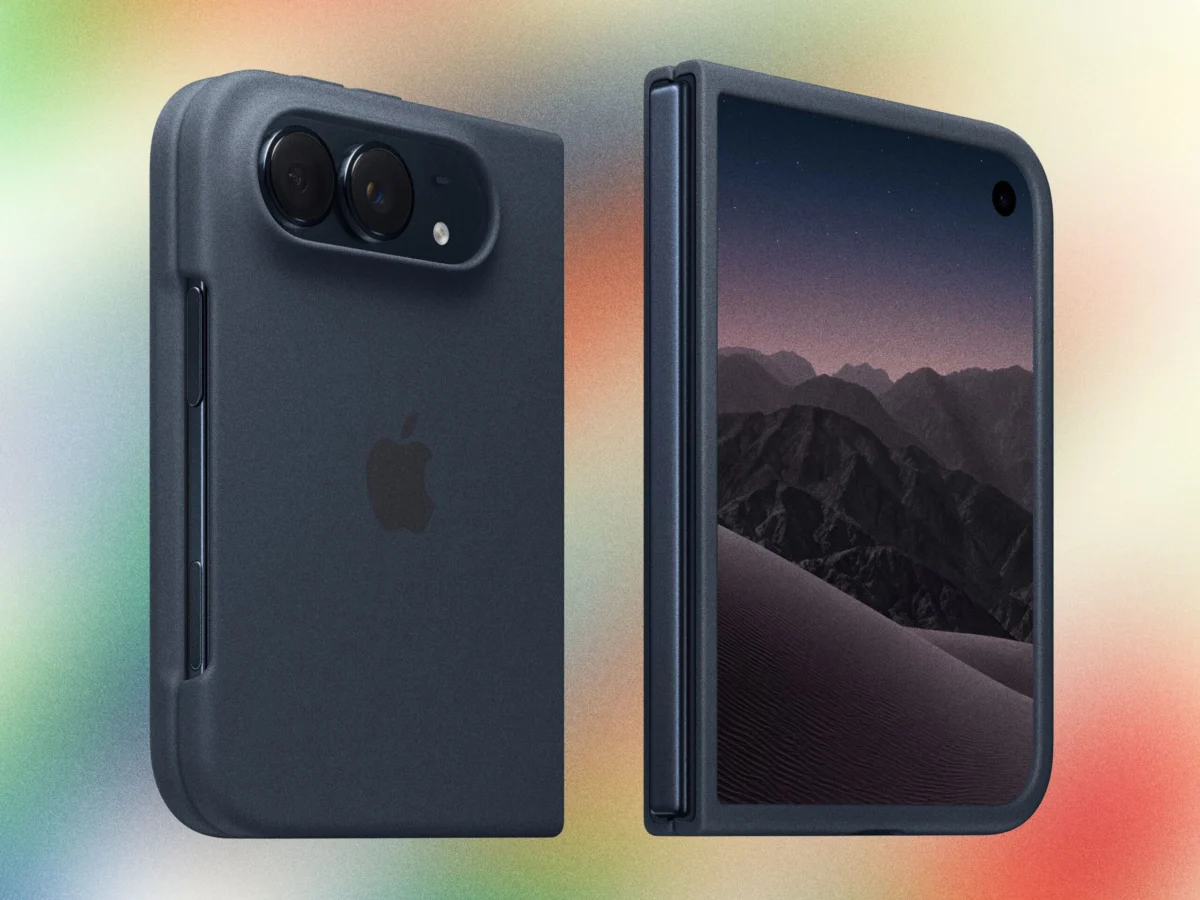
Much like the elite luxury goods that occupy the same cultural stratosphere—think of Carlos Alcaraz and his gleaming yellow-gold Rolex Le Mans Daytona—the iPhone Duo is not a device that anyone strictly needs. You do not need a folding screen to check your email or scroll through social media. However, after spending time with the Duo in the environment where it was born, I can personally confirm that the moment you hold it, the logic of "need" evaporates. It is a piece of industrial art that creates its own demand.
The device was unveiled by Apple’s new CEO, John Ternus, amidst the shimmering heat of a late-summer afternoon in Cupertino. The atmosphere at Apple Park was a frantic blend of high-fashion gala and silicon-valley frenzy. The Duo arrives as the spiritual successor to the lineage of devices once introduced by the softly spoken, philosophical voiceovers of Jony Ive—products defined by deeply luxurious footage of brushed aluminum and microscopic tolerances. Whether the Duo will prove to be as globally transformative as the original 2007 iPhone or the 2008 MacBook Air remains a subject of intense debate among the analyst class. Nevertheless, for a company now valued at a staggering $4.6 trillion, the Duo is a legacy-burnishing achievement. It is the kind of launch that generates a level of public fascination and raw intrigue that next-generation AirTags or incremental camera updates simply cannot match. To find out if the reality lived up to the hype, I navigated the "scrum" of fevered influencers, veteran tech journalists, and a surprisingly chaotic appearance by IShowSpeed.

The Redemption of the Foldable Form Factor
To understand the significance of the iPhone Duo, one must look back at the tumultuous history of folding phones. The cynics will point out that Apple is late to the party, and they aren’t entirely wrong. Apple has spent the last five years experimenting with various form factors to bolster its bottom line as the standard smartphone market reached a point of saturation. We saw the iPhone mini, which failed to find a massive audience; the Plus, which served a specific niche; and most recently, the ultra-thin iPhone Air released in 2025. While the Air was a marvel of engineering, it was largely ignored by a public hungry for a true paradigm shift.
More importantly, the early era of folding phones was, frankly, disastrous. Those first-generation devices were bulky, prone to screen failure, and featured a distracting, cavernous crease down the center of the display. They were delicate instruments that would succumb to a single grain of sand in the hinge mechanism. Many of us remember the infamous early review cycles where products were recalled within weeks due to fundamental durability issues.
By 2026, however, the technology has finally matured. The folding phone has moved from a fragile prototype to a reliable luxury. Samsung’s Galaxy Z Fold 7, released last year, set a high bar for what a foldable could be, but Apple has taken that foundation and refined it with its signature obsession with detail. The iPhone Duo is remarkably compact when folded flat, fitting into a pocket with the ease of a traditional smartphone. Crucially, the "crease" that plagued earlier competitors is virtually invisible in real-world lighting conditions. Apple has invested years of R&D into a hinge system and a flexible display substrate that can survive the rigors of daily life—including the tight pockets of a pair of Levi’s 501s.

The Most Expensive iPhone Ever Made
When the iPhone Duo hits store shelves on October 23, it will enter a market where foldables still represent a tiny fraction of total sales. Recent data suggests that despite the hype, folding devices account for only about 3% of global smartphone sales. The barriers to entry have always been clear: they are expensive, perceived as fragile, and often fail to provide a "killer app" that justifies the bulk. The Duo addresses the latter two points but leans heavily into the first.
At $1,999, the Duo is nearly double the price of the already premium iPhone 17 Pro Max. This is a deliberate positioning by Apple. The Duo is a "halo" product, intended to radiate prestige. To justify this cost, the passport-shaped device oozes a level of lavishness typically reserved for bespoke Husbands’ tailoring or the immersive depth of a Christopher Nolan film on an IMAX screen. Despite its complex internals, the Duo is the thinnest iPhone ever made when unfolded. It feels surprisingly svelte and lightweight in the hand, a feat achieved through the extensive use of a Grade 5 titanium frame. If you can imagine two ultra-thin iPhone Airs joined by a hinge that feels as sturdy as a bank vault, you are halfway to understanding the Duo’s physical presence.
A Masterclass in Display Engineering
The primary allure of any foldable is the "two-screens-in-one" magic trick. Apple has optimized this experience with a dual-display setup that feels cohesive rather than compromised. On the exterior, there is a 5.4-inch display—the screen you will likely use for 80% of your daily tasks like texting or checking notifications. But the real theater begins when you open the device to reveal a 7.6-inch internal display, the largest ever featured on an iPhone.

This internal screen is roughly the size of the original iPad Mini, but with vastly superior technology. Its aspect ratio is more "notepad" than "widescreen," making it exceptionally well-suited for productivity or reading. It feels particularly at home in the confined luxury of a business class seat, where it easily outclasses the dated in-flight entertainment systems. Apple has also brought its custom nano-texture glass to the Duo, a feature previously reserved for high-end monitors and iPad Pros. This layer minimizes glare and maximizes color gamut and contrast, which is a godsend for anyone catching up on The Gentlemen Season 2 or other high-bitrate content in bright environments. Both displays are capable of hitting a staggering 3,000 nits of peak brightness, ensuring legibility even under the harsh midday sun.
Unlike some competitors that are tall and narrow, the Duo’s wider shape feels more natural. It avoids the "remote control" ergonomics that make some foldables difficult to navigate with one hand. It feels tactile and purposeful, echoing the design language of the very first iPhones. Furthermore, for those who want to use the Duo as a digital journal, it features full compatibility with the Apple Pencil, effectively turning the phone into a pocket-sized creative studio.
Pro-Level Power and the AI Frontier
Apple waited until it could fit its most powerful silicon into a folding chassis without turning the device into a thermal nightmare. The iPhone Duo is powered by the A20 Pro chip, a 2-nanometer marvel that provides substantial leaps in raw computational power and GPU performance. This chip is essential for driving the Duo’s complex multitasking features, allowing users to run multiple "Pro" apps side-by-side on the large internal display without a hint of lag.

Central to the Duo experience is the newly overhauled Siri AI. After years of falling behind the curve, Apple’s $1 billion-a-year investment into generative AI has finally paid off. The new Siri is deeply integrated into the OS, capable of understanding context across apps and performing complex tasks that previously required manual input. On the Duo’s large screen, Siri can help manage split-screen workflows, summarize long documents, or even assist in photo editing with intuitive natural language commands.
Battery life remains a point of concern for foldables, given the power draw of two screens. However, Apple claims the Duo can provide up to 44 hours of usage. This will, of course, vary depending on how often you unfurl that massive 7.6-inch panel, but the efficiency of the A20 Pro chip seems to handle the load gracefully.
The Inevitable Compromises
No first-generation product is without its trade-offs. To maintain the Duo’s impossibly thin profile, Apple had to make choices regarding the camera system. Unlike the iPhone 17 Pro Max, which features a triple-lens array with massive sensors, the Duo is equipped with a dual-lens setup: a 48-megapixel wide-angle lens and a 2x telephoto lens. While the image processing of the A20 Pro is world-class, photography enthusiasts may miss the 5x or 10x optical zoom found on the Pro Max.

Perhaps the most surprising omission is Face ID. Because the bezels on the internal folding screen are so thin, there was no room for the complex TrueDepth camera array required for facial recognition. Instead, Apple has returned to Touch ID, placing a fingerprint sensor on the side power button. While some may find this retro, Apple has polished the experience; the sensor is lightning-fast and positioned exactly where your thumb rests, whether the phone is open or closed.
Availability and the Road Ahead
Apple has a history of slightly delaying its most experimental "leap" products. We saw it with the iPhone X in 2017, and we are seeing it again with the Duo. By pushing the release to October, Apple allows the standard iPhone 18 lineup to have its moment in the sun before the Duo arrives to steal the spotlight. It also provides a few extra weeks for final software optimization—a crucial step for a device that relies so heavily on seamless screen transitions.
Pre-orders for the iPhone Duo are set to begin on Friday, October 16, with the official on-sale date following on Friday, October 23. The entry-level model with 256GB of storage starts at $1,999, available in two sophisticated finishes: "Star White" and "Night Sky." For those who need maximum storage for video editing or massive libraries, the 2TB model tops out at a breathtaking $3,199.

The iPhone Duo is more than just a new product; it is a statement of intent. It signals that Apple is ready to move beyond the incremental and embrace the experimental once again. It is a high-stakes gamble that the future of mobile computing is not just in our pockets, but in our ability to expand our horizons—one fold at a time. Whether it becomes a mass-market staple or remains a trophy for the tech elite, the Duo has already succeeded in making the iPhone exciting again.
