
 By admin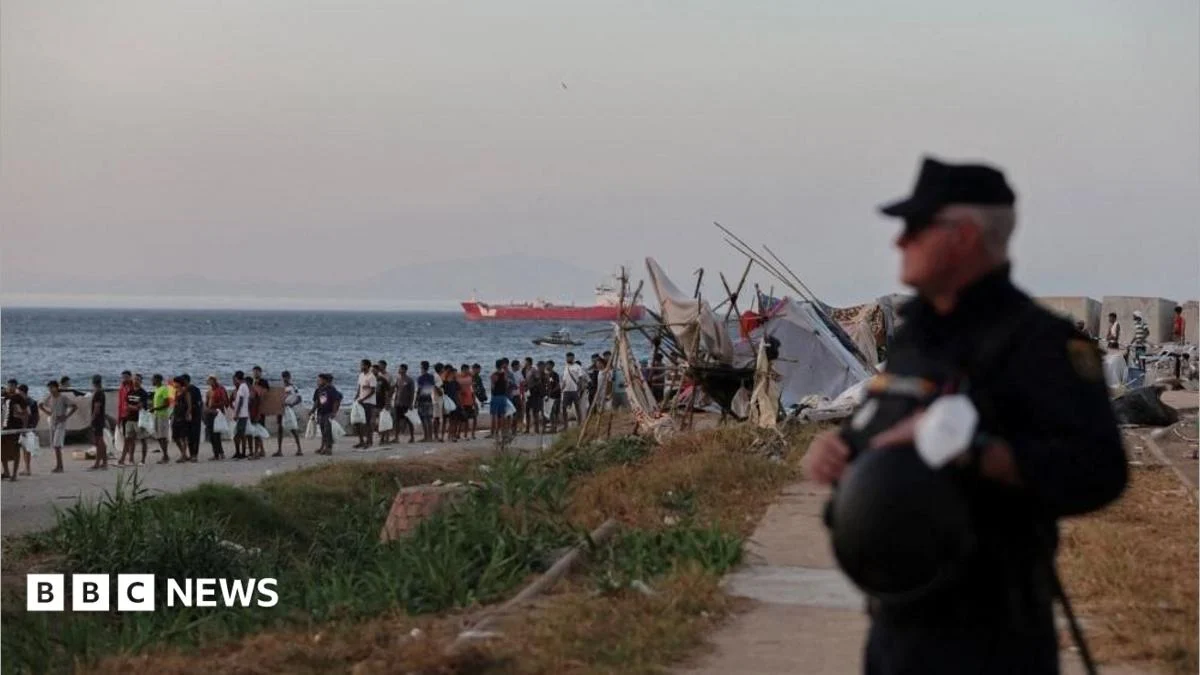
This intelligence directly contradicts Prime Minister Sánchez’s repeated assertions that the events of July 30th were an unforeseen and unpredictable surge. Opposition parties have seized upon these declassified documents, arguing that they conclusively demonstrate the government’s deliberate attempt to mislead the Spanish public about the scale and predictability of the crisis. Sánchez had previously declared to parliament that there was "no information that conveyed the magnitude" of the "crisis we were going to suffer" during those critical last two days of July. However, the CNI’s detailed report, now publicly available, provides irrefutable evidence of precisely such forewarning.
The sheer scale of the migrant influx was staggering. According to figures from Ceuta’s mayor, at least 72,000 migrants successfully crossed from Morocco into the Spanish territory on July 30th and 31st. The vast majority of these individuals undertook a perilous journey, swimming around the border fence that separates the two territories. Tragically, this desperate attempt for a better life came at a devastating cost, with at least 100 people reported to have died during the crossing, a grim testament to the desperation that drove them. While most of the migrants were eventually returned to Morocco, a significant number, estimated to be as many as 5,000, remain in Ceuta. They are either housed in makeshift camps or forced to sleep on the city’s streets and beaches, creating a humanitarian and logistical challenge for the autonomous Spanish city located on the North African coast.
The lingering presence of these migrants has fueled significant unrest within Ceuta. Local residents have voiced serious concerns about safety and security, leading to instances of hostility and direct action. Some have resorted to destroying shelters intended for migrants and actively blocking aid supplies, highlighting the palpable tension and strain on the community. This social friction underscores the complex humanitarian, security, and political dimensions of the crisis.
The CNI’s warning, detailed in a note dated July 29th, was sent to Moroccan intelligence services and specifically identified the platforms being used for mobilization: WhatsApp and Facebook groups. These groups were actively promoting an attempt by migrants to reach the Spanish exclave on July 30th, explicitly mentioning both swimming around the border fence and attempting to scale it. The CNI reported that approximately 180,000 individuals were receiving these messages. One particularly chilling message within these groups read: "Whoever wants to cross has the last chance on Throne Day [July 30th] at 8 the authorities will be distracted with the celebrations and parades." This message clearly indicates a strategic exploitation of a national holiday to facilitate the crossing, suggesting a level of planning and coordination that directly contradicts the government’s narrative of unpredictability.
Beyond its communication with Moroccan authorities, the CNI also took steps to alert the Spanish central government’s representation in Ceuta and the Guardia Civil (Civil Guard) via text message about this surge in social media activity. These messages are part of a larger tranche of over 40 security documents related to the Ceuta crossing that the Spanish government declassified. This declassification was a direct result of mounting pressure on Prime Minister Sánchez, who faced widespread allegations of mishandling the crisis and, crucially, of a potential complicity or facilitation by Morocco.
Earlier in the month, a leaked Spanish police report had already suggested the potential involvement of Moroccan police in the incident, further fueling speculation about Morocco’s role. However, Prime Minister Sánchez has consistently maintained that there is no concrete evidence to support claims of Moroccan complicity in facilitating the mass crossings. His insistence on this point, despite the intelligence warnings now brought to light, has drawn significant criticism.
Shortly before the release of these crucial documents on Wednesday, Sánchez reiterated his position in an interview with Spanish television, stating that "the mass arrival of migrants was not expected." This statement now appears disingenuous in light of the CNI’s prior knowledge. Opposition politicians have been swift and vocal in their condemnation, asserting that the newly released material directly refutes the government’s claims. Ester Muñoz of the conservative People’s Party declared, "They had the information, they are directly responsible for the invasion of Ceuta and for those who died." This accusation directly links the government’s alleged inaction or lack of preparedness to the tragic loss of life.
The reaction from the far-right Vox party was even more incendiary. Jorge Buxadé took to social media to state that the documents proved that Sánchez "and his band of criminals should be brought before the Supreme Court for treason and security crimes." This extreme rhetoric highlights the deep political polarization surrounding the crisis and the government’s handling of it.
Despite the mounting evidence and public outcry, the Spanish government has continued to defend its actions, insisting that it acted based on the information available at the time and that the scale of the crisis could not have been fully anticipated. Foreign Minister José Manuel Albares echoed this sentiment, stating he was "not aware of any report that might have foreseen the magnitude of what happened on July 30."
A government source, speaking anonymously, attempted to contextualize the published documents, suggesting that they "showed that the information available before the mass crossing did not make it possible to anticipate the scale that the crisis would reach or prepare with enough time the necessary response." This statement implies that while there was awareness of social media activity, the true magnitude of the impending influx and the subsequent humanitarian and security implications were not discernible from the intelligence received.
However, Miguel Ángel Pérez Triano, the central government’s delegate in Ceuta, addressed the specific revelations about the text messages sent by the CNI to his office on the day before the mass crossing. He downplayed their significance, stating, "The Whatsapps from [July] 29 do not constitute an alert or a report. It is nothing more than an exchange of information." This attempt to reframe the CNI’s communication as a mere "exchange of information" rather than a concrete "alert or report" has been widely perceived as an effort to minimize the government’s prior knowledge and preparedness.
The situation in Ceuta remains precarious. The influx of thousands of migrants has strained resources and exacerbated existing social tensions. The long-term implications for both the migrants and the residents of Ceuta are significant, raising questions about asylum procedures, integration policies, and the broader geopolitical dynamics between Spain and Morocco. The declassified documents have undeniably shifted the narrative, placing increased scrutiny on the Spanish government’s response and its commitment to transparency in times of crisis. The debate over whether the government deliberately misled the public, or was genuinely overwhelmed by an unforeseen event, is likely to continue as the full repercussions of the Ceuta migrant crisis continue to unfold. The incident serves as a stark reminder of the complex challenges posed by migration, the critical importance of reliable intelligence, and the delicate balance between national security and humanitarian concerns. The public’s trust in government pronouncements is now under intense examination, with these declassified documents acting as a catalyst for greater accountability.
