
 By admin
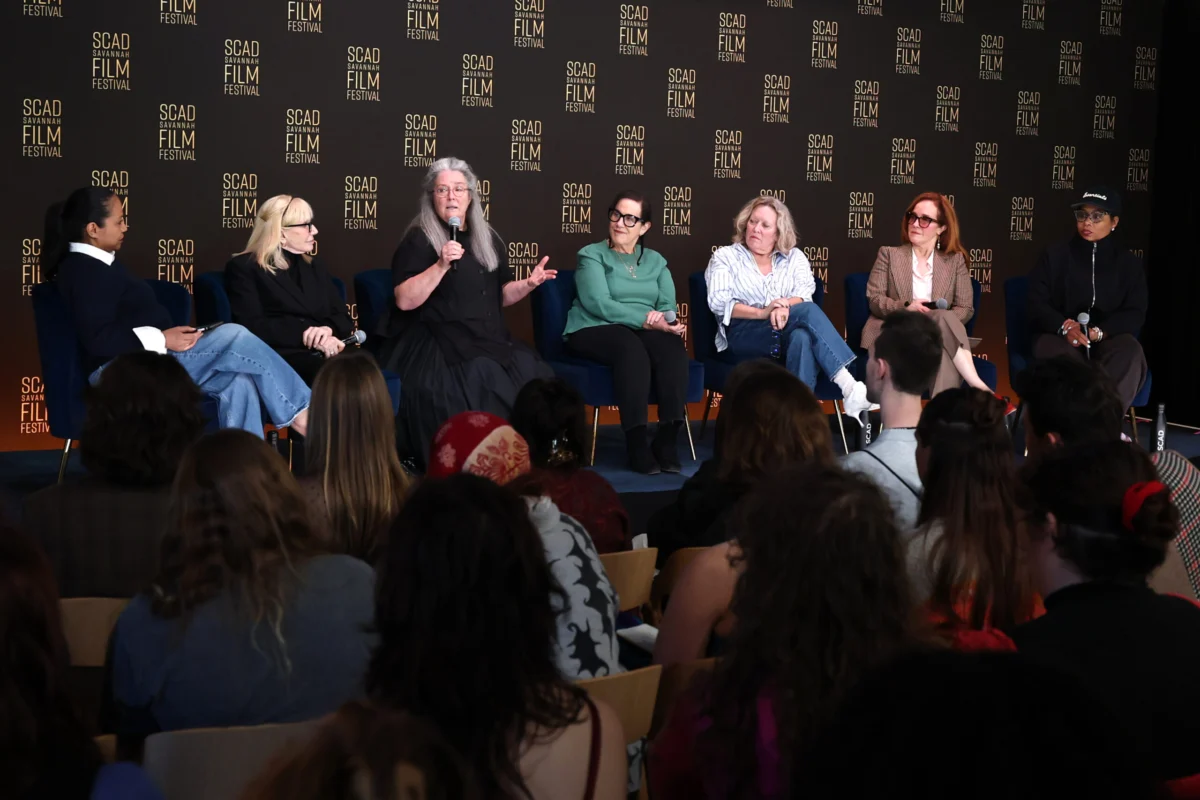
Contrary to the prevalent misconception that contemporary design in film is merely about sartorial indulgence and high-end shopping sprees, a panel of acclaimed costume designers convened at the SCAD Savannah Film Festival to illuminate the profound storytelling and meticulous thought processes that underpin character depiction through clothing. Molly Rogers, whose extensive resume includes serving as an assistant costume designer on the iconic "The Devil Wears Prada" and as the lead costume designer for its sequel, emphatically dismissed the notion that a passion for shopping equates to an understanding of the craft. "When someone comes up to me and says, ‘I really want to learn and work with you. I love to shop.’ That’s an automatic exit," Rogers stated, underscoring that the true essence of contemporary costume design lies far beyond mere aesthetic appeal or brand recognition.
The insightful discussion, expertly moderated by Variety‘s Senior Artisans Editor Jazz Tangcay, featured a distinguished ensemble of designers: Ellen Mirojnick, renowned for her impactful work on "Wall Street," "Basic Instinct," and "Fatal Attraction"; Arianne Phillips, whose credits include "Nocturnal Animals," "The Invite," and "I Want Your Sex"; Linda Muir, celebrated for her contributions to "The Northman" and "The Witch"; Amy Roth, who recently lent her talents to "I Play Rocky"; and Marci Rodgers, known for her work on "Michael."
Ellen Mirojnick, a veteran of the industry, delved into the inherent complexities of designing contemporary wardrobes. "In the beginning of my career, I did a lot of contemporary costume, and I loved it," Mirojnick shared. "I loved being able to document what New York was like at that period, because yes, it was for film, but it also documented the history of what we were like, even if it was an elevated contemporary character." She further elaborated on the nuanced challenges, stating, "Contemporary design is very difficult and very beautiful at the same time to create." This sentiment highlights the delicate balance required to present characters that resonate with audiences on a personal level while simultaneously serving the narrative’s broader themes.
Marci Rodgers recounted her formative experiences, particularly her initial foray into costume design with Spike Lee’s groundbreaking series "She’s Gotta Have It." Hailing from Chicago, Rodgers was acutely aware of the distinct stylistic landscape of New York City. To gain a deeper understanding of the city’s sartorial pulse, she requested to sit in on background casting sessions with Lee. "So I could see how people are coming in here dressed," she explained. This immersion proved invaluable as she began to craft the wardrobe for Nola Darling. A pivotal moment occurred when she learned that Nola’s favorite artist was Prince. "Purple is clearly going to be a thing. But it would be tidbits of purple. She wouldn’t shop at Saks," Rodgers revealed, emphasizing her strategic approach to building a character’s authentic style through accessible and meaningful choices, often leaning towards thrift stores to capture Nola’s unique persona.
Her work on the film "Barbershop," set against the backdrop of Chicago, further underscored Rodgers’ commitment to reflecting the community and the fashion zeitgeist of the era. She recalled a prescient warning from a professor: "Contemporary design would be the hardest thing I’d ever do. Actors will come in with an idea – or no idea – and then, after the table read, everything changes." This observation points to the dynamic nature of filmmaking, where costume designers must remain adaptable and responsive to evolving character interpretations and narrative shifts.
Arianne Phillips echoed the sentiment of contemporary design being frequently misunderstood, sharing her experiences with studio executives and producers. "I’ve been in rooms with studio executives. Directors, writers, producers and studio executives – they’re rich. They make a lot of money. They have a relationship to shopping, someone shopping for them. They can afford what they want, and they’re experts," Phillips noted. This often leads to a disconnect, as these individuals may project their own assumptions onto characters’ wardrobes. "This happens with actors a lot, where they’ll say, ‘Oh, I know my character wore those Prada boots.’ You have to be, as Marci said, a salesperson for your character. Costume design can be disrespected so easily by people sitting behind desks moving numbers around and not giving you the support you need." This underscores the crucial role of costume designers as advocates for their characters, meticulously building a visual language that supports their journey and motivations.
Phillips also addressed the growing influence of product placement, particularly as luxury brands increasingly participate in film financing. "We’re told by producers, ‘You have to use that product.’ You have to choose directors who support staying true to the story, as this is only going to get more complicated with how films are financed," she stated. This presents a significant challenge for designers striving to maintain artistic integrity amidst commercial pressures, requiring careful negotiation to ensure that product placement serves the narrative rather than dictates it.
The designers also offered glimpses into their recent projects, revealing the intricate details that bring cinematic worlds to life. Ellen Mirojnick discussed her monumental undertaking on a project where she crafted over 5,300 costumes, with a particular focus on Anne Hathaway’s portrayal of Queen Penelope. The overarching color theme for the House of Ithaca was "burned red," a motif that Mirojnick masterfully integrated into Penelope’s attire. "It was very important to keep her in those tones, not to disrupt the story," she explained, demonstrating how color palettes can subtly reinforce thematic elements and character arcs.
A particularly poignant example of Mirojnick’s storytelling through costume came at the film’s climactic moment, when Odysseus returns. Penelope dons a striking blue dress, which Mirojnick envisioned as a form of armor. "We created a drape with fine pleats, very tight and specific to the shape of her body. It went up through her neck, paired with a golden necklace – one of the only decorative pieces she wears. It felt as if she was ready for battle, and she was going to hold her own. She had a challenge to put forth, and her gown reinforced her strength," Mirojnick elaborated, showcasing how a single garment can encapsulate a character’s resilience and readiness to confront adversity.
Linda Muir shared her meticulous research process for her work with Robert Eggers on "The Northman" and "The Witch," particularly her deep dive into the significance of wool in Viking society. Muir explained, "There are no wolves in the British Isles because the king ordered all of them eradicated so they wouldn’t eat the sheep." This historical context led to wool becoming a valuable commodity, signifying wealth and social standing. "The wealthy bought that wool, so anyone with a lot of wool clothing was upper class," she added. Muir’s dedication to authenticity extended to sourcing and working with craftspeople capable of recreating period-accurate materials. "The challenge with these films is finding people who can create wool fabrics, hats, jewelry, buttons, belts – all the things that make the whole picture when you have so few styles and elements to work with." This highlights the demanding nature of historical costume design, requiring not only artistic vision but also a profound understanding of historical context and material culture.
Arianne Phillips discussed her collaborative process with Olivia Wilde on "The Invite," a project that marked her third collaboration with the director. "It was my third time working with Olivia, so there’s a lot of trust there," Phillips stated, emphasizing the importance of established working relationships built on mutual understanding and creative synergy. For "The Invite," Phillips strategically employed a single costume change to establish the film’s tone and reveal layers of the character played by Natalie Portman. "Cruz’s costume was layered intentionally to reveal more about her as the story progressed," Phillips explained. She also detailed how Wilde’s character, Angela, a stay-at-home artist grappling with a loss of creativity, was designed to visually integrate with her surroundings. "I worked with production designer Jade Healy to make sure she blended into the walls," Phillips said. She further elaborated on a nuanced decision regarding color palette: "I wanted Seth’s palette to be similar, and the blues were really bothering me because they weren’t in harmony. Then I realized that was perfect because the relationship is out of sync." This demonstrates how even perceived disharmony in color can serve as a powerful narrative device, reflecting the characters’ internal states and interpersonal dynamics.
Molly Rogers returned to discuss the formidable task of designing for "The Devil Wears Prada 2." "The first movie is so beloved, and I meditated on that for a while. It was a perfect storm – the script, the cast, the clothing. I thought, ‘OK, the curse of the sequel.’" Despite the inherent pressure, Rogers successfully navigated the challenge. A particularly memorable moment involved the iconic cerulean sweater from the original film. Rogers explained how she ensured its inclusion, reasoning that Andy (Anne Hathaway) would have undoubtedly kept such a cherished item. In a stroke of creative genius, Rogers revealed, "Annie had scissors in her hands. I had wanted to shred it more naturally, like the sweater with holes in the elbows that you hang on to. But she chopped the sleeves off, and I realized it’s now a vest. I was trying to do menswear a little with her, so it read that way – it’s a vest." This innovative repurposing of a beloved item demonstrates Rogers’ ability to evolve iconic elements while staying true to character development.
Amy Roth shared her insights into the creation of the costumes for "I Play Rocky," a project that presented a unique set of challenges. "The original ‘Rocky’ film didn’t have a costume designer, so there were no references to pull from," Roth explained. This necessitated a deep dive into collective memory and iconic imagery. "Recreating this iconic look – not just from the film, but from my memory and everybody’s collective memory of Rocky – the hat, the leather jacket, the gloves, the bouncing ball, they were all crucial." The leather jacket, in particular, required extensive effort. "We had to make it and age it. I found the original jacket on eBay, in my actor’s size and felt relief," she recounted, highlighting the serendipitous nature of prop and costume sourcing. Roth lauded actor Anthony Ippolito’s dedication to embodying the role. "He wanted his body to look exactly like Stallone’s. He posed like Stallone. He just embodied his body. He really wanted to do what we were doing. He would bring pictures of things he wore, and we’d recreate them for him," Roth said, underscoring the symbiotic relationship between actor and costume designer in achieving a truly transformative performance.
Rogers also touched upon her work on "Michael," specifically the recreation of the iconic "Thriller" music video. "It was one of the last things we shot. I had a research book of 800 pages, and Deborah Landis told me something interesting. We all know the leather jacket is iconic, but she revealed that Michael’s Levi jeans were originally white and she had to dye them red." This revelation underscores the hidden details and historical nuances that often go unnoticed by the general public. Levi’s collaborated with the filmmakers, providing pairs of jeans to facilitate the accurate recreation of the look. "I had a Pantone book and recreated the beaded jacket, realizing there were two different shades of red – color value is so important," Rogers stated, emphasizing the precision required to capture the visual authenticity of such a seminal piece of pop culture. The dedication extended to the supporting cast, including the zombie dancers. "I thought, ‘That’s the woman in the pink dress. I’ve got to put the pearls right here,’" Rogers recalled, illustrating the meticulous attention to detail that defines her approach to costume design, ensuring that every element, no matter how seemingly minor, contributes to the overall narrative tapestry. The full conversation offered a compelling testament to the artistry, dedication, and profound storytelling inherent in the world of film costume design.
