
 By Lina Irawan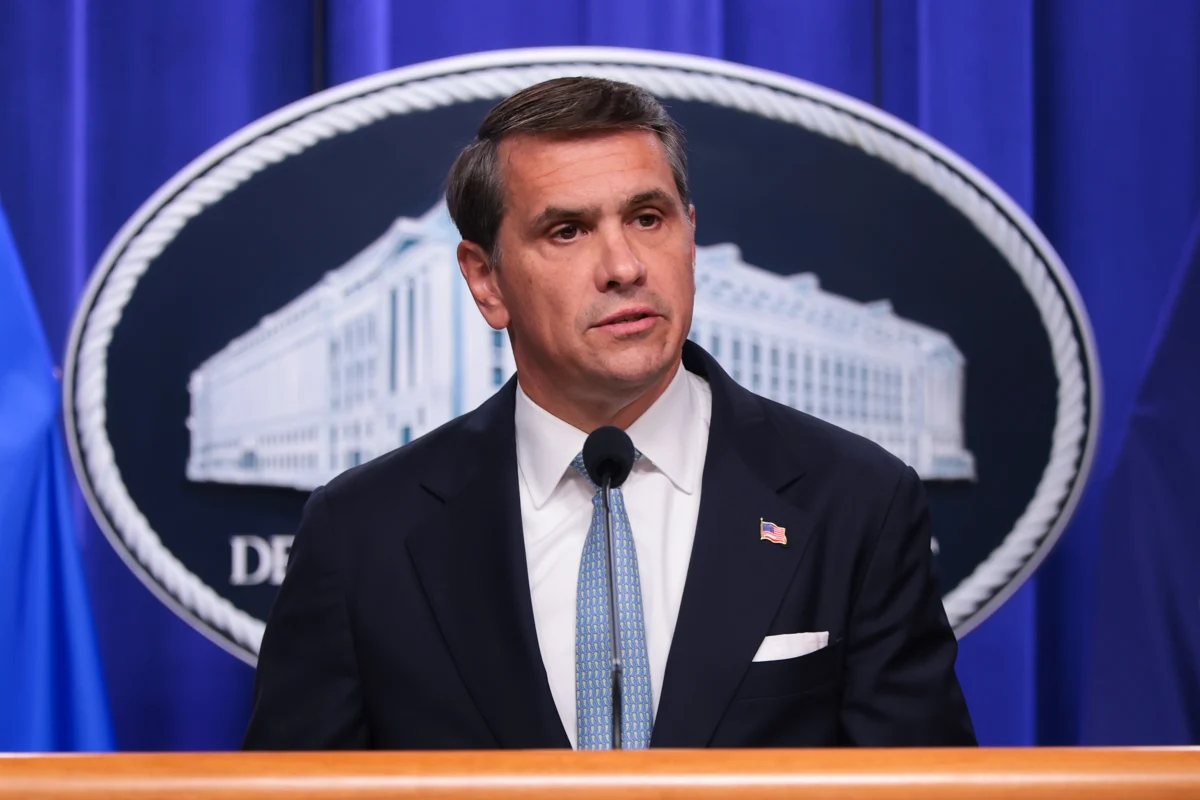
Blanche, a former personal lawyer to President Trump, carries a unique burden into his new role as Attorney General. His past legal representation of the president has subjected his appointment to intense scrutiny from legal ethics watchdogs, political commentators, and the public alike, all keenly observing how he would navigate the traditional separation between the White House and the Justice Department. His public statements, particularly on the highly visible NBC program Meet the Press, were therefore dissected for any indication of his approach to this critical principle.
The core of the controversy stems from the Reflecting Pool incident. Initially, a former Olympian was charged with damaging the pool’s lining. However, Pirro’s office, after what it described as a thorough investigation, concluded that "botched" construction work was primarily to blame for the damage, rather than malicious vandalism. This finding directly contradicted President Trump’s public assertions, who had repeatedly, and without presenting specific evidence, blamed the damage on vandals. The Reflecting Pool, a hallowed space integral to the National Mall and a symbol of American ideals, holds immense public and historical significance. Its prominence meant any perceived desecration, or the handling of such a case, would invariably draw national attention and spark strong reactions.
In his defense of Pirro, Blanche emphasized that the U.S. Attorney was actively pursuing other cases of alleged vandalism against national monuments in the capital. "I absolutely support US Attorney Pirro, as does President Trump," Blanche stated on Meet the Press. He acknowledged the President’s frustration with the Reflecting Pool case, adding, "Now, that’s different than whether the president is extraordinarily frustrated at what happened in that case. And I don’t in any way fault him for that." This distinction, Blanche suggested, allowed for both presidential displeasure over a specific outcome and overall support for a prosecutor’s broader work. He argued that judging Pirro solely on a single case, particularly given the specific evidence her office uncovered, was unfair.
However, Blanche’s appearance on Meet the Press also contained moments that immediately sparked debate regarding the sacrosanct independence of the Justice Department. When directly asked whether he would promise that the Justice Department would always act independently of the White House, Blanche responded with a candid, "No, I can’t pledge that." He elaborated by arguing that he could not obligate himself to oppose policy goals set by the president. Instead, Blanche offered a pledge of "integrity," assuring that he and federal prosecutors "will act with integrity" and "prosecute without fear or any sort of favor." This statement immediately drew sharp criticism from former DOJ officials, legal scholars, and good government advocates, who traditionally view the Justice Department’s independence from political influence, especially in individual prosecutorial decisions, as fundamental to the rule of law.
Historically, Attorneys General have upheld the principle that prosecutorial decisions are made based solely on the facts and the law, free from political interference or pressure from the White House. This tradition is a cornerstone of the American justice system, designed to ensure fairness, prevent politicization of law enforcement, and maintain public trust. Blanche’s refusal to unequivocally commit to this principle, even while asserting "integrity," raised significant concerns about potential precedents and the erosion of established norms. Critics argued that while broad policy goals might be set by the executive, the application of law to specific cases should remain strictly within the purview of independent legal judgment, not presidential "policy goals."
The President’s prior engagement with the Reflecting Pool case underscored the contentious nature of the situation. Trump had previously "lashed out" at Pirro, a long-standing ally, after her office filed court documents attributing the damage to "botched" construction. This public rebuke of a subordinate prosecutor by the President himself was seen by many as a direct challenge to the Justice Department’s autonomy. It highlighted a recurring tension during Trump’s presidency, where he often blurred the lines between his political desires and the operational independence of federal law enforcement agencies. His insistence on vandalism, despite his own Justice Department’s findings, illustrated a deep personal investment in the narrative surrounding the incident.
To support his argument for Pirro’s overall competence and fairness, Blanche attempted to shift public attention to other cases. He lauded Pirro, stating she "is doing a phenomenal job of enforcing that," referring to vandalism laws at national monuments. While Blanche did not initially cite specific incidents during the interview, Pirro’s office had recently charged a Kentucky woman with vandalism for spraying the World War II Memorial on the National Mall with graffiti. This contrasting example served to illustrate that Pirro’s office was indeed prosecuting vandalism vigorously when the evidence supported such charges, lending credence to Blanche’s claim that the Reflecting Pool decision was based on unique evidentiary findings, not a lack of commitment to law enforcement.
The exchange also delved into the question of presidential influence on specific cases. Blanche conceded that he would consider President Trump’s opinion if the President were to press for the Reflecting Pool case to be revived. "Will I take the president of the United States’ view on something into consideration? Yes, of course," he stated. However, he quickly added a qualifier, asserting, "the president does not expect any of his leaders, including me, to just say ‘Yes’ to him no matter what he says." This statement, while attempting to soften the implication of direct presidential influence, still left many observers uneasy. The very notion of an Attorney General considering the President’s "view" on an individual prosecutorial decision, especially one already dismissed, deviates significantly from the traditional insulation of such judgments from political pressure. Legal experts often stress that such considerations, even if not leading to a reversal, can create a chilling effect on career prosecutors and undermine the perception of impartial justice.
Jeanine Pirro herself has a prominent history, not just as a prosecutor but also as a media personality and a vocal supporter of Donald Trump. Her background adds another layer of complexity to this saga, as her loyalty to the President has been a subject of discussion even before this incident. The pressure on Pirro, stemming from both the President’s public anger and her need to demonstrate prosecutorial independence, is considerable. Reports suggesting Trump was "undecided on keeping Pirro" as the top DC prosecutor further underscore the political precariousness of her position, even for an ally.
The broader implications of this exchange are significant for the future of the Justice Department under Todd Blanche. His statements indicate a departure from the strict interpretation of DOJ independence often articulated by previous Attorneys General, particularly in the post-Watergate era. Legal scholars like Professor Stephen Gillers of NYU School of Law, speaking generally on the topic, might argue that an Attorney General’s primary loyalty must be to the Constitution and the rule of law, not to the political desires of the President. The blurring of lines between "policy goals" and specific case decisions risks politicizing the application of justice, potentially eroding public trust in the integrity of federal law enforcement.
Ultimately, the controversy surrounding the Reflecting Pool case and Blanche’s defense of Pirro serves as an early litmus test for his leadership of the Justice Department. It highlights the inherent tension between an Attorney General’s duty to uphold the law impartially and the political realities of serving an assertive President. As Blanche embarks on his tenure, the ongoing debate about DOJ independence, prosecutorial discretion, and the appropriate boundaries of presidential influence will undoubtedly remain a defining challenge, constantly scrutinized by a nation grappling with the integrity of its legal institutions.
