
 By admin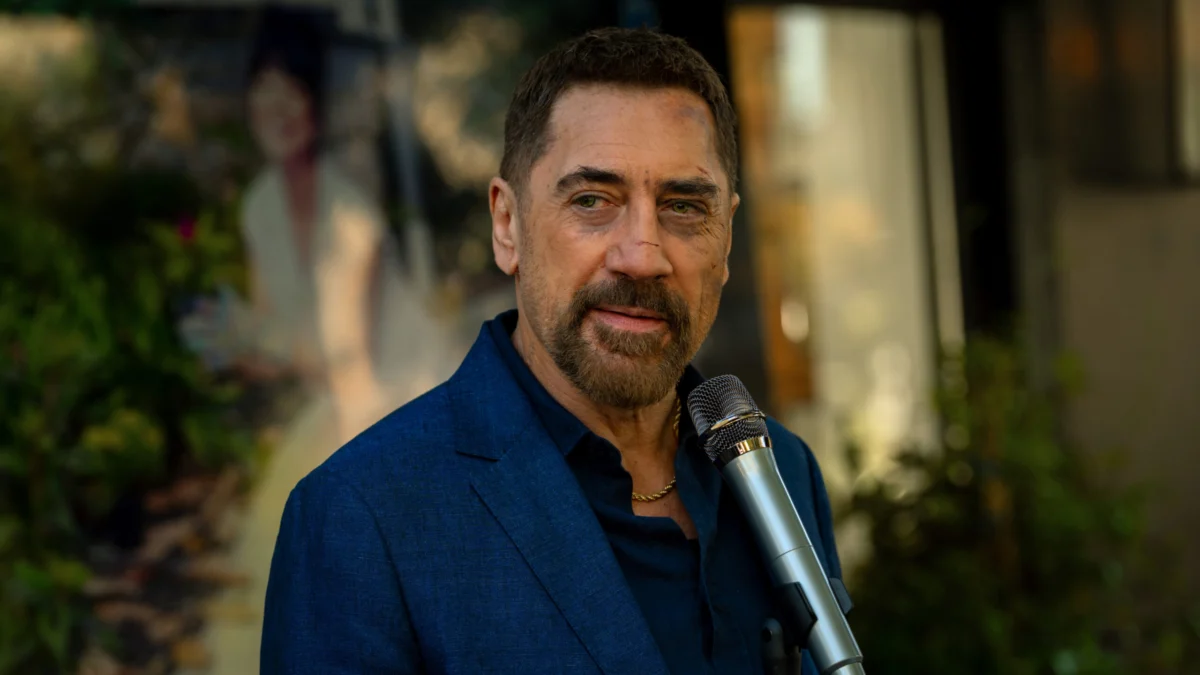
In the harrowing conclusion of Apple TV+’s "Cape Fear," titled "The Executioners," the Bowden family, led by Anna (Amy Adams) and Tom (Patrick Wilson), finally confronts the relentless tormentor Max Cady (Javier Bardem). Their epic struggle culminates in an invasion of their home, a chilling kangaroo court staged by Cady, and dire threats against their children, Natalie (Lily Collias) and Zack (Joe Anders). Yet, the "victory" they achieve is a fragile one, leaving them irrevocably haunted by the specter of Max Cady and the profound psychological toll of their ordeal.

The series finale hinges on a devastating revelation: Anna unearths irrefutable evidence from Cady’s family houseboat that his sister, Crystal (Juliette Lewis, reprising a role from the 1991 film, albeit a different character), was the true perpetrator of the murder for which Max was convicted. Crystal, in a fit of rage, murdered Max’s pregnant wife and, in a grotesque act of violence, ripped the unborn fetus from her body. The tragic irony is that Max’s child, a boy who survived the attack and grew to near adulthood, was inadvertently killed by Max himself during the chaotic confrontation at the Cady family vessel. This revelation serves as definitive proof that Max was unjustly imprisoned, a victim of circumstance rather than the malicious intent prosecutor Tom Bowden had pursued and defense attorney Anna Bowden had failed to disprove. For all his subsequent crimes against the Bowden family, Max’s legal journey began with him as an innocent man, a fact that casts a long shadow over the entire narrative.
By the time Max Cady is subdued, he appears utterly broken, sputtering water on the Bowden’s deck before succumbing to apprehension by the authorities. However, the family’s hard-won peace is merely conditional. Anna’s declaration, "Let him die in a cage," signifies a decision to spare his life, a choice that echoes a similar ambiguity in the 1962 film adaptation. The narrative then leaps forward to a seemingly idyllic backyard barbecue, a poignant echo of the series’ opening, where the Bowdens basked in the warmth of friendship. But this reunion is starkly different; the family is isolated, trapped within their own fortress, a chilling testament to their ongoing fear. Natalie, engrossed in a true-crime influencer’s video filmed perilously close to their front door, joins her parents and brother.

The scene is thick with unspoken tension. As Tom grills, his eyes dart nervously towards the pool, the site of a near-fatal confrontation. Zack sits in an unnerving silence, the forced conviviality of his parents a thin veneer over their deep-seated trauma. Tom’s attempt at humor, calling Anna a "psychopath" for her burger order, is met with her resigned, "Guilty." This simple word, a callback to the very accusation that defined Max’s pursuit, shatters Anna’s composure. Her gaze drifts to the periphery, her face contorting in agony and fear as the screen plunges into a stark, bright-red filter, signaling the series’ end but not the cessation of Anna’s psychological torment.
Nick Antosca, the creator of this modern interpretation of John D. MacDonald’s 1962 novel "The Executioners" (the third on-screen adaptation, following the 1962 and 1991 films), spoke with Variety about the gut-wrenching final sequence, the revelation of Max’s innocence, and the uncertain futures of the Bowdens. He also addressed the lingering question of Natalie’s parentage, a possibility that looms large given Anna and Max’s past lawyer-client relationship.

"The Bowden family will always be haunted by Max Cady and the memory of what happened during this story," Antosca stated. He drew a parallel to the ending of the 1991 film, where Juliette Lewis’s character declares they "never spoke of it again." Antosca countered, "Yeah, but I bet you thought about it – still thinking about it today." He aimed for that same lingering, pervasive sense of dread in his series’ conclusion, where the family’s unease is palpable, with Tom’s nervous glances suggesting an unseen threat that exists solely in their minds.
The unresolved question of Natalie’s parentage, subtly hinted at by an unopened DNA-testing kit envelope, remains a significant talking point. Antosca confirmed that he does have a definitive answer in mind, writing the finale with that specific resolution in his consciousness. This ambiguity, he acknowledged, was intentional, designed to spark conversation and leave viewers pondering the deeper implications of the family’s fractured reality.

The decision to set the climax within the Bowden family home, rather than on the houseboat as in previous film adaptations, heightened the sense of invasion and psychological violation. "We were to bring the storm to them, and put the trial in their own home," Antosca explained. This domestic setting amplified the primal nature of the fight, transforming their sanctuary into a battleground. The violence in the finale was meticulously calibrated, with Antosca detailing the painstaking process of determining how much to show to maximize impact without gratuitously dwelling on the gore. He recounted a specific editing session with Martin Scorsese, where they debated the precise frame to capture the visceral horror of a violent act.
The Bowdens’ decision to spare Max’s life, a departure from the 1991 film, was a deliberate choice to explore the family’s desperate attempt to cling to a semblance of moral order amidst chaos. "They don’t want to kill a man in front of their children," Antosca explained, acknowledging that this act of mercy, from a purely pragmatic standpoint, might be seen as one of their worst decisions, given the potential for Max’s future actions.

Antosca further elaborated on the evolution of the Max Cady character across different adaptations. While previous iterations depicted Max as morally compromised, this version unequivocally establishes his innocence in the original crime. "So he was wrongly convicted of this murder, but he was a really bad guy in general, and prison narrowed and sharpened that darkness within him," Antosca said. He highlighted Wesley Strick’s "brilliant" innovation in the 1991 film of making Max Cady the defense attorney’s client, a narrative choice that significantly deepened the moral complexity and personal stakes.
The dynamic between Anna and Max is underscored by a shared, albeit twisted, understanding. Anna’s calculated provocation of Max during a public press conference, revealing compromising information and directly accusing him of his wife’s murder, demonstrates her willingness to play by his rules when she has nothing left to lose. Antosca described this as a "freedom" born from despair, allowing her to unleash her pent-up rage and strategically dismantle Max’s facade of control.

The Bowdens’ initial reluctance to take decisive action, Antosca suggests, stems from their deeply ingrained belief in their own fundamental goodness, despite past transgressions. Their desire to rationalize and avoid drastic measures, such as uprooting their lives, reflects a universal human tendency to downplay impending danger until it is too late. Antosca shared a personal anecdote about a disconcerting encounter in his own backyard, mirroring the show’s depiction of permeable boundaries and the unsettling realization that perceived threats can be easily dismissed until they manifest directly.
The series delves into a pervasive cultural theme of collective guilt and the self-identification as "good people" in modern America, which Antosca believes subtly permeated the show’s DNA. When questioned about whether the Bowdens are "bad people," Antosca characterized them as "complicated people. They’re very flawed people." This nuanced portrayal of the Bowdens, wrestling with their own moral compromises while being pursued by a man whose own innocence was stolen, forms the thematic core of "Cape Fear’s" gripping conclusion. The final moments leave the audience with the unsettling certainty that while Max Cady may be incarcerated, the psychological scars he inflicted upon the Bowden family will continue to fester, a perpetual reminder of the darkness that lurks beneath the surface of seemingly ordinary lives.
