
 By Titik Puspa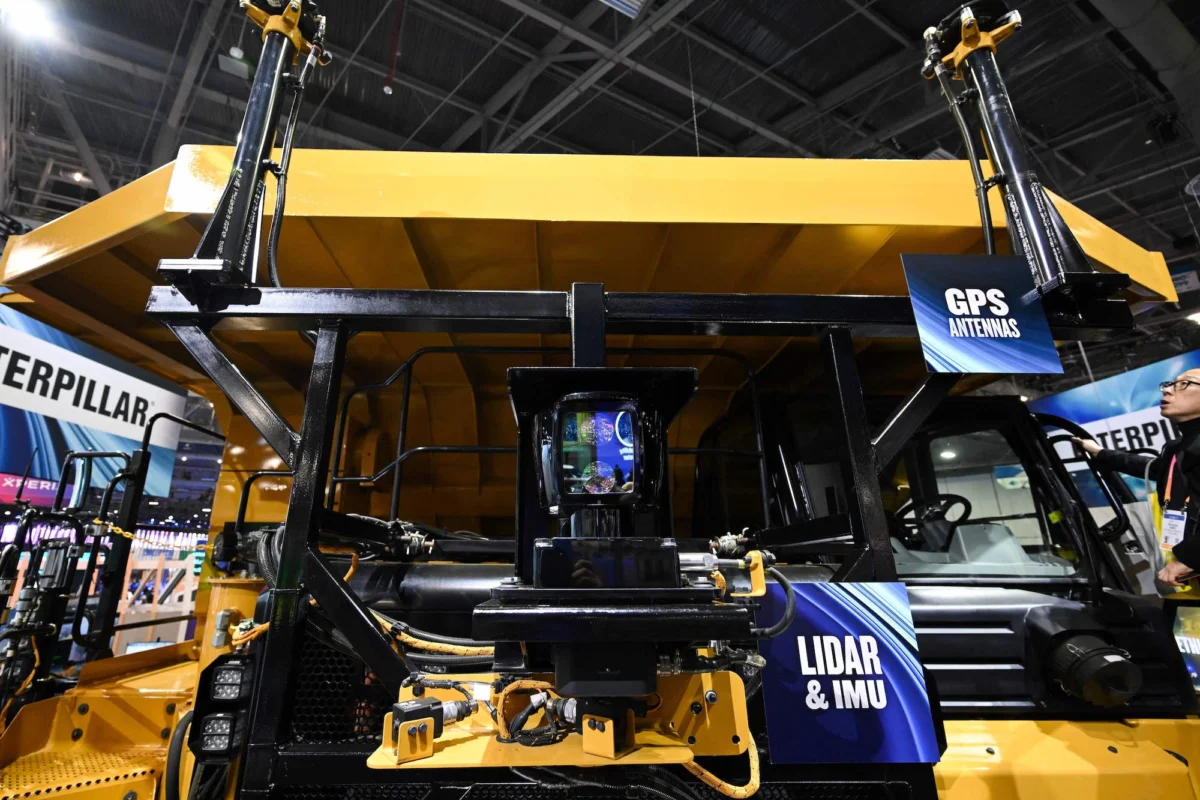
In the relentless pursuit of digital transformation, companies worldwide grapple with a ubiquitous hurdle: the arduous task of seamlessly integrating artificial intelligence into their daily operational fabric. Industrial titan Caterpillar, a company whose very legacy is built on mastering the complexities of the physical world, is now strategically deploying its profound, decades-honed experience in physical integration to surmount this very challenge in the realm of AI. This unique historical advantage positions Caterpillar not just as a user of AI, but as a pioneer in demonstrating its practical, real-world application, particularly in demanding environments where precision, reliability, and safety are paramount.
Caterpillar’s ambitious foray into the autonomous space was initially rooted in the mining sector, a domain where persistent labor shortages and inherently hazardous working conditions create a compelling imperative for automation. The company’s pioneering efforts in this arena have yielded a comprehensive suite of automated solutions, including robust haul trucks engineered for self-operation, sophisticated drilling machinery, underground loaders designed for efficiency in confined spaces, and powerful dozers capable of autonomous earthmoving. Beyond the hardware, Caterpillar has cultivated a sophisticated software ecosystem to support these autonomous fleets, encompassing a centralized command center for fleet management, advanced remote control capabilities for construction equipment, and even cutting-edge terrain intelligence systems that provide real-time environmental data. This integrated approach ensures that automation is not merely about individual machines but about orchestrating complex operations with unparalleled efficiency and safety.
"We are now entering an incredibly exciting phase where we can effectively channel all of the invaluable learning and hard-won expertise derived from our mining operations and meticulously apply it to far more dynamic and multifaceted environments," articulated Jaime Mineart, Caterpillar’s Chief Technology Officer, during a candid fireside chat at the Ai4 conference in Las Vegas earlier this month. Mineart’s sentiment underscores a strategic pivot, moving beyond the specialized applications of mining to unlock the broader potential of AI across the vast spectrum of construction, quarrying, and other industrial job sites. This expansion signifies a commitment to democratizing the benefits of advanced automation and intelligence, making them accessible and applicable to a wider array of industries and challenges.
The industrial behemoth is now broadening its AI adoption strategy, extending its application to tools directly empowering its technicians and internal workforce. A prime illustration of this is the innovative Cat AI Assistant. This groundbreaking tool allows field technicians, standing in close proximity to complex machinery, to leverage voice commands to instantaneously access critical repair procedures, diagnose potential issues with remarkable speed, and precisely identify necessary replacement parts before commencing any repair work. Mineart proudly announced that this AI-powered assistant is already actively being utilized by a diverse user base, encompassing both end customers and dedicated Caterpillar operators and technicians, signifying its immediate impact and practical value.
The efficacy of the Cat AI Assistant is intrinsically linked to Caterpillar’s vast repository of proprietary data. This rich dataset is meticulously curated from the billions of operational hours logged by its extensive network of connected machines. Mineart revealed the sheer scale of this data infrastructure, stating that Caterpillar currently boasts approximately 1.6 million connected assets deployed globally, generating and contributing over 16 petabytes of meticulously structured data. This immense volume of real-world operational data serves as the fertile ground from which the AI models are trained, refined, and continuously improved, ensuring their accuracy and relevance to the complex demands of heavy machinery. The continuous influx of data allows the AI to learn from an ever-expanding array of scenarios, adapt to new challenges, and provide increasingly sophisticated insights.
Beyond direct customer-facing applications, Caterpillar is strategically employing AI to revolutionize its internal manufacturing and operational processes. The company is utilizing AI to power sophisticated software solutions capable of scanning physical sites and generating precise digital twins. These digital replicas serve as invaluable virtual environments for meticulously analyzing manufacturing operations, identifying potential bottlenecks, optimizing workflows, and predicting equipment maintenance needs with unprecedented accuracy. Furthermore, in a move that mirrors the widespread adoption of AI across the corporate landscape, Caterpillar is leveraging AI to enhance its enterprise-wide operations and accelerate its software development lifecycle. "We are actively deploying AI agents to modernize our legacy codebases, to efficiently generate and rigorously test new software functionalities, and to proactively identify defects at the earliest possible stages of development," Mineart elaborated, highlighting the transformative impact of AI on the company’s internal technological advancements. This dual focus on external product enhancement and internal process optimization demonstrates a holistic embrace of AI as a fundamental driver of innovation and efficiency.
However, Mineart is quick to temper the enthusiasm for technological advancement with a pragmatic acknowledgement of the inherent complexities of implementation. She astutely points out that the mere development of sophisticated AI technology represents only a fraction of the challenge. The true difficulty lies in the intricate process of integrating an autonomous machine or an AI-powered tool into the customer’s existing job site and fundamentally transforming established workflows. This requires a profound rethinking of how human workers collaborate with intelligent machines, and a critical re-evaluation of how existing operational processes must be adapted to harness the full potential of these new technologies. The transition is not simply about introducing new tools but about fostering a new paradigm of human-machine collaboration.
"The most significant hurdle in achieving true autonomy and effectively implementing physical AI lies in the nuanced integration of that technology into the customer’s operational job site and seamlessly embedding it within their established workflows," Mineart emphasized. This statement encapsulates the core of Caterpillar’s strategic approach: understanding that success hinges not just on technological prowess but on a deep, empathetic understanding of customer needs and operational realities. It underscores the importance of human-centric design and implementation, ensuring that AI solutions augment rather than disrupt existing human expertise and capabilities.
To bridge this integration gap, Caterpillar is actively leveraging its most valuable asset: the deep institutional knowledge of its experienced operators. These seasoned professionals, whose expertise has been cultivated over decades of hands-on experience with heavy machinery, are instrumental in training and refining the AI systems. Their insights into the nuances of equipment operation, potential failure modes, and optimal performance parameters provide the crucial real-world context that AI algorithms require to learn and excel. As machines become increasingly autonomous, a significant shift in the operator’s role is anticipated. Many operators are expected to transition from directly controlling a single piece of equipment to overseeing and managing multiple autonomous machines concurrently from the centralized vantage point of a remote command center. This evolution promises to enhance operational efficiency and safety by allowing for a broader, more strategic overview of job site activities.
This profound transition, however, presents a new and significant challenge for Caterpillar: the imperative to upskill and retrain its vast global workforce of 118,000 employees. Recognizing this critical need, Mineart revealed the company’s substantial commitment to investing $100 million over the next five years, a dedicated fund earmarked for comprehensive training programs focused on AI, autonomy, and robotics. This significant investment underscores Caterpillar’s understanding that its people are the linchpin of its AI-driven future, and that empowering its workforce with the necessary skills is paramount to realizing the full potential of its technological advancements. This proactive approach to workforce development is crucial for ensuring a smooth and successful transition into the next era of industrial operations.
This substantial investment in human capital is strategically aligned with Caterpillar’s efforts to capitalize on the burgeoning global boom in AI infrastructure. The company’s financial performance provides compelling evidence of this synergy. Caterpillar recently announced an all-time high quarterly revenue, reaching an impressive $20.5 billion in the second quarter. This record-breaking figure was significantly bolstered by robust demand for the power-generation equipment essential for the construction and operation of data centers, a direct beneficiary of the AI revolution. The company’s power-generation division experienced a remarkable sales surge of 72%, translating to $3.10 billion in revenue. CEO Joe Creed echoed the sentiment of unflagging demand, stating unequivocally that "no one is slowing down" when it comes to the insatiable appetite for cloud computing and the infrastructure that underpins generative AI. This confluence of technological innovation, strategic investment in AI and workforce development, and strong market demand positions Caterpillar at the forefront of the ongoing industrial transformation, poised to lead the charge in integrating artificial intelligence into the very fabric of the physical world.
