
 By admin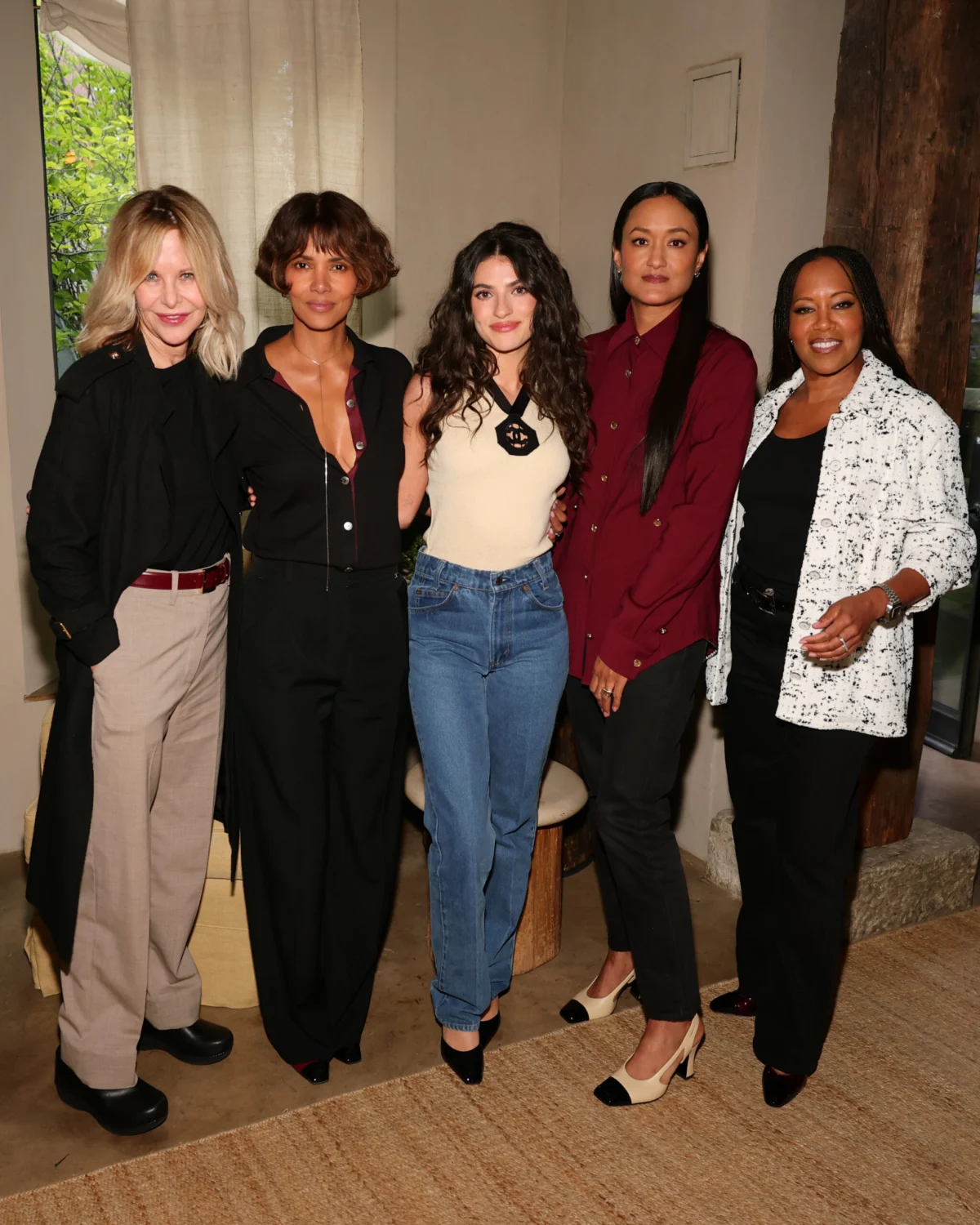
The twilight hues of a perfect New York City fall evening painted the sky as a sophisticated gathering unfolded in a rustic Greenwich Village penthouse. Within its elegant confines, a vibrant mix of burgeoning talent – writers, directors, and producers – mingled seamlessly with established titans of the film industry. The air buzzed with anticipation, punctuated by the clinking of glasses and the murmur of conversation, as servers circulated with an array of delectable hors d’oeuvres and an unending supply of refreshing lemon water. All eyes, however, were fixed on the impending announcement of this year’s Chanel x Tribeca Through Her Lens program, an initiative renowned for its commitment to nurturing female storytellers by awarding one deserving team full financing to produce their short film.
For three intensive days leading up to this celebratory evening, the selected participants had immersed themselves in a rigorous yet inspiring program. They engaged in a series of workshops designed to hone their craft, received invaluable one-on-one mentorship from industry luminaries, and participated in insightful conversations that delved into the multifaceted landscape of filmmaking. This immersive experience culminated in a live pitch session before a distinguished jury, whose esteemed members this year included the Oscar-winning actress Halle Berry, acclaimed cinematographer Autumn Durald Arkapaw, the powerhouse talent Regina King, and accomplished industry figures Ella Rubin and Meg Ryan. Addressing the assembled crowd on Thursday night, Arkapaw articulated the jury’s profound appreciation for the caliber of work presented. "I felt very confident that all these talented women will make, and should make these films," she stated, her voice resonating with conviction. However, she continued, "one film touched us [as] the most as a compassionate, strong example of a story that is needed in our country right now." This statement foreshadowed the profound impact of the chosen narrative, hinting at its thematic relevance and emotional resonance in the current societal climate.
This year, the coveted award, which provides complete financial backing for the production of a short film, was bestowed upon the dynamic duo of writer and director Gem Little and producer Kseniya Yorsh for their poignant short film, "Cowards." This selection marked a significant milestone for the emerging filmmakers, validating their creative vision and providing a crucial platform to bring their story to a wider audience. The film’s narrative is deeply rooted in personal experience, offering a raw and authentic portrayal of a critical period in adolescence.

Set against the backdrop of a sweltering summer day in 1999 Chicago, "Cowards" centers on the experiences of 11-year-old Diamond. The film masterfully depicts a profound rift that emerges between Diamond and her best friend, a personal crisis that forces her to confront and re-evaluate everything she has been taught about toughness. This concept of toughness, presented not as inherent bravery but as a learned survival mechanism for young girls navigating a complex world, is a theme that resonates deeply with Little, who based the narrative on her own formative years. "Youth violence is a crucial issue, and we don’t often talk about it from the lens of young girls and how we’re taught to be tough as a survival mechanism," Little shared with Variety. Her intention is to shed light on the often-unseen pressures and expectations placed upon young women, challenging conventional narratives of strength and resilience.
The transformative power of the Through Her Lens program was palpable for both Little and Yorsh. Over the course of the three intensive days, they not only sharpened their filmmaking skills but also experienced a profound personal evolution as women and storytellers. As they prepared to return to Los Angeles, their shared sentiment underscored the program’s core message. "How important it is right now for us to have agency and autonomy over our own stories," they agreed. "Women tell the truth. I think we’re going to continue to do that." This powerful declaration highlights a growing movement within the film industry to empower women to control their own narratives, fostering a more authentic and diverse cinematic landscape.
Halle Berry, a member of the distinguished jury, further elaborated on the thematic significance of "Cowards," particularly its exploration of female strength and conflict resolution. "I don’t think, as a woman, our first instinct is to fight," Berry observed. "We’re very egalitarian. We’re nurturers of our families. More often than not, we’re willing to talk something out and find a peaceful resolution. That’s the difference between men and women. ‘Cowards’ beautifully expresses that." Her insights offer a compelling perspective on the film’s nuanced portrayal of conflict, suggesting that true strength can manifest in empathy and communication rather than aggression. This distinction, Berry implies, is a fundamental aspect of the female experience that "Cowards" so effectively captures.
The deliberation process, as Berry recounted, was not without its challenges, but the jury ultimately gravitated towards a narrative with a clear and urgent message. "Something had to be a definitive thought," she explained, referring to the jury’s decision-making. They ultimately determined that "a film on anti-violence, and a female way of dealing with violence was something that the world needs right now." This commitment to addressing vital social issues through the lens of female perspective underscores the program’s broader mission: to champion stories that not only entertain but also provoke thought and inspire change. The emphasis on a "female way of dealing with violence" suggests a departure from traditional, often male-dominated, depictions of conflict, offering a more complex and potentially more effective approach to de-escalation and resolution.

Regina King, another esteemed juror, offered a humorous yet insightful reflection on the demands of the program. "I’ll be honest: when I first got the materials, I was like, ‘Oh, there’s homework? I thought we were just going to hear the pitch;’" she confided with a laugh. However, this initial sentiment quickly gave way to a profound sense of renewed passion for the industry. The experience of hearing these compelling stories and meeting the women who were bravely bringing them to life served as a powerful reminder of why she fell in love with filmmaking in the first place. She found particular inspiration in the "omnipresent individuality" of each participating team, a quality that imbues her with hope for the future of cinema. "At this age, you can definitely be jaded," King admitted with a chuckle, alluding to the often-cynical nature of the entertainment world. "We’re all going to hell in a handbag." Yet, it is the emergence of this new generation, "marching to the beat of their own drum," that reignites her joy in the creative process. Their unique perspectives and bold storytelling, she believes, are essential for injecting fresh energy and innovation into the industry.
King further elaborated on the profound impact of witnessing this new wave of talent, noting the beauty in grounding oneself in the future, especially in the face of a challenging news cycle. When prompted about this sentiment, she corrected with a definitive emphasis, stating, "In a great way." This subtle but significant distinction highlights her profound optimism and belief in the power of these emerging voices to shape a more positive and hopeful future.
Emerging from the three-day immersive experience, King revealed that she was "taking off her blinders." She explained that "When you have experienced success, you can find yourself guilty of losing the peripheral. Having this experience reminds me that everything is not right in front of me." This introspection underscores the value of programs like Through Her Lens in broadening perspectives and reminding even the most seasoned professionals of the diverse stories and challenges that exist beyond their immediate sphere of influence. The program’s robust mentorship component featured a remarkable roster of industry leaders, including Celine Song, the acclaimed filmmaker behind "Past Lives" and "Materialists"; playwright and filmmaker Aleshea Harris, known for her powerful work "Is God Is"; veteran producer Ellen Goldsmith-Vein; celebrated actress Fala Chen; and Gina Prince-Bythewood, the visionary director of "The Woman King." Their collective guidance provided invaluable insights and support to the emerging talents.
Throughout the intensity of the program, King found herself reflecting on her own directorial endeavors. She expressed deep gratitude for her sister, Reina King, who has been her steadfast filmmaking partner. The thought of their shared journey, she mused, could very well parallel the experiences of the women in the room. "That could be [us] in this room," she smiled, adding, "We’re still in rooms pitching like that." This statement speaks to the ongoing nature of creative development and the enduring challenges and triumphs faced by women in the industry, regardless of their established status. It underscores the importance of continuous support and advocacy within the filmmaking community.

As the evening drew to a close, Gem Little stood on the terrace, sharing a profound piece of wisdom imparted by Tribeca co-founder Jane Rosenthal to the cohort earlier in the week. "You not only hold the door open for the women who are behind you, but you hold the door open for the women who are ahead of you as well. You never know. All of this stuff is a sliding scale." This powerful sentiment encapsulates the spirit of collaboration and mentorship that lies at the heart of the Chanel x Tribeca Through Her Lens program. It emphasizes the interconnectedness of the industry and the importance of fostering a supportive environment where women at all stages of their careers can thrive. The concept of a "sliding scale" suggests a dynamic and evolving landscape, where opportunities and influence are fluid, and where mutual support is crucial for collective advancement. Little’s reflection underscores the program’s lasting impact, not just on the winning team, but on the entire cohort, inspiring a generation of women to champion one another and to continue pushing the boundaries of storytelling.
