
 By admin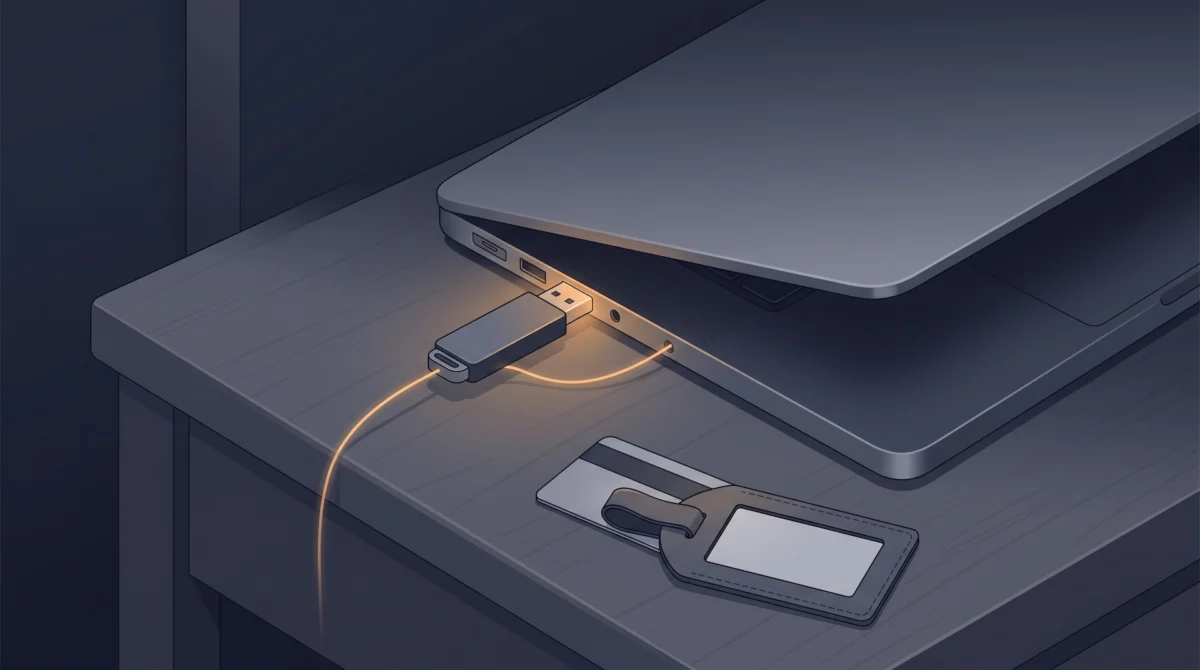
In a chilling demonstration of sophisticated cyber-espionage, a Chinese state-linked hacking group, tracked by cybersecurity firm CrowdStrike as OVERCAST PANDA, successfully infiltrated executive laptops attending an agricultural industry conference on Hainan Island earlier this spring. The audacious attack, detailed in CrowdStrike’s 2026 Threat Hunting Report, eschewed conventional cyberattack vectors like phishing or network breaches. Instead, attackers gained physical access to hotel rooms, exploiting unattended devices while their owners were occupied with evening engagements.
The campaign’s timeline, as meticulously reconstructed by CrowdStrike’s OverWatch team and shared in an exclusive interview with VentureBeat at Fal.Con 2026, reveals a methodical and stealthy operation. Evidence suggests an intruder entered one hotel room around 8 p.m. local time and a second by 9:57 p.m. The objective: to install a sophisticated backdoor named FlowCloud directly onto each laptop’s storage. The intruders achieved this by booting the compromised machines from a USB stick, a technique that sidesteps network defenses, phishing awareness training, and credential harvesting attempts. Once the malware was written, the laptops were rebooted and left undisturbed, leaving no trace of network intrusion or stolen credentials.
The intrusions, dated by the report to between March and May 2026, were confirmed by Adam Meyers, CrowdStrike’s senior vice president of counter adversary operations, who provided specific timestamps for publication. CrowdStrike’s intervention prevented further exploitation, but the group assesses that OVERCAST PANDA will almost certainly continue its operations. The FlowCloud malware itself is not new; Proofpoint had documented its use in 2020, delivered via phishing campaigns targeting the U.S. utilities sector. More recently, NTT Security’s Security Operations Center (SOC) has tracked similar USB-delivered infections at overseas branches of Japanese organizations since early 2022, highlighting a persistent threat vector.
Security researchers have long recognized this method of physically tampering with unattended laptops as an "evil maid attack," a term popularized by Joanna Rutkowska in 2009 following her demonstration of such an attack using a bootable USB stick. Meyers emphasized that such physical-access operations are exceptionally rare among the 290 named adversaries CrowdStrike monitors. While other groups, like MUSTANG PANDA, have employed similar tactics involving victims plugging in dropped USB drives, the OVERCAST PANDA campaign’s novelty lies in the confluence of state intelligence services orchestrating hotel room intrusions and deploying custom malware via bootable media, rather than relying on user interaction.
The insidious nature of the attack became apparent the following morning when the executives powered on their laptops. Upon booting, the implanted trigger activated, launching FlowCloud. This initiated a cascade of malicious activities, including keylogging, screen capture, file collection, and the harvesting of sensitive credentials. "We have the visibility once the machine boots up," Meyers explained to VentureBeat. The FlowCloud backdoor, designed to launch after the operating system loads, was detected by CrowdStrike’s Falcon sensor. The critical vulnerability, however, lay in the hours between the USB write operation and the subsequent reboot – a window of compromise where the laptop remained infected and undetected.
This disclosure of the attack’s timeline and methodology by CrowdStrike preceded their significant announcement of an expanded AI security product slate at Fal.Con 2026. The company unveiled Falcon Guardian, SafeMind, the Agentic Identity Provider, and AI Gateway, underscoring their commitment to addressing evolving threat landscapes.
Why Existing Security Tools Missed the Mark
The effectiveness of OVERCAST PANDA’s attack highlights a fundamental gap in many conventional cybersecurity defenses. Endpoint Detection and Response (EDR) solutions typically require the operating system to be loaded and their agent to be running to provide visibility and protection. Multi-Factor Authentication (MFA) is designed to safeguard login attempts, phishing training aims to educate users about malicious emails, and AI agent security focuses on securing agents once they are operational. OVERCAST PANDA’s "evil maid" approach bypassed all these layers at the point of initial compromise. The malware was installed below the running OS, below the EDR agent, and beneath the authentication stack. While Falcon successfully detected FlowCloud after the operating system booted and the backdoor began its execution, the implant and its trigger were already deeply embedded on the disk.
"Hotel entry is a very common thing," Meyers remarked, drawing a parallel to the awareness of physical security personnel. "I think what is unique is the combination of hotel entry with deployment of malware." Meyers further posited that China’s Ministry of State Security (MSS) is likely the entity behind OVERCAST PANDA. He suggested that the individuals gaining physical access to the hotel rooms were either MSS or Ministry of Public Security officers, or potentially bribed or coerced hotel housekeeping staff. The report also detailed a separate mid-2026 intrusion targeting a U.S.-based media professional using the same physical intrusion tradecraft. The specific targeting of an agricultural conference, Meyers noted, aligns with intelligence collection priorities often linked to China’s national five-year plans.
CrowdStrike’s Fal.Con Announcements and the Dawn of Runtime Security
The recent Fal.Con 2026 conference was a pivotal event for CrowdStrike, not only for its threat intelligence revelations but also for its forward-looking product announcements. Nvidia CEO Jensen Huang joined CrowdStrike CEO George Kurtz on stage to unveil SafeMind, an agentic cybersecurity system built upon Nvidia’s Nemotron open models and CrowdStrike’s extensive threat intelligence. Meyers informed the Fal.Con audience about the alarming surge in vulnerabilities, with 7,400 CVEs registered in June 2026 – a staggering 96% increase compared to June 2025. CrowdStrike itself contributed approximately 30% of these, submitting 2,400 vulnerabilities through responsible disclosure.
Falcon Guardian, CrowdStrike’s new runtime security solution for AI agents on endpoints, was officially launched during the conference. Mike Sentonas, CrowdStrike President, announced its immediate availability. AI Gateway, initially presented as a capability of Guardian, is slated for release as a hosted service in September, with a hybrid version to follow. AJ Shipley, CrowdStrike’s Chief Product Officer, confirmed that the company will integrate a SafeMind model into Guardian within the next few weeks, specifically for the detection of malicious prompts directed at AI agents.
These new products are designed to combat increasingly sophisticated threats, which the report quantifies with alarming data. The rate of AI agent-triggered detection leads has grown 2.5 times faster than human-triggered leads, according to OverWatch’s analysis. Cloud-conscious eCrime activity has seen a dramatic surge of 171% during the reporting period. Vishing intrusions, a form of voice phishing, doubled in the first half of 2026 compared to the latter half of 2025. Notably, the eCrime group SNARKY SPIDER has demonstrated an alarming acceleration in its attack chain, moving from account takeover to data exfiltration in under five minutes after compromising Single Sign-On (SSO)-integrated SaaS applications. Each of these pervasive threats, however, relies on network connectivity, a running operating system, an active user session, or a live cloud workload – all elements bypassed by the physical intrusion method employed by OVERCAST PANDA.
Firmware and Policy: The Unsung Heroes of Physical Security
While the OVERCAST PANDA campaign showcased a novel attack vector, the solutions to mitigate such threats are not new, albeit often overlooked due to their perceived inconvenience. "It’s a solvable problem," Meyers stated, "It’s just an inconvenient solution, which means that a lot of people don’t do it." CrowdStrike itself has been offering firmware attack detection and BIOS settings auditing through its Falcon sensor since May 2019. This includes integration with Dell SafeBIOS, which surfaces BIOS verification telemetry within the Falcon console. The capability to audit security-critical BIOS settings on laptops has been available for seven years, implying that its application to travel devices is a strategic decision rather than a product deficit.
The controls that could have effectively countered the OVERCAST PANDA campaign are described as "old and cheap," each serving a distinct purpose. Disabling external boot capabilities within the Unified Extensible Firmware Interface (UEFI) directly removes the USB boot vector. Implementing a BIOS administrator password prevents unauthorized access to and modification of these critical settings. Pre-boot authentication, requiring a PIN or USB key before the operating system loads, ensures that even if a foreign boot environment is loaded, the encrypted data volume remains inaccessible. Furthermore, firmware monitoring can detect tampering after the fact.
Meyers offered stark advice: "Don’t bring anything with you that you’re not comfortable with handing over to a foreign intelligence service." He personally advocated for the use of temporary laptops and separate email accounts for overseas travel, with devices being wiped upon return. The exposure, he warned, begins even before reaching the destination, with customs officials having the authority to seize devices and compel logins. He further characterized hotel safes as unreliable, stating, "They have master keys to that stuff."
Scale Dictates Priority in the Security Landscape
The overall growth in intrusions tracked by CrowdStrike OverWatch, approximately 4% during the reporting period following a 27% rise the previous year, indicates a shift towards more complex and resource-intensive campaigns. The OVERCAST PANDA hotel room operation exemplifies this trend. However, when asked to compare the physical intrusion with the speed and scale of AI-powered network attacks, Meyers leaned towards the latter as the greater concern for the average enterprise. He cited the REVENANT SPIDER case, where an eCrime group used AI to compromise 17 victims with custom web shells in just 48 minutes.
"You can’t intrude on hotel rooms at scale," Meyers explained. "You can’t intrude on physical devices at scale. And even then, it’s just one device." Physical access attacks are highly targeted, focusing on individual victims, and rarely lead to broader network pivots. In contrast, REVENANT SPIDER’s AI-driven approach operates at network speeds, posing a more widespread and immediate threat to a larger number of organizations. Security budgets, driven by the need to protect the maximum number of machines, often prioritize scalable network threats, leaving the harder-to-detect, albeit less scalable, physical threats to receive less attention. Yet, the executives targeted at the Hainan conference were the specific focus of a state intelligence service, which deliberately chose an unscalable method precisely because it circumvents network-based defenses.
The Conference as a Threat Model
The executives attending industry conferences represent a prime target demographic for such campaigns, and the inherent gap in runtime security, which only activates once a machine boots, is a critical vulnerability. The vendors exhibiting at major cybersecurity conferences, like Fal.Con, are often showcasing the very runtime protection solutions that attendees might need for their own compromised laptops. The organizational fragmentation within companies exacerbates this problem. Falcon Guardian might be deployed by one team, while BIOS configuration for travel laptops falls under the purview of another. Identity governance might manage the Agentic IdP, while the decision about executives carrying production-access machines to international conferences rests with a different department. Furthermore, the budget allocated for cloud threat defense often operates independently of travel device policies. Meyers, having experienced both sides of security management, noted the disconnect: "I’ve talked to companies where they’re like, we’re having a board meeting in Shanghai, and I’m like, why would you do that?"
Actionable Steps for Security Leaders Before the Next International Trip
To proactively address the vulnerabilities exposed by the OVERCAST PANDA campaign, security leaders must implement a series of stringent controls, particularly for Windows laptops, which are the primary targets for FlowCloud. A comprehensive audit of all executive laptops to check USB boot status is paramount. If a device can be booted from USB, it possesses the same critical gap that OVERCAST PANDA exploited.
Enforcing full-disk encryption coupled with robust pre-boot authentication is essential. BitLocker, when configured with TPM-only protection, has been identified as a weak point against physical access. Researchers have demonstrated methods to extract volume master keys from the LPC bus using inexpensive hardware modules, and similar exploits over SPI have been documented. OVERCAST PANDA’s ability to write a backdoor and its post-boot trigger directly to the Windows volume suggests that the targeted machines were either unencrypted or protected by a configuration that could be bypassed. Pre-boot authentication, requiring a PIN or a physical USB key, introduces a necessary human verification step before the storage becomes accessible, significantly hindering unauthorized access.
Verifying that Secure Boot is enabled and its revocation list is current is also crucial. Secure Boot validates the integrity of boot components, preventing most unauthorized bootloaders. However, it can still leave external media bootable, and signed shims have been found to facilitate bypasses. Recent research highlighted legacy Microsoft-signed UEFI shims that allowed untrusted code to run at boot on machines that still trusted Microsoft’s third-party certificate. While Microsoft has since revoked these shims, laptops that have not received the necessary updates remain vulnerable. To fully secure the boot process, the boot order should be locked at the UEFI level, one-time boot menus should be disabled, and a BIOS administrator password should be implemented to protect both the setup utility and any boot-override keys. Meyers reiterated that many of these essential settings are often overlooked due to the perceived inconvenience of implementation.
Finally, issuing dedicated travel-only devices for international conferences is a prudent strategy. These devices should have no access to production systems, no saved credentials for internal tools, and no persistent VPN configurations, thereby minimizing the potential impact of a compromise. "If they can get their hands on it, they can own it," Meyers concluded, echoing a common cybersecurity adage. While Falcon can detect FlowCloud post-boot, the critical vulnerability remains the hours between the USB write and the next login, during which the laptop sits compromised and undetected. The solution, he emphasized, is not technologically complex but requires a strategic shift in policy and practice: "It’s cheap to buy a couple of laptops and a couple of phones." The controls that close this critical window are a handful of firmware settings and a spare, properly secured device. The persistent question for security leaders remains: have these fundamental controls been deployed?
