
 By Lina Irawan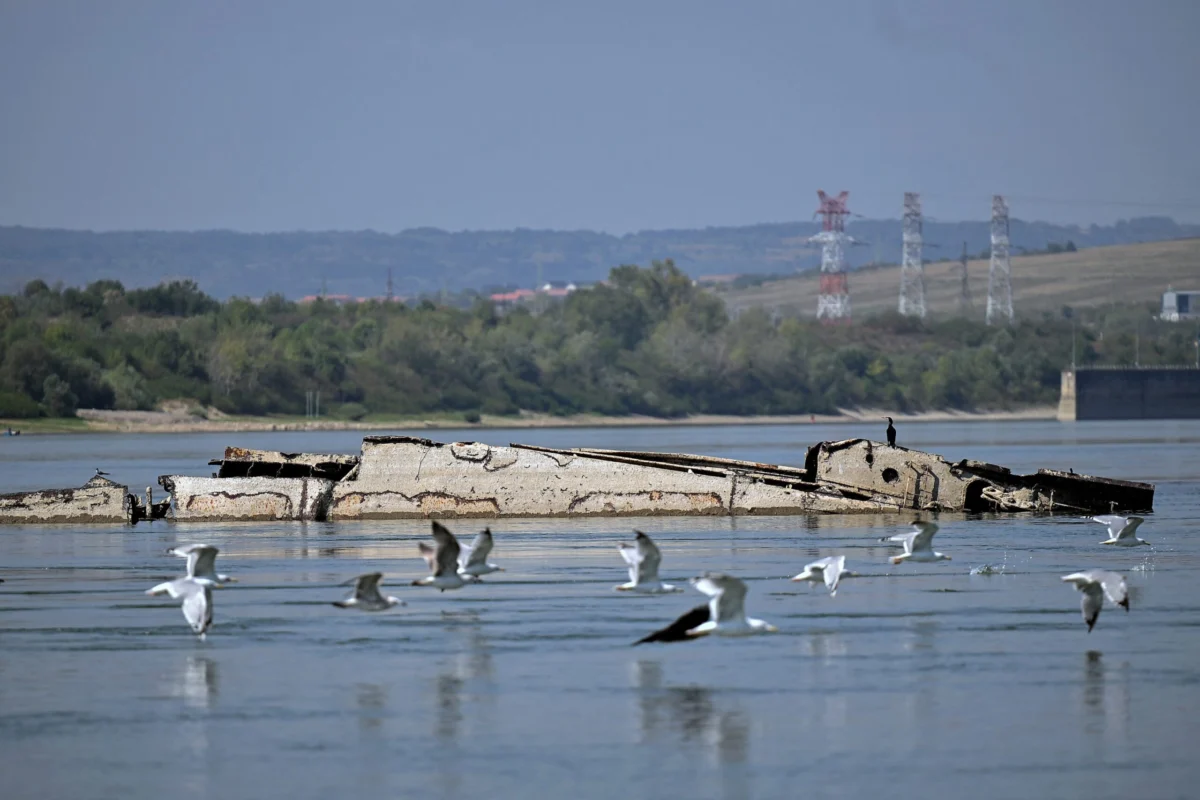
The dramatic unveiling of these long-sunken relics offers a chilling spectacle, a tangible link to a bygone era of conflict, but it is merely one striking symptom of a far more profound crisis gripping Central and Eastern Europe. The unprecedented drought and accompanying heatwaves have plunged the region into a state of acute environmental, economic, and energy insecurity, underscoring the escalating impact of climate change on a vital European artery.
Near the Serbian port of Prahovo, on the border with Romania, the once-submerged skeletal remains of Nazi Germany’s Black Sea fleet are now starkly visible. Rusty hulls, jagged masts, and ghostly superstructures breach the surface, some still cradling their deadly cargo of unexploded ordnance and ammunition. This "ghost fleet" is not merely a curious distraction from the sweltering summer heat; it represents a formidable and dangerous obstacle to navigation, a historical hazard amplified by contemporary climate challenges.
The Unveiling of a Wartime Secret: Germany’s Scuttled Fleet
The ships now emerging from the Danube’s drastically receded waters are a grim testament to the desperate final months of World War II. In September 1944, as Soviet forces relentlessly advanced deeper into Europe, pushing through Romania, Nazi Germany’s Danube Flotilla found itself cornered. Faced with the imminent capture of their vessels and a desire to impede the Soviet offensive in the Balkans, German commanders made the strategic decision to scuttle up to 200 warships, barges, and other craft in the treacherous Iron Gates gorge, particularly near Prahovo. This act of deliberate sinking was a "scorched earth" tactic, intended to create an impassable blockade and deny the Soviets valuable naval assets. While the immediate tactical objective was achieved, preventing the swift passage of Soviet vessels, Nazi Germany would surrender just eight months later, in May 1945, leaving behind a submerged legacy that continues to haunt the river.
Historians specializing in naval warfare and the Eastern Front describe this event as a desperate, but ultimately futile, maneuver. "The scuttling of the Danube Flotilla was a last-ditch effort to buy time and disrupt Soviet logistics," explains Dr. Elena Petrović, a military historian at the University of Belgrade. "It reflects the chaos and desperation of the German retreat, but the long-term environmental and navigational consequences were likely not a primary consideration at the time." The vessels included patrol boats, mine-sweepers, landing craft, and even some smaller combat ships, many of which were heavily armed. Decades later, the residual danger from these submerged time capsules remains palpable, with explosives and ammunition still potentially active within their corroded holds.
For decades following the war, the presence of these wrecks posed a constant, albeit largely submerged, challenge. Communist Yugoslav authorities undertook efforts to remove some of the most accessible and dangerous vessels, primarily those directly obstructing vital shipping lanes. However, the sheer scale of the task, coupled with the inherent dangers of handling unexploded ordnance (UXO) in a dynamic riverine environment, meant that the majority of the fleet remained undisturbed. The estimated cost of a comprehensive salvage operation, including the safe neutralization of UXO, has always been prohibitive, running into the hundreds of millions of Euros. This year, the Serbian government, with financial support from the European Union, has reignited discussions and even launched tenders for the removal of these wrecks, a task made newly urgent by the river’s unprecedented low levels.
The Danube’s Plight: A Regional Crisis
The emergence of the ghost fleet is a visually striking symptom of a much broader and more critical issue: the Danube River, a lifeline for over 80 million people across 10 nations, is experiencing record low water levels. Hydrological data from key monitoring stations along the river, including Prahovo, show readings significantly below historical averages, in some cases nearing all-time lows seen only in previous extreme drought years like 2003 and 2018. The current drought, however, is proving to be more severe and protracted, exacerbating an already fragile situation.
The primary driver behind this crisis is a combination of prolonged, intense heatwaves and significantly reduced precipitation across Central and Southeast Europe. "This isn’t just a bad summer; it’s a clear pattern of extreme weather events consistent with climate change projections," states Dr. Markus Schmidt, a hydrologist at the International Commission for the Protection of the Danube River (ICPDR). "We are seeing higher temperatures leading to increased evaporation, coupled with reduced rainfall and, critically, diminished meltwater contributions from the Alps, which feed many of the Danube’s major tributaries." The lack of winter snowpack and spring rains has left the river system with a critical deficit, now compounded by the searing summer heat.
Economic Fallout: Shipping, Energy, and Trade
The economic repercussions of the Danube’s diminished flow are far-reaching and severe. The river is a crucial artery for commercial shipping, transporting vast quantities of goods ranging from grain and oil to chemicals, coal, and raw materials. As water levels drop, the draft (depth) available for vessels decreases dramatically. This forces barges to lighten their loads, carrying significantly less cargo – sometimes as little as 30-50% of their full capacity – to avoid grounding. "As you can see, the (big) ships can’t pass anymore," laments Krsta Brandic, a long-time resident of Prahovo, gesturing towards the stalled vessels near the port. "The entire river traffic has almost stopped, or it’s extremely limited."
This reduction in capacity translates directly into higher transportation costs, longer transit times, and significant supply chain disruptions. Companies are forced to seek alternative, more expensive modes of transport, such as rail or road, which are often less efficient and contribute to increased carbon emissions. Industries reliant on Danube shipping for raw materials or export routes face production delays and increased operational expenses, impacting competitiveness and potentially contributing to inflationary pressures across the region. For countries like Serbia, Romania, Bulgaria, and Hungary, which heavily depend on the Danube for trade, the economic strain is substantial.
Beyond commercial shipping, the tourism sector is also taking a hit. Popular river cruises, a significant source of revenue for many riverside towns and cities, have been cancelled or rerouted, leading to substantial losses for tour operators, hotels, and local businesses.
Energy Security on the Brink
Perhaps one of the most critical impacts of the low Danube levels is on the energy sector. Numerous thermal power plants along the river, particularly in Serbia, Romania, and Bulgaria, rely on the Danube for cooling water. As water levels drop and river temperatures rise due to the heatwave, the efficiency of these cooling systems is severely compromised. There is a real risk of power plants having to reduce output or even shut down entirely to prevent overheating, which would strain already precarious national energy grids.
This energy crisis is compounded by the broader geopolitical context of the war in Ukraine, which has driven up natural gas prices and created immense pressure on European energy supplies. Governments across Central and Eastern Europe are taking urgent steps to conserve electricity, issuing public appeals for reduced consumption, implementing energy-saving measures, and exploring all available options to maintain grid stability. The specter of energy rationing or widespread blackouts looms large, making the Danube’s health not just an environmental issue, but a matter of national security and economic stability.
Environmental and Ecological Reverberations
The environmental consequences of the prolonged drought extend far beyond navigation and energy. Low water levels significantly impact the river’s delicate ecosystem. Aquatic life, including fish populations, suffers from reduced oxygen levels, higher water temperatures, and habitat shrinkage. Spawning grounds are exposed, and migratory routes are disrupted. The concentration of pollutants, which are normally diluted by higher water volumes, increases, further degrading water quality and posing risks to human health and wildlife. Wetlands and riparian zones, vital for biodiversity and natural flood control, are drying out, threatening a myriad of species that depend on these habitats.
"The Danube is a living system, and these extreme conditions put immense stress on every part of it," explains Dr. Ana Popescu, an environmental scientist focused on riverine ecosystems. "From macroinvertebrates to migratory birds, the entire food web is disrupted. The long-term effects on biodiversity and ecosystem resilience could be profound if these drought events become more frequent and severe."
Looking Ahead: Adaptation and Collaboration
The Danube crisis serves as a stark warning and a powerful call to action. Climate models predict an increased frequency and intensity of heatwaves and droughts in Central and Southeast Europe, suggesting that the current situation may become the "new normal" rather than an anomaly. Adapting to these changes will require a multi-faceted approach and unprecedented international cooperation among the Danube basin countries.
Potential solutions include significant investments in water management infrastructure, such as improved reservoir systems and more efficient irrigation techniques. For navigation, strategic dredging of critical bottlenecks may be necessary, although this carries its own environmental concerns and must be carefully managed. Developing more resilient energy infrastructure, with a greater emphasis on renewable sources not reliant on river water for cooling, is also crucial.
As for the ghost fleet of World War II, its emergence underscores the interconnectedness of historical legacies and contemporary environmental challenges. The imperative to remove the dangerous wrecks, a costly and complex undertaking, has now been amplified by the immediate economic need to keep the Danube navigable. This summer, the second longest river in Europe is not only revealing hidden histories but also exposing the vulnerabilities of an entire continent to the relentless march of climate change, demanding urgent and concerted action from all its stakeholders. The silent, rusty hulls are a poignant reminder that past conflicts can still shape present realities, especially when illuminated by the harsh light of a warming world.
