
 By admin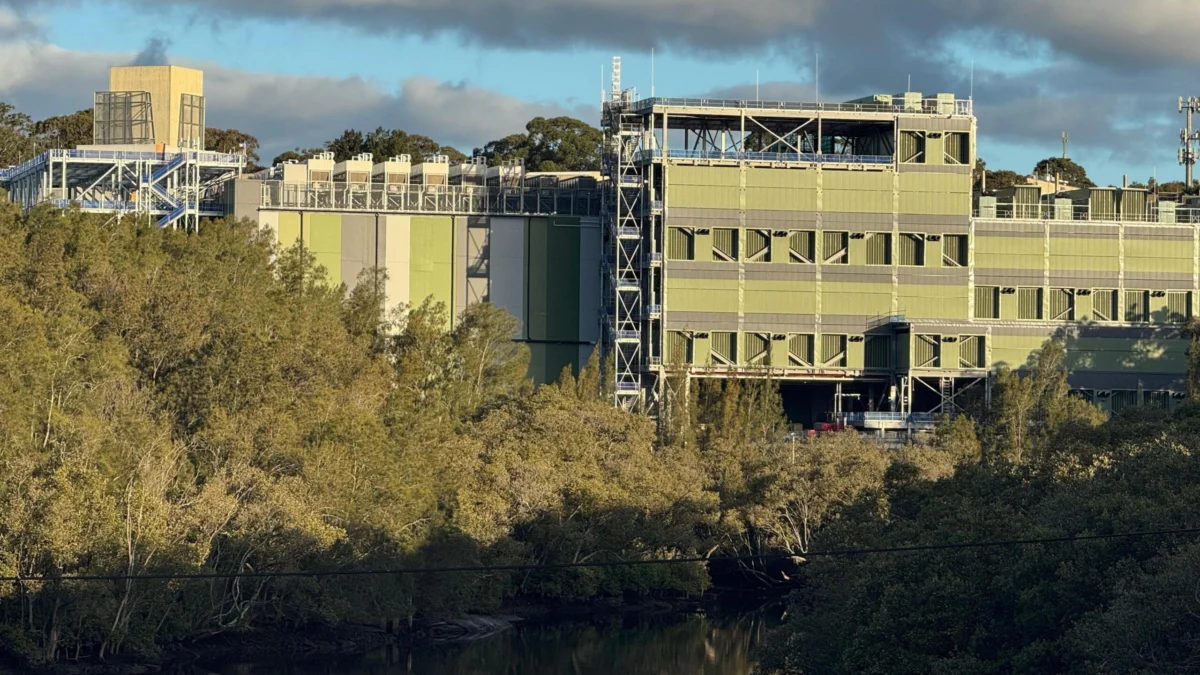
The sheer size and incessant hum of data centres are often the first things people notice. For some, the sound is akin to a jet plane preparing for takeoff; for others, it’s a persistent, high-pitched whine that infiltrates daily life. Lucy*, a resident of Sydney’s desirable lower north shore suburb of Lane Cove, experiences this auditory intrusion nightly. "I’ll hear it and think, ‘What is that? What is going on?’" she says, only to remember that the source is a data centre located a mere 350 metres from her home. Compounding her concern, plans are underway to construct four additional data centres at the local industrial park.
Australia has rapidly emerged as a prime global destination for data centres, attracting significant investor interest due to its abundant clean energy sources, substantial natural gas reserves, and ample land availability – all crucial elements for powering and housing advanced technologies. Earlier this year, Sam Altman, CEO of OpenAI, boldly suggested that Australia possesses the potential to become a world-leading data centre capital, should it choose to pursue that ambition.
Evidence suggests Australia is indeed moving in the direction of big tech’s aspirations. The nation currently hosts 162 data centres, with plans for an additional 90. This expansion is backed by an estimated investment pipeline exceeding A$155 billion (£80 billion). A potentially monumental development is the proposed construction of one of the world’s largest data centres in western Sydney, projected to be Australia’s single largest energy consumer at one gigawatt capacity. Furthermore, in Marsden Park, also in western Sydney, the largest data centre in the Southern Hemisphere is already under construction, situated remarkably close to a local community, just 100 metres away.

However, as an increasing number of Australians find themselves living in close proximity to these colossal facilities, concerns are mounting regarding their impact on water supplies, energy consumption, and the broader environment. This growing unease prompts a critical question: is the race to embrace artificial intelligence (AI) truly worth the potential ecological and social costs?
‘What happens if we don’t?’
Data centres have been an indispensable component of the digital economy since the advent of the internet, originally designed to process and store data for essential services like email, online banking, and cloud computing. The landscape dramatically shifted following the 2022 launch of ChatGPT and the subsequent explosion in AI’s popularity, igniting an urgent drive to build more data centres capable of powering this burgeoning technology. The strategic placement of these large, windowless structures, filled with the constant thrum of servers and intricate cabling, has become paramount for minimizing latency – the crucial time delay in data transmission from source to destination.
Belinda Dennett, CEO of Data Centres Australia, emphasizes the unacceptability of delays in critical applications such as air traffic control, robotic surgery, and even streaming services like Netflix in today’s technologically advanced world. Australia boasts approximately 13.6 million monthly AI users, ranking it as the sixth most active global participant in this technology. Experts contend that establishing data centres within Australia will lower the barrier to entry for developing domestic AI companies. "If we think about it in reverse, what happens if we don’t build infrastructure here," Dennett poses. "We get none of the value chain, we are just importing tools from someone else and we become just a user."

Australia’s appeal as a market for foreign investment is further bolstered by its favourable attributes: readily available land, a stable political environment, and its membership in the Five Eyes intelligence alliance. Dennett also highlights the presence of a skilled workforce, a relatively stable energy grid, and immense potential for renewable energy generation.
Leading business experts and economists posit that without the significant growth in data centres over the past few years, Australia would likely have faced a recession. Jon Whittle, a former director of the digital research centre at CSIRO (Australia’s national science agency) and a prominent voice in AI and business circles, concurs with this assessment, arguing that the government has little choice but to continue on this investment trajectory. "There’s some very serious considerations around this, but my main message would be we need to lean into it," he asserts.
Fears over power and water supplies
Conversely, prominent energy and environmental experts express skepticism about Australia’s capacity to adequately meet the substantial energy and water demands of the burgeoning data centre sector. The Australian Energy Market Operator projects that data centre energy requirements could triple nationwide by 2030. Without substantial new investment in renewable energy generation and storage, the Climate Council, an independent non-profit organization providing expert advice, warns that data centres could drive power prices up by as much as 26% in New South Wales (NSW) by 2035.

Given that data centres require a constant and robust power supply, a scale and speed that intermittent sources like wind and solar cannot consistently match, there are significant concerns that the current boom could necessitate the construction of new coal and gas power plants. A recent report by Greenpeace Australia Pacific found that no data centre operator analysed could adequately substantiate their claims of driving the country’s renewable energy growth. In the United States, many data centres have opted for the more cost-effective solution of building new gas-fired power stations rather than waiting to develop additional renewable energy infrastructure.
Within a 90-minute drive of Sydney’s central business district, the Australian-owned data group Cloud Carrier has outlined plans to construct three gas-fired power stations to supply energy for an existing data centre and two future facilities. Furthermore, should energy demands strain the grid or lead to power outages, data centres, such as those proposed in Lane Cove, would likely resort to backup diesel generators.
However, NSW Treasurer Daniel Mookhey maintains that Australia’s data centre investment boom is being paralleled by a surge in renewable energy development. "We don’t see the two [as] unrelated," he tells the BBC. "We see data centres allowing us to replace a lot of our old coal-fired power with clean, green renewable energy with the private sector picking up a large amount of the tab because otherwise households would." Mookhey believes this private investment will not only facilitate renewable energy expansion but also foster "new industries that are likely to employ future generations."
Beyond energy, data centres present a significant challenge in terms of water consumption. Some facilities can utilize up to 40 million litres of water daily, an amount equivalent to the needs of 80,000 households, to prevent their servers from overheating. In a nation already susceptible to drought, this represents a potentially critical issue. Sydney, in particular, is projected to require an increase in its drinking water supply over the next five to ten years to accommodate its growing population, according to the Water Services Association of Australia (WSAA). If this water is diverted for data centre operations, households may face increased costs for sourcing water from alternative, more expensive methods like desalination. Sydney Water, Australia’s largest water utility, estimates that data centres could consume as much as 25% of Sydney’s drinking water by 2035.

In response to these growing concerns, Prime Minister Anthony Albanese announced in July a new legal obligation for "large-scale" data centres to underwrite their power supplies, limit water usage, and bear the costs of any necessary additional water infrastructure. However, the Prime Minister also indicated that this legislation, slated for introduction in 2027, would only apply to new proposals, exempting projects already built or under construction. This limited scope has prompted environmental and community groups to call for an immediate moratorium on all data centre development.
"We’ve got the government rolling out the red carpet saying we want to be the data centre capital of the world," states Sydney’s Lane Cove deputy mayor, Rochelle Flood. "But can we actually do that sustainably or is it going to set us back in terms of net zero and our water storage targets?"
‘What is it for?’
During a town hall meeting organized by Greenpeace Australia Pacific at the Lane Cove library, residents expressed their dismay, stating they were never consulted about their area becoming a data centre hub. One of the proposed data centres in the cluster is situated a mere 16 metres from the nearest home and 160 metres from a local primary school. Furthermore, Deputy Mayor Flood points out that if the four planned data centres are approved in the industrial park, approximately 50% of the existing businesses will be forced to relocate, taking their associated jobs with them.

Felipe Tanaka, a 40-year-old manager of a business within the industrial park, has been informed of the requirement to move to accommodate a data centre. "We never knew that something like this would happen," Tanaka tells the BBC. "Thousands of jobs are going to be gone from this area in the next few years." While large data centres can employ over a thousand workers during their construction phase, research suggests this number dwindles to around 100 operational jobs once the facility is up and running. "Most of our 300 to 400 workers here are locals," Tanaka laments. "Having to move will probably see half of my employees gone."
NSW Treasurer Mookhey counters that the job creation associated with data centres stems not from their direct operational workforce but from the businesses that utilize their services. "When Microsoft and Amazon do business here in NSW, it’s pleasing to see they are committed to providing some of their more skilled operations and locating them here," he notes. However, the nature of other potential skilled job creation remains unclear, as does the precise purpose of many of these data centres. Critics have pointed out that a significant portion of AI usage involves the creation of trivial content, such as animated GIFs of cats, which consumes energy equivalent to running a microwave for an hour.
"They’re telling us this is essential… that we need to have these centres in our neighbourhood but they’re not saying what it’s for," Flood argues. "When our drinking water, energy and land is being used for generative AI slop, that is not giving any value back."
*Names have been changed to protect identities.
