
 By admin
The route between Boston and Honolulu is legendary in aviation circles, not just for its distance, but for the operational challenges it presents. Spanning 5,095 miles, the flight typically takes between 10 and 11 hours depending on the jet stream. To put this in perspective, a flight from Boston to London is roughly 3,300 miles, while Boston to Rome is about 4,000 miles. Flying to Hawaii from the East Coast of the United States is, for all intents and purposes, an international-length flight conducted entirely within domestic borders. Because it is a domestic flight, it lacks the high-margin "International Business Class" pricing that typically sustains such long-haul operations, relying instead on a mix of premium leisure travelers and standard economy passengers.
This latest cancellation highlights a volatile period for ultra-long-haul domestic travel. Delta’s decision to cut the route follows a similar move by Hawaiian Airlines, which also suspended its non-stop service between the two cities in early 2025. At the time, Hawaiian Airlines cited a lack of sustained demand and the high cost of fuel required to fly its Airbus A330-200 aircraft across the continent and half the Pacific Ocean. Delta had hoped to capitalize on the vacuum left by Hawaiian, betting that its robust hub in Boston and its loyal SkyMiles member base would provide the necessary load factors to make the route profitable. However, the data suggests that the "demand lag" which plagued Hawaiian Airlines has also caught up with the Atlanta-based carrier.
The history of the BOS-HNL route is a saga of ambition meeting economic reality. The route was first launched with great fanfare in 2019 by Hawaiian Airlines, becoming the longest domestic flight in the United States. Delta followed suit, recognizing Boston as a key "coastal hub" where it could compete aggressively with JetBlue. Throughout the post-pandemic travel boom, there was a surge in "revenge travel," with passengers willing to pay premium prices for non-stop convenience to bucket-list destinations like Oahu. But as the travel market normalized in 2024 and 2025, the economics of the 10-hour flight became harder to justify.

Industry analysts point to several factors for the route’s failure. First is the "yield" problem. While the planes might be relatively full, the average price paid per mile is often lower on leisure routes to Hawaii than on business-heavy routes to London or Paris. Second is the competition from "one-stop" alternatives. Travelers in the Northeast can easily connect through West Coast hubs like Los Angeles (LAX), San Francisco (SFO), or Seattle (SEA), or through mid-country hubs like Chicago (ORD) or Dallas (DFW). These connecting flights often allow airlines to use smaller, more fuel-efficient narrow-body aircraft for the first leg, reserving the large wide-body jets for the shorter over-water hop from the West Coast.
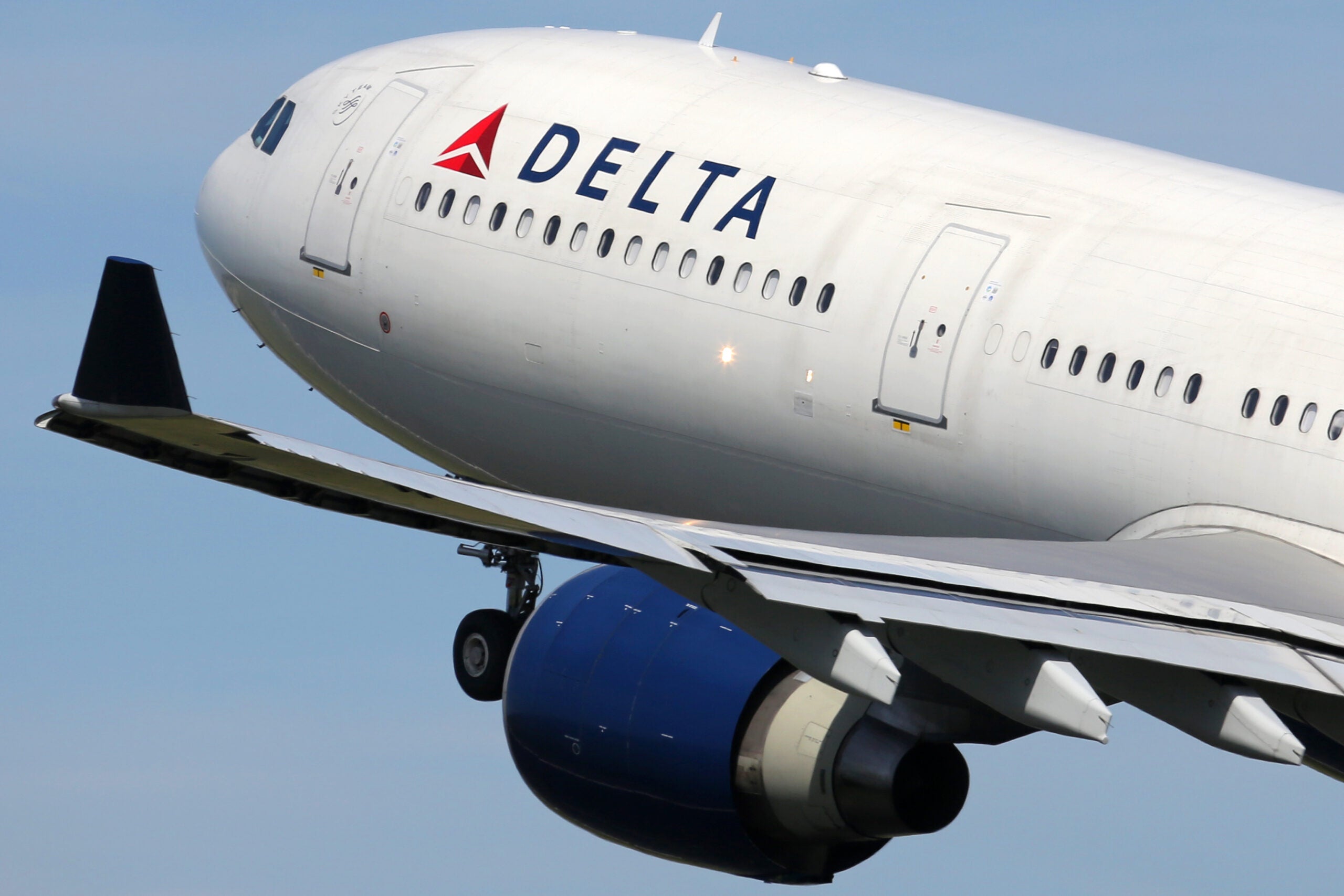
Furthermore, the aircraft required for the BOS-HNL route are in high demand elsewhere. Delta typically utilizes the Airbus A330-300 or the more modern, fuel-efficient A330-900neo for these missions. These aircraft are the workhorses of Delta’s transatlantic network. With the European travel market seeing record-breaking demand and high ticket prices, Delta’s network planners likely determined that an A330 is more valuable flying from Boston to Amsterdam or Dublin than it is flying to Honolulu. In the zero-sum game of airline fleet management, every hour a wide-body jet spends on a low-margin domestic route is an hour it isn’t earning premium revenue on an international corridor.
For the passengers who had already booked seats for the 2027 season, the news is a frustrating reminder of the instability of airline schedules. One traveler, who shared his experience with industry insiders, noted that his non-stop return from Honolulu was replaced with a multi-leg journey involving a layover in Detroit (DTW). This adds hours to an already grueling travel day and removes the primary selling point of the original booking: the convenience of a single takeoff and landing. Delta has issued a formal apology, stating that they "routinely evaluate and adjust" their network to meet customer demand, and promised to contact all impacted customers to arrange alternate travel plans.
Despite the setback in Boston, Delta is not retreating from Hawaii entirely. The airline is currently moving forward with what it describes as its "largest-ever Hawaii schedule" for the upcoming winter season. This includes a new service from its Minneapolis-St. Paul (MSP) hub to Maui (OGG), a route designed to cater to Midwesterners looking to escape the sub-zero temperatures of January and February. Delta also maintains non-stop service to Honolulu from nearly all its major hubs, including Atlanta (ATL), Detroit (DTW), Minneapolis (MSP), Salt Lake City (SLC), Seattle (SEA), and Los Angeles (LAX). The notable exceptions remain New York’s LaGuardia (LGA), which is restricted by "perimeter rules" that prevent most long-haul flights, and now, once again, Boston.
The broader context of Hawaii tourism also plays a role in these network shifts. The islands have faced a complex recovery following the devastating Maui wildfires of 2023. While Honolulu on the island of Oahu was not directly impacted by the fires, the tragedy caused a temporary cooling of the overall tourism market in the state. Additionally, the weakening of the Japanese Yen has led to a significant decrease in visitors from Japan, traditionally a cornerstone of the Hawaiian tourism economy. This has forced airlines to rely more heavily on domestic U.S. travelers, leading to increased competition and downward pressure on fares from the West Coast, which in turn makes the expensive East Coast non-stop routes less attractive to the airlines’ bottom lines.
The cancellation also raises questions about the future of the Boston hub. Delta has invested billions of dollars into Boston Logan, including a massive renovation of Terminal E and a significant expansion of its gate footprint. The airline has positioned Boston as its primary gateway to the North Atlantic, but its attempts to turn it into a jumping-off point for the Pacific have met with repeated resistance from market forces. For now, it appears that New York’s John F. Kennedy International Airport (JFK) and Newark Liberty International Airport (EWR)—where United Airlines operates a non-stop to HNL—will remain the only reliable gateways for non-stop travel from the Northeast to the Aloha State.
As of early 2027, the title of "America’s Longest Domestic Flight" will likely revert fully to the JFK-HNL route, operated by both Hawaiian Airlines (now part of the Alaska Air Group) and Delta. That route clocks in at approximately 4,983 miles, just slightly shorter than the ill-fated Boston connection. The razor-thin margin of distance between the two routes underscores just how extreme the Boston-Honolulu flight was in the landscape of American aviation.
For the aviation enthusiasts and frequent fliers who value unique routes, the loss of BOS-HNL is the end of an era—or at least the end of a chapter. While Delta’s statement leaves the door open for future "adjustments," the fact that the route has been cut three times by two different airlines suggests that the "New England to Hawaii" non-stop market may simply be a bridge too far for current economic conditions. Travelers from Massachusetts will have to get used to the "Delta Shuffle" through LAX or ATL for the foreseeable future, as the dream of a direct sunrise-to-sunset flight across the heart of the Pacific remains an elusive goal for the airline industry. For those lucky enough to have tickets for the brief window in late December 2026, they will be experiencing a rare piece of aviation history: a route that exists only when the holiday spirit—and the holiday ticket prices—are at their absolute peak.
