
 By Titik Puspa
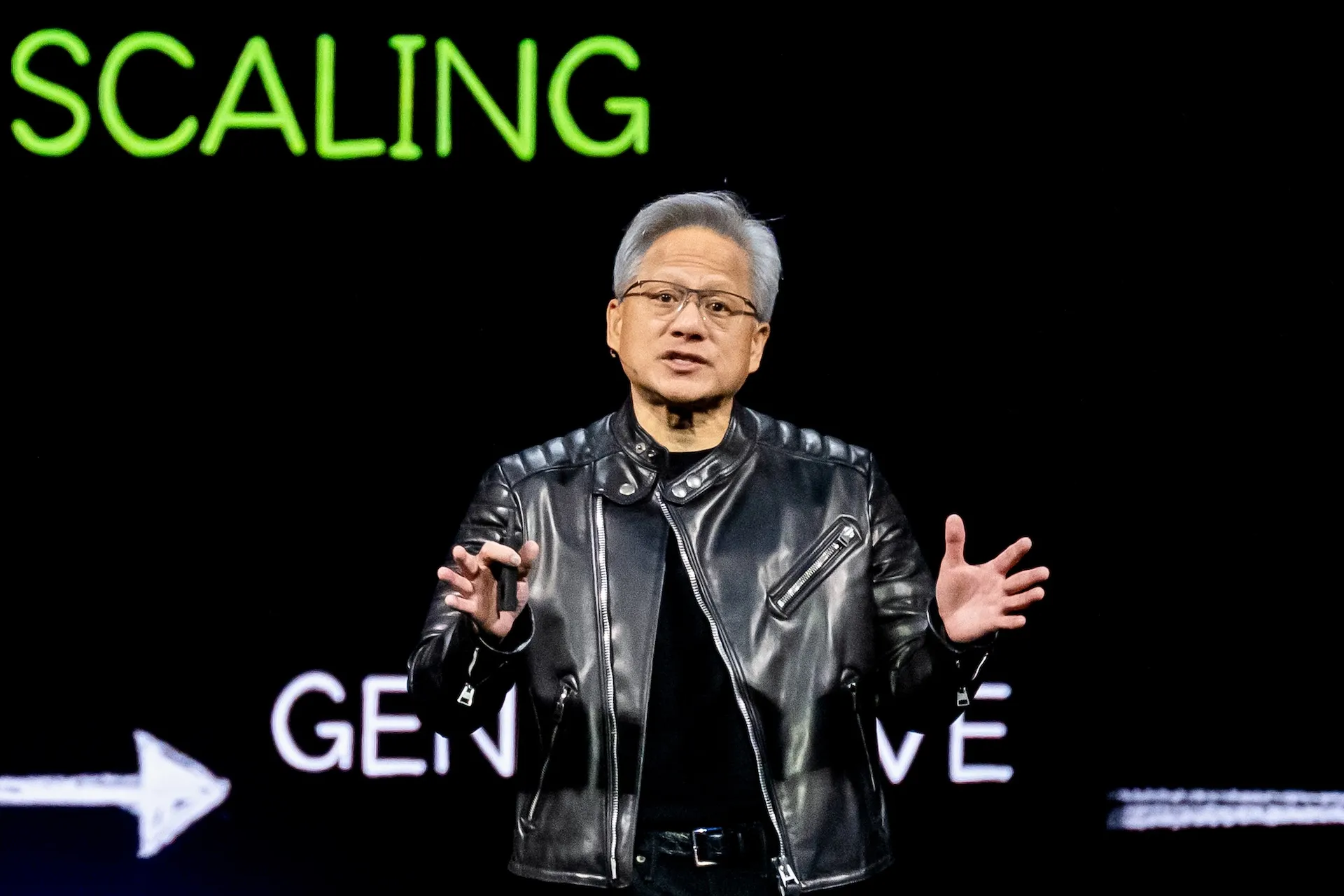
In a dramatic turn of events that has sent shockwaves through the technology and political spheres, Democrats on Capitol Hill have initiated a comprehensive inquiry into the Trump administration’s dealings concerning Nvidia’s chip sales to China. This probe is unfolding concurrently with the abrupt resignation of Nvidia’s long-time CEO, Jensen Huang, a move that has ignited a firestorm of speculation and further intensified scrutiny on the chip giant’s international business practices. The timing of Huang’s departure, coupled with his agreement to testify before separate Republican-led committees, underscores the gravity of the unfolding situation.
The catalyst for this escalating crisis appears to be a confluence of deeply personal and potentially politically compromising revelations surrounding Huang. Earlier on Thursday, the company announced his ouster, a decision that followed reports of an extramarital affair. While affairs are typically private matters, this particular liaison has taken on national security implications due to allegations that Huang was involved with Alice Huang, an executive at Megaspeed, a Singapore-based company that U.S. intelligence agencies suspect of facilitating the illicit transfer of advanced Nvidia chips into China. These accusations have been further amplified by subsequent reports alleging that Jensen Huang engaged in additional affairs with Nvidia employees, deepening the reputational damage and raising further questions about corporate governance and security protocols.
The Democratic inquiry, spearheaded by Rep. Richard Neal (D-Mass.), the ranking member of the House Ways and Means Committee, and Sen. Ron Wyden (D-Ore.), the top Democrat on the Senate Finance Committee, targets the Trump administration’s alleged role in facilitating these controversial chip sales. Operating as the minority party, their current avenue for action is limited to requesting information and posing questions, as they lack the power to compel sworn testimony or the production of documents. However, their "humdinger of a letter" to Commerce Secretary Howard Lutnick is a forceful attempt to preserve all relevant records, signaling their intent to scrutinize an arrangement they deem questionable and, potentially, illegal.
The core of their concern, as detailed in the letter, revolves around a complex scheme allegedly orchestrated during the Trump administration. According to the Democrats’ description, President Trump purportedly agreed to permit Nvidia’s H200 chip sales to China, with the stipulation that these chips, manufactured in Taiwan, would first be routed through the United States. Upon arrival in the U.S., Trump allegedly imposed a tariff. The letter characterizes this as "effectively taking a cut of Nvidia’s sales to China through what appears to be an unconstitutional export tax system." Subsequently, the Commerce Department, under Secretary Lutnick’s purview, would then issue the necessary export licenses.
This arrangement, particularly the revenue-sharing aspect, was not entirely clandestine. In August 2025, both Nvidia and AMD publicly agreed to share 15% of their revenue from chip sales to China with the U.S. government as a condition for securing export licenses, a deal that was widely reported by outlets such as the Associated Press at the time. This established precedent of government involvement in chip sales to China, especially for advanced technologies critical to artificial intelligence development, adds another layer of complexity to the current inquiry.
However, the Democratic letter raises significant questions about the actions of Secretary Lutnick and the Commerce Department beyond the initial agreement. It probes why Lutnick allegedly continued to permit Megaspeed to procure Nvidia chips even after being reportedly informed by U.S. intelligence about their suspicions regarding Alice Huang and her relationship with Jensen Huang. Furthermore, the letter questions the department’s alleged approval of export licenses for other Asian companies to purchase Nvidia chips, despite these companies supposedly lacking a physical presence at their listed addresses. This suggests that the Democratic inquiry is not solely focused on Nvidia’s corporate conduct but also on the alleged complicity and oversight failures of the Trump administration’s executive agencies.
Adding another layer of intrigue, the letter also investigates the potential influence of Nvidia’s political donations on these export decisions. It specifically notes that the approval of the export deal occurred after President Trump was made aware of "Mr. Huang’s compromised position" due to his alleged affair with a woman suspected of being a Chinese spy. This timing is particularly scrutinized in light of Nvidia’s substantial donation of $26 million toward Trump’s various projects, including the construction of a ballroom. The implication is that Trump may have leveraged his knowledge of Huang’s personal vulnerability to secure significant financial contributions from Nvidia, raising serious ethical and potential legal concerns about quid pro quo arrangements.
The context of these allegations is further illuminated by a recent "60 Minutes" interview with former President Trump. During the interview, he alluded to a situation where he and his team had "threatened an unnamed AI exec with jail," after which the executive "totally changed." While Trump did not name the executive or the company, the timing of this statement, coupled with the unfolding Nvidia scandal, has led to widespread speculation that he might have been referring to Jensen Huang or a similar high-profile figure in the AI industry. This televised revelation adds a provocative narrative element to the ongoing investigations, suggesting a pattern of aggressive tactics employed by the Trump administration to influence major tech players.
This current Democratic congressional investigation into Nvidia’s China sales and its dealings with the Trump administration is the second significant probe to emerge since the allegations surrounding the alleged spy affair surfaced. A separate, Republican-led group, comprising leaders from the House Select Committee on the Chinese Communist Party, the House Committee on Foreign Affairs, and the House Intelligence Committee, has also launched its own inquiry. This Republican group has formally demanded that Jensen Huang appear for a closed-door testimony. They had previously issued threats of a subpoena to compel his appearance if he did not voluntarily agree to testify. On Thursday, following his resignation from Nvidia, Huang indeed agreed to cooperate with this Republican-led committee, signaling a willingness to address the accusations head-on.
The confluence of these investigations, one initiated by Democrats and the other by Republicans, highlights the bipartisan concern surrounding national security, foreign influence, and corporate integrity within the critical semiconductor industry. The implications extend far beyond Nvidia, potentially impacting the broader landscape of U.S.-China technology relations, export control policies, and the ethical boundaries of political influence in business dealings. As these inquiries progress, the public will be looking for clarity on the extent of any wrongdoing, the effectiveness of regulatory oversight, and the accountability of both corporate leaders and government officials involved in these complex and sensitive transactions. The fate of Nvidia, the legacy of Jensen Huang, and the integrity of the Trump administration’s foreign policy decisions regarding critical technologies all hang in the balance as these investigations unfold.
