
 By admin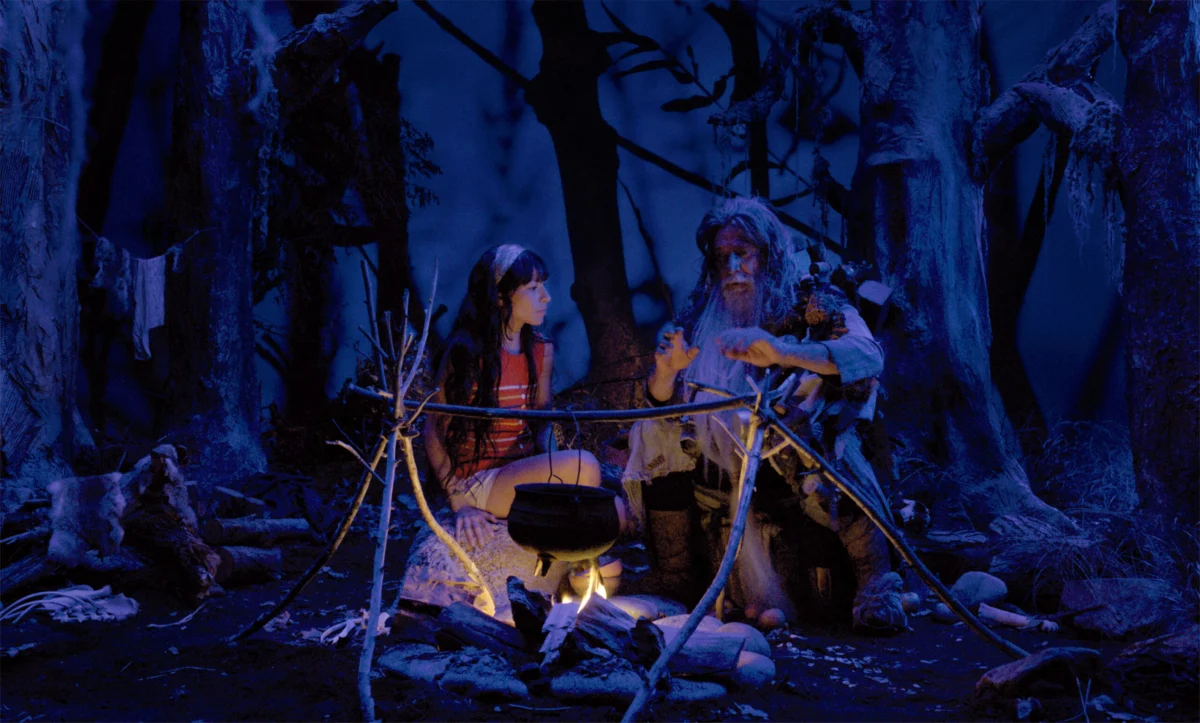
León and Cociña first announced their arrival on the international scene with "The Wolf House" in 2018, a stop-motion fantasy that served as both a dream and a nightmare debut. The film garnered significant attention for its wholly original design, a breathtaking fusion of claymation, puppetry, and papier-mâché that created a palpably handmade yet immersively surreal world. Beneath its seemingly juvenile storybook premise, "The Wolf House" delved into the very grownup recesses of horror and trauma, exploring themes of repression and guilt with an unnerving psychological depth. This groundbreaking work established the duo’s commitment to pushing the boundaries of visual storytelling and their ability to imbue even the most fantastical creations with profound emotional weight.
Their 2021 follow-up, "The Hyperboreans," while perhaps capturing fewer imaginations due to its dense and narratively abstruse melange of history, psychology, and political theory, nonetheless dazzled with its technical prowess. The film expanded their visual repertoire by incorporating live-action cinematography, adding another layer to their already varied visual quiltwork. This willingness to experiment with new techniques while maintaining their core artistic vision demonstrated their continuous evolution as filmmakers. "The Hyperboreans" showcased their ambition to tackle more complex intellectual and philosophical themes, further cementing their reputation as artists unafraid to challenge their audience.
"Donkey Princess," however, feels like a deliberate and fruitful return to the adult fairytale terrain that first enchanted audiences with "The Wolf House." The film’s title itself hints at its narrative roots, drawing inspiration from the 17th-century Charles Perrault tale "Donkeyskin." This is a story far removed from the sanitized versions often presented by mainstream entertainment; Perrault’s original narrative, with its discomfiting incestuous undertones, has only been given a truly offbeat cinematic treatment by Jacques Demy in his 1970 film of the same name. León and Cociña, collaborating once again with novelist Alejandra Moffat on the screenplay—a partnership that proved so fruitful in "The Wolf House"—have crafted a narrative that, while downbeat in its whimsy, directly confronts the darker psychological underpinnings of the classic fairytale.
At the heart of "Donkey Princess" is Princess Diana, portrayed with a captivating vulnerability by Antonia Giesen, an actress who previously starred in "The Hyperboreans." This Princess Diana bears no resemblance to her famous British namesake, save for the suffocating weight of expectation and patriarchal control that defines her existence within her kingdom. The film’s visual realization of this oppressive realm is a testament to the creative synergy between the directors and production designer Natalia Geisse. The kingdom is depicted as a surreal landscape where animated imagery merges with winningly ramshackle production design. Toadstool-shaped castle turrets appear to be rendered in what resembles cake frosting, fiberglass formations mimic mountains, and forests are conjured from stray, dry branches. This is further accessorized with the occasional flurry of 2D cartoon butterflies and birds, evoking a fragile, almost childlike aesthetic that starkly contrasts with the underlying thematic darkness. Fans of the directors’ distinctive stop-motion work will recognize familiar landscape textures, particularly from their interlude in Ari Aster’s "Beau is Afraid." The color palette, dominated by queasy shades of turquoise and puce, further amplifies the sense of unease, suggesting a world not built to last, and for Princess Diana, it is indeed a world she yearns to escape.
Diana’s plight is exacerbated by her father, played by Francisco Melo, who has become an obsessive guardian since the untimely death of her mother. The King, deeply affected by his widowhood, has outlawed love throughout the land, creating an atmosphere of pervasive repression. Diana’s yearning for escape intensifies when she encounters Lalo, a charming commoner portrayed by Andrew Bargsted. Their swift romance offers Diana a glimpse of a life beyond the confines of the royal court, a prospect of freedom that is both exhilarating and deeply dangerous.
The King, unable to tolerate his daughter’s burgeoning independence and her defiance of his decree, reacts with swift and brutal force. Lalo is banished to an orange-skied hellscape, a desolate landscape strewn with thorns and vultures. This vivid depiction is a witty fusion of silhouette animation and tactile set construction, showcasing León and Cociña’s mastery of diverse visual techniques. Before his banishment, however, Lalo bestows upon Diana a bracelet said to possess the power to grant wishes across space and time. This magical artifact serves as the catalyst for the film’s most significant narrative shift, transporting Diana to the bustling urban landscape of contemporary Chile.
In this new reality, Diana and Lalo find themselves living parallel lives, their destinies intertwined yet separate. They are reunited and even work alongside each other in the pest control business, a stark contrast to their former royal existence. While this might appear to be a compromised happily-ever-after, the narrative takes a further unsettling turn: Diana’s father has also been teleported to this new realm. Stripped of his royal powers and reduced to an aging invalid, he remains a burdensome and intrusive presence in Diana’s life, a constant reminder of the trauma and control she is attempting to escape.
"Donkey Princess" is not content with a single dimensional shift. Diana is subsequently shuffled through various lives and personae, perpetually seeking freedom and happiness but never quite finding it. This narrative trajectory echoes the time-travel mechanics explored in Bertrand Bonello’s recent film, "The Beast." Like Bonello’s work, León and Cociña’s film navigates various temporal paths, which, despite their initial opacity, eventually converge into a single, climactic tragedy, leaving open the possibility of eventual freedom. The storytelling style of León and Cociña can, at times, be opaque, with the film’s opening salvo, in particular, feeling hurried and scrambled. However, as the narrative progresses, it gains in grace and clarity, culminating in a surprising shift towards near-total realism. This move towards grounded reality represents a significant departure for filmmakers known for their feverishly imaginative world-building.
While "Donkey Princess" might not possess the same intensity of vision and purpose as "The Wolf House," it stands as an intriguingly transitional work within an oeuvre that continues to defy categorization and promises boundless creative possibilities. The film’s exploration of a mythic princess haunted by tortured daddy issues, issues that follow her even after she is spirited into the real world, builds to a climax that is both touching and profoundly disquieting. The directors’ ability to merge fantastical elements with deeply human psychological struggles is on full display, creating a cinematic experience that is as intellectually stimulating as it is visually arresting.
The enduring legacy of León and Cociña’s work lies in their unwavering commitment to originality and their fearless exploration of the human psyche through the prism of the surreal and the fantastical. "Donkey Princess," in its delicate balance of accessible fairytale elements and avant-garde artistic expression, further cements their reputation as one of the most exciting and vital directorial voices working today. Their unique ability to craft worlds that are both mesmerizingly beautiful and deeply unsettling ensures that their films will continue to spark conversation and inspire awe for years to come. The film’s success at Locarno, a festival renowned for championing bold and innovative cinema, underscores its significance and its potential to reach a wide and appreciative audience. As they continue to evolve as filmmakers, the trajectory of León and Cociña’s career remains one of the most compelling to watch in contemporary cinema, promising further excursions into the uncharted territories of visual storytelling and thematic depth.
