
 By admin
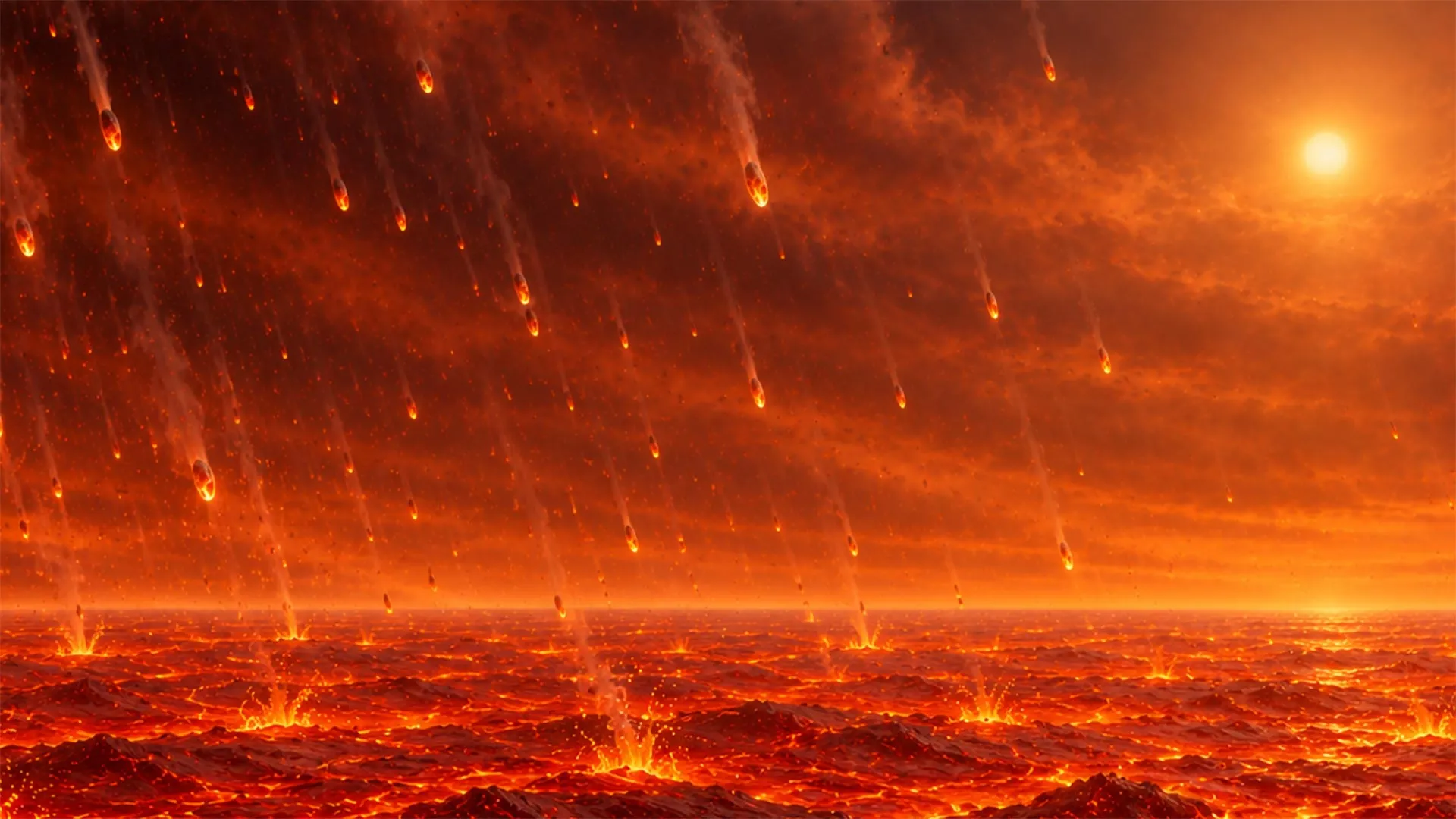
For eons, the enigma of Earth’s abundant water—the very essence of life on our planet—has captivated scientists and philosophers alike. Where did it come from? How did this "pale blue dot" acquire such a vast liquid reservoir, unique among its rocky neighbors? New research published in the prestigious journal Nature Geoscience offers a groundbreaking answer, suggesting that Earth may have created a substantial amount of its own water as the planet was forming. This challenges the long-held assumption that our world relied almost entirely on external deliveries from comets, meteorites, or other celestial bodies impacting its surface. Instead, the study posits that fundamental chemical reactions between rocky pebbles and the hydrogen-rich atmosphere of the young Earth could have produced enormous quantities of water, fundamentally reshaping our understanding of planetary habitability.
This pivotal discovery presents a compelling new explanation for how our planet acquired one of the most critical ingredients for life. More profoundly, it raises the tantalizing possibility that other rocky planets throughout the universe could generate water through similar intrinsic processes, potentially making habitable worlds far more common than previously imagined. If water is not just a serendipitous delivery but an inherent byproduct of rocky planet formation, the cosmos could be teeming with aquatic worlds.
The innovative research was spearheaded by a team at The University of New Mexico (UNM), which meticulously investigated this possibility by recreating some of the extreme, primordial conditions that characterized Earth’s early formation. The study was led by graduate student Susmita Garai, working alongside Zachary Sharp, a distinguished professor and director of Earth and Planetary Sciences, and Peter Olson. Their sophisticated experiments delved into the complex interactions that occur when rocks containing iron react with hydrogen gas at the incredibly high temperatures prevalent in the nascent solar system.
"Previous ideas about the source of water to Earth rely on an external source, such as comets or meteorites," explained Professor Sharp, highlighting the paradigm shift proposed by their findings. "Here we show that virtually any Earth-sized planet should have water by this newly identified mechanism." He further elaborated on the experimental challenges inherent in such a study: "In order to evaluate the possibility of ‘pebble rain’ being a source of water, we needed to construct and execute some very challenging high-temperature experiments. Dr. Garai’s efforts paid off mightily, as she found that water is produced in just minutes in the high temperature environment of the Early Earth’s atmosphere." This rapid production rate underscores the efficiency and potential scale of the proposed mechanism.
A New Explanation for the Origin of Earth’s Water: Beyond Extraterrestrial Deliveries
For decades, the scientific community has vigorously debated the original source of Earth’s water. The most prominent theories have largely converged on an extraterrestrial origin. One widely accepted hypothesis suggests that much of Earth’s water was transported to the developing planet by icy material originating in the colder, more distant regions of the early solar system, such as the Kuiper Belt or the Oort Cloud. According to this explanation, water-rich objects, including comets and small icy pebbles, traveled inward, eventually colliding with and contributing their volatile cargo to Earth’s growing mass.
Another strong candidate for water delivery has been carbonaceous chondrites, a primitive type of meteorite rich in water and organic compounds. These meteorites are thought to have originated closer to Earth’s orbit than comets, potentially offering a more consistent delivery mechanism. Crucially, the deuterium-to-hydrogen (D/H) ratio found in some carbonaceous chondrites closely matches that of Earth’s oceans, providing a compelling chemical fingerprint. Comets, on the other hand, often exhibit D/H ratios that differ significantly from terrestrial water, complicating their role as the sole or primary source.
However, researchers have long struggled with certain aspects of these "external delivery" theories. Explaining how enough of this material could have reached our planet from such great distances, particularly in the quantities needed to form vast oceans, remains a challenge. There are also unresolved questions about whether these delivery processes fully account for Earth’s precise chemical and isotopic composition, including the observed D/H ratio and the abundance of other volatile elements. The new study bypasses these delivery logistics entirely, investigating a fundamentally different route by which water could have appeared. Instead of arriving already contained in ice or other materials, water may have been produced directly through chemical reactions involving the rocky ingredients that built Earth and the gases surrounding it.
Earth’s Fiery Birth and the Genesis of Water
The proposed mechanism is intricately linked to the process of planetary formation known as pebble accretion. During the planet’s earliest stages, countless small pieces of rock, often referred to as "pebbles" (millimeter to meter-sized), gradually came together, colliding and sticking to form a larger body. This process is now recognized as a highly efficient means of rapid planetary growth. As Earth gained mass through this pebble accretion, it is believed to have accumulated a dense, primordial atmosphere, primarily composed of hydrogen—the most abundant element in the solar nebula from which our solar system formed. This early atmosphere would have been incredibly hot and dense, with temperatures and pressures far exceeding anything found on the planet today, resembling a "hell-like atmosphere," as Professor Sharp vividly described.
Under these extreme conditions, a remarkable chemical reaction could have been triggered as rocky pebbles, rich in iron oxides, fell through this hydrogen-dominated atmosphere. Hydrogen in the surrounding gas would react with iron oxide (specifically, ferrous oxide, FeO) embedded within the silicate rocks. This reaction would transform the iron oxide into metallic iron (Fe) while simultaneously releasing water vapor (H2O). The simplified chemical equation is: FeO + H2 → Fe + H2O. This is a reduction-oxidation (redox) reaction where hydrogen acts as a reducing agent, stripping oxygen from the iron oxide. The resulting metallic iron would sink into the planet’s core, while the newly formed water vapor would contribute to the growing atmospheric water reservoir, eventually condensing to form oceans as the planet cooled.
Experiments Reveal Water Can Form in Minutes
To rigorously test the feasibility of this proposed process, the UNM researchers meticulously designed and executed a series of high-temperature experiments. They exposed samples of silicate rock, representative of the early building blocks of Earth, to temperatures ranging from 1,200 to 1,400 degrees Celsius. These temperatures are consistent with models of the early Earth’s hot, dense atmosphere. The experiments were conducted using a controlled flow of hydrogen gas, simulating the primordial atmosphere. To ensure the observed effects were specifically due to hydrogen, they repeated the tests with helium gas as a crucial control, as helium is an inert gas that would not participate in the reaction. Each experiment ran for durations between 15 minutes and three hours, allowing for observation of reaction kinetics.
The results provided compelling and strong evidence that the proposed reaction indeed occurs efficiently under these extreme conditions. When the rocks were heated in the presence of hydrogen, a substantial transformation took place: almost 80% of their iron oxide content was converted into metallic iron, with water vapor being a direct and immediate product of the reaction. This high conversion rate demonstrates the efficiency of the process.
In stark contrast, the researchers did not observe the same reaction or any significant water production when helium was used instead of hydrogen. This critical difference unequivocally confirmed that hydrogen played a crucial and active role in generating the water, validating the core premise of their hypothesis.
The speed and scale of the reaction were particularly striking to the research team. While the scientists had anticipated that some water might form, the results suggested that the process could have been far more productive and rapid than initially expected. When they extended their experimental findings to the scale and conditions of the early Earth—considering factors like the estimated mass of hydrogen in the primordial atmosphere, the rate of pebble infall, and the duration of this early phase—their calculations indicated that this mechanism might have generated hundreds of oceans’ worth of water. This is a truly staggering amount, suggesting a profound impact on Earth’s hydrological budget.
"We had suspected and hoped that we would produce iron metal and water in our reduction experiments, but we really had no way of knowing how fast and how much," Professor Sharp recounted, reflecting on the surprise of the findings. "We were quite surprised to find that extrapolation of our work suggests that hundreds of oceans’ worth of water were likely produced in this way. Looking out over a large body of water, it is hard to imagine that that water may have been produced 4 ½ billion years ago in a hell-like atmosphere, but it very well may have." This vivid description paints a picture of a planet actively forging its future oceans in a crucible of extreme heat and gas.
Implications for Earth and Beyond: Could Other Earth-Like Planets Make Their Own Water?
These findings profoundly suggest that the very conditions of Earth’s formation may have actively and intrinsically contributed to its water supply. Rather than being entirely dependent on water delivered from elsewhere in the solar system—a process subject to the vagaries of celestial mechanics—the growing planet may have possessed the inherent ingredients and mechanisms needed to manufacture water through its own internal chemical reactions. This concept fundamentally shifts our understanding from passive reception to active generation.
The implications of this research extend well beyond our home planet. If rocky planets around other stars develop similarly hot, hydrogen-rich atmospheres during their formation—a scenario consistent with models of planet formation in protoplanetary disks—they might also produce substantial amounts of water as rocky material accumulates through pebble accretion. This possibility could have monumental consequences for understanding how common water is across the universe. A process that naturally occurs during the formation of Earth-sized planets would mean that obtaining water might not require the precise cosmic lottery of having the right icy objects arrive from distant, cold regions of a planetary system. Instead, water could be a built-in feature of many rocky worlds.
This research also significantly bolsters the growing interest in pebble accretion as a leading explanation for how planets form. Although the concept of pebble accretion has gained attention relatively recently, primarily over the last decade, it has already proven remarkably successful in helping scientists address several longstanding questions and paradoxes about planetary development, such as the rapid formation of gas giants and the existence of super-Earths.
"The idea of pebble accretion is still relatively new. It’s only been around for the last decade," Sharp reiterated. "But it seems to solve many problems that exist with the existing paradigm for planet formation. And now we see that it also can explain why our planet is habitable. By extension, it is reasonable to expect that other Earth-sized bodies circling other stars would also have water and possibly life." This statement encapsulates the profound reach of the new findings, linking a specific planetary formation mechanism directly to the question of universal habitability.
While the study offers a compelling new pathway for water generation, important uncertainties remain to be resolved. The experiments conclusively demonstrate that rocky material can generate water when exposed to hydrogen under conditions resembling those of the early Earth. However, they do not yet establish how much of our planet’s present water supply was actually produced this way compared to the contribution from external sources. Quantifying the relative contributions of internal production versus delivery by comets, meteorites, and other sources will be a critical next step for future research. This might involve more detailed isotopic analyses of water in Earth’s deep mantle, which could retain signatures of different formation pathways. Further modeling of the duration and exact composition of Earth’s early hydrogen atmosphere will also be crucial.
Nevertheless, the findings reveal a potentially fundamental and highly productive process that may have shaped Earth billions of years ago. They suggest that the ability to produce water could be an intrinsic part of the formation of rocky planets themselves, opening entirely new avenues for understanding where water, and by extension, life, might exist beyond our solar system. This discovery marks a significant leap forward in our quest to understand the origins of life’s most vital ingredient and the potential for life to flourish across the cosmos.
