
 By Lina Irawan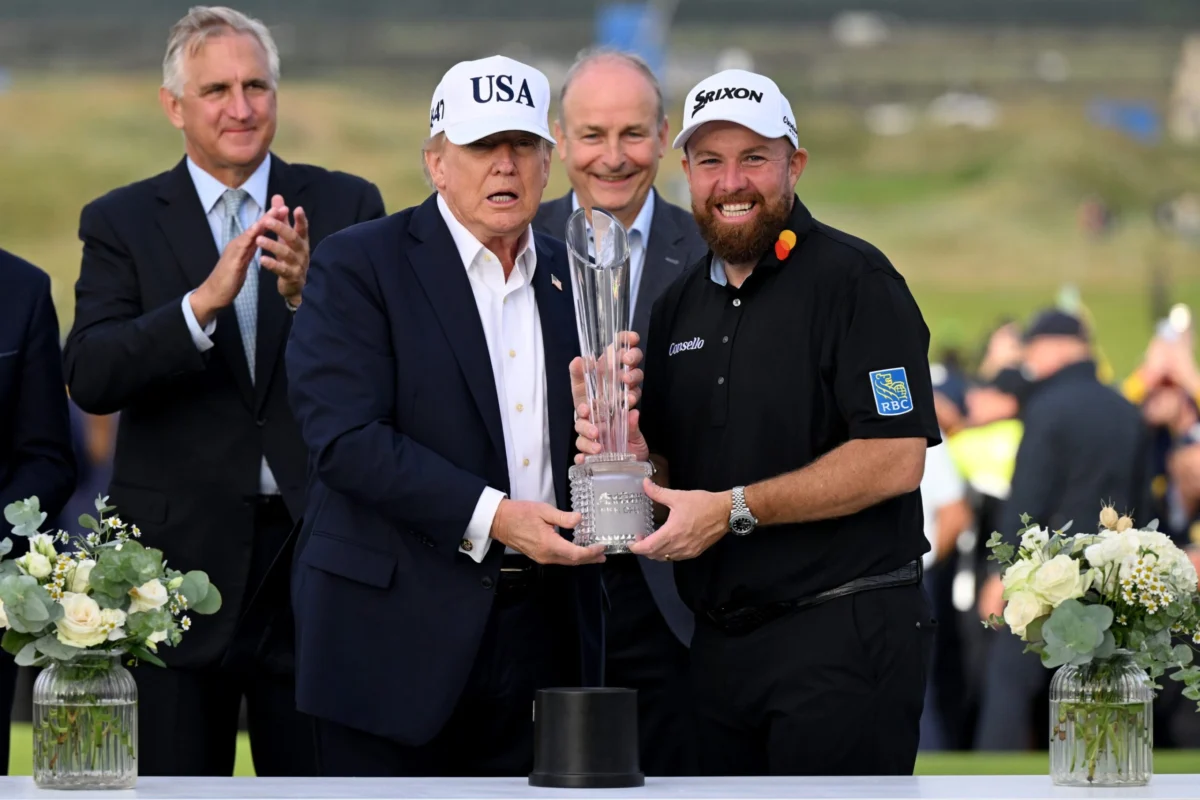
U.S. President Donald Trump delivered an unexpected and significant trade policy announcement on Sunday at the conclusion of a golf tournament in Ireland, declaring his intention to remove the existing 10% tariff on Irish whiskey. The impromptu revelation, made during the trophy ceremony for the Irish Open, was met with enthusiastic cheers and whistles from the assembled spectators, highlighting the popular appeal of such a measure in a nation deeply proud of its iconic spirit. This move, following similar action on Scotch and Northern Irish whiskies, marks a notable, albeit piecemeal, easing of the extensive trade barriers that have characterized U.S.-European Union relations under the Trump administration.
Speaking from the podium, Trump explained his decision with characteristic bluntness, stating that he had been persistently lobbied on the issue by "everybody," including some of the professional golfers participating in the tournament. "Everybody’s been bugging me to do it," the Republican president reportedly said, adding, "And I said, ‘On behalf of the United States of America, I am going to take the tariffs off’ Irish whiskey." The declaration, delivered in a casual setting rather than through formal diplomatic channels or official press releases, underscored Trump’s unique approach to policy-making, often blending personal interactions with significant economic directives.
The Landscape of Trump’s Trade Wars and EU Tariffs
To fully appreciate the gravity of this announcement, it’s essential to understand the broader context of the U.S.-EU trade disputes that escalated significantly during Trump’s presidency. His administration embarked on a strategy of imposing tariffs on a wide range of imported goods, primarily justified by concerns over national security, trade imbalances, and what he perceived as unfair trade practices. The initial salvo in this trade war often involved steel and aluminum imports, but it quickly expanded to include various agricultural products, luxury goods, and, notably, alcoholic beverages from the European Union.
The tariffs on European spirits, including Irish whiskey, were largely a consequence of the long-standing dispute between the U.S. and the EU over illegal subsidies provided to aircraft manufacturers Boeing and Airbus. The World Trade Organization (WTO) had authorized both sides to impose tariffs on each other’s goods as a retaliatory measure. In this complex trade environment, various European food and beverage products became collateral damage. Initially, many European spirits, including certain whiskies, faced a punitive 25% tariff. While the specific trajectory for Irish whiskey saw some adjustments, the original article indicates that it had been subject to a standard tariff imposed by Trump on most EU imports, which had been reduced from 15% to 10% in July, prior to this latest announcement. This reduction in July itself represented a slight de-escalation, but the full removal signifies a more definitive step.
The Economic Strain on Irish Whiskey
The United States represents the largest and most valuable market for Irish whiskey, a spirit that has experienced a dramatic global resurgence in recent decades. The imposition of tariffs, even at the 10% or 15% level, significantly hampered this growth trajectory. Industry data prior to the tariffs consistently showed double-digit percentage growth in Irish whiskey exports to the U.S. However, once the tariffs were implemented, this momentum was severely curtailed.
The Irish Whiskey Association (IWA), the representative body for the Irish whiskey industry, had been vocal in its opposition to the tariffs, consistently calling for their removal. In May, the IWA reiterated its plea, arguing that the tariffs were a "tax on Irish whiskey consumers and U.S. businesses alike." The tariffs led to increased costs for U.S. importers, distributors, and retailers, which were often passed on to consumers in the form of higher prices. This, in turn, dampened demand and reduced sales volumes. Many smaller and medium-sized Irish distilleries, which rely heavily on export markets, found it particularly challenging to absorb the additional costs, impacting their profitability and investment plans.
William Lavelle, Head of the Irish Whiskey Association, had previously highlighted the direct financial impact, stating that the tariffs had cost the sector tens of millions of dollars in lost sales and revenue. Beyond the direct financial hit, the tariffs created significant market uncertainty, making it difficult for businesses on both sides of the Atlantic to plan effectively for the future. U.S. companies with Irish products in their portfolios, from large distributors to small independent liquor stores, faced disrupted supply chains and reduced margins, further complicating their operations. The "uncertainty for consumers" mentioned by the IWA referred to fluctuating prices and potentially reduced availability of certain brands, as importers became hesitant to commit to large orders under the cloud of unpredictable trade policy.
A Precedent Set: The UK Whiskey Exemption
Trump’s decision to lift tariffs on Irish whiskey was not entirely without precedent, as he had announced a similar waiver for U.K. whiskey, encompassing Scotch and spirits produced in Northern Ireland, in May. This earlier move was explicitly linked by Trump to a high-profile visit by King Charles III and Queen Camilla to the White House. On April 30, Trump posted on social media, proclaiming, "The King and Queen got me to do something that nobody else was able to do, without hardly even asking!" This statement underscored his transactional approach to diplomacy, where personal relationships and perceived favors could directly influence significant trade policy decisions.
The lifting of tariffs on Scotch and Northern Irish spirits was met with considerable relief by the Scotch Whisky Association, which confirmed on July 24 that the zero-tariff policy had officially come into effect. This earlier decision had sparked hopes within the Irish whiskey sector that a similar reprieve might be forthcoming. However, the distinction between "UK whiskey" (Scotch, Northern Irish) and "Irish whiskey" (produced in the Republic of Ireland) is crucial. While geographically proximate, the Republic of Ireland is an independent member state of the European Union, whereas the UK (including Scotland and Northern Ireland) had left the EU. This distinction meant that while the UK could negotiate its own trade terms post-Brexit, Ireland remained bound by EU trade policy, complicating any separate tariff negotiations. The fact that Trump chose to unilaterally remove tariffs on Irish whiskey, despite Ireland’s EU membership, suggests a potential shift in strategy or perhaps a more pragmatic acknowledgment of the specific economic pressures on the industry.
The Diplomatic and Political Undercurrents
Trump’s announcement in Ireland was not just an economic policy shift; it carried significant diplomatic and political weight. His visit to Ireland, largely centered around his golf properties, provided an unconventional stage for such a declaration. The spontaneous nature of the announcement, divorcing it from the formal, often protracted processes of international trade negotiations, is characteristic of his presidency. It allowed him to present the tariff removal as a personal gesture, a direct response to popular sentiment ("everybody’s been bugging me"), rather than a concession resulting from intense diplomatic pressure or a structured trade deal.
The timing of the announcement, during a visit to a key European ally, also sends a subtle message. While broader U.S.-EU trade tensions persist, singling out Irish whiskey for tariff relief could be interpreted as a goodwill gesture towards Ireland, a country with deep historical and cultural ties to the United States. It also highlights the power of specific industry lobbying and the potential for a populist leader to respond to visible, localized economic concerns. The enthusiastic reaction from the crowd further reinforced the notion that such a move resonates positively with the public.
Economic Ramifications and Future Outlook
The complete removal of the 10% tariff is expected to provide a significant boost to the Irish whiskey industry. For Irish producers, it means their products will become more competitive in the U.S. market, as the price advantage enjoyed by domestic and other tariff-exempt whiskies will diminish. This is likely to lead to increased export volumes, higher revenues, and potentially renewed investment in distillery expansion and job creation within Ireland.
For U.S. importers, distributors, and retailers, the tariff removal simplifies their operations, reduces costs, and allows for more stable pricing. Consumers in the U.S. can look forward to potentially lower prices for their favorite Irish whiskeys and greater availability of a wider range of brands. This boost to the supply chain could invigorate the entire Irish whiskey ecosystem in the U.S., from marketing campaigns to bar promotions.
However, the question of implementation remains. Details on how soon the tariff would be officially lifted were not immediately available following Trump’s announcement. Such a policy change typically requires formal action by the U.S. Trade Representative (USTR) or through an executive order. The actual procedural steps and the timeline for these changes to take effect will be closely watched by the industry.
Moreover, the broader implications for U.S.-EU trade relations are significant. While this specific tariff removal is a positive step for one sector, it does not resolve the underlying disputes that led to the imposition of tariffs on other European goods. Trade experts will be keen to observe if this move signals a broader softening of the U.S. stance on EU tariffs or if it remains an isolated, product-specific decision influenced by unique circumstances and personal diplomacy. The crucial question is whether the EU will reciprocate by lifting any retaliatory tariffs it has placed on U.S. products, potentially fostering a more constructive environment for future trade negotiations.
Economists like Dr. Eleanor O’Connell, a trade policy specialist, suggest that "while positive for the Irish whiskey sector, such ad-hoc tariff removals, especially when announced informally, underscore the unpredictable nature of current global trade policy. A more stable and predictable trade environment benefits all parties, and the hope is this individual action might pave the way for broader de-escalation."
In conclusion, President Trump’s announcement to lift tariffs on Irish whiskey is a significant development, offering much-needed relief to an industry that has faced considerable headwinds. It highlights the unique intersection of personal diplomacy, domestic political considerations, and international trade policy under his administration. While the immediate beneficiaries will be Irish producers and American consumers, the long-term impact on the wider U.S.-EU trade relationship and the potential for further de-escalation remains to be seen, contingent on the formal implementation and subsequent diplomatic maneuvers.
