
 By admin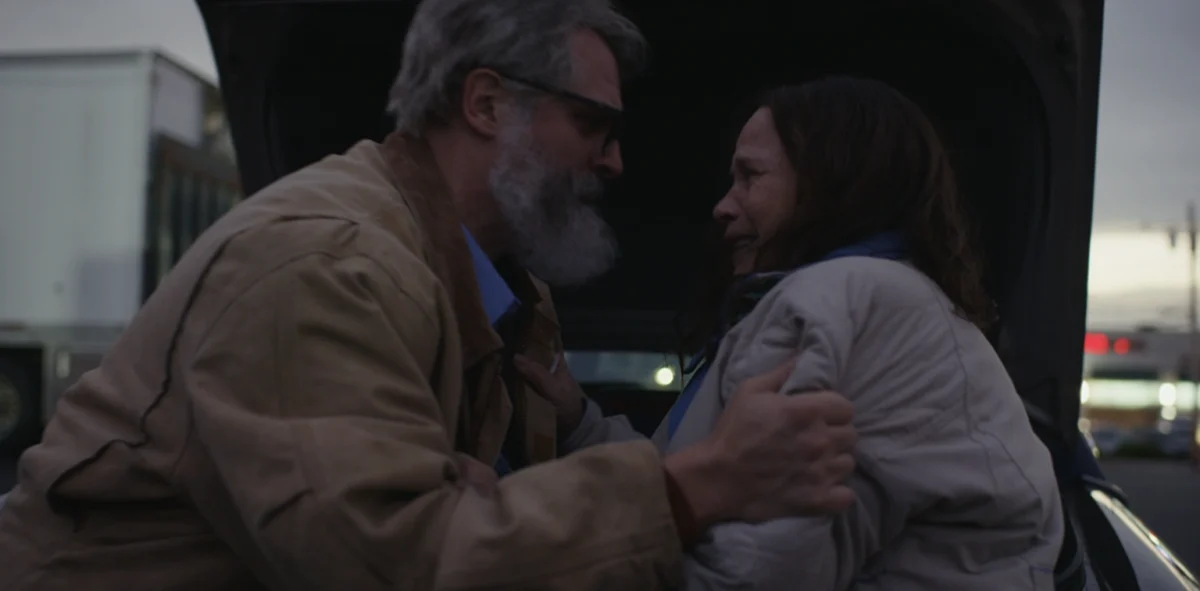
Courteney Cox’s directorial debut, "Evil Genius," attempts to transform the chilling true-crime saga of the 2003 "pizza bomber" case into a darkly comedic caper, but ultimately struggles to find its footing amidst a barrage of over-the-top performances and a superficial retelling of already widely known, bizarre facts. For those captivated by Netflix’s 2018 documentary series of the same name, which meticulously dissected the criminal incompetence at the heart of this tragedy, Cox’s fictionalized account offers little in the way of new revelations. Instead, it leans heavily into a gleeful, mocking portrayal of the case’s stranger-than-fiction elements, prioritizing lurid sensationalism over deeper analysis. The success of the film will largely hinge on a viewer’s tolerance for Patricia Arquette’s unbridled, thunderous performance as Marjorie Diehl-Armstrong, the alleged mastermind of the ill-fated scheme. Her portrayal is a force of nature, often overwhelming the more subdued, yet still compelling, performance of David Harbour as her co-conspirator and on-again, off-again lover, Bill Rothstein.
Cox, in her first feature-length directorial effort since the 2014 comedy "Just Before I Go," assembles a film that, while likely to attract an audience drawn to the enduring public fascination with this peculiar case, lacks significant formal style or narrative finesse. The story of Brian Wells, the pizza delivery man tragically killed by a bomb locked to his neck, has been a subject of intense media scrutiny for over two decades, making the prospect of a theatrical rehash less appealing than its streaming counterpart. Indeed, "Evil Genius" feels tailor-made for binge-watching from the comfort of one’s couch, with Arquette’s polarizing yet undeniably captivating characterization potentially serving as "Emmy catnip." However, as a gala premiere at the Toronto International Film Festival, the film felt somewhat diminished, perhaps too intimate for the grand scale of the event.
The foundational details of the "pizza bomber" incident are presented with a familiar cadence, echoing the documentary series and the countless headlines that preceded it. On August 28, 2003, Brian Wells, a middle-aged pizza deliverer portrayed by actor-filmmaker Tom McCarthy as an unwitting pawn, embarked on a bank robbery at a PNC Bank branch near Erie, Pennsylvania. His claim of being a hostage, with a detonation device affixed to his neck, was a central element of the unfolding horror. Wells demanded $250,000 but ultimately absconded with a significantly smaller sum. His apprehension by police shortly after the robbery proved to be the prelude to the device’s activation, resulting in his death and initiating a protracted, multi-year FBI investigation. This tragic event, while the climax of the film, feels almost incidental to the broader narrative chaos that unfolds.
The film’s script, penned by Courtenay Miles, a writer known for Netflix’s crime drama "Mindhunter," adopts a frenetic, pinballing structure. It begins not with the Wells incident, but with an entirely different murder: Bill Rothstein calls the police to report the deceased body of Marjorie Diehl-Armstrong’s boyfriend discovered in her freezer. This narrative choice starkly contrasts with the documentary series, which meticulously traced the events backward from the bomb to the botched grand plan. Cox’s film, conversely, attempts to connect the dots in a loopier fashion, moving from an apparent crime of passion to the more infamous crime of greed.
The sheer volume of incidents crammed into the film’s 97-minute runtime is palpable, especially when compared to the documentary’s more than double runtime. This compression is felt throughout, leaving little room for nuanced development. However, Cox’s film does manage to carve out a distinct focus on the volatile, on-again, off-again "amour fou" between Diehl-Armstrong and Rothstein. Arquette embodies Diehl-Armstrong as a embittered harridan, convinced the world owes her a considerable debt, while Harbour portrays Rothstein as a hapless milquetoast utterly ensnared by her influence. Flashbacks to their youth, with Arquette’s own daughter, Harlow Jane, playing a younger version of Diehl-Armstrong, hint at an intelligent, ingenuous young woman who simply needed a guiding hand. Yet, neither the script nor Arquette’s flamboyant, curdled, and persistently one-note performance of terminal misanthropy effectively bridges the gap between past and present. The lack of connective tissue makes it increasingly difficult for the audience to invest emotionally in a character whose motivations feel so disjointed.
Ultimately, the film seems less concerned with eliciting empathy than with highlighting the shouty, combative dysfunction that defined the relationship between its two central figures. It revels in their blatant incapability as criminals, with the title "Evil Genius" serving as a pointedly ironic jab. The film constantly flags and foreshadows their every misstep with a knowing, almost smug, "get-a-load-of-this" smirk. Their accomplices, brought to life by actors like Garret Dillahunt and Danielle Macdonald, are largely relegated to figures of amusement, possessing limited personality and even less discernible motivation. The narrative increasingly frames their doomed venture as a ragged, unfolding farce, a descent into absurdity rather than a tragic tale.
The overall tone of "Evil Genius" feels over-egged, as if the inherent absurdities of the case were not enough. One might argue that a more humane, character-driven study of the events would have allowed the bizarre nature of the case to register even more starkly. Instead, Cox’s film insists on casting an already ugly story in the ugliest possible light, a sentiment amplified by Eigil Bryld’s intentionally harsh, roughly framed cinematography. The film’s pitiless gray imagery, coupled with an abrasive sound design that frequently submerges dialogue beneath loud, blunt needle drops spanning genres from classic rock to alternative, creates an atmosphere of deliberate unloveliness. While the story itself offers precious little room for grace or beauty, a touch more empathy from the filmmakers might have provided a more resonant, albeit still dark, viewing experience. The film’s stylistic choices, while perhaps intended to mirror the chaotic nature of the events, ultimately serve to alienate the audience rather than draw them into the narrative’s emotional core. The relentless negativity, while reflecting the grim realities of the case, leaves little room for the audience to connect with the human tragedy at its center, reducing complex individuals to caricatures of their worst impulses. The film’s commitment to portraying the characters’ flaws with such unflinching severity, while artistically bold, can also be seen as a missed opportunity to explore the psychological underpinnings that might have led to such a catastrophic series of events. The audience is left to ponder not just the "how" of the crime, but the more elusive "why" behind the deeply flawed individuals who orchestrated it, a question that "Evil Genius" largely sidesteps in favor of its more sensationalist inclinations.
