
 By Lina Irawan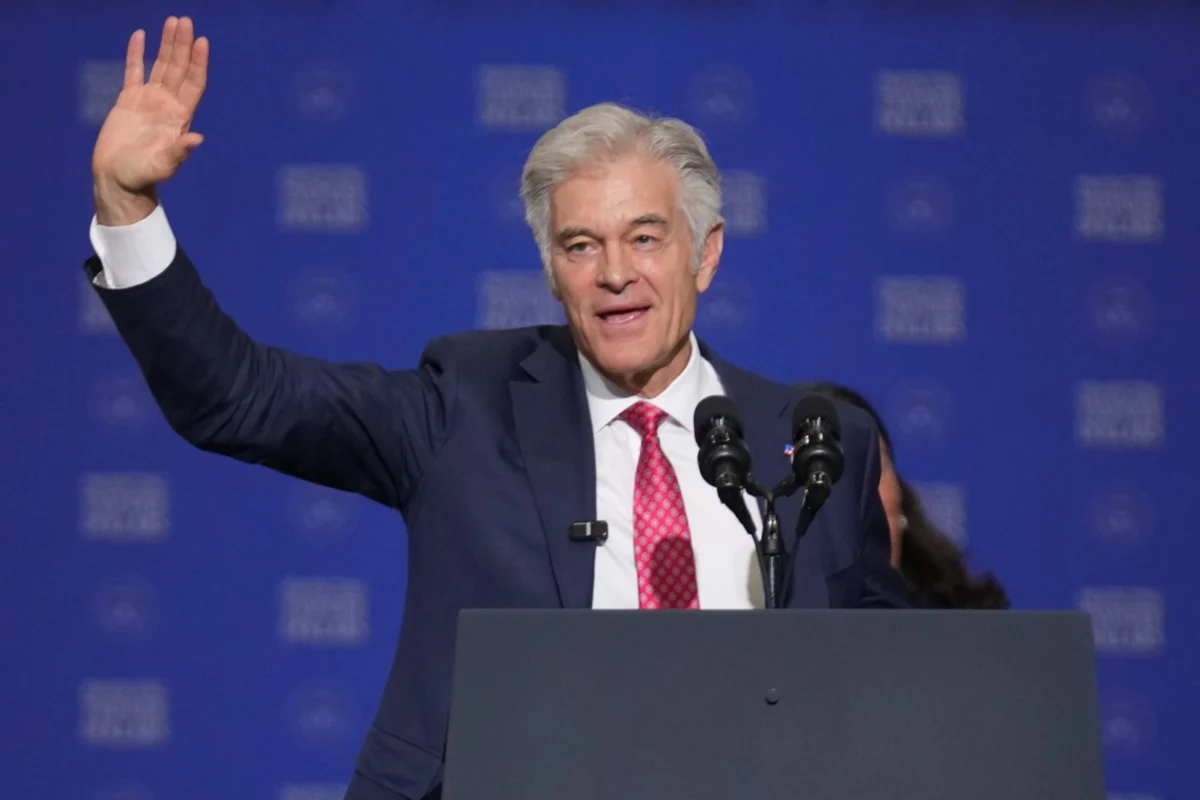
The Trump administration has escalated its aggressive campaign against Medicaid fraud, announcing new federal funding deferrals totaling over $1 billion for California and Minnesota. Health Secretary Robert F. Kennedy Jr. stated these actions mark a strategic pivot towards "stopping the fraud before it happens," a departure from previous administrations’ post-prosecution "claw back" approach. This proactive stance, however, has ignited fierce opposition from the affected states, which accuse the federal government of punitive, politically motivated tactics and a lack of transparency.
Secretary Kennedy, addressing a news conference, underscored the administration’s resolve, asserting, "We have a duty to stop the payments, demand answers and then follow the evidence wherever it leads." This assertive posture is central to the administration’s broader initiative to demonstrate its commitment to combating fraud and safeguarding taxpayer dollars. The timing is particularly salient, as rising healthcare costs and other economic pressures have propelled affordability to the forefront of voter concerns in the lead-up to November’s midterm elections.
The anti-fraud offensive gained significant momentum in March when Vice President JD Vance, at President Donald Trump’s behest, inaugurated a new inter-agency task force. This task force unites officials from various federal departments, leveraging advanced data analytics and technological tools to pinpoint and investigate suspected misuse of federal funds across the sprawling healthcare landscape. The administration frames these efforts as a necessary evolution in federal oversight, moving beyond reactive measures to preemptive intervention.
However, the states on the receiving end of these deferrals paint a starkly different picture. John Connolly, the temporary commissioner and state Medicaid director for Minnesota’s Department of Human Services, expressed profound frustration, stating the federal government has failed to provide "data or explanation on how the deferral amount was calculated or what it was based on." This lack of substantiation, he argued, undermines the legitimacy of the federal actions and creates significant operational hurdles for state agencies responsible for managing critical healthcare services.
Connolly did not mince words, issuing a scathing statement that characterized the federal government’s actions as "unprecedented and punitive ways as part of their war on Medicaid and its recipients." He emphasized that "Partnership – not politics – is required to stop criminals and protect services for the people who need them," highlighting a perceived breakdown in the collaborative spirit that traditionally underpins federal-state Medicaid programs.
The political dimension of these deferrals quickly became a central point of contention. Minnesota’s Democratic Governor Tim Walz openly speculated that the Republican administration was strategically deferring Medicaid funds to offset the costs of President Trump’s tax cuts, which largely benefited wealthy Americans. Similarly, California’s Democratic Governor Gavin Newsom accused the administration of targeting his state for explicitly political reasons, citing a pattern of animosity from the White House towards the predominantly Democratic state. This sentiment is amplified by President Trump’s frequent public denunciations of California as a "badly governed state," and the administration’s earlier intensified anti-immigration efforts in Minnesota, which involved a robust deployment of Immigration and Customs Enforcement officers, leading to weeks of counter-protests and even the tragic shooting deaths of two civilians. These prior tensions provide a fraught backdrop against which the current Medicaid funding dispute is unfolding.
States Grapple with Unprecedented Obstacles and Lack of Clarity
The administration’s aggressive "stop fraud before it happens" strategy, while lauded by its proponents as innovative and fiscally responsible, has demonstrably led to considerable "false starts and headaches" for states. This approach, which prioritizes immediate payment deferral over a methodical, evidence-based investigation, has been met with skepticism and frustration by state officials who are struggling to comprehend the basis for the federal government’s claims.
A notable example of federal miscalculation surfaced in April when the Centers for Medicare & Medicaid Services (CMS) conceded to The Associated Press that it had "made a significant error" in the figures it initially used to justify a fraud probe in New York. This admission raised immediate concerns about the reliability of the data and methodologies underpinning the broader federal anti-fraud campaign. Such errors erode trust and complicate the already intricate federal-state partnership, particularly when substantial funds are at stake.
Further compounding these concerns, California’s Medicaid director testified before a congressional committee just last month that CMS had yet to provide "any instances of fraud, waste or abuse" to the state, even after announcing a staggering $1.3 billion Medicaid funding deferral in May. This colossal sum, critical for California’s expansive healthcare system, was withheld without the specific, actionable evidence that states typically require to address allegations of misconduct. The current deferral of $867.5 million for California, announced by Secretary Kennedy, remains unclear whether it is in addition to, or overlaps with, this earlier $1.3 billion figure, adding another layer of confusion to the funding landscape.
In Minnesota, state officials have been diligently executing a "thorough corrective action plan" in an earnest attempt to assuage CMS’s concerns. These efforts followed an earlier federal decision to defer approximately $260 million in federal money, accompanied by threats of future cuts. John Connolly of Minnesota’s Department of Human Services articulated the state’s proactive engagement, stating, "We have cooperated in good faith and proactively engaged the Centers for Medicare and Medicaid Services to first raise the alarm on fraud in Minnesota’s Medicaid program, to effectively investigate fraud and to institute further safeguards against future misuse of funds." This highlights a fundamental disconnect: while states claim proactive measures, the federal government appears to be acting with sweeping, unilateral deferrals.
During Tuesday’s announcement, Secretary Kennedy did not clarify whether the newly announced deferrals – $867.5 million for California and $199 million for Minnesota – are supplementary to or inclusive of the previously announced funding freezes this year. This ambiguity leaves states in a precarious financial position, making it exceptionally difficult to budget and plan for essential services for their most vulnerable populations.
CMS Administrator Dr. Mehmet Oz, tasked with justifying these significant deferrals, offered generalized "patterns" rather than concrete examples of fraud within the two states. Among the questionable activities he cited were providers billing for four or more patients concurrently, or billing for services rendered after a Medicaid beneficiary’s death. While these patterns indeed warrant investigation, states argue that such broad observations do not constitute the specific, verifiable evidence needed to justify immediate, large-scale funding deferrals that impact millions of citizens.
Dr. Oz also singled out the rapid growth rate in California’s home care program as a reason for federal concern. California officials, however, swiftly disputed this characterization, explaining that the expansion of the state’s home care program is not indicative of improper spending but rather a deliberate and federally encouraged strategic initiative to keep individuals out of more expensive institutional settings like nursing homes. Anthony Cava, spokesperson for the California Department of Health Care Services, firmly countered, "In-home care growth reflects intentional, federally encouraged expansion, not improper spending. California is calling on CMS to stop threatening care for California’s most vulnerable residents." This clash underscores a fundamental disagreement on interpreting healthcare spending trends, with states emphasizing policy intent and the federal government focusing on growth metrics as potential red flags.
Path Forward, Enhanced Enforcement, and Broader Implications
Despite the current impasse, Secretary Kennedy and Administrator Oz indicated a potential pathway for states to restore the flow of federal funding: by furnishing comprehensive documentation that unequivocally proves the legitimacy of the payments in question. This places the burden of proof squarely on the states, requiring them to retrospectively justify expenditures that the federal government has deemed suspicious without providing specific, detailed allegations upfront.
Officials in both California and Minnesota have previously confirmed their ongoing efforts to collaborate with the federal government and provide the requested information. Oz specifically noted that Minnesota had already submitted relevant documents, which were currently undergoing "reevaluation very carefully" by federal authorities. This suggests a potential avenue for resolution, though the timeline and criteria for successful reevaluation remain unclear.
Looking ahead, Secretary Kennedy also hinted at a significant expansion of federal enforcement powers. He suggested extending the authority to exclude providers from Medicaid, Medicare, and other federal health programs directly to CMS. Historically, this formidable authority has resided exclusively with the Department of Health and Human Services’ (HHS) Office of the Inspector General (OIG). This proposed shift would grant CMS a more direct and immediate tool to remove "bad actors" from the federal healthcare system. Thomas March Bell, the HHS Inspector General, expressed strong support for this initiative, stating, "This is going to be a full force multiplier. It’s going to create additional momentum, and it’s going to exclude additional bad actors." The implications of such an expansion are significant, potentially streamlining the process of removing fraudulent providers but also raising questions about due process and the potential for overreach if not carefully managed.
The ongoing dispute casts a spotlight on the intricate and often fraught relationship between federal and state governments in managing the nation’s largest public health insurance program. Medicaid, a joint federal-state venture, serves over 80 million low-income Americans, including children, pregnant women, the elderly, and individuals with disabilities. Federal matching funds constitute a substantial portion of state Medicaid budgets, making any deferral or cut deeply impactful. Healthcare policy experts warn that sudden, large-scale funding withdrawals without clear justification can destabilize state healthcare systems, leading to potential service reductions, provider instability, and compromised patient care, especially for vulnerable populations who rely entirely on Medicaid.
The broader context of healthcare fraud in the U.S. is staggering, with estimates suggesting billions of dollars are lost annually to various schemes, from upcoding and phantom billing to identity theft and medically unnecessary services. While the administration’s stated goal of combating fraud is universally supported, the methodology employed in this particular campaign has drawn sharp criticism for its perceived heavy-handedness and lack of transparency. Legal analysts suggest that withholding funds based on "patterns" rather than specific, documented instances of fraud could face legal challenges related to administrative due process and the federal government’s obligation to provide clear grounds for such actions.
As the midterm elections approach, the political stakes surrounding healthcare affordability and government efficiency are exceptionally high. The Trump administration’s aggressive posture on Medicaid fraud is undeniably a calculated move to demonstrate decisive action on an issue of public concern. However, the fervent pushback from states, particularly those with Democratic leadership, underscores the profound tension between federal enforcement priorities and the practical realities of delivering essential healthcare services at the state level. The coming months will reveal whether this new "stop fraud before it happens" strategy will genuinely curb illicit activities or simply intensify the political battle over the future of federal healthcare funding.
