
 By admin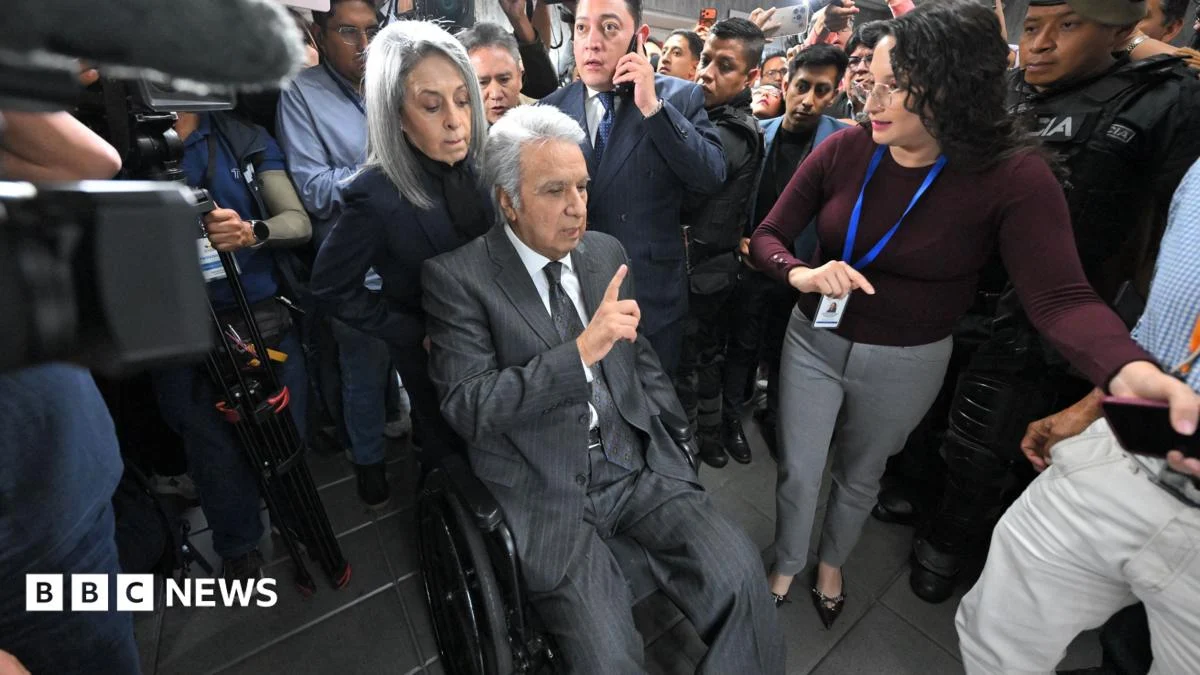
In a landmark ruling that has sent shockwaves through the political landscape of Ecuador, former President Lenín Moreno has been found guilty of taking bribes and sentenced to five years in prison. The conviction stems from a sprawling corruption scandal involving the construction of the colossal Coca Codo Sinclair hydroelectric dam, a project secured by the state-owned Chinese firm Sinohydro. While Moreno, 73, will serve his sentence under house arrest due to his age and a pre-existing disability, his conviction marks a significant moment in the fight against corruption in the South American nation, adding him to a growing list of former leaders facing legal repercussions for illicit activities.
Moreno, who occupied the presidency from 2017 to 2021, has vehemently denied any wrongdoing, maintaining his innocence and asserting that he did not accept any funds from Sinohydro. His defense team has already indicated a strong intention to appeal the verdict, which was delivered by a court in the capital city of Quito. The court found Moreno and 19 other individuals guilty of corruption, a broad indictment that includes his wife, daughter, and brother, as well as former plant managers, Sinohydro representatives, and even a former Chinese ambassador to Ecuador. This widespread conviction underscores the depth and complexity of the alleged bribery scheme that permeated various levels of government and business.
The prosecution’s case, meticulously built over several years, alleges that Sinohydro, a behemoth in the global infrastructure sector owned by the Chinese state, channeled a staggering sum of $76.1 million (approximately £56.2 million) through a network of shell companies to individuals involved in the procurement and execution of the Coca Codo Sinclair project. While Moreno himself is alleged to have received a comparatively smaller sum, prosecutors presented evidence suggesting that his family members benefited significantly, with tens of thousands of dollars purportedly flowing into their accounts. The court’s decision mandates that those convicted of bribery must repay three times the amount they received, a punitive measure aimed at both punishment and restitution. Furthermore, Moreno has been permanently barred from holding public office, effectively ending his political career.
This conviction places Moreno in an unenviable position, becoming the third former Ecuadorian leader to be sentenced for corruption. His predecessor, Rafael Correa, under whom Moreno served as vice-president, was himself handed an eight-year prison sentence in 2020 for a separate bribery case. The shadow of Correa’s alleged influence looms large over Moreno’s defense. Moreno has pointed fingers at his former mentor, accusing Correa of orchestrating the entire bribery scheme and signing off on the Coca Codo Sinclair project despite its inherent risks. Moreno contends that upon assuming the presidency, he initiated an investigation into the persistent issues plaguing the dam’s construction, a move he claims was aimed at rectifying past wrongs rather than covering up his own complicity.
The Coca Codo Sinclair hydroelectric dam, a flagship project of Ecuador’s energy sector, has been a source of controversy and scrutiny since its inception. Commissioned to bolster the nation’s electricity supply and reduce reliance on fossil fuels, the dam, with an installed capacity of 1,500 megawatts, was touted as a monumental achievement in bilateral cooperation between Ecuador and China. However, almost immediately after its operationalization, alarming structural problems began to surface. Cracks appeared in the dam’s structure, and a multitude of other technical failures plagued its performance, raising serious questions about the quality of construction and the integrity of the bidding process. These persistent issues led the Ecuadorian government to launch legal proceedings against Sinohydro in 2021, culminating in a $400 million settlement with the firm’s owner earlier this year. This settlement, however, does little to erase the underlying corruption allegations that have now led to criminal convictions.
The details of the bribery scheme, as laid out by prosecutors, paint a grim picture of how state resources can be exploited for personal gain. The use of shell companies, a common tactic in corruption cases, allowed for the obfuscation of illicit financial flows, making it challenging to trace the money directly to the ultimate beneficiaries. The involvement of Sinohydro, a state-owned enterprise, raises profound questions about corporate governance and the ethical responsibilities of multinational corporations operating in developing economies. The prosecution’s success in dismantling this complex network and holding individuals accountable, including a former president, is a testament to the diligence of Ecuador’s judicial system and anti-corruption agencies.
The implications of this verdict extend beyond Ecuador’s borders. It serves as a stark reminder of the pervasive nature of corruption in international infrastructure projects and the need for greater transparency and accountability in global business dealings. The involvement of a Chinese state-owned company in such a scandal also brings into focus the broader implications of China’s Belt and Road Initiative, a massive global infrastructure development strategy. While the initiative aims to foster economic growth and connectivity, it has also faced criticism regarding transparency, debt sustainability, and the potential for corruption in the awarding of contracts.
Experts in anti-corruption and governance have weighed in on the significance of Moreno’s conviction. Dr. Maria Rodriguez, a political analyst specializing in Latin American affairs, commented, "This verdict is a crucial step forward for Ecuador. It signals that no one, not even a former head of state, is above the law. It’s a message of deterrence to others who might consider engaging in corrupt practices. However, the fight is far from over. The systemic issues that allow such corruption to fester need to be addressed through comprehensive reforms."
Another commentator, Mr. David Chen, a former prosecutor now working with an international anti-corruption watchdog, highlighted the challenges inherent in prosecuting such complex cases. "Tracing illicit funds through multiple offshore entities and involving international actors is incredibly difficult. The success in this case is a testament to the collaboration between Ecuadorian investigators and potentially international partners. It also underscores the importance of independent judiciaries and robust investigative bodies."
The case also brings to light the intricate political dynamics within Ecuador. Moreno’s presidency was marked by a shift in political alignment compared to his predecessor, Correa. While Moreno initially presented himself as a continuity candidate, his administration eventually distanced itself from Correa’s more populist and confrontational style, aligning more closely with international financial institutions and pursuing a more orthodox economic agenda. This political divergence has fueled public debate and speculation about the true motivations behind the corruption allegations and the ensuing legal battles.
The legal battle ahead for Lenín Moreno promises to be protracted. His intention to appeal suggests a prolonged period of legal wrangling, which could potentially delay the finalization of his sentence. The appeals process will involve a review of the evidence presented at trial and the legal arguments made by both the prosecution and the defense. The outcome of the appeal will be closely watched, as it could set a precedent for future corruption cases involving high-ranking officials.
In the interim, the focus remains on the broader implications of this conviction for Ecuador’s governance and its international reputation. The government now faces the daunting task of rebuilding public trust and demonstrating a renewed commitment to transparency and accountability. The settlement with Sinohydro, while providing some financial redress, does not fully address the ethical and political ramifications of the scandal. The ongoing scrutiny of Sinohydro and its operations in other countries will likely intensify in the wake of this conviction.
The BBC has made repeated attempts to solicit comments from Sinohydro and the Chinese embassy in Ecuador regarding the verdict and the allegations. As of the time of reporting, no official statements have been released by either entity, leaving the international community to await their response to this significant development. The conviction of Lenín Moreno serves as a potent symbol of Ecuador’s ongoing struggle against corruption and its determination to hold powerful individuals accountable for their actions, regardless of their past positions or influence. The long-term impact of this verdict will depend on the government’s ability to implement lasting reforms and ensure that justice is not only served but also seen to be served in its pursuit of a cleaner and more transparent future.
