
 By Lina Irawan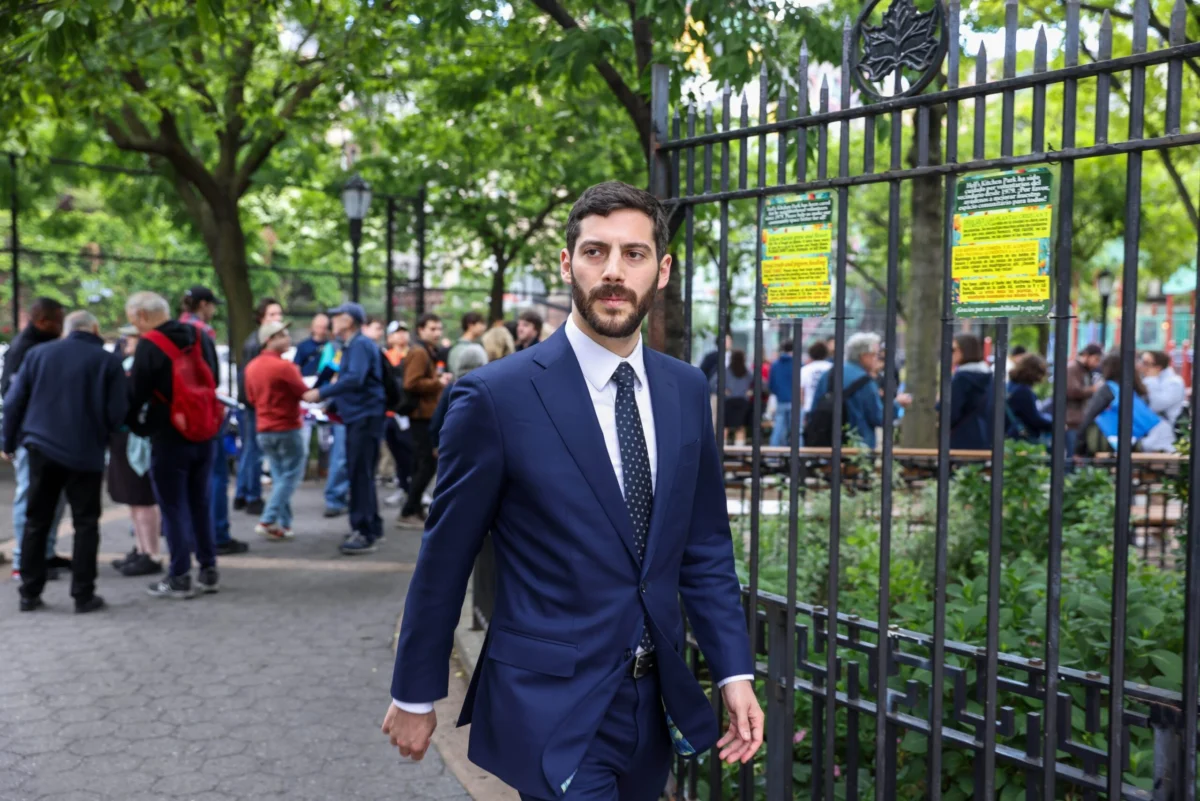
This commitment formed the bedrock of his platform when he ran for Rep. Jerry Nadler’s open congressional seat this year. Yet, his campaign became an unexpected crucible, exposing the immense financial power and complex influence of the AI industry. Despite many of his own donors hailing from within the tech sector, Bores found himself in the crosshairs of powerful industry-backed entities. Leading the Future, a super PAC notably funded in part by OpenAI president Greg Brockman and the influential venture capital firm Andreessen Horowitz, poured more than $7.6 million into opposing him, specifically targeting his advocacy for the RAISE Act. On the other side, Public First Action, buoyed by a substantial $20 million contribution from Anthropic, spent money in Bores’s favor, highlighting a fascinating, albeit often contradictory, internal dynamic within the AI industry regarding regulation. The total outside money injected into that Manhattan primary race soared past $40 million, making it the most expensive House primary of the cycle—a staggering sum that speaks volumes about the stakes involved in shaping AI policy. Despite this unprecedented financial support and opposition, Bores ultimately lost the election.
His defeat, however, was not an end but a catalyst. That loss directly led to the founding of Who Decides, a nonprofit Bores launched on Tuesday with his former chief of staff, Anna Myers. This new organization is designed to address what Bores perceives as a critical vacuum in the public discourse surrounding AI: the need for a unified, democratically driven voice to counter the concentrated influence of a few powerful tech companies and their financial backers. So far, Who Decides has successfully raised $10 million, with an ambitious goal to secure an additional $20 million by 2027, aiming for a total of $30 million ahead of the pivotal 2028 election cycle. Bores envisions the nonprofit as a crucial nexus, intending to unite the diverse array of AI advocacy organizations that Democrats already trust. Rather than imposing a top-down agenda, Who Decides aims to help these groups build out their own initiatives, fostering a collaborative environment to "establish a shared floor of an agenda on things that we all want to see good done."
Bores articulated his core philosophy to Fortune, stating, "Give the American people a say in how AI develops." He drew a poignant distinction between the public’s understanding of established policy issues and the nascent discourse around AI. For issues like Medicare or the Green New Deal, he explained, "Most voters have an answer key in their head for every question that they ask." The public has engaged with these topics for decades, forming opinions based on information, debate, and personal experience. With AI, however, Bores lamented that "even the messaging lives in this gray area." He continued, "We’re in this limited time where it’s not even just the answers that are up for grabs, but even the questions that are being asked are up for grabs." This "pre-paradigmatic" stage of AI policy presents both a challenge and an opportunity: to shape the foundational questions before the answers become entrenched by powerful interests.
The journey of the RAISE Act itself serves as a microcosm of the broader struggle. Passed into law late last year by New York Gov. Kathy Hochul after a "tenuous time in Albany," the act’s passage necessitated the formation of a broad coalition. This coalition comprised 55 diverse organizations, spanning a wide spectrum of stakeholders from dedicated AI policy groups to educational institutions concerned about the implications of chatbots in schools. This diverse alliance reflected the multifaceted societal impact of AI and the varied interests seeking to shape its trajectory. In stark contrast, Bores observed, "The opposition was always the same. It was a small subset of Silicon Valley that thinks there should be no regulation on AI whatsoever." This singular, well-resourced opposition highlights the asymmetric nature of the battle for AI governance—a diffuse public interest against concentrated private power.
This observation was a primary motivator for Bores in creating Who Decides. The group’s strategy is not to engage in a futile attempt to outspend industry behemoths like Leading the Future or Build American AI—Bores frankly admitted he wishes he had those resources. Instead, Who Decides is adopting a grassroots, strategic approach, targeting 11 battleground states by empowering and coordinating with organizations already active on the ground. This approach seeks to amplify existing voices and build a broad-based movement from the bottom up. The urgency of this outreach accelerated significantly after Jacob Coxon’s recent resignation from Anthropic, a high-profile departure that signaled growing internal dissent within leading AI companies regarding safety protocols and regulatory inaction. Bores noted the immediate impact, saying, "The seven major presidential candidates since my election, the 16 Congress members since last week," referring to the increased engagement following Coxon’s move. While initial outreach has primarily come from Democrats, Bores emphasized his openness to collaboration across the political spectrum, stating he is "open ears for anyone, regardless of political ideology."
Weak Laws and Weaker Willpower
The dynamic between strong public sentiment and legislative inertia is not unique to AI. A recent Gallup poll revealed that a majority of Americans, between 56% and 58%, consistently desire stricter gun laws. Furthermore, specific measures like background checks enjoy near 90% support across both Republican and Democratic parties, according to Pew Research. Despite this decades-long public consensus, Congress rarely acts decisively on gun control, a phenomenon widely attributed to the powerful influence of lobbying groups that outspend a diffuse public majority. AI, Bores argues, appears to be following a strikingly similar trajectory.
"The basics of this issue, while the urgency has changed a lot in the past week, the basics have not, which is that 80% of Americans want there to be more regulation on AI, and that’s across parties," Bores asserted. While independent polling places the figure somewhat lower, the direction remains consistent. A February–March 2026 Annenberg Public Policy Center survey found that 65% of Americans believe the government has done "too little" to regulate AI. This sentiment transcends partisan divides, with majorities of Democrats (77%), independents (72%), and even Republicans (53%) expressing a desire for more government intervention. This broad public consensus stands in stark contrast to the slow pace and often diluted nature of legislative efforts.
Public sentiment gets even grayer when examining the evolving stances of prominent figures within the AI industry itself. In May 2023, OpenAI’s CEO, Sam Altman, famously called for regulation during his testimony before the Senate Judiciary Committee, signaling an apparent willingness from the industry’s vanguard to embrace oversight. This seemingly pro-regulation stance was widely welcomed. However, by May 2025, Altman had notably reversed course, telling the Senate Commerce Committee that requiring government approval for AI development would be "disastrous." This pivot highlights the inherent tension within the industry between the perceived need for safety and the desire for unfettered innovation and competitive advantage. While some, like Anthropic’s Dario Amodei, have consistently maintained a pro-regulation position, the flow of Anthropic-linked money into political fights that simultaneously opposed regulation, as seen in Bores’s primary, complicates the narrative, suggesting internal contradictions or strategic nuances within these companies.
Bores believes that regardless of the initial and ultimate stances of industry figures, a narrow set of powerful financiers consistently spends vast sums to impede meaningful regulation. "So many of the mega donors who are pushing for there to be no regulation whatsoever are Republican mega donors," he said, explicitly naming Marc Andreessen and Elon Musk. These figures often espouse a techno-optimist, libertarian philosophy that views government intervention as an impediment to progress and innovation, advocating instead for market-driven solutions or self-regulation. Their substantial financial contributions translate into significant political leverage, further skewing the playing field against broad-based public interest.
This dynamic, Bores contends, directly impacted his own RAISE Act. What ultimately passed was a significantly watered-down version, stripped of crucial provisions such as third-party audits and whistleblower protections—measures designed to provide transparency and accountability. These essential safeguards were sacrificed in the legislative process, likely due to the very financial pressures Bores describes. Despite these compromises, Bores maintains a strong belief in the act’s significance: "The RAISE Act was, arguably still is, the strongest AI safety bill in the country," he stated, though he anticipates that Illinois and Massachusetts will soon introduce legislation that could surpass it, indicating a growing momentum for state-level action.
Avoid the Circular Firing Squad
The federal landscape for AI regulation is fraught with its own set of political maneuvers. In 2025, Senator Ted Cruz (R-TX) attempted to insert language into a massive legislative package, dubbed the "One Big Beautiful Bill," which would have barred every state from enforcing any AI law for a period of 10 years. This audacious move to preempt state-level initiatives was met with widespread opposition, including from 17 Republican governors who requested its removal. Ultimately, the Senate voted overwhelmingly, 99–1, to strip the preemption language, signaling a strong bipartisan consensus against a federal takeover that would stifle state innovation in regulatory approaches.
However, the threat of federal preemption has not receded. Cruz is now a co-sponsor of a new federal AI safety bill alongside Senator Amy Klobuchar (D-MN) and Majority Leader John Thune (R-SD). This bill, built around safety testing and incident reporting, is being touted as potentially D.C.’s most likely AI bill to pass yet. Bores, however, reads between the lines, interpreting it as essentially Cruz’s old preemption bill "wrapped in federal packaging." He warned Fortune, "Spot on," about that reading. "It’s people trying to use this momentum and this crisis to shut down the real power people have to regulate." The concern is that while appearing to address AI safety, such a federal bill could include language that explicitly or implicitly preempts state laws, thereby neutralizing the more robust regulatory efforts undertaken by states like New York. This would centralize power in Washington, potentially catering to industry preferences for a single, less stringent regulatory framework over a patchwork of diverse state laws.
Beyond the external political machinations on Capitol Hill, Bores also acknowledged a significant challenge within the Democratic party itself: a less-than-stellar track record on effective messaging and unified action. Often, he noted, advocates who fundamentally agree on the need for regulation end up splitting their efforts into separate, siloed fights. "Democrats are very passionate about making a difference, and that passion is usually well placed," he observed, "but that occasionally gets misdirected into turning into a circular firing squad and saying, no, my sub-issue is more important than your sub-issue." This internal fragmentation weakens their collective impact, making them vulnerable to a more unified and well-resourced opposition.
Bores’s solution to this internal discord is straightforward and compelling: "The people who are opposing almost every issue in AI are the same people… we should be sitting at the same table." He advocates for a strategic shift, urging diverse Democratic-aligned AI advocacy groups to recognize their common adversary and pool their resources and efforts. By focusing on shared objectives and presenting a united front, they can more effectively counter the concentrated influence of those seeking minimal or no regulation. The stakes, he implies, are too high for internal squabbles. The future of AI, its ethical development, and its impact on society depend on a cohesive, democratically accountable approach that prioritizes public safety and well-being over narrow industry interests. Who Decides, in this context, aims to be the facilitator of this crucial unification, striving to ensure that the "American people" truly have a say in how this transformative technology develops.
